The digital media landscape has reached a critical inflection point where the ease of content production has created a surplus of noise, making the challenge of audience acquisition more complex than ever. While the technical barriers to launching a podcast and distributing it across major platforms like Spotify, Apple Podcasts, and YouTube have effectively vanished, the strategic barriers to building a loyal, high-intent B2B audience have intensified. For modern enterprises, the podcast is no longer a peripheral experiment but a central pillar of demand generation and thought leadership.
The State of Audio Consumption in the Professional Sphere
Recent data from Edison Research’s The Infinite Dial 2025 highlights a significant shift in American media habits, revealing that 55% of the population aged 12 and older consumed a podcast within the last month. This statistic underscores the normalization of audio content as a primary source of information and entertainment. However, for B2B brands, the objective is rarely mass-market reach. Instead, the focus has shifted toward "relevance-at-scale"—the ability to penetrate specific niches inhabited by decision-makers, industry influencers, and prospective partners.
In the B2B sector, a single download from a Chief Technology Officer at a Fortune 500 company can outweigh the value of 10,000 downloads from a generalized audience. Consequently, the marketing of a podcast must evolve from a broad promotional effort into a sophisticated system of discovery, distribution, and engagement designed to support measurable business outcomes.
The Evolution of B2B Podcasting: From Experiment to Strategic Asset
The chronology of B2B podcasting has moved through three distinct phases. In the early 2010s, the medium was largely experimental, utilized by early adopters as a novelty. By 2018, the "content gold rush" saw a surge in corporate shows, though many suffered from "podfade"—the tendency to cease production after fewer than ten episodes due to a lack of immediate ROI. Entering 2025, the medium has matured into a structured distribution engine where the audio file serves as the "source code" for a multi-channel content strategy.
Industry analysts suggest that the rise of the B2B podcast is a direct response to the declining effectiveness of traditional gated content. As buyers become increasingly resistant to filling out forms for white papers, the "ungated" nature of podcasts allows brands to build trust and authority in "dark social" channels—spaces where peer-to-peer recommendations happen beyond the reach of traditional attribution software.
Defining Growth: Metrics That Matter for the C-Suite
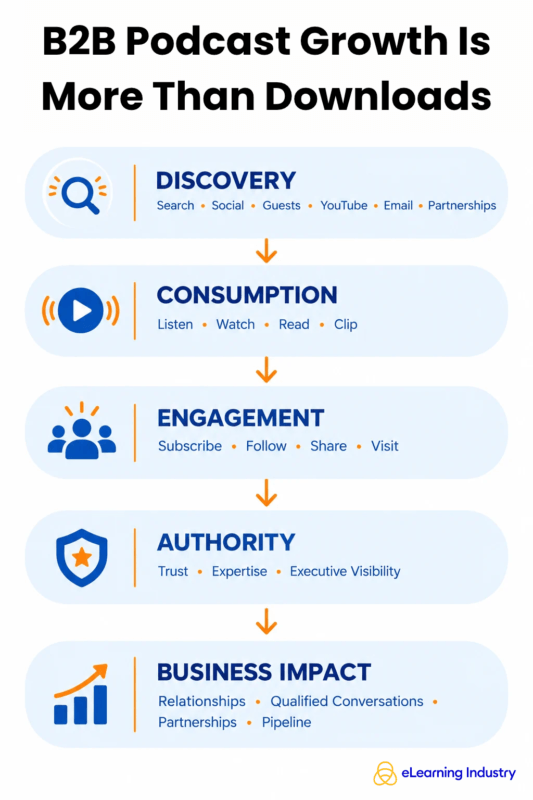
To successfully market a B2B podcast, organizations must first redefine what growth looks like. While consumer-facing shows prioritize advertising revenue and subscriber counts, B2B entities must align their podcast performance indicators (KPIs) with broader commercial objectives.
Growth in this context is categorized into five distinct pillars:
- Audience Quality: Tracking the professional seniority and industry relevance of the listener base.
- Distribution Efficiency: Measuring the reach of repurposed assets (clips, articles, social posts) across multiple platforms.
- Authority and Sentiment: Evaluating the brand’s "share of voice" in industry conversations and the perceived expertise of its executives.
- Pipeline Influence: Utilizing self-reported attribution and CRM data to identify how many closed-won deals engaged with podcast content during the buyer’s journey.
- Partnership Equity: Measuring the strength of relationships built with high-profile guests who often double as prospective clients or strategic partners.
A 15-Point Framework for B2B Podcast Distribution
The transition from a "published" episode to a "distributed" asset requires a repeatable, documented process. The following strategies represent the current best practices for maximizing the impact of every recorded conversation.
1. Strategic Audience Mapping
Successful promotion begins with a narrow focus. A podcast intended for "business leaders" is often too vague to resonate. Effective shows target specific personas—such as "Head of People Operations at mid-market SaaS firms"—allowing for highly tailored promotional copy and guest selection.
2. Audio SEO and Search Optimization
Search engines and AI discovery tools increasingly index audio content. Optimization involves more than keyword-stuffing; it requires descriptive, benefit-driven titles, comprehensive show notes, and the inclusion of accurate transcripts that allow search crawlers to understand the depth of the expertise shared.
3. The "Hub and Spoke" Web Strategy
Every episode should reside on a dedicated, SEO-optimized webpage within the company’s primary domain. This page serves as a resource hub, containing the embedded player, a detailed summary, key takeaways, and links to related internal resources, thereby keeping the audience within the brand’s digital ecosystem.
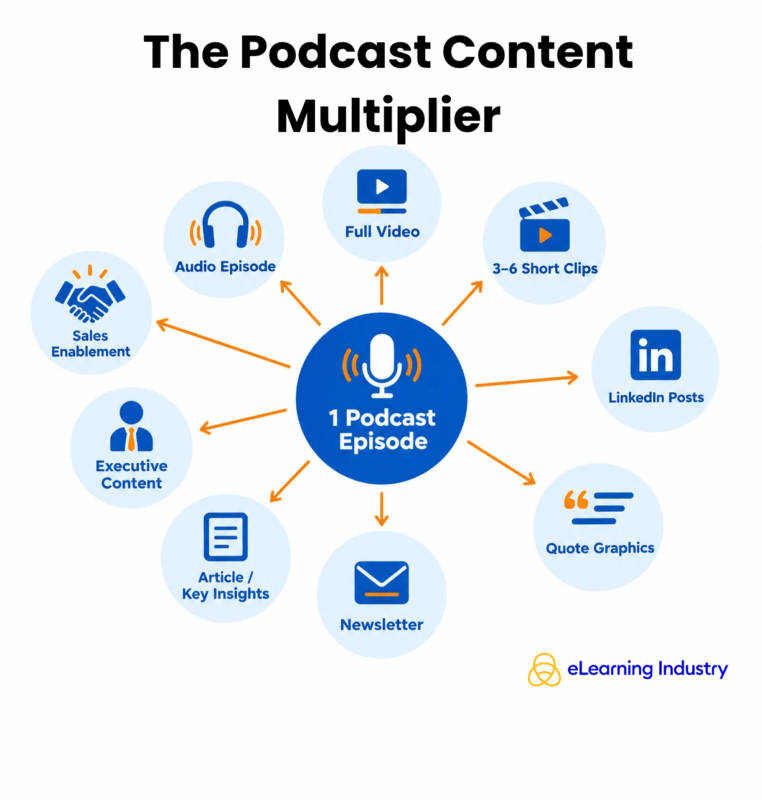
4. The Content Multiplier Effect
A single 45-minute interview can be decomposed into a dozen distinct assets, including long-form blog posts, LinkedIn newsletters, quote graphics, and technical briefs. This ensures that the insights reach the audience in their preferred format, whether they have 30 seconds for a graphic or 30 minutes for an audio deep-dive.
5. High-Impact Video Shorts
Platforms like LinkedIn, YouTube Shorts, and TikTok have prioritized short-form video. By extracting "gold nugget" moments—surprising insights or contrarian opinions—and adding professional captions, brands can capture attention in the scroll and direct high-intent viewers to the full conversation.
6. Guest-Partner Reciprocity
Guests are often the most effective distribution partners. Providing them with a "promotional concierge kit"—personalized graphics, pre-written social copy, and direct links—reduces the friction of sharing and taps into their established professional networks.
7. Executive Brand Integration
The podcast host, often a company executive, must leverage their personal brand. Authentic posts detailing what the host learned or how their perspective was challenged often outperform corporate announcements, as they humanize the brand and foster direct engagement with peers.
8. Email Lifecycle Marketing
Email remains the most reliable way to bypass social media algorithms. Segmented newsletters can deliver relevant episodes directly to the inboxes of prospects who have expressed interest in specific topics, turning a one-time listener into a recurring subscriber.
9. YouTube as a Discovery Engine
As the world’s second-largest search engine, YouTube is essential for video podcasts. Optimizing for the YouTube algorithm requires custom thumbnails, timestamped chapters, and engagement-focused descriptions that encourage viewers to subscribe to the visual series.
10. Cross-Pollination and Industry Partnerships
Collaborating with other podcasts or industry publications through guest exchanges or joint webinars allows a brand to "borrow" the trust and audience of established voices in the space.
11. Internal Advocacy Programs
Employees are a brand’s most credible advocates. By providing sales and customer success teams with relevant episode clips, they can use the podcast as a "soft touch" in their outreach, providing value to prospects without a direct sales pitch.
12. Transforming Audio into Evergreen Search Assets
Insights from a podcast should be synthesized into searchable articles that address specific industry pain points. This ensures the content remains discoverable via Google and AI search tools long after the initial launch week.
13. Intent-Based Paid Promotion
Paid media should be used surgically. Rather than buying generic traffic, B2B brands use LinkedIn or industry-specific sponsorships to put their most valuable episodes in front of specific job titles at target accounts.
14. Ecosystem Integration
The podcast should not exist in a vacuum. Integrating links into email signatures, "Thank You" pages after webinar registrations, and existing blog posts ensures that the show is a constant presence throughout the customer lifecycle.
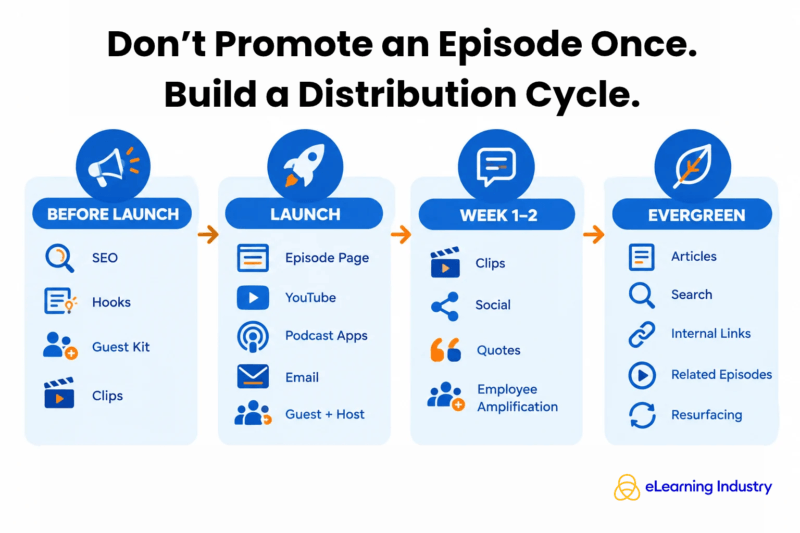
15. The Distribution Lifecycle Calendar
Marketing an episode is a marathon, not a sprint. A documented cycle—from "teasers" 48 hours before launch to "re-surfacing" evergreen insights six months later—ensures that the content’s value is fully realized over time.
The Role of Podcasts in Modern Thought Leadership
In an era dominated by AI-generated text, the human voice has become a premium asset for establishing credibility. Podcasting allows B2B leaders to demonstrate "proof of expertise" in real-time. This medium supports an earned media strategy where the original ideas shared on a show are picked up by trade publications, cited in industry reports, and lead to speaking invitations at major conferences.
Furthermore, the intersection of podcasting and AI discovery is becoming increasingly vital. As AI tools like ChatGPT and Perplexity become primary search interfaces, they rely on structured, high-quality web content to generate answers. By providing detailed transcripts and summaries, B2B brands increase the likelihood that their podcast insights will be cited as authoritative sources by these AI engines.
Broader Implications and Long-Term Outlook
The strategic shift toward sophisticated podcast marketing reflects a broader change in B2B buying behavior. With 70% to 80% of the B2B buying journey now happening before a prospect ever speaks to a salesperson, the ability to influence that journey through educational and authoritative audio content is a significant competitive advantage.
Organizations that view podcasting as a "one-and-done" publishing task will likely see diminishing returns. Conversely, those that treat the podcast as a foundational content engine—investing in distribution, repurposing, and audience engagement—will build a durable marketing asset. As the medium continues to evolve, the winners will be defined not by the size of their production budget, but by the precision of their marketing strategy and the depth of the value they provide to their professional community.