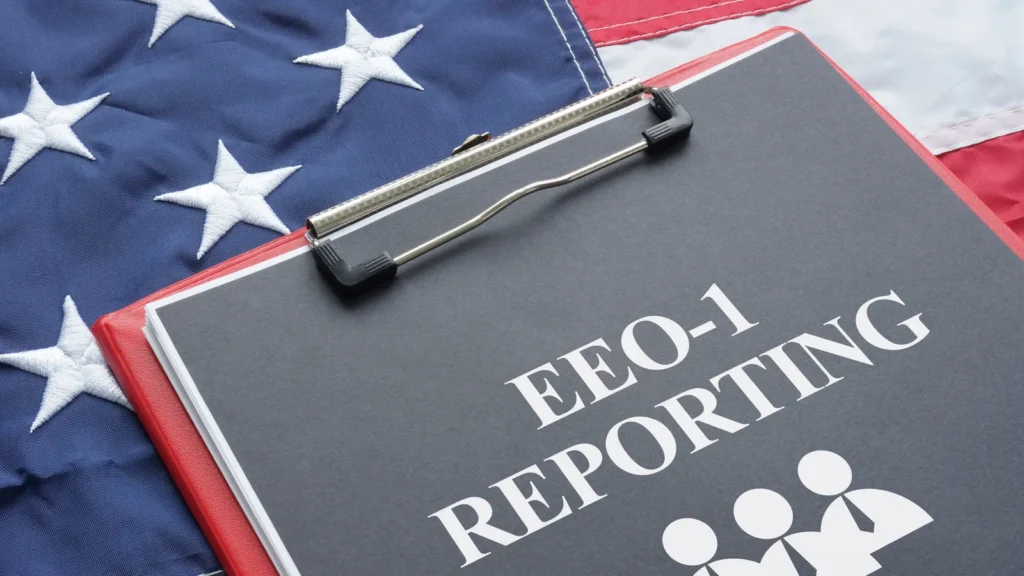
Employers may be entering a new era of employment law compliance – one potentially no longer marked by the federally mandated scramble to file EEO-1 reports. This significant shift, proposed by the U.S. Equal Employment Opportunity Commission (EEOC), signals a departure from decades of standardized workforce demographic data collection, prompting a complex re-evaluation for businesses, HR professionals, and advocacy groups alike. While the federal requirement may recede, experts contend that the underlying need and strategic value of such data will persist, driving companies to navigate a burgeoning patchwork of state laws and a renewed emphasis on internal data-driven talent initiatives.
A Decades-Long Mandate Under Review
The U.S. Equal Employment Opportunity Commission, the federal agency responsible for enforcing civil rights laws against workplace discrimination, set in motion a profound change in July 2026 by proposing a rule to eliminate several key EEO reporting requirements. This proposal targets a broad spectrum of reports, including the EEO-1, EEO-2, EEO-3, EEO-4, EEO-5, and EEO-6. Among these, the EEO-1 is arguably the most recognized, requiring employers with 100 or more employees, as well as certain federal contractors with 50 or more employees, to submit detailed demographic data about their workforce by job category, race/ethnicity, and sex. This comprehensive data collection has historically served as a critical tool for monitoring employment trends, identifying potential discrimination, and informing enforcement actions.
The genesis of EEO reporting is deeply rooted in the Civil Rights Act of 1964. Title VII of this landmark legislation prohibited employment discrimination based on race, color, religion, sex, or national origin, and simultaneously established the EEOC to enforce these provisions. To effectively fulfill its mission, the EEOC needed a mechanism to gather information about workforce composition. Thus, the EEO-1 report was introduced, becoming a cornerstone of federal oversight in employment equity. Over the years, this data has been instrumental not only for the EEOC’s enforcement efforts but also for researchers, policymakers, and civil rights organizations to analyze labor market disparities, track progress in diversity and inclusion, and advocate for systemic change. The data collected has illuminated persistent challenges, such as wage gaps and underrepresentation of certain demographic groups in leadership roles, providing an empirical basis for policy interventions and corporate initiatives.
The EEOC’s Rationale and Political Currents
The EEOC’s justification for proposing the rescission hinges on characterizations of demographic data collection as an "unnecessary burden" plaguing businesses. During a July 2026 meeting, the agency claimed that EEO reporting, rather than fostering equity, "encourages employers to discriminate against employees who aren’t ‘minorities’" and to "engage in racial stereotyping." This perspective aligns with a broader conservative pushback against certain diversity, equity, and inclusion (DEI) practices, which some critics argue lead to "reverse discrimination" or quota systems. A think tank founded by advisors to former President Donald Trump, for instance, openly celebrated the proposed move as a significant step away from "discriminatory DEI practices," reflecting an ideological undercurrent influencing the commission’s current direction.
The proposal initiated a public comment period, which concluded in late August. During this time, the EEOC invited feedback from a wide array of stakeholders, from civil rights advocates to business organizations. The commission has not yet indicated when it plans to publish a final rule, and multiple requests for comment from media outlets have gone unanswered, leaving the future of federal EEO reporting in a state of uncertainty.
Stakeholder Reactions: A Chorus of Concern and Caution
The public comment period saw a predictable divergence of opinions, yet also revealed a nuanced consensus among HR professionals regarding the practical implications. A trial attorney advocacy group vehemently argued against the rescission, underscoring the report’s utility in identifying and challenging systemic discrimination. Conversely, organizations like the America First Policy Institute (AFPI), a think tank aligned with conservative principles, lauded the move as dismantling what they perceive as counterproductive federal overreach.
However, for HR professionals and business leaders, the issue is far from simple. The Society for Human Resource Management (SHRM), a leading professional organization, submitted a comprehensive comment imploring the EEOC not to end the mandate without providing a clear replacement framework or, at minimum, robust guidance. Emily Dickens, SHRM’s chief administrative officer, highlighted that removing the existing demographic data collection framework "could leave employers with significant questions" regarding what specific information to collect, when and how to gather it, how long to retain it, who should have access, and, critically, how it should be used ethically and legally. Without such federal guidance, SHRM warned of employers developing "unsanctioned approaches to data collection," potentially leading to inconsistencies and increased legal risk.
Employee advocacy organizations echoed SHRM’s concerns, sounding the alarm about a potential "vicious cycle." They posited that a lack of legal frameworks and centralized data collection could inadvertently foster workplace cultures conducive to discrimination, thereby leaving employers more vulnerable to violations of Title VII of the Civil Rights Act. The Economic Policy Institute (EPI), a non-profit think tank, specifically highlighted that the rescission "would deprive employers, researchers, policymakers and advocates of their ability to independently analyze and use this unique data source to develop and advocate for policies that support the EEOC’s mission of ending workplace discrimination." EPI further emphasized that "large and persistent disparities in employment and pay of Black workers relative to white workers are among the most durable features of the U.S. labor market," and compelling empirical evidence points to discrimination as a significant factor in their persistence. For the EEOC itself, described by EPI as a "historically under-resourced agency," EEO data is "essential to directing those limited resources" toward critical enforcement efforts.
The End of Federal Mandate, the Rise of State Patchwork
Even if the EEOC’s proposal is finalized, employers will not be entirely free from demographic reporting obligations. Legal experts like Mark Goldstein, a partner at Reed Smith, pointed out that "like a lot of employment issues nowadays, it will now come down to compliance with a patchwork of state and local laws." Several states have already implemented their own reporting requirements, often mirroring or expanding upon the federal EEO-1 mandate. Goldstein specifically cited California, Colorado, Illinois, and Massachusetts, as well as New York City, as jurisdictions with such provisions. For companies operating in these areas, particularly multistate employers, much of their current data collection and reporting practices may need to continue largely unaltered to ensure compliance with local regulations. This fragmented regulatory landscape could, paradoxically, increase the administrative burden for some organizations, as they might have to tailor their data collection to multiple, differing state and local standards rather than a single federal one.
Beyond legal mandates, many employers are expected to voluntarily continue some form of demographic record-keeping. Jennifer Robins, counsel at Saul Ewing, suggested that maintaining such records could be crucial for defending against litigation. Furthermore, companies have found that internally collected data is invaluable for assessing the effectiveness of their talent initiatives, such as diversity recruitment programs, retention strategies, and pay equity analyses. The process of gathering and analyzing this data often "illuminates patterns, supports talent initiatives and more," as noted by sources to HR Dive.
The Enduring Value of Data: Beyond Compliance
Laurie Henneborn, Vice President of Research, Insights, and Solutions at Catalyst, a global non-profit organization promoting inclusive workplaces, emphasized that if EEO-1 reporting is no longer mandated, demographic data collection transitions from a compliance exercise to a strategic leadership choice. "When organizations stop measuring, problems don’t disappear. They simply become harder to see," Henneborn asserted. She highlighted the importance of data in understanding patterns in hiring, compensation, promotion, and other critical aspects of the talent cycle. "Without measurement, it’s harder to know whether talent systems are working as intended or whether barriers are emerging that affect performance, engagement, or retention," she explained. Henneborn concluded that "the value of workforce data was never limited to compliance," underscoring its intrinsic utility for organizational health and competitiveness.
Goldstein concurred that while the administrative burden of collection is a factor, many organizations will likely decide that the benefits outweigh the costs. The instructional insights gained from analyzing workforce demographics can be significant, helping companies identify areas for improvement in diversity, equity, and inclusion. However, he cautioned that the decision to continue collecting demographic information will need to be made on a case-by-case basis, tailored to each organization’s specific operational footprint, strategic goals, and risk profile.
Navigating the Ethical Minefield of Voluntary Data Collection
The shift to voluntary data collection, or collection driven by state mandates, places an even greater onus on employers to handle sensitive demographic information with extreme care and legal precision. Robins stressed that employers should always have been cautious about such data, but even more so now. HR departments must ensure that providing demographic information is explicitly voluntary for employees and that a strict "firewall" exists between this data and any personnel decisions. "Employers should have always been careful that, for example, any disparate impact analysis that they’re doing, they are not then relying on the outcome of that analysis to make a different race-based decision," Robins advised, warning against actions that could lead to claims of reverse discrimination.
Goldstein echoed this advice, stating, "If you’re asking for this information voluntarily, make sure that you’re doing it in a legally compliant way." This includes making the information available only on a strict need-to-know basis and ensuring it cannot be used in a manner that results in discriminatory treatment. The ethical handling of data, robust privacy protocols, and clear communication with employees about the purpose and confidentiality of the information will become paramount in this new landscape.
An Uncertain Future and Strategic Imperatives
Looking ahead, the potential rescission of federal EEO reporting could catalyze further legislative action at the state and local levels. Goldstein predicts, "I would expect more state and local jurisdictions to consider and potentially adopt legislation requiring some sort of demographic reporting requirements." This would further entrench the "patchwork" compliance environment, adding layers of complexity for businesses operating across multiple jurisdictions.
For the immediate future, however, Robins advises HR professionals against precipitous action. "Employers shouldn’t make big changes right now. This rule is still in process," she stated. Even if the rule is finalized, the myriad other compelling reasons—from litigation defense to strategic talent management—to continue similar record-keeping practices mean that HR workflows may remain largely unaltered in the short term.
Ultimately, Henneborn offers a forward-looking perspective, emphasizing the empowering quality of data. "The strongest organizations use data as a diagnostic tool. They look for patterns, ask questions, listen to employees, and make improvements where needed," she explained. In an evolving regulatory environment, "the organizations that emerge strongest in the years ahead will likely be those that stay focused on evidence-based decision-making, regardless of changes in the regulatory landscape." The debate surrounding EEO reporting underscores a fundamental truth: effective talent management and a commitment to equity are increasingly reliant on robust data, whether mandated by federal law or championed by visionary leadership. The landscape of employment law compliance is undoubtedly shifting, but the strategic imperative for understanding and acting upon workforce demographics remains as vital as ever.