The Human Capital Management (HCM) market is experiencing a significant resurgence, driven by its pivotal role as a foundational platform for artificial intelligence (AI) and its increasing strategic importance to enterprise operations. Following a period of scrutiny from financial markets, core HCM vendors like Workday and SAP are now positioned for substantial growth, fueled by a recovering economy and the transformative potential of AI. This evolution marks a departure from traditional HR systems of record to dynamic platforms capable of driving business growth, optimizing workforce strategies, and managing a complex future of human and AI collaboration.
The AI Revolution and the Ascendancy of HCM Platforms
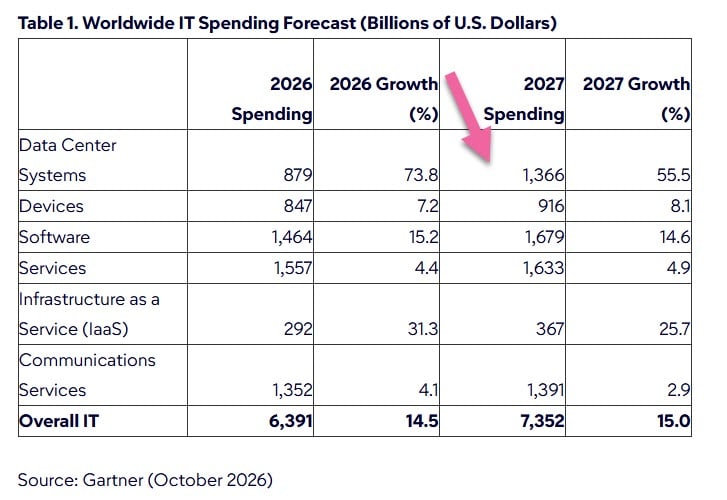
The current economic climate, characterized by growth and corporate restructuring, necessitates robust HCM solutions. Industry analysts project IT spending to increase by 15% in the coming year, with the HCM sector anticipated to outpace this growth, potentially doubling its expansion rate. This surge in demand is directly linked to the evolving role of HCM platforms, which are transitioning from administrative tools to strategic enablers of AI-driven business initiatives.
At the forefront of this transformation is the integration of AI. HCM systems are no longer solely focused on managing employee data; they are becoming sophisticated AI platforms that refine hiring processes, enhance skill development, and are poised to manage hybrid workloads comprising both human employees and AI agents. These platforms house critical strategic data essential for major business decisions, including mergers and acquisitions, organizational restructuring, and productivity analyses.
The future of work will involve a significant integration of AI agents alongside human workers. Projections suggest that by 2030, organizations may employ as many AI agents as human employees. HCM platforms are uniquely positioned to facilitate this transition by providing reliable datasets, effective agent management tools, intuitive user experiences, and frameworks for developing custom applications. This capability is crucial for managing this new "workforce" effectively.
Addressing the Fragmentation of the AI Agent Market

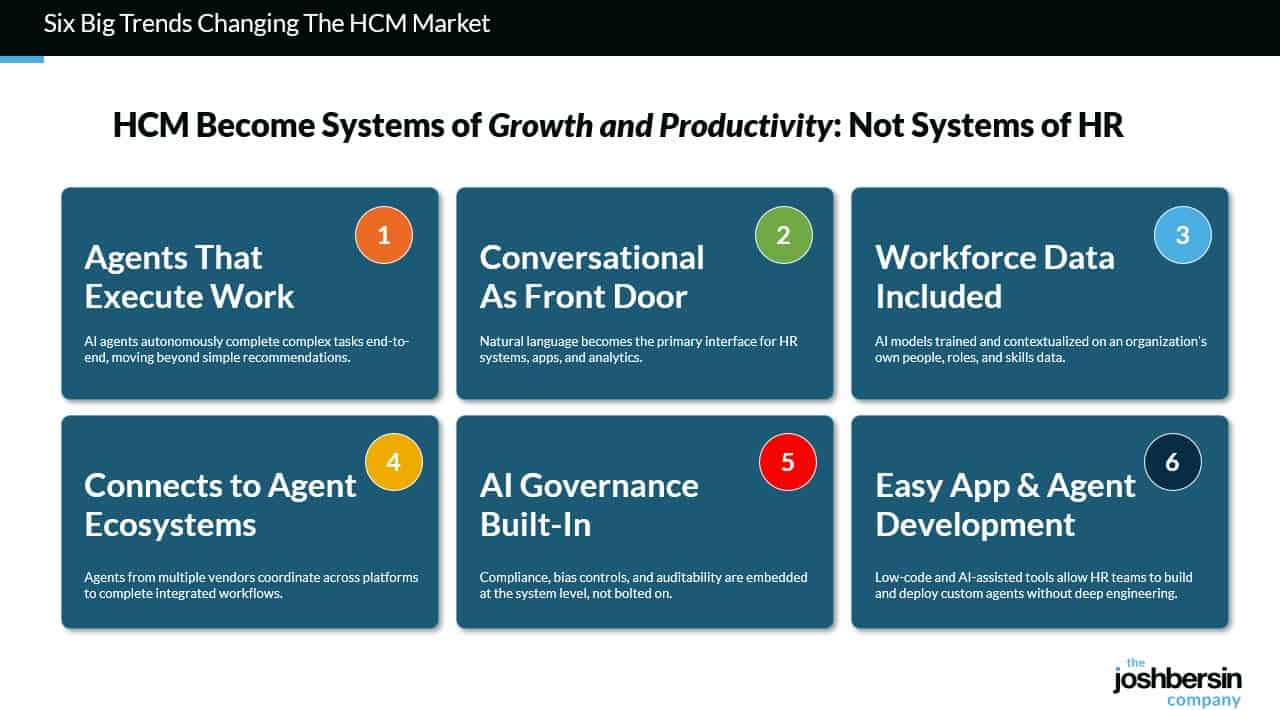
A significant trend observed at recent industry events, such as the Unleash conference, is the proliferation of specialized AI "agents" for recruitment, coaching, and other HR functions. While the sheer volume of these offerings signals innovation, it also points to a fragmented market where distinguishing the true value and functionality of individual agents can be challenging. Companies are increasingly seeking an integrated "system of agents" rather than a collection of disparate tools.
The challenge lies in consolidating the functionalities of various standalone agents – from sourcing and candidate communication to interviewing and pre-hire assessments. HCM platforms are emerging as the ideal orchestrators for these agent systems, enabling seamless integration and interoperability. This holistic approach ensures that specialized AI capabilities are managed within a cohesive framework, preventing the creation of data silos and fragmented workflows.
Openness and Accessibility: The New HCM Paradigm
A fundamental shift in the HCM market is the increasing openness of these platforms. With readily accessible APIs and robust data clouds, the creation of isolated data repositories is becoming obsolete. This enhanced interoperability, driven by AI advancements, allows HCM vendors to effectively monetize access to their data and services. This trend is further supported by projections indicating a significant growth in the AI token market, from which HCM vendors are expected to capture a substantial share.
Enhanced User Experience: Making HCM Intuitive
Historically, enterprise HCM systems have been criticized for their complex user interfaces, often requiring extensive training for employees. However, a notable development is the significant improvement in user experience. New interfaces, such as Workday’s Sana, SAP’s Joule, and HiBob’s intuitive design, are now akin to productivity tools, making them more approachable and engaging for the average employee. This enhanced usability allows companies to build valuable productivity applications directly within the HCM platform, a capability that was previously unattainable.
Workday: Entering its "Fourth Act" with AI Innovation
Workday, a long-standing leader in the HCM space, is embarking on what its co-founder Aneel Bhusri terms its "fourth act," marked by a renewed focus on AI and innovation. Under the leadership of Gerrit Kazmaier, President of Product and Technology, and bolstered by strategic acquisitions like Paradox and Sana, Workday has assembled a highly capable team deeply versed in AI and market dynamics. This leadership team, including prominent figures like Joel Hellemark, Adam Godson, Gabe Monroy, and Max Wessel, reflects a strong commitment to leveraging AI for business transformation.
Workday’s AI-Powered "Superagents"
Workday is introducing seventeen "Superagents" designed to enhance productivity, drive transformation, and foster growth. These Superagents, adhering to a "less is more" philosophy, encapsulate a range of sub-agents capable of delivering specific business outcomes. Key examples include:
- Workday Deployment Agent: Designed to streamline the configuration and deployment of Workday systems for new customers, enabling rapid implementation.
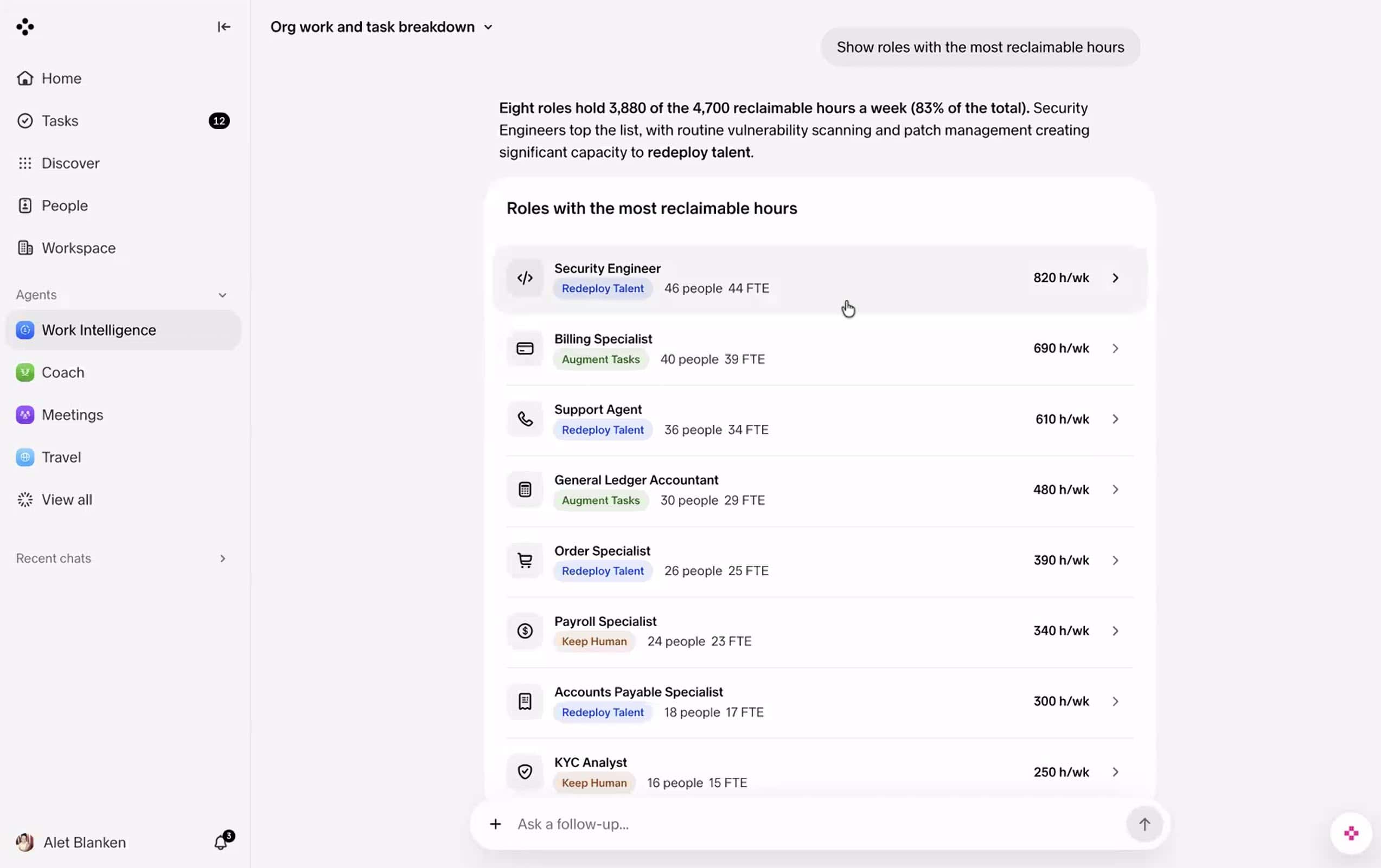
- Decision Intelligence Agent: Facilitates comprehensive workforce, hiring, and talent analysis, integrated with financial insights. It leverages "Work Intelligence" to break down jobs into tasks, enabling sophisticated hybrid work capacity planning and organizational redesign with AI-human org charts.
- Org Development Agent: Provides tools for auditing, rectifying, benchmarking, and optimizing job architectures, including AI-powered agents integrated into the organizational chart.
- Payroll Agent: Automates the identification and correction of payroll anomalies, significantly reducing the manual effort previously required.
The Workday Data Cloud represents another significant advancement, offering an integrated system for accessing all Workday data via API or SQL, a feature highly anticipated by customers. Additionally, Workday’s new Candidate Profile allows job seekers to apply once to any Workday-employing organization, eliminating the need for repeated profile submissions.
Workday’s commitment to AI extends to robust agent management tools. This includes the Agent System of Record (ASOR), an Agent Gateway for managing third-party agents, and a newly acquired Agent Identity system from C1.ai. This comprehensive suite positions Workday competitively against other major players like SAP and ServiceNow. Customer feedback from the Rising conference indicates strong enthusiasm for Workday’s deployed AI agents, particularly those inherited from established AI-native products like Paradox and Sana, suggesting rapid AI revenue growth for the company.
SAP SuccessFactors: Charting a Course for the "Autonomous Enterprise"
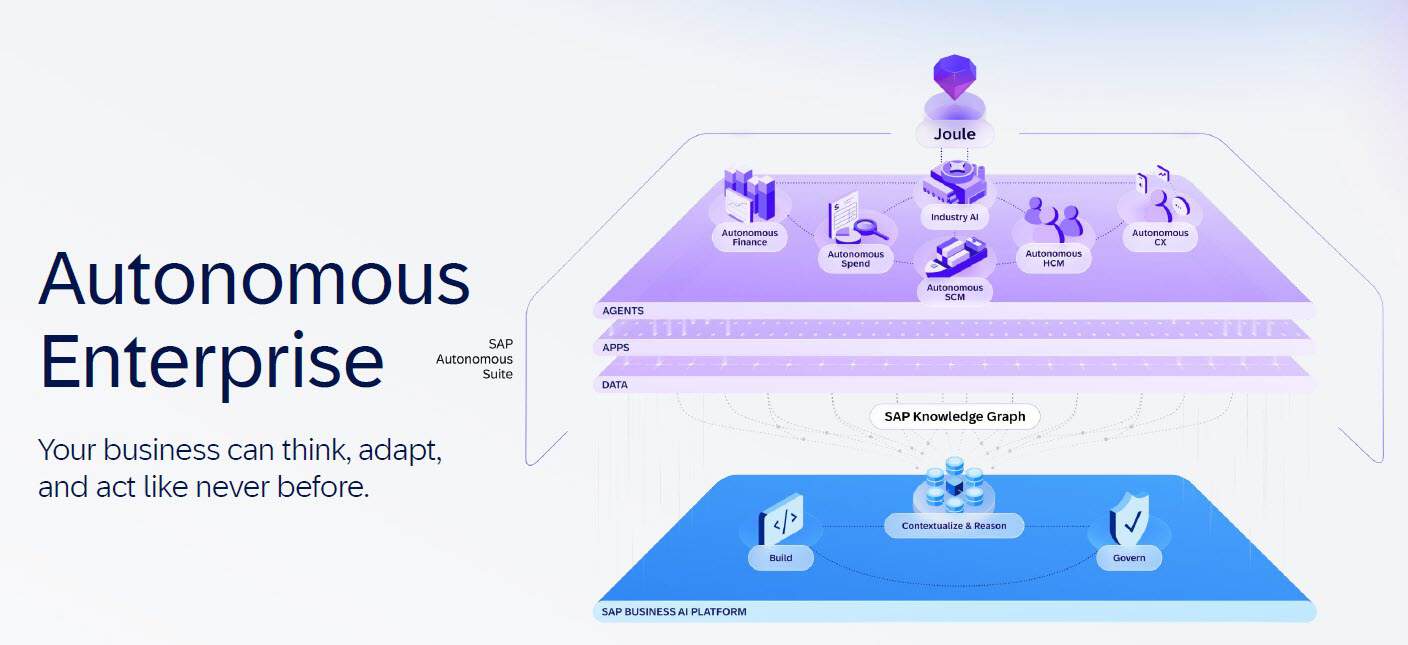
SAP is pursuing a parallel strategy with its "Autonomous Enterprise" vision, focusing on enterprise-wide automation. While Workday emphasizes productivity and growth, SAP’s approach centers on achieving operational efficiencies through AI-driven automation across its core ERP pillars: Finance, Spend, Supply Chain, HCM, and Customer.
SAP’s Agent Ecosystem and AI Assistants
SAP’s strategy involves a granular approach to AI automation, with numerous agents integrated into its data fabric and SAP Knowledge Graph. Within HCM alone, over 40 agents are available, grouped into "AI Assistants." The company plans to introduce at least 22 more agents by year-end, covering areas such as pay equity analysis and other critical functions outlined in HR 2030 research. This model positions SAP as a provider of AI automation specialists, which are then aggregated into "Assistants" to empower employees with higher-level capabilities.
A notable upcoming innovation is SAP’s planned "Workforce Planning" Superagent, which will leverage the task-intelligence engine from its anticipated acquisition of Techwolf. This initiative aligns with the broader trend of decomposing work into tasks to better apply AI for scalability.
Significant leadership changes within SAP’s HCM division include the promotion of Siva Sunderasan as GM and Chief Product Officer for SuccessFactors, and Rebecca Carr as President of HCM Products. Carr’s background at SmartRecruiters, now SAP’s strategic talent acquisition platform, and Sunderasan’s extensive experience at Oracle and PeopleSoft, bring a wealth of expertise and innovative thinking. Notably, SAP CEO Christian Klein has publicly acknowledged HCM’s strategic importance within the broader ERP ecosystem, underscoring the company’s commitment to people and work as central to its AI transformation.
SmartRecruiters, with its AI agent "Winston," is poised to become a foundational technology for SAP’s talent acquisition strategies, allowing Carr and her team significant latitude for innovation.
Joule Work: SAP’s Unified AI Interface
A key user-facing innovation from SAP is Joule Work, an ambitious AI agent designed to serve as a unified "front door" to SAP’s vast array of applications and data. While not yet a fully integrated suite like Workday’s Sana, Joule Work is evolving into an extensible, trainable AI agent and orchestration platform. It leverages the SAP Knowledge Graph, a data fabric that unifies SAP applications and data elements, enabling users to query, transact, and receive answers seamlessly.
Joule Work features conversational interfaces and user workspaces known as "Spaces," with growing capabilities to interact with third-party applications. The platform also includes Joule Studio, a powerful development environment that empowers both end-users and professional developers to create applications. Joule Studio’s "intent-based development" allows users to describe desired agent functionalities, with the platform guiding the building process. This capability provides access to over 1,000 data elements and objects within the SAP suite, offering a revolutionary toolset for developers.
SAP is also prototyping a Work Intelligence Agent, similar to Workday’s offering, utilizing technology from its Techwolf acquisition. This task-analysis approach, while not universally applicable, represents a novel perspective on workforce planning. As AI agents and tokens become units of work, breaking down tasks can unlock new opportunities for scaled AI application.
Beyond the Giants: A Broadened HCM Renaissance
The revitalization of the HCM market is not exclusive to Workday and SAP. Other major players are also experiencing a significant "rebirth" driven by AI integration and evolving market demands.
Oracle’s Verticalized Approach
Oracle, a company with a long history in enterprise software through acquisitions like PeopleSoft, has integrated over 1,000 agents into its ERP suite. Despite not always being the most lauded platform, Oracle is experiencing robust growth, with its cloud revenue increasing by 14% in the past year. Oracle is strategically focusing on verticalizing its applications, developing specialized HCM solutions for industries where it holds a strong market position, including healthcare, energy and utilities, retail, and defense.
UKG: Optimizing Frontline Work
UKG, a company formed by the merger of Ultimate Software and Kronos Group, has demonstrated exceptional success in developing agents for workforce management optimization. They are now positioning their HCM offering as a "Workforce Operating Platform," reinforcing its strategic value. UKG’s focus on the frontline workforce, which constitutes 72% of the US workforce, addresses a critical market ripe for operational improvements and is driving double-digit growth.
HiBob: The "Instagram of HR" Evolves
HiBob, a rapidly growing HCM platform described as the "Instagram of HR," has surpassed 5,500 customers and continues to grow at over 30% annually. Designed for "people management" rather than traditional HR administration, HiBob has introduced seven Superagents and its powerful "Bob Assistant," powered by Galileo. The platform has expanded beyond HR to offer an operational management platform for companies up to 5,000 employees, recently securing a $166 million investment from Salesforce Ventures.
Other Notable Players
Dayforce (formerly Ceridian) is also experiencing growth and has gone private to fund its expansion, similar to UKG’s focus on workforce management and agent integration. Emerging platforms like Gloat AI-Native HCM and Darwinbox Cortex are also bringing AI-native HCM solutions to market.
The rise of these comprehensive HCM platforms poses a challenge for smaller startups. While innovation will persist, the central and strategic role of established HCM vendors means that customers are increasingly likely to select agents integrated within these core systems first.
The New Front Door to Work: A Paradigm Shift in User Engagement
Perhaps the most profound change in the HCM landscape is the drive to make these systems indispensable for daily work. With AI serving as the new user interface (UI), HCM platforms are transforming into central hubs for employee application development and "employee experience." This shift is poised to dramatically increase user engagement, potentially by a factor of 10 to 100 times, beyond current usage patterns.
Historically, employees have interacted with HCM systems sparingly, primarily for tasks like checking vacation balances or reviewing retirement plans. Learning and performance tools, often difficult to use, have led to the adoption of external Learning Experience Platforms (LXPs). This is set to change as HCM platforms become the primary gateway to all necessary employee data, context, and information required for career management, skill development, scheduling, expense reporting, and information retrieval, all within a secure and authorized environment.
While employees may also build applications using tools like ChatGPT, Microsoft Copilot, or Claude, these applications will necessitate backend authentication and data access. HCM platforms, by offering integrated and lawful AI experiences, are well-positioned to become the preferred environment for developing and deploying these employee-centric agents. Managed interfaces to leading LLMs like Claude are already being integrated, with similar developments expected for Microsoft Copilot.
A key competitor in this evolving space is ServiceNow, with its recent launch of the "Employee Works" platform. However, even ServiceNow’s solutions require integration with the HCM system of record. Savvy HCM vendors like Workday and SAP are aiming to capture a significant portion of employee and manager workflows directly within their platforms.
Workday Sana: A Seamless AI-Driven Experience
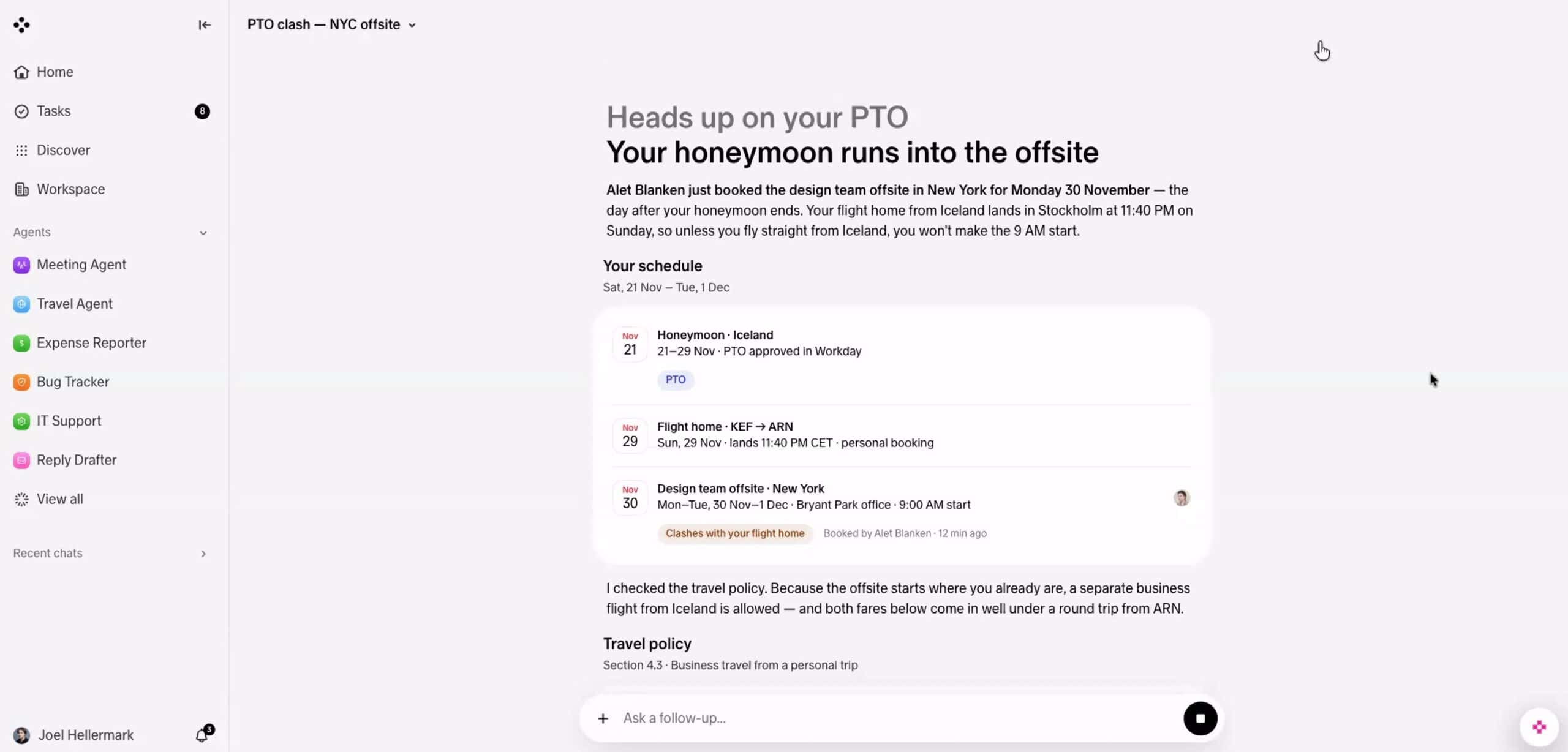
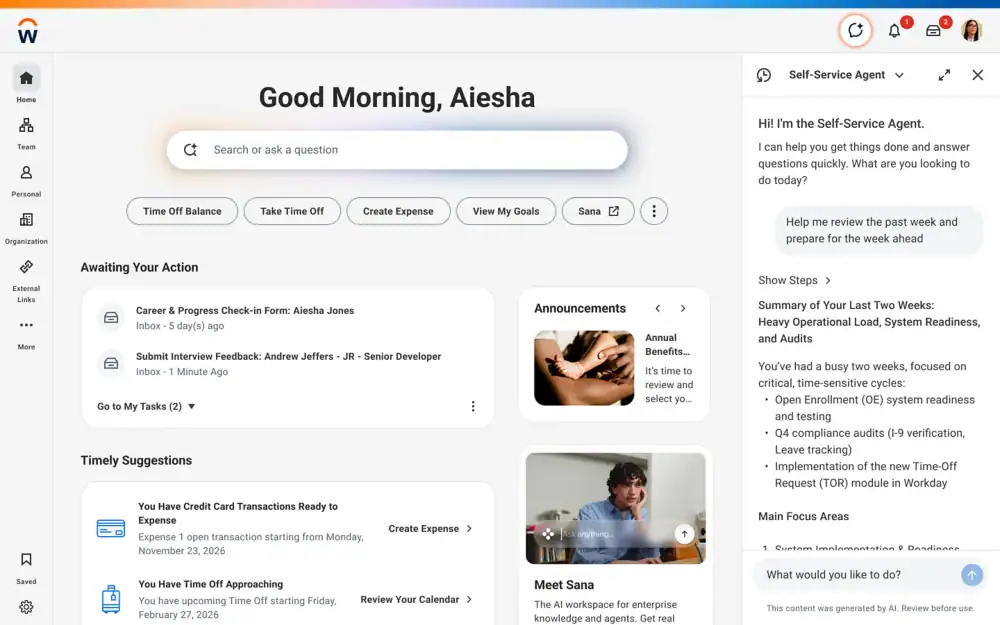
Workday’s integration of Sana has fundamentally redefined its user experience, offering an intuitive "what do you want to do today?" interface. Sana utilizes Jev (by Typesafe.ai), a high-speed technology that bypasses traditional LLM processing, delivering near-instantaneous responses with exceptional speed and cost-efficiency.
Sana Concierge and Sana Coach provide employees with interactive tools for managing daily tasks such as booking time off, filing expense reports, conducting check-ins, performing performance reviews, and developing career plans. The integration of Galileo, a product from the author’s company, is planned for later this year, further enhancing these capabilities.
The visual design of Sana is highly appealing, exemplified by the Workday Concierge interface. The Workday Decision Intelligence Agent also features a robust "Work Intelligence" module, and a new Developer Agent offers functionality comparable to Microsoft Copilot, catering to professional developers.
Workday’s agent management framework, comprising the Agent System of Record, Agent Gateway, and Agent Identity platform from C1.ai, ensures the lawful and secure deployment of custom Sana agents. The introduction of "Autopilots" enables agents to operate in an "ambient" and always-on mode, functioning as monitoring agents.
Sana Core is now a built-in feature of Workday, with Sana Enterprise offering integrations with numerous third-party systems, including Microsoft, Salesforce, and Google. This positions Workday as the primary employee agent platform for work. Furthermore, Workday has integrated Claude, allowing its use as a lawful front-end agent, with anticipated integration for Microsoft Copilot.
Sana Learning, a leading AI-native learning platform, is being merged into Workday Learning. This integration aims to dynamically generate learning experiences from any content, offering a powerful new approach to employee development.
SAP Joule Work: Orchestrating Enterprise Processes
For SAP customers grappling with numerous interfaces and commands across a complex system, Joule Work offers a unified AI interface. This extensible and trainable AI agent and orchestration platform leverages the SAP Knowledge Graph to facilitate seamless querying, transactions, and information retrieval.
Joule Work’s interface supports conversational interactions and user workspaces, with expanding capabilities for third-party application integration. It is an application platform in its own right, capable of executing workflows. Joule Studio provides a development environment for building both simple and complex applications, empowering users with "intent-based development" and access to the vast SAP application suite.
SAP is also developing a tool similar to Workday’s Work Intelligence Agent, utilizing technology from Techwolf. This task-analysis capability is gaining traction as a new method for workforce planning, potentially enabling more efficient application of AI to tasks and scaling operations.
Agent Management, Safety, and Identity: Governing the AI Workforce
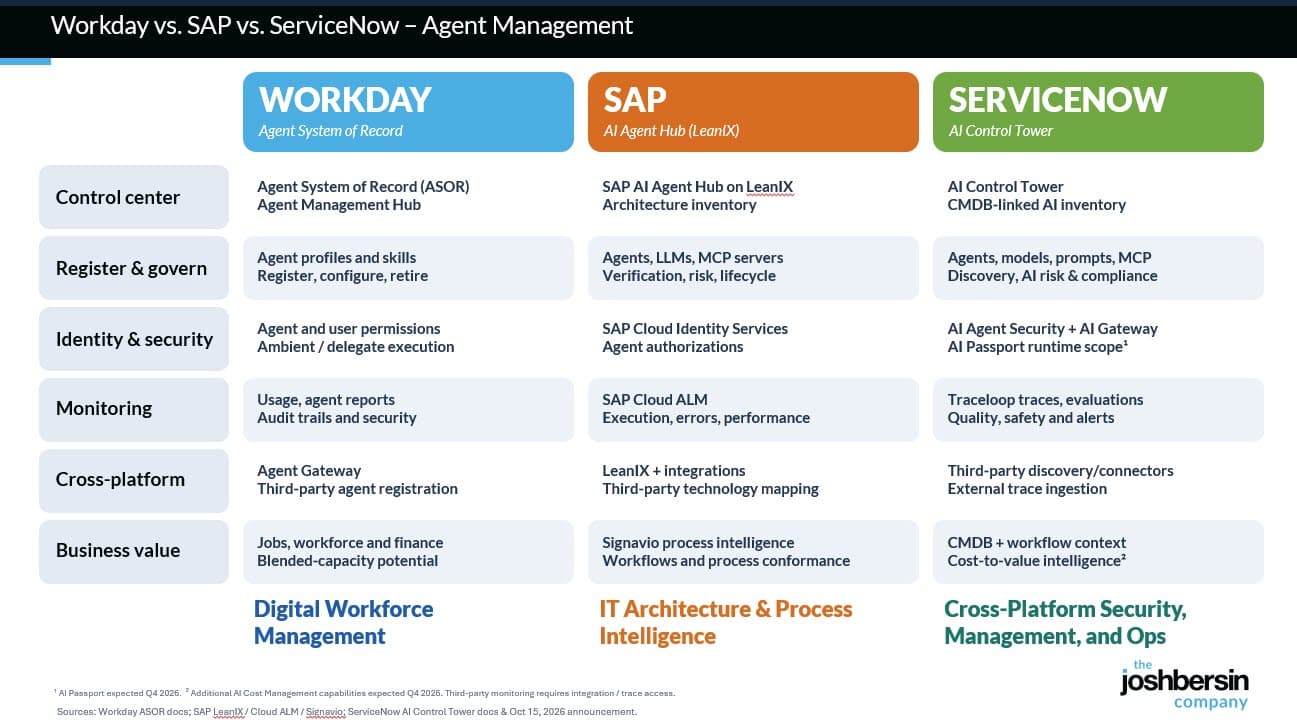
As organizations increasingly deploy AI agents, robust management, governance, and monitoring tools become critical. Both Workday and SAP are developing comprehensive enterprise platforms to address these needs, ensuring visibility into agent existence, ownership, authorization, behavior, cost, and business impact.
Workday’s Workforce-Centric Approach
Workday views agent management as an extension of workforce management, treating AI agents as "intelligent actors" within the organization. Its core product, the Agent System of Record (ASOR), is supported by the Agent Management Hub and Agent Gateway, complemented by Agent Identity management from C1.ai.
Workday’s model allows companies to register agents, define capabilities, configure access, monitor activity, and manage their lifecycle. Agents possess profiles, skills, and security permissions. The architecture supports both internal and external agents, provided they integrate with the Agent Gateway. The Agent Management Hub acts as an administrative control center, providing insights into agent configuration, security, usage, and lifecycle status. Workday’s security model distinguishes between agents acting independently ("ambient mode") and those acting on behalf of employees ("delegate mode"), ensuring agents operate within defined permission sets.
For instance, a recruiting agent handling candidate screening and interview scheduling can be evaluated alongside recruiter workloads, capacity, and hiring costs, laying the groundwork for managing a blended human-AI workforce.
SAP’s Enterprise Architecture Perspective
SAP approaches agent management from an enterprise architecture and business process management perspective. Its AI Agent Hub, built on the LeanIX enterprise architecture management platform, is designed to manage agents within the context of business systems and processes.
SAP’s model treats AI agents as enterprise technology and business process assets. Each agent can be linked to an owner, application, business capability, process, risk category, and governance status. This inventory includes AI agents, large language models, and MCP servers, acknowledging that agent behavior is influenced by the models and data sources they access.
An agent resolving procurement exceptions, for example, can have its technology dependencies identified via LeanIX, execution behavior analyzed in Cloud ALM, process impact assessed through Signavio, and business impact evaluated. This holistic approach ensures that agents are managed not just as individual tools but as integrated components of the enterprise’s operational fabric.
Agent Monitoring and Safety: Ensuring Responsible AI Deployment
Monitoring AI agents is crucial to address concerns about rogue or suboptimal performance. Both Workday and SAP are developing tools to address three key areas of agent monitoring:
- Technical Monitoring: This involves tracking agent uptime, invocation frequency, processing time, failure rates, and authorization of actions. Workday utilizes ASOR, audit capabilities, and Agent Gateway, while SAP employs its AI Agent Hub and Cloud ALM.
- Process Monitoring: This focuses on whether agents perform business activities correctly, adhere to approved procedures, and avoid creating inefficiencies or exceptions. For example, an agent might complete a transaction but bypass essential approval steps.
- Workforce and Business-Performance Monitoring: This assesses the agent’s contribution to employee productivity, organizational capacity, financial results, and customer outcomes. Workday’s extensive data on employees, jobs, and financials positions it to analyze agents as productive resources alongside human workers. SAP can similarly connect agent performance to business process improvements and leverage SuccessFactors for organizational context.
While neither vendor has yet delivered a complete system for optimizing the productivity of a blended human-AI workforce across an entire enterprise, this capability is anticipated to be a critical development in the near future.
Conclusion: HCM is Hot Again – A New Era of Business Re-engineering
The resurgence of the HCM market is fundamentally driven by AI. These platforms are evolving from systems of record to powerful engines for business re-engineering and growth. Agent-ready, user-friendly, and easily customizable platforms are poised to reshape the market.
Imagine an HCM system that identifies underperforming operations, assesses team skills against industry benchmarks, designs development or organizational changes, and then actively creates an agent to inform managers and upskill employees. This same agent could advise on hiring strategies, support long-term workforce planning, and identify process bottlenecks for elimination. While these advanced services will likely involve token costs, the potential upside in revenue generation and growth is immense, with all the necessary core data already residing within the HCM platform. This represents a significant new business opportunity exceeding $10 billion. The HCM market has indeed been reinvented, and it is hotter than ever.