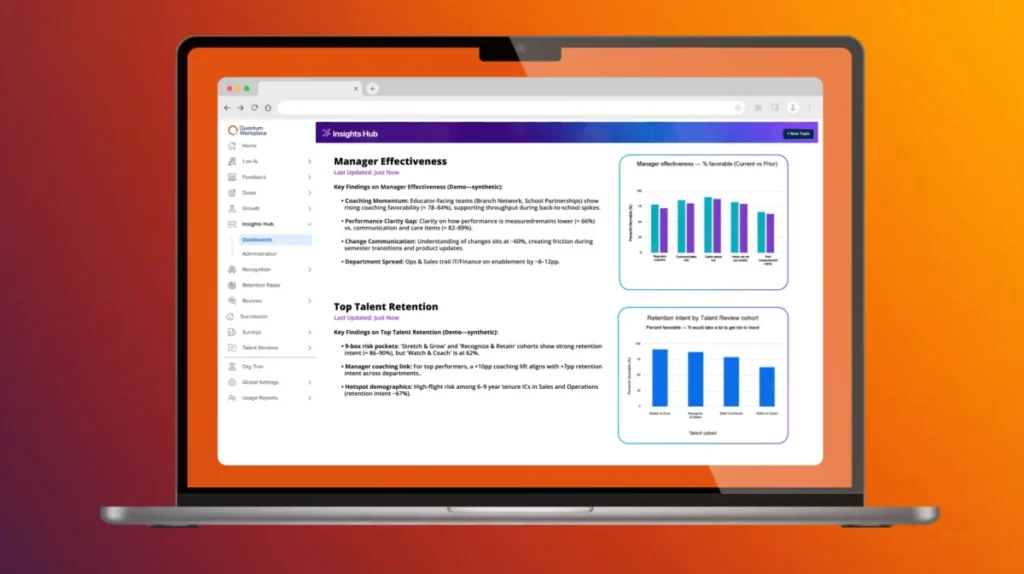
The modern human resources landscape is awash in data. From employee engagement surveys and performance reviews to development plans and recognition programs, organizations are collecting more information about their workforce than ever before. However, the sheer volume of this data often presents a challenge rather than a solution. Many HR teams find themselves struggling to translate this raw data into meaningful understanding and, crucially, actionable strategies. This is where the distinction between "people analytics" and "people insights" becomes paramount, and where new technological solutions like Quantum Workplace’s Insights Hub are emerging to fill a critical void.
At its core, people analytics is the practice of collecting and analyzing workforce data to describe what is happening. This can include identifying trends in employee turnover, tracking engagement scores, or monitoring performance metrics. It provides a descriptive overview, answering the fundamental question: "What happened?" For instance, an HR department might observe a 5% increase in voluntary turnover in the last quarter, a statistic derived from people analytics. This data point, while informative, often leaves leaders with the next, more complex questions: "Why did this happen?" and "What should we do about it?"
This is precisely the gap that Quantum Workplace’s Insights Hub aims to bridge. The platform positions itself as an AI-powered solution designed to move beyond mere data description to deliver "people insights." These insights are interpreted findings that connect signals across an organization’s data, explain their significance, and recommend specific next steps. In essence, Insights Hub acts as a virtual analyst and coach, providing clarity and guidance at a speed that traditional data analysis often cannot match.
"Most HR teams already have plenty of data," states a representative from Quantum Workplace. "What they need is clarity, and they need it fast." This sentiment underscores the growing frustration among HR professionals who spend considerable time compiling reports, building presentations, and attempting to decipher the underlying causes of workforce trends, only to be met with further questions from leadership. The process can be laborious, often involving pulling separate reports on turnover, engagement, and performance, then attempting to synthesize them into a coherent narrative. This cycle can take days, leaving leadership waiting for answers and potentially delaying critical decisions.
The Data Deluge: A Familiar Challenge for HR Leaders
The scenario described is a common one across industries. A Monday might be spent analyzing turnover reports, Tuesday dedicated to an engagement dashboard, and by Friday, an HR professional is building a slide deck to explain the potential implications of the numbers. This manual effort is not only time-consuming but also resource-intensive, diverting valuable HR personnel away from more strategic initiatives.
Industry analysts have long observed this phenomenon. Forrester, a prominent research and advisory firm, has noted that many organizations become trapped in a cycle of data collection followed by limited action. The data itself is rarely the problem; rather, it is the significant time lag between data collection, analysis, and the formulation of effective decisions that hinders progress. This delay can have tangible consequences, impacting employee morale, retention, and overall business performance.
Where Traditional Analytics Falls Short
While traditional people analytics offers essential visibility into workforce trends, benchmarks, and a shared understanding of quantitative data, its limitations become apparent when it comes to driving strategic action. These tools typically stop at description, presenting dashboards and reports that require interpretation by an analyst or HR partner. The responsibility then falls on these individuals to connect the dots between disparate reports, contextualize the findings within the organization’s unique circumstances, and ultimately decide on a course of action.
People insights, as delivered by platforms like Insights Hub, pick up where traditional analytics leaves off. The key differences can be summarized as follows:
- Core Question: Analytics asks "What happened?" Insights ask "Why did it happen, and what should we do?"
- Typical Output: Analytics yields dashboards and reports. Insights provide explained findings with recommended actions.
- Interpretation: Analytics requires an analyst or HR partner. Insights are explained by the system in plain language.
- Data View: Analytics often focuses on one metric or report at a time. Insights connect signals across various data sources, such as engagement, performance, development, and recognition (with recognition data integration coming soon).
- Organizational Relevance: Analytics typically offers standard metrics. Insights are shaped around the organization’s specific point of view and priorities, such as how manager effectiveness is defined.
- Missing Data: Analytics shows a blank spot in a report. Insights clearly note what is missing and suggest how to fill the gap.
- Next Step: Analytics leaves the next step to the reader. Insights suggest actionable steps that can be tracked.
- Best For: Analytics is best for measuring and monitoring. Insights are best for deciding and acting.
This shift from descriptive data to prescriptive guidance is crucial for organizations aiming to foster a more agile and responsive approach to talent management.
Insights Hub: Making the Transition to People Insights a Reality
Quantum Workplace’s Insights Hub is engineered to facilitate this transition by functioning much like a skilled human analyst. It begins by focusing on the organization’s most critical priorities.
1. Centering on User-Defined Topics:
Organizations can select pre-defined topics such as "Manager Effectiveness" or "Top Talent Retention," or they can create custom topics tailored to their unique strategic objectives. A "topic" serves as a framework for analysis, guiding the AI agent, named "Cue," on which questions are most relevant to the organization.
2. Adapting to Organizational Perspectives:
The setup process involves a brief, guided conversation with Cue. Initially, it draws upon Quantum Workplace’s research-backed perspectives on the chosen topic. Crucially, it then allows the organization to inject its own specific viewpoint and priorities. This customization ensures that the insights generated are not generic but are deeply relevant to the company’s context. Setting up a topic typically takes between five to ten minutes.
3. Comprehensive Data Integration:
Once a topic is established, Cue begins to investigate patterns by examining data across the organization’s Quantum Workplace platforms (including engagement and performance data) and its Human Resources Information System (HRIS). The more data sources that are connected, the more robust and nuanced the generated insights become. The upcoming integration of recognition data will further enhance this holistic view.
4. Clear and Explanatory Findings:
Each insight presented by Insights Hub clearly articulates what is being observed, why it is significant, and how to interpret the supporting data, often with citations to relevant research. Users can engage in private, follow-up conversations with Cue to explore insights further, asking clarifying questions without the need for a separate analytical resource.
5. Transparency on Data Gaps:
A key feature of Insights Hub is its ability to identify and articulate when data is insufficient to draw a definitive conclusion. Instead of guessing or presenting incomplete information, Cue will highlight data gaps and suggest methods for closing them. For example, it might indicate that exit survey feedback is incomplete, prompting the organization to address this data collection issue. These identified gaps can then serve as a roadmap for future data investment.
6. Action-Oriented Recommendations:
Insights Hub is designed with the understanding that data is only valuable if it leads to action. Therefore, each insight is accompanied by recommended actions tied to the specific topic. Users can add their own actions, track their progress, and mark them as complete, fostering accountability and demonstrating the impact of insights on organizational improvements.
The Tangible Benefits of People Insights for Leaders
The adoption of people insights offers a multitude of advantages for HR leaders and their organizations, enabling them to achieve clearer answers more rapidly.
- Accelerated Decision-Making: Generating comprehensive talent reports manually can take days. Insights Hub automates much of this research, allowing HR professionals to spend less time compiling data and more time making informed decisions. Cue identifies key questions, investigates data, and surfaces the most critical findings, streamlining the entire process.
- Holistic Data Interpretation: Relying on single metrics can be misleading. Insights Hub connects signals from various data streams, such as engagement, performance, and development, providing a more complete and contextualized understanding of workforce dynamics. This interconnected view helps identify the root causes behind trends, such as why certain employees might be leaving.
- Elevated HR Strategic Value: When HR teams are freed from the burden of constant data compilation, they can transition from being data providers to strategic advisors. With analysis handled by Insights Hub, HR professionals can engage leadership in discussions about talent strategy, offering informed perspectives rather than just spreadsheets.
- Empowered Managerial Guidance: Managers are often time-poor and may not have the capacity to delve into complex dashboards. Insights are presented in a coaching-style narrative that explains workforce dynamics and their implications clearly. This approach fosters a sense of support and ownership among managers, positioning insights as tools for improvement rather than critiques.
- Actionable Insights with Trackable Outcomes: The inclusion of recommended actions with each insight ensures that data translates into tangible steps. The ability to add, track, and complete these actions provides a clear view of organizational commitments and their execution over time, reinforcing the practical value of insights.
- Identification of Data Blind Spots: Organizations invariably have areas where their data is incomplete. Insights Hub proactively identifies these blind spots, offering suggestions for improvement. For instance, if exit survey data is lacking, Cue will highlight this gap and propose solutions, guiding where future data collection efforts should be focused. This systematic approach reinforces the interconnectedness of the four pillars of a healthy workplace: engagement, performance, development, and recognition, allowing leaders to act on the complete picture.
Assessing Readiness for People Insights
Organizations considering the shift to people insights can evaluate their preparedness with a simple checklist. If a significant portion of these statements resonate, a move towards people insights is likely beneficial:
- Do you find yourself spending more time collecting and reporting on people data than on strategic planning?
- Do leaders frequently ask "why" after you present data, requiring further analysis?
- Are you looking for ways to improve employee engagement, performance, or retention, but struggling to pinpoint the most effective actions?
- Do you want HR to be seen as a more strategic partner within the organization?
- Are you seeking to provide managers with more actionable guidance on talent-related issues?
- Do you suspect there are blind spots in your current workforce data collection or analysis?
If two or more of these questions are answered affirmatively, exploring people insights solutions like Quantum Workplace Insights Hub is a logical next step.
Making the Transition from Data to Decisions
Organizations today are already investing significant effort into collecting valuable people data. Quantum Workplace’s Insights Hub aims to empower these organizations to transform that data into clear, confident, and actionable strategies. By moving beyond descriptive analytics to deliver interpretative insights, businesses can foster a more proactive, informed, and ultimately, more effective approach to managing their most valuable asset: their people. The platform is poised to redefine how organizations understand and leverage their workforce data, driving tangible improvements in employee experience and business outcomes.
Frequently Asked Questions
What is the fundamental difference between people analytics and people insights?
People analytics focuses on describing what is happening within workforce data, identifying trends and metrics. People insights, on the other hand, interpret that data, explain its significance, and provide concrete recommendations for action.
Could you describe Quantum Workplace Insights Hub in more detail?
Insights Hub is an advanced, AI-powered platform designed to deliver people insights. It functions as both a virtual analyst and a leadership coach, connecting disparate people data sources to generate explained findings and actionable strategies.
What types of data does Insights Hub utilize?
The platform draws upon data from Quantum Workplace’s suite of solutions, including employee engagement and performance management tools. It also integrates with HRIS data. The richness and accuracy of insights increase with the number of connected data sources. Recognition data is slated for future integration as the platform continues its beta development.
How does Insights Hub handle incomplete or missing data?
Insights Hub is designed to work with the data available. When specific data points are missing, the system will clearly indicate these gaps and offer guidance on how to address them, transforming potential blind spots into opportunities for improvement.
Is specialized analytical expertise required to use Insights Hub?
No, Insights Hub is designed for accessibility. Users define their organizational priorities, and the AI agent, Cue, prioritizes insights accordingly. The setup process for a topic is straightforward, typically requiring only five to ten minutes.