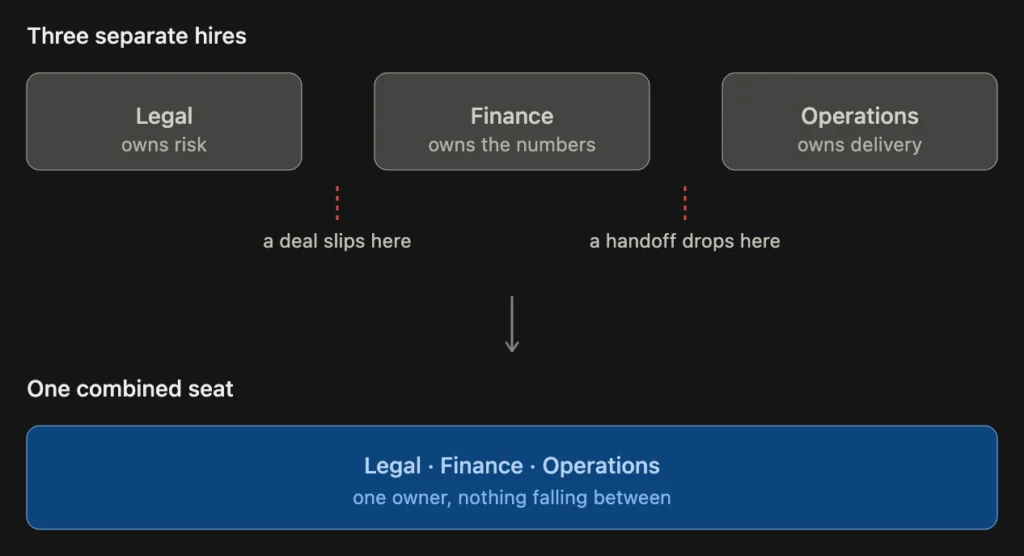
When a company embarks on significant growth, such as opening new regional markets or launching innovative products, it simultaneously confronts a complex interplay of increased legal exposure, shifting financial margins, and the intricate demands of operational execution. Historically, these critical functions—legal, finance, and operations—have been managed by distinct departments, each with its own leadership and specialized teams. However, the rapid pace of modern business, coupled with an increasingly intricate regulatory environment, is highlighting the inherent vulnerabilities in this siloed approach. The gaps between these traditionally separate hires often become the precise points where critical deals falter, regulatory filings are missed, or strategic initiatives lose momentum.
This emerging challenge has given rise to a new executive archetype: the integrated leader. This individual is tasked with owning not just one, but often all three domains—risk, revenue, and day-to-day operations. The primary objective of consolidating these responsibilities into a single executive seat is to prevent critical functions from drifting apart, ensuring cohesive oversight and strategic alignment across areas that are, in reality, deeply interconnected.
The Genesis of a Converged Role
The traditional corporate structure, characterized by distinct legal, finance, and operations departments, was largely a product of a slower-paced business environment and less complex regulatory frameworks. Legal teams focused on compliance, contracts, and risk mitigation; finance departments managed budgets, reporting, and capital; and operations ensured the smooth functioning of day-to-day processes. This division fostered deep specialization but often at the cost of integrated strategic thinking.
The impetus for convergence stems from several contemporary business imperatives:
- Rapid Market Entry and Product Launches: Companies seeking to scale quickly cannot afford the delays or misalignments that can occur when legal, financial, and operational teams are not synchronized from the outset.
- Digital Transformation: The shift to digital platforms and services blurs the lines between data privacy (legal), financial transactions (finance), and system uptime (operations), demanding a unified approach to governance and execution.
- Global Regulatory Complexity: Operating across international borders or even within highly regulated domestic markets (like fintech or healthtech) means navigating a labyrinth of compliance requirements that impact everything from product design to financial reporting and customer service.
- Efficiency and Agility: Consolidating oversight can streamline decision-making, reduce bureaucratic hurdles, and foster a more agile response to market changes or unforeseen challenges. A single point of accountability for risk and revenue drivers can significantly enhance organizational efficiency.
The World Economic Forum’s 2023 Future of Jobs Report provides compelling data supporting this trend. The report identifies governance, risk, and compliance skills as among the fastest-rising competencies globally, particularly in heavily regulated sectors. This rise is occurring in parallel with increasing demand for data and operations leadership, underscoring a broader shift towards integrated functional expertise. The report projects that by 2027, skills in analytical thinking, creative thinking, AI and big data, and — crucially — leadership and social influence, will be paramount. The convergence of legal, finance, and operations leadership directly addresses the need for executives who can bridge these technical and strategic divides.
The Multifaceted Mandate: Legal, Finance, and Operations
No two companies construct this integrated role identically, but a consistent thread runs through them: the demand for a broad and deep range of capabilities. This executive must be equally adept at presenting to a board of directors, navigating a rigorous audit, and collaborating effectively with frontline teams.
-
Legal Acumen: This encompasses the entire contract lifecycle, from drafting templates and negotiating commercial terms to managing vendor agreements and overseeing outside counsel engagement. A critical component is the ownership of privacy and data governance policies, ensuring adherence to evolving regulations like GDPR, CCPA, and HIPAA. More than just compliance, this role requires an intuitive "regulatory awareness"—the ability to proactively identify and address potential legal pitfalls before they escalate into significant corporate crises. For instance, in fintech, understanding intricate licensing requirements and anti-money laundering (AML) protocols is paramount.
-
Financial Stewardship: The financial responsibilities are extensive and fundamental. They include comprehensive budget ownership, developing accurate financial forecasts, sophisticated cost and margin modeling, and establishing robust internal controls. For startups, this might involve "SOX-lite" principles, while for public companies, it means managing the full apparatus of Sarbanes-Oxley compliance. Jeffrey Zhou, CEO and Founder of Fig Loans, a financial technology company specializing in installment loans, articulates this synergy: “In lending, legal, finance, and operations are the same decision wearing three hats. A single underwriting call is a compliance question and a margin question and an ops question, all at once. I want the person who has felt a compliance call reshape the unit economics in one afternoon and made it anyway.” This perspective highlights the inextricable link between regulatory compliance and financial viability.
-
Operational Excellence: This pillar focuses on ensuring that processes are robust and scalable, capable of withstanding real-world demands. It includes vendor management, negotiating service level agreements (SLAs), and implementing programs that foster seamless cross-functional collaboration. Beyond general operational principles, specific industries layer on unique demands. Fintech requires deep familiarity with Know Your Customer (KYC) and AML procedures, while healthcare mandates strict adherence to HIPAA regulations. The more regulated the operating environment, the more explicitly these industry-specific requirements must be detailed in the job description.
Challenges in Recruitment and the Art of Attraction
Finding the "handful of people who can actually do it" is the primary challenge. Most applicants for such a broad role will lack the requisite depth in all areas, and a vague job description will only prolong the screening process. The ideal candidates are those who meticulously research the role, seeking clarity on their decision-making authority and how their performance will be measured.
Crafting an effective job posting for this complex role is therefore paramount. It transcends mere listing of duties; it is a strategic communication tool designed to attract a highly specialized talent pool.
-
Precision in The job title, while seemingly superficial, is the first point of contact and crucial for searchability. Titles should be straightforward and descriptive, aligning with terms candidates would actually use in a search engine. "VP of Legal, Finance, and Operations" or "Head of Compliance and Operations" are effective. Eschewing overly creative or colloquial titles like "Ops Ninja" prevents the right candidates from overlooking the opportunity.
-
The "Ten-Second Summary": Senior professionals allocate minimal time to an initial scan. The summary must be concise, impactful, and informative, clearly articulating what the role owns, its strategic importance, its reporting structure, and—critically—the functional split, often expressed as percentages (e.g., "40% Legal, 30% Finance, 30% Operations"). A poorly defined summary will inevitably yield a deluge of unqualified applications.
-
Action-Oriented Responsibilities: Moving beyond generic verbs like "oversee," "support," or "help drive" is essential. Each responsibility listed should pinpoint a concrete decision, a tangible deliverable, or an established company schedule. Examples include "manage month-end close processes," "prepare quarterly board presentations," or "develop and implement a tiered vendor policy within 90 days." This approach clarifies accountability and provides a realistic preview of the role’s demands. For instance, detailing legal responsibilities might include "managing the contract lifecycle end-to-end, including template development, redlining, and playbook creation," or "overseeing compliance training for new regulatory changes." The increasing reliance on contract lifecycle management (CLM) software means the role will often involve leveraging such platforms for efficiency and auditability.
-
Essential Skills, Tools, and Temperament:
- Credentials: Clearly state academic requirements (J.D., CPA, MBA) and any essential professional certifications relevant to the industry (e.g., CAMS for AML, CIPP for privacy).
- Technical Tools: List specific software and platforms candidates are expected to be proficient in, such as CLM systems (e.g., ContractSafe), ERP solutions (e.g., SAP, Oracle), financial modeling software, and regulatory compliance platforms. Gavin Yi, CEO and Founder of Yijin Solution, a precision manufacturing company, emphasizes the practical application of tools and processes: “A process is only as good as the slowest person who has to follow it. The leaders I keep build something a new hire can run on day three, not something elegant only they understand. When procurement, quality, and compliance answer to one person, the handoffs stop dropping things.” This underscores the need for leaders who can implement accessible and robust systems.
- Soft Skills: These are often the most difficult to articulate but are crucial for success in such a demanding, cross-functional role. Key attributes include structured problem-solving, exceptional written and verbal communication (especially under pressure), the ability to simplify complex information, strategic thinking, and strong leadership capabilities that foster cross-functional collaboration.
Transparency as a Recruitment Tool
Beyond the specifics of the role, candidates—especially senior ones—are evaluating the company itself. A brief, informative paragraph outlining the business model, target audience, revenue stage, and growth trajectory is vital. The regulatory landscape of the company is particularly important for this type of role, as it directly shapes the executive’s day-to-day responsibilities.
Transparency extends to practical considerations. Clearly stating the work model (remote, hybrid, in-office) and, crucially, the salary range, is becoming standard practice and often a legal requirement in many jurisdictions. Nick Wiese, Regional Vice President at Alpha Heating & Air, a multi-branch home-services company, highlights the importance of honesty: “The posting that works tells the truth about the day. In the trades, we learned the hard way that a description hiding the on-call weekends just buys you a hire who quits in month two. A broad corporate role is the same. Put the hard parts on the page, and the person who shows up knows what they signed for.” This applies equally to complex corporate roles where high stakes and demanding environments are inherent.
Prabhath Sirisena, Co-founder & CPO of Hiveage, an invoicing software provider, points out the immediate impact of salary transparency: “Senior people read a posting backwards from the bottom half the time. No range means either the company hasn’t figured out what the role is worth, or they have and don’t want to say it out loud. Either read costs you the candidates who have other offers already in hand and don’t need to find out the hard way.” In a competitive talent market, omitting this critical information is a significant disadvantage.
Final Review: Eliminating Bias and Obstacles
Before a job posting goes live, a thorough final review is essential. This critical step involves scrutinizing the language for unconscious biases, such as gendered terms, and ensuring that the listed "must-have" qualifications are truly non-negotiable and not simply a wish list that creates an unnecessarily high barrier to entry. Non-searchable terms or industry jargon that isn’t universally understood should be rephrased. Leveraging specialized tools, like Ongig as mentioned in the original context, can objectively analyze the posting for these very issues, helping companies publish a clear, inclusive, and effective job description that accurately reflects the intended role.
The integrated legal, finance, and operations executive is no longer a niche requirement but a strategic necessity for companies navigating the complexities of modern growth, digital transformation, and stringent regulatory environments. Attracting and retaining these rare individuals hinges on clarity, transparency, and a deep understanding of the unique and multifaceted value they bring to an organization.