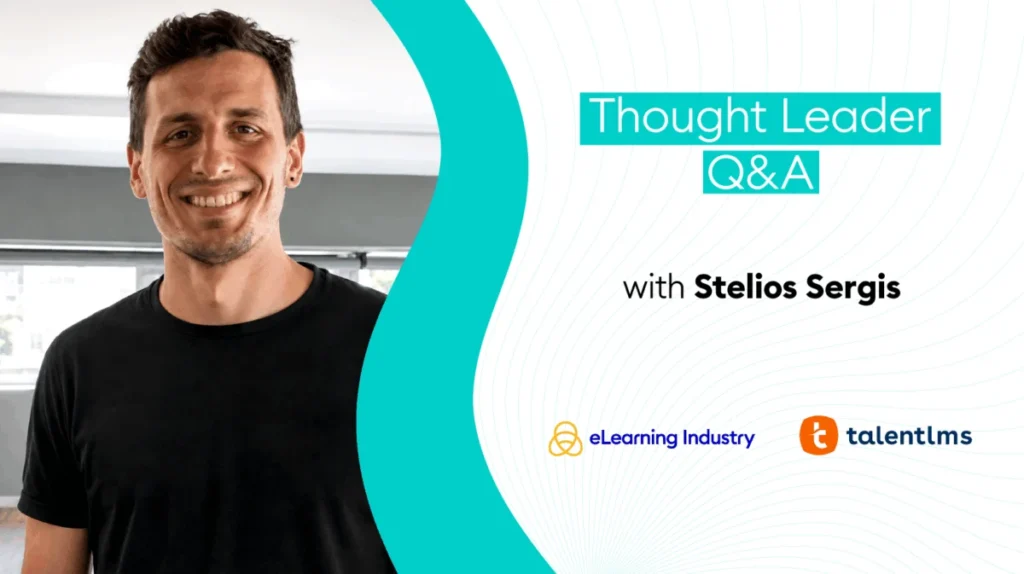
The landscape of corporate education is undergoing a fundamental transformation as organizations grapple with the widening chasm between traditional training methodologies and the accelerated pace of technological change. In an era where the shelf-life of professional skills is shrinking—particularly in the technology sector—Learning and Development (L&D) leaders are advocating for a shift away from isolated, formal instruction toward a model that integrates growth into the "flow of work." Dr. Stelios Sergis, a prominent figure in the talent development space with over 15 years of experience in the tech sector, emphasizes that the modern business environment requires a dual approach: building essential foundations through formal programs while simultaneously capturing and scaling the organic knowledge generated by employees during their daily tasks.
The current crisis in corporate capability is underscored by the concept of "learning debt," a term popularized by recent industry research. According to the TalentLMS 2026 Learning Debt report, approximately 41% of employees feel their professional roles have evolved at a speed that outpaces their company’s ability to provide relevant training. This disconnect suggests that structured, periodic training sessions are no longer sufficient to maintain a competitive workforce. The challenge for L&D teams is not merely to provide more content, but to architect systems that allow for continuous, real-world application and peer-to-peer knowledge transfer.
The Structural Failure of Traditional Training Models
The primary limitation of traditional structured training lies in the "forgetting curve," a psychological phenomenon first identified by Hermann Ebbinghaus. The curve illustrates how quickly information is lost when there is no attempt to retain it or apply it in a practical context. In a corporate setting, this means that even the most high-quality training modules often fail to result in long-term behavioral change because employees lack the immediate opportunity to apply new concepts to their specific work challenges.
Dr. Sergis, who leads Talent Growth at Epignosis, argues that learning is not a one-time event but a process of repeated practice, feedback, and reflection. "One of the biggest misconceptions about learning is that once we’ve delivered training, learning has happened," Sergis notes. He suggests that while formal training creates the necessary cognitive foundation, true mastery occurs when employees navigate "stretch assignments" or high-stakes tasks that force them to synthesize information under pressure.
This perspective aligns with the 70-20-10 model of development, which posits that individuals obtain 70% of their knowledge from job-related experiences, 20% from interactions with others, and only 10% from formal educational events. However, the modern L&D strategy must go beyond acknowledging this ratio; it must actively design the "70%" and "20%" portions to be as intentional as the "10%."
Data Analysis: The Hidden Cost of Learning Debt
The implications of failing to bridge the gap between training and work are quantifiable. The TalentLMS research indicates that learning debt does not just impact individual performance; it creates systemic organizational risk. When roles evolve faster than training, employees often develop "workarounds"—unconventional or undocumented methods to solve problems. While these innovations are valuable, they often remain siloed within individual minds.
Key statistics from the 2026 Learning Debt report highlight a growing transparency gap within organizations:
- 47% of employees admit to staying quiet when they struggle with a specific task, fearing that admitting a lack of knowledge might be perceived as incompetence.
- 28% of employees report that their direct managers are unaware of how often they struggle with the core skills required for their roles.
- 41% of the workforce feels the speed of role evolution is unmanageable under current training frameworks.
These figures suggest that nearly half of the workforce is operating in a state of "silent struggle," which directly leads to inefficiencies, increased error rates, and employee burnout. For L&D departments, the objective is to move from being a "content provider" to an "enabler of transparency," creating environments where identifying a skill gap is viewed as a starting point for growth rather than a performance failure.
The Managerial Pivot: From Supervisor to Co-Pilot
A critical component of integrating learning into everyday work is the redefinition of the manager’s role. Historically, managers were responsible for oversight and output; however, in the new L&D paradigm, they are being repositioned as "co-pilots" in an employee’s developmental journey. This shift requires managers to possess a deep understanding of both business roadmaps and individual career aspirations.
The "Personal Trainer" analogy, used by Dr. Sergis, clarifies this division of ownership. Just as a personal trainer provides the roadmap and motivation while the athlete performs the physical exertion, a manager provides the business context and the "gym" (the work assignments), while the employee owns the effort and the consistency of practice.
In daily practice, this involves:
- Strategic Task Allocation: Instead of assigning tasks based solely on who can do them fastest, managers intentionally assign "stretch tasks" to employees who need to develop specific competencies.
- Continuous Feedback Loops: Moving away from annual performance reviews toward real-time, project-based feedback.
- Retrospective Learning: Utilizing project debriefs not just to discuss what went wrong, but to identify what new knowledge was created that could benefit the wider team.
The Role of Artificial Intelligence in Scaling Growth
Artificial Intelligence (AI) is emerging as the primary tool for solving the "personalization at scale" problem in L&D. While L&D teams have long sought to provide personalized learning paths, the manual effort required to map skills for thousands of employees was previously prohibitive.
Dr. Sergis identifies three specific areas where AI adds genuine value:
- Strengths Discovery: AI tools can analyze work patterns, communication styles, and deliverables to help employees identify "invisible strengths"—natural talents they may not have formally recognized.
- Contextual Practice: AI-driven assistants can act as low-stakes environments for practice. For example, an employee can use a generative AI tool to simulate a difficult stakeholder negotiation or to role-play a leadership scenario before executing it in real life.
- Knowledge Synthesis: One of the most significant challenges in modern business is the loss of "tribal knowledge." AI can scan project documentation, internal communications, and Slack threads to synthesize collective expertise, making the organization’s "shared brain" accessible to new or struggling employees.
However, the integration of AI also demands a focus on human validation. While AI can identify patterns, the nuance of mentoring and the emotional intelligence required for coaching remain uniquely human functions. The goal is to use AI to handle the "data-heavy" aspects of skill identification, freeing up L&D professionals and managers to focus on high-impact human interaction.
Redefining Success Metrics: What to Count and What to Stop
As the philosophy of L&D shifts, so too must the metrics used to evaluate success. For decades, the industry has relied on "vanity metrics"—course completion rates, hours of training delivered, and post-training satisfaction scores (often called "smile sheets"). Industry experts now argue that these metrics provide no evidence of actual capability growth.
To truly measure the impact of learning integrated into work, L&D teams are being encouraged to track:
- Sustained Behavioral Change: Observations of whether an employee is applying new methods consistently three to six months after the initial training.
- Increased Independence: A measurable reduction in the need for supervision or technical support on specific tasks.
- Knowledge Velocity: The speed at which a new solution discovered by one employee is adopted by the rest of the team or department.
- Psychological Safety Levels: Measuring how comfortable employees feel admitting to a skill gap, which serves as a leading indicator for future learning debt.
Conversely, organizations are being advised to "stop counting" metrics that focus purely on consumption. High course completion rates may simply indicate that employees are good at following instructions, rather than being indicative of their ability to innovate or solve complex business problems.
Broader Implications for the Global Economy
The shift toward everyday learning has implications that extend beyond individual company performance. As the global economy transitions toward a skills-based hiring and promotion model, the ability of an organization to foster "learning agility" becomes a key differentiator in the war for talent.
Economists suggest that organizations that successfully manage learning debt will see higher retention rates and lower recruitment costs. By providing employees with the tools to grow through their existing work, companies can "build" talent internally rather than constantly competing for a limited pool of external experts. Furthermore, this model promotes inclusion; by making learning part of the standard workday, organizations ensure that employees with external commitments (such as caregivers) have the same developmental opportunities as those who can dedicate extra hours to formal study.
In conclusion, the evolution of L&D from a centralized training function to a decentralized growth enabler represents a necessary adaptation to the modern world of work. By leveraging AI for personalization, empowering managers as coaches, and focusing on the practical application of knowledge, organizations can turn the "flow of work" into their most powerful classroom. As Dr. Sergis and the findings from the 2026 Learning Debt report suggest, the future of corporate success lies not in how much employees are taught, but in how effectively they are empowered to learn from their own experiences and from each other.