U.S. organizations are increasingly turning inward to cultivate the skills required for the rapidly evolving business landscape, with a significant majority now preferring to reskill existing employees for newly created roles. This strategic shift comes even as more than a third of companies simultaneously report a need for external hires possessing "expertise in new areas," highlighting a dual approach to talent acquisition and development. Published on November 25, 2026, the latest findings underscore a dynamic tension in workforce strategy: the imperative to nurture internal talent versus the immediate need for specialized, cutting-edge skills.
The comprehensive survey, conducted earlier this year by The Harris Poll on behalf of Express Employment Professionals, gathered insights from 1,006 U.S. hiring decision-makers. It revealed that a striking 86% of these leaders now favor reskilling their current workforce for new positions, marking a notable increase from 79% just a year prior in the fall of 2025. This upward trend signals a growing recognition of the value inherent in an organization’s existing human capital, fostering adaptability and resilience in an unpredictable economic and technological environment.
Bob Funk Jr., CEO of Express Employment International, emphasized the strategic importance of this internal investment. In a statement, Funk asserted, "Reskilling is an important part of building a workforce that can adapt to changing business needs." He further elaborated on the inherent advantages, noting, "Existing employees bring valuable knowledge of a company’s operations, culture and customers, giving businesses a strong foundation for developing new capabilities. When combined with strategic hiring, investing in current employees can help businesses address evolving skill demands while maintaining operational continuity." This perspective underscores that reskilling is not merely a cost-saving measure but a foundational element of long-term organizational health and competitive advantage.
The Driving Forces Behind the Reskilling Imperative
The heightened emphasis on reskilling is not an isolated phenomenon but a direct response to several profound shifts shaping the modern economy. The relentless pace of technological advancement, particularly in areas like artificial intelligence, automation, and data analytics, is rapidly rendering traditional skill sets obsolete while simultaneously creating demand for entirely new competencies. Organizations are grappling with what the World Economic Forum consistently identifies as a global skills gap, where the skills possessed by the workforce do not align with the skills required by emerging industries and job functions.
Beyond technological disruption, demographic changes, global competition, and increased economic volatility contribute to this imperative. Companies recognize that continuously hiring externally for every new skill need is unsustainable, both financially and culturally. The cost associated with recruiting, onboarding, and integrating new hires can be substantial, often outweighing the investment in developing existing staff who already understand the company’s ethos and operational intricacies. Furthermore, internal mobility and career development opportunities are increasingly vital for employee retention and engagement, particularly among younger generations who prioritize growth and learning.
Diverse Approaches to Internal Training and Development
Organizations are deploying a variety of methods to facilitate this internal transformation. The Harris Poll data illuminated the prevalent training modalities:
- Company-Led Training Programs: Three-quarters (75%) of companies planning to invest in internal reskilling intend to use their own structured training programs. This figure, specifically for company-led training during work hours, saw an increase to 58% from 52% in the spring of 2025, indicating a preference for integrating learning directly into the daily workflow.
- On-the-Job Training: A significant 62% plan to leverage the expertise of their current staff through "on-the-job training from other employees." This peer-to-peer learning model harnesses institutional knowledge and practical experience, creating a culture of continuous improvement and mentorship.
- Third-Party Instruction: Recognizing the need for specialized knowledge, 58% of companies plan to train workers using third-party instruction. Similarly, 42% expected to enlist third-party companies for training or courses during work hours, up from 36% in the spring of 2025. This suggests a willingness to outsource highly specialized or foundational training to experts.
- Flexible Learning Options: While the majority of training is conducted during work hours, roughly a third of companies planned to hold company-led training outside work hours or to arrange third-party training or courses outside work hours, offering flexibility to both employers and employees.
- Financial and Mentorship Support: Beyond formal training, 36% of companies indicated they would cover education costs, such as degrees or certifications, demonstrating a commitment to formal academic or professional development pathways. Additionally, 35% plan to provide mentorship opportunities, recognizing the invaluable role of guided experience and career advice.
- Emerging Technologies in Training: Reflecting the very trends driving the need for reskilling, just over a quarter (25%) of companies reported plans to utilize AI-assisted training. This nascent but growing approach points to the potential for personalized, adaptive learning experiences that can scale efficiently.
These diverse strategies illustrate a pragmatic approach, combining internal expertise with external specialization and formal education with practical, on-the-job learning. The emphasis on during-work-hour training also signals an understanding that learning is now an integral part of work, not an extracurricular activity.
The Enduring Power of Soft Skills: Personality Over Technical Gaps
Perhaps one of the most compelling insights from related research conducted earlier this year by Express Employment Professionals is the finding that when attracting new employees, 86% of U.S. hiring decision-makers believe the right personality can outweigh a candidate’s skills gap. This underscores a profound shift in hiring priorities, elevating soft skills such as a "willingness to learn," adaptability, critical thinking, problem-solving, and collaboration to paramount importance.
In an environment where technical skills can become outdated quickly, an individual’s capacity to acquire new knowledge and adapt to changing circumstances is becoming the most valuable asset. This "growth mindset" is crucial for navigating technological disruptions like AI and automation. Companies are increasingly looking for individuals who are curious, resilient, open to feedback, and possess strong interpersonal skills, recognizing that these attributes are far more challenging to train than specific technical competencies. A candidate with a strong foundational attitude and a demonstrable eagerness to learn is seen as a better long-term investment, capable of evolving with the organization. This perspective not only informs external hiring but also reinforces the logic behind internal reskilling: existing employees who demonstrate this willingness to learn are ideal candidates for internal development.

Broader Implications and Strategic Advantages
The prevailing trend towards internal reskilling carries significant implications for various stakeholders:
For Businesses:
- Cost-Effectiveness: While initial investment in training can be substantial, it often pales in comparison to the cumulative costs of continuous external recruitment, including advertising, screening, interviewing, and onboarding.
- Talent Retention and Engagement: Investing in employees’ development fosters loyalty, boosts morale, and signals that the company values its workforce. This, in turn, can significantly reduce turnover rates, preserving institutional knowledge and expertise.
- Organizational Agility: A workforce continuously upskilled and reskilled is inherently more adaptable to market changes, technological shifts, and evolving customer demands. This agility is a critical competitive differentiator.
- Preservation of Institutional Knowledge: Existing employees possess invaluable insights into company culture, processes, and customer relationships. Reskilling them for new roles ensures this knowledge is retained and applied effectively within new contexts.
- Enhanced Employer Brand: Companies known for investing in their employees’ growth are more attractive to both current and prospective talent, strengthening their employer brand in a competitive labor market.
For Employees:
- Career Development and Mobility: Reskilling offers employees clear pathways for career advancement and diversification, preventing stagnation and opening doors to new opportunities within the same organization.
- Increased Job Security: By acquiring new, in-demand skills, employees enhance their value to the company, making them more resilient to layoffs or job displacement caused by automation.
- Personal Growth and Fulfillment: Learning new skills can be inherently rewarding, boosting confidence and job satisfaction.
- Lifelong Learning Imperative: This trend solidifies the idea that learning is no longer confined to initial education but is a continuous, career-long endeavor.
For the Economy and Society:
- Addressing Skill Gaps: On a macro level, widespread reskilling initiatives can help bridge national skill gaps, contributing to a more productive and innovative economy.
- Inclusive Growth: By providing opportunities for existing workers to transition into new roles, reskilling can help prevent widening disparities between those with in-demand skills and those whose skills are becoming obsolete.
- Strengthening the Workforce: A continually adapting workforce is better equipped to drive innovation and maintain global competitiveness.
Challenges and Considerations in Implementation
Despite the compelling advantages, implementing effective reskilling programs is not without its challenges. Organizations must carefully consider:

- Identifying the Right Skills: Accurately predicting future skill needs requires robust workforce planning and foresight, which can be complex in rapidly changing industries.
- Measuring Return on Investment (ROI): Demonstrating the tangible benefits of reskilling programs can be challenging, necessitating clear metrics and evaluation frameworks.
- Employee Engagement and Motivation: Not all employees may be equally enthusiastic or capable of undergoing significant reskilling, requiring tailored approaches and strong communication.
- Resource Allocation: Dedicating sufficient time, budget, and personnel to training initiatives can strain resources, particularly for smaller organizations.
- Cultural Transformation: Successful reskilling often requires a broader cultural shift towards continuous learning and adaptability within the organization.
Expert Perspectives and Future Outlook
Industry experts widely concur that the emphasis on internal reskilling is not a fleeting trend but a fundamental recalibration of talent strategy. HR strategists point to the "build vs. buy" dilemma, with "build" gaining significant traction as companies realize the limitations and costs of an exclusively external hiring model. Economists highlight the potential for reskilling to mitigate the disruptive effects of automation, ensuring a smoother transition for workforces impacted by technological change. Educational institutions are also adapting, with a growing focus on modular, stackable credentials and partnerships with corporations to provide targeted, industry-relevant training.
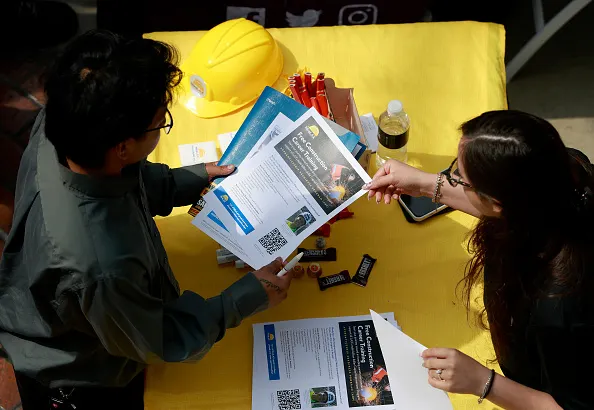
The journey depicted by the Harris Poll data – from 79% preferring reskilling in fall 2025 to 86% in early 2026 – illustrates a rapid acceleration of this strategic shift. The explicit acknowledgement of "willingness to learn" as a paramount trait for new hires further solidifies the notion that a foundational capacity for adaptation is now more critical than ever. As the global economy continues its dynamic evolution, organizations that successfully cultivate a culture of continuous learning and strategically invest in the reskilling of their existing talent will be best positioned to thrive, building agile, resilient, and future-proof workforces. The job seeker and recruiter photographed at the Carson Event Center on June 30, 2026, exemplify this evolving landscape, where the dialogue increasingly shifts from a mere checklist of existing skills to a deeper exploration of potential, adaptability, and an unyielding commitment to growth.