
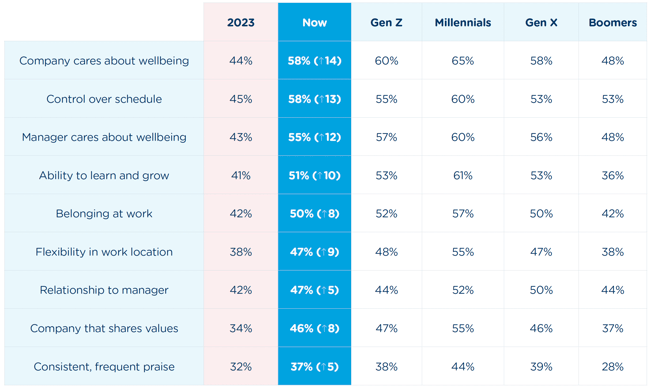
In a significant evolution of workplace expectations, a recent analysis tracking employee sentiment in the U.S. since 2023 reveals a profound shift: a growing majority of the workforce now prioritizes factors beyond a mere 10% pay raise. This trend, which has gained momentum over the past two years, indicates a fundamental reevaluation of what constitutes a fulfilling and sustainable work environment, with implications for organizational strategy and employee engagement across industries.
Historically, compensation has been the primary driver for many employees. However, the landscape has dramatically changed. Data gathered over this period shows that while a 10% salary increase was once the benchmark against which other benefits were measured, it is increasingly being eclipsed by intrinsic motivators and the quality of the overall employee experience. This evolution is not a subtle shift; it represents a paradigm change in how employees perceive value and commitment from their employers.
Key Drivers of the New Workplace Paradigm
The research highlights several key factors that are now surpassing the appeal of a 10% pay raise for a majority of U.S. employees. Chief among these is the demand for greater control over one’s schedule. This encompasses flexible work arrangements, the ability to set working hours, and a better work-life balance, reflecting a desire for autonomy and integration of professional and personal lives. The COVID-19 pandemic, which necessitated widespread remote work and flexible schedules, undeniably accelerated this demand, demonstrating to both employees and employers that productivity can thrive outside traditional office settings and rigid time constraints.
Closely following is the increasing importance of wellbeing. Employees are actively seeking employers and managers who demonstrate a genuine concern for their physical, mental, and emotional health. This extends beyond basic health benefits to encompass a supportive culture that actively combats stress, burnout, and isolation. The data indicates that over half of the workforce now views this empathetic approach as more valuable than a significant pay increment.

The desire for learning and growth also ranks high on the list of employee priorities. This includes opportunities for professional development, skill acquisition, and career advancement. In an era of rapid technological and economic change, employees recognize the importance of continuous learning to remain relevant and adaptable in their careers.
Furthermore, the concept of belonging has emerged as a critical element of the modern workplace. Employees are seeking environments where they feel accepted, valued, and connected to their colleagues and the organization’s mission. This sense of inclusion fosters psychological safety and contributes significantly to overall job satisfaction and engagement.
These emerging priorities are particularly significant because, as the report suggests, most of these factors come at a lower financial cost to employers compared to a 10% pay raise. This presents a strategic opportunity for organizations to enhance employee satisfaction and retention by focusing on cultural and experiential improvements rather than solely relying on escalating compensation packages.
The Crucial Role of Management
The research underscores the pivotal role of managers in shaping the employee experience and influencing engagement. A consistent finding across the analyses is that effective and competent management directly correlates with team engagement and overall organizational success. When managers are actively involved, supportive, and skilled, problems are resolved efficiently, innovation flourishes, and employee turnover decreases. Conversely, disengaged managers can lead to a decline in customer satisfaction, plummeting employee productivity, and ultimately, diminished business outcomes.
Gallup’s research, which traces the impact of employee engagement from the team level to national GDP growth, reinforces this point. The report indicates that managers are increasingly tasked with balancing the competing demands of executives and employees, a situation that is beginning to take a visible toll on their wellbeing. This highlights the need for robust support and training for managers, enabling them to effectively navigate these complex dynamics.
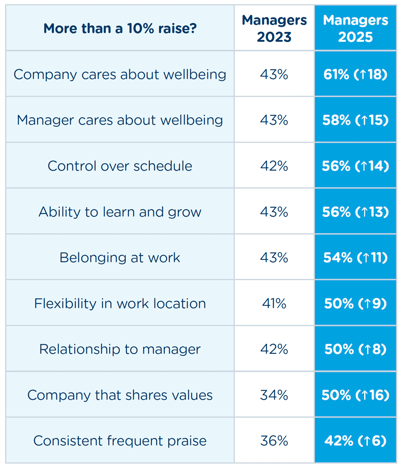
Interestingly, managers themselves are also prioritizing aspects of their work experience beyond financial compensation. Similar to their direct reports, managers are increasingly valuing wellbeing, opportunities for learning and growth, a sense of belonging, and control over their schedules over a 10% pay raise. This suggests a shared evolution in workplace expectations across all levels of an organization.
The Manager-Employee Perception Gap
A concerning disconnect has emerged between how managers perceive their impact and how employees experience it. While a significant majority of managers (66%) believe they make their employees’ lives easier, a considerably smaller portion of employees (44%) concur. This perception gap extends to other critical areas of management, suggesting that the intended positive influence of managers is not always translating into tangible benefits for their teams.
This disconnect is compounded by the fact that a substantial percentage of managers (30%) report feeling overwhelmed. If organizations expect managers to be the linchpins of engagement, coaching, communication, performance management, and wellbeing initiatives, they must provide them with the necessary support and resources. Without this, the burden on managers becomes unsustainable, potentially leading to burnout and diminishing their effectiveness.
The Underlying Driver: Declining Wellbeing
The intensified focus on a superior employee experience is not occurring in a vacuum. It is intrinsically linked to a marked increase in workplace stress, burnout, and loneliness. The pervasive sense of unease and pressure in the modern work environment is compelling employees to seek out organizations that prioritize their holistic wellbeing.
The implications for business outcomes are substantial. Data indicates that a significant majority of employees (85%) believe that feeling appreciated directly impacts their productivity. Furthermore, 79% state that their relationship with their manager plays a crucial role in their productivity. This empirical evidence refutes the notion that workplace culture and employee wellbeing are merely "soft skills." Instead, they are directly tied to tangible output and organizational success.
Managers who embrace this understanding and strategically allocate their time to foster positive employee experiences – through consistent coaching, one-on-one meetings, and meaningful recognition – can achieve transformative results. These efforts not only enhance the employee experience but also contribute directly to the company’s bottom line.
A Shift Towards Human-Centric Organizations
The ongoing trends suggest a broader societal shift towards more human-centric organizations. As economic pressures and technological advancements continue to reshape the nature of work, the emphasis is moving from transactional relationships to relational ones. Companies that recognize and adapt to this evolving employee mindset, by investing in wellbeing, flexibility, growth, and a strong sense of belonging, are likely to be the ones that attract and retain top talent, foster innovation, and achieve sustainable success in the years to come. This necessitates a strategic reevaluation of HR policies, management training, and organizational culture to align with the new realities of employee expectations. The era of prioritizing the bottom line at the expense of human capital is demonstrably drawing to a close, replaced by an understanding that investing in people is the most effective strategy for long-term prosperity.