
The efficacy of an organization’s talent acquisition strategy hinges significantly on the speed and precision of its job description (JD) process. Far from merely drafting faster, optimizing this crucial initial step demands a holistic re-evaluation of the entire job description management journey. This includes refining approval protocols, fostering seamless collaboration, ensuring robust version control, and establishing efficient storage mechanisms. A strategic overhaul in these areas is imperative for modern recruitment, directly impacting time-to-hire, candidate experience, and ultimately, the quality of talent secured.
The Critical Role of Job Descriptions in Modern Recruitment
In today’s fiercely competitive talent landscape, a well-crafted and efficiently managed job description is more than just a list of duties; it’s a powerful recruitment tool, a legal document, and a fundamental component of an organization’s employer brand. Delays or inaccuracies in the JD process can cascade into significant operational inefficiencies, including prolonged time-to-hire, increased recruitment costs, and a diminished candidate experience. Studies consistently indicate that a protracted hiring process can deter top-tier candidates, who often have multiple opportunities and expect a swift, professional engagement. Conversely, a streamlined JD process ensures that roles are defined accurately, attract the right talent, and move through the recruitment funnel with agility, directly contributing to organizational growth and stability.
Beyond Speed: Optimizing the Entire JD Lifecycle
Achieving true efficiency in job description management necessitates a shift from tactical speed improvements to strategic process optimization. This involves integrating best practices across all stages, from initial role definition to final publication and archival. The objective is not just to write JDs quickly but to ensure they are accurate, compliant, attractive, and manageable throughout their lifecycle.
Foundational Steps for Expedited JD Creation
Before a single word is written, foundational steps can dramatically influence the speed and quality of the subsequent drafting process. These preliminary actions lay the groundwork for clarity, consistency, and data-driven decision-making.
-
Structuring for Clarity and Candidate Engagement: An unorganized job description is a bottleneck for both internal teams and external candidates. Without clear headings and a logical flow, reviewers spend precious time deciphering content, and potential applicants struggle to quickly grasp essential information. This confusion inevitably leads to slower approval cycles and a higher drop-off rate among candidates. To counteract this, a standardized, intuitive structure is paramount. This includes a compelling job title, an engaging company overview, a concise executive summary of the role, clearly delineated responsibilities, essential qualifications, desired skills, and information on benefits and company culture. Utilizing bullet points for responsibilities and qualifications enhances readability, allowing candidates to quickly scan for relevance. This structured approach not only accelerates internal review but also optimizes the candidate experience, making JDs more accessible and appealing. For example, research suggests that JDs with clear formatting and bullet points can increase application rates by up to 15-20% by improving candidate engagement and comprehension.
-
Leveraging Dynamic Templates for Consistency: The creation of every job description from scratch is an unnecessary drain on resources and a prime source of inconsistency. Effective templates provide a pre-structured framework that eliminates redundant effort and minimizes errors. A robust template should encompass all critical components: standardized sections for company boilerplate information (e.g., EEO/Diversity statements, ‘About Us’, benefits overviews), placeholder sections for role-specific details, and pre-approved legal disclaimers. By providing a consistent starting point, templates can cut drafting time by an estimated 70%, allowing HR and hiring managers to focus on customizing the remaining 30% with unique, role-specific requirements. This not only speeds up the process but also ensures brand consistency and legal compliance across all job postings.
-
Harnessing Candidate Data for Informed JD Development: The days of guesswork in job description creation are over. Analyzing historical candidate data, typically housed within Applicant Tracking Systems (ATS) or other HR information systems, offers invaluable insights to refine future JDs. This data can reveal which qualifications consistently lead to successful hires, which keywords attract a diverse pool of applicants, and what elements in previous JDs correlated with high application-to-interview conversion rates. For instance, by understanding the typical educational background of top performers in a similar role, organizations can refine educational requirements, avoiding both over-qualification and under-qualification. Milos Eric, General Manager at OysterLink, emphasizes this approach: "We found that starting to write JDs with actual candidate behavior in mind saved us time. So we decided to observe which listings our top candidates clicked on, what prompts them to apply, and what causes them to drop off. Using this information, we reverse-engineer our JDs to make them more effective at converting top candidates to apply to our openings. This eliminates most of the time we’d waste creating JDs by second-guessing." This data-driven methodology ensures JDs are optimized for attracting and converting the most suitable talent, reducing the need for iterative revisions.
Streamlining Operational Workflows
Beyond the initial drafting, the operational aspects of managing job descriptions—storage, collaboration, and version control—are equally critical for maintaining speed and efficiency throughout the recruitment cycle.
-
Establishing a Centralized Job Description Library: The absence of a centralized, accessible repository for job descriptions is a significant productivity drain. Recruiters and hiring managers often waste hours sifting through disparate documents across shared drives, emails, or local files, trying to locate an appropriate starting point. A cloud-based JD library acts as a critical time-saver, providing a single source of truth for all approved job descriptions. This enables users to quickly search and filter JDs by various parameters—department, job title, required skills, or experience level—to find suitable inspirations or templates. The ability to readily access and adapt existing, approved JDs eliminates the need to "reinvent the wheel" for every new opening, thereby substantially accelerating the initial drafting phase. It also ensures consistency and adherence to established best practices, which can reduce the average JD creation time by up to 25%.
-
Fostering Collaborative JD Creation Teams: A fragmented or disorganized collaboration process is a notorious bottleneck in job description creation. Questions like "who is working on this section?" or "why hasn’t this document moved to the next stage?" are clear indicators of inefficient teamwork. Poor collaboration leads to duplicated efforts, conflicting edits, communication breakdowns, and ultimately, significant delays. To counter this, organizations must establish clear roles and responsibilities within a collaborative team, leveraging shared platforms that allow for real-time editing, commenting, and feedback. This minimizes email chains and ensures all stakeholders are working from the most current document. By centralizing communication and providing transparency into individual contributions and progress, collaborative tools can reduce the time spent on internal reviews and approvals by 10-20%.
-
Implementing Robust Version Control Systems: The chaos of poor version control can sabotage even the most efficient drafting efforts. Without a clear system, teams can spend countless hours reconciling conflicting edits, searching for the "final" version, or inadvertently publishing outdated or incorrect job descriptions. This not only wastes time but also introduces compliance risks and negatively impacts the candidate experience. An effective version control system, ideally integrated within a specialized JD management software, provides a chronological record of all changes, identifies who made which edits, and allows for easy rollback to previous versions if needed. This transparency ensures accountability, prevents rework, and provides an auditable trail, streamlining the review and approval process and significantly reducing the likelihood of errors.
Ensuring Accuracy and Compliance
The quality and integrity of job descriptions are paramount, requiring careful attention to stakeholder input, linguistic precision, and a well-defined approval hierarchy.
-
Engaging Key Stakeholders for Comprehensive Information: Often, the individual primarily responsible for drafting a job description may not possess all the nuanced details required for an accurate and effective posting. This necessitates proactive engagement with key stakeholders, particularly hiring managers and department heads, early in the process. Gathering comprehensive information upfront regarding the specific needs of the role, its key performance indicators, essential skills, and cultural fit reduces the iterative back-and-forth that typically plagues JD creation. Lucas Botzen, CEO of Rivermate, highlights this: "We rely heavily on collaboration upfront to avoid many revisions later. Before we even start drafting, we spend a focused amount of time with hiring managers to clarify expectations, success metrics, and must-have versus nice-to-have skills. This helps us avoid vague or overly broad descriptions that would otherwise need multiple revisions. In my experience, a 15-minute alignment conversation can save hours of rewriting." This upfront clarity ensures the JD accurately reflects the role’s demands, saving considerable time in later revision stages.
-
Cultivating Unambiguous and Standardized Language: Clarity is the bedrock of an effective job description. Without clear guidelines on language, tone, and terminology, JDs can become inconsistent, confusing, and potentially alienating to candidates. This lack of standardization often leads to extensive revisions as teams strive to make the language accessible and inclusive. Establishing a style guide or a set of linguistic best practices, focusing on plain language, avoiding jargon, and promoting inclusive terminology, can significantly streamline the writing process. This ensures that all JDs communicate expectations clearly and consistently, resonating with a broader and more diverse candidate pool.
-
Designing an Agile Approval Workflow Process: A disorganized approval workflow is a major impediment to the rapid deployment of job descriptions. Waiting for multiple stakeholders to manually review and approve a JD can extend the process by weeks. Common symptoms of a slow approval process include unclear approval paths, a lack of accountability for delays, and a reliance on manual reminders. Implementing an automated approval workflow is critical. This system should notify each approver sequentially or in parallel, providing a direct link to the document and a clear deadline. It also allows for real-time tracking of the JD’s status, identifying bottlenecks and enabling prompt intervention. An automated workflow can drastically reduce approval times, often from weeks to mere days, by ensuring timely engagement from all necessary parties.
Technological Enablement: The Power of Job Description Software
While individual strategies are beneficial, their true power is unleashed when integrated within a dedicated job description software platform. Such tools are designed to eliminate manual processes and provide a comprehensive solution for JD management.
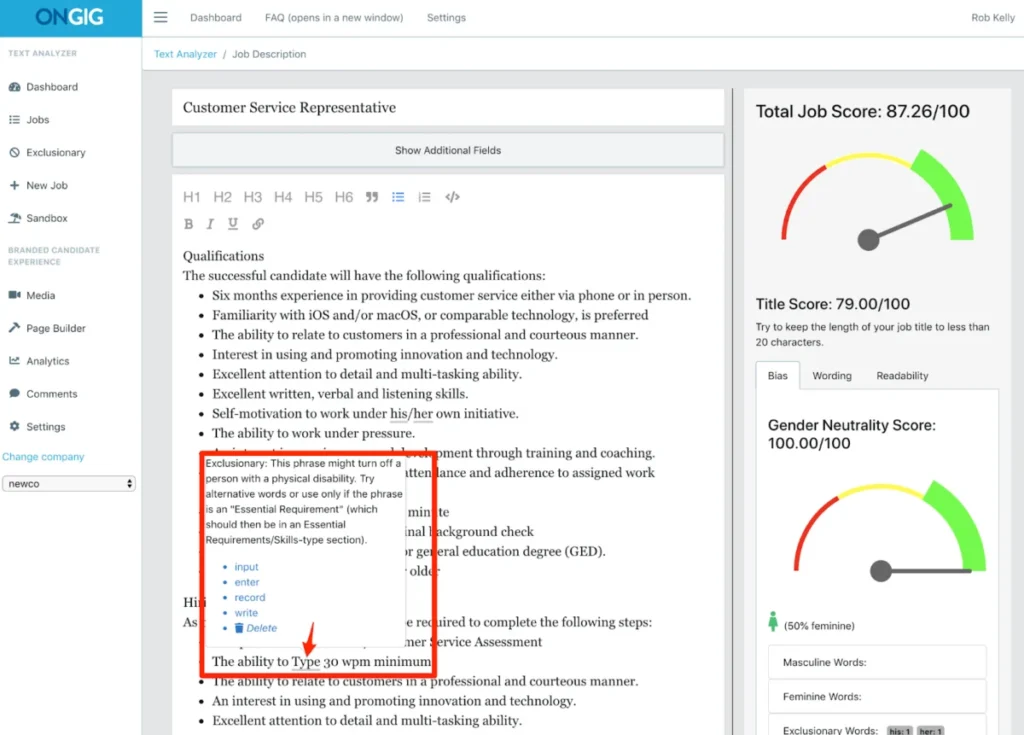
Job description software, such as Ongig Text Analyzer, goes beyond simple drafting to encompass the entire JD lifecycle. These platforms offer:
- Centralized Library Management: A single, searchable repository for all JDs.
- Template Automation: Pre-built, customizable templates that enforce consistency and compliance.
- Collaborative Editing: Real-time collaboration features with commenting, tracking changes, and user roles.
- Automated Workflow and Approvals: Streamlined, configurable approval paths with notifications and deadlines.
- Version Control: Comprehensive history of changes, allowing for easy tracking and rollback.
- AI-Powered Optimization: Tools that analyze JDs for bias, readability, and SEO, suggesting improvements for inclusiveness and reach. This can include flagging discriminatory language, ensuring gender-neutral phrasing, and optimizing for search engines.
- Performance Analytics: Integration with ATS to track JD performance, providing data on views, applications, and conversion rates, thus informing future improvements.
- Compliance Checks: Automated checks against legal and regulatory requirements (e.g., EEO, ADA), reducing legal risks.
By consolidating these functions, JD software can reduce the overall time spent on job description management by up to 40-50%, while simultaneously enhancing their quality and effectiveness.
Strategic Practices for Ongoing Efficiency
Maintaining speed and quality in JD management requires continuous attention to best practices, even after initial implementation.
-
Adapting and Replicating Existing Job Descriptions: For recurring or similar roles, starting from scratch is inefficient. A robust JD library enables organizations to quickly locate and copy existing, approved job descriptions. The strategy involves using approximately 70% of the common, established elements (e.g., company overview, benefits, core competencies) and dedicating the remaining 30% to customizing role-specific details, such as unique responsibilities, project requirements, or reporting structures. This adaptive approach significantly reduces drafting time while ensuring the new JD aligns with organizational standards and historical success metrics.
-
Developing a Comprehensive Job Description Checklist: Even with optimized workflows and advanced software, human error can occur. A detailed checklist serves as a final quality assurance step before publishing any job description. This checklist should cover all critical elements, ensuring accuracy, completeness, and compliance. Key items might include:
- Clarity and Conciseness: Is the language easy to understand?
- Accuracy: Do the responsibilities and qualifications match the actual role?
- Completeness: Are all essential sections included (e.g., benefits, company culture)?
- Inclusivity: Is the language free of bias and gender-neutral?
- Compliance: Does it adhere to all legal and regulatory requirements (e.g., EEO, ADA)?
- SEO Optimization: Are relevant keywords included for discoverability?
- Brand Alignment: Does it reflect the company’s employer brand and values?
- Contact Information/Application Instructions: Are these clear and correct?
- Approval Sign-offs: Have all necessary stakeholders approved the final version?
This checklist acts as a crucial safety net, preventing last-minute discoveries of missing information or errors that would otherwise necessitate costly delays and rework.
Broader Implications for Talent Acquisition
A strategic focus on accelerating and optimizing the job description process yields profound benefits across the entire talent acquisition function:
- Reduced Time-to-Hire and Cost-per-Hire: Faster JD creation and approval directly translate to quicker job postings, shorter recruitment cycles, and ultimately, lower operational costs.
- Enhanced Candidate Experience and Employer Brand: Clear, well-structured, and timely job descriptions demonstrate organizational efficiency and professionalism, attracting higher-quality candidates and strengthening the employer brand.
- Improved Quality of Hire and Retention: Data-driven and stakeholder-aligned JDs lead to better matching of candidates to roles, resulting in higher quality hires and improved employee retention rates.
- Mitigated Legal and Compliance Risks: Standardized templates, compliance checks, and robust version control reduce the likelihood of legal challenges related to discriminatory language or inaccurate job postings.
- Strategic Role of HR and Recruitment: By automating routine tasks and streamlining workflows, HR and recruitment teams can shift their focus from administrative burdens to more strategic initiatives, such as talent pipelining, diversity and inclusion efforts, and workforce planning.
In conclusion, the journey to attracting and hiring top candidates is significantly influenced by the efficiency and effectiveness of an organization’s job description process. Adopting a holistic approach that integrates strategic foundational steps, streamlined operational workflows, advanced technological solutions, and continuous best practices is no longer optional but a strategic imperative. Organizations that embrace this comprehensive optimization will not only accelerate their recruitment efforts but also enhance their ability to secure the best talent in a dynamic global marketplace.






