Employee perks, once considered simple office amenities like free snacks or a casual dress code, have dramatically transformed into strategic tools vital for talent acquisition, retention, and fostering a thriving workplace culture. This shift reflects a profound change in employee expectations, where individuals are increasingly seeking not just competitive compensation, but also a sense of value, connection, and support from their employers.
The contemporary workplace is defined by employees asking more profound questions about the nature and purpose of their work. They are unafraid to seek opportunities elsewhere if their current environment fails to meet these evolving standards. Supporting this trend, the Achievers Workforce Institute’s 2026 Engagement and Retention Report reveals a concerning landscape: only about one in four employees feel genuinely engaged, and an equally low proportion feel truly appreciated at work. The report underscores a critical correlation: where appreciation is absent, engagement and retention inevitably suffer.
This is precisely where modern employee perks step in. Far from being superficial extras, they serve as tangible signals of an organization’s commitment to its people. When thoughtfully designed and implemented, perks can significantly reinforce recognition, bolster employee well-being, and cultivate a deeper sense of connection between individuals, their work, and the broader organizational mission. Conversely, poorly conceived perks quickly fade into irrelevance, failing to leave a lasting positive impression. The focus for forward-thinking organizations must therefore be on perks that genuinely contribute to a positive and enduring workplace culture.
Defining the Modern Employee Perk
At its core, an employee perk encompasses the range of benefits, rewards, and unique experiences an organization offers beyond the foundational elements of base salary and traditional benefits packages like health insurance or retirement plans. However, the most effective perks transcend mere surface-level incentives or occasional gestures. They are designed to answer a fundamental question for employees: "Do you see me, and do you value my contribution?"
When an organization provides a clear and resounding "yes" to this question through its perk offerings, the relationship shifts from transactional to deeply meaningful. Modern employee perks are strategically engineered to achieve several key objectives: they aim to make employees feel seen and acknowledged for their efforts, provide tangible support for their personal and professional well-being, facilitate a sense of belonging and connection within their teams and the company, and ultimately reinforce the organization’s core values. In essence, these perks are not about superficial "fun"; they are about cultivating an environment where individuals feel consistently seen, supported, and appreciated, not just occasionally, but day in and day out.
The Unprecedented Importance of Employee Perks
The landscape of employee expectations has undergone a seismic shift, and with it, the methods by which organizations signal value to their workforce. In today’s competitive talent market, merely offering competitive pay and a robust benefits package is no longer sufficient to guarantee engagement or loyalty. Employees are meticulously evaluating how frequently their efforts are recognized, whether their needs are genuinely supported, and if their daily work experience truly reflects a sense of value.
Employee perks have thus assumed a critical role in translating abstract appreciation into something employees can tangibly experience. When perks are intentionally designed to reinforce employee recognition and provide practical support for daily work challenges, their impact extends beyond mere sentiment improvement; they directly influence key organizational outcomes. Research from the Achievers Workforce Institute (AWI) consistently demonstrates that employees who feel genuinely appreciated are an astonishing 12 times more likely to find their work meaningful and 17 times more likely to envision a long-term future with their organization.
This highlights that perks are not simply about adding more benefits. They are about strategically embedding appreciation into the fabric of the employee experience. In a labor market characterized by intense competition for talent, organizations cannot solely rely on compensation to retain their best people. Thoughtful employee perks bridge the crucial gap between effort and appreciation, transforming recognition into a visible, consistent, and deeply felt aspect of working life.
A Historical Perspective on Perk Evolution
The journey of employee perks can be traced through several distinct phases. In the mid-20th century, benefits like pensions and health insurance emerged as foundational elements, primarily focused on providing security. The late 20th century saw the introduction of more lifestyle-oriented perks, often concentrated in tech companies, such as free food, on-site gyms, and casual dress codes, signaling a more relaxed work environment. However, these were often viewed as ‘extras’ rather than strategic tools.
The early 21st century brought a focus on work-life balance, with the nascent introduction of flexible hours and remote work options, largely driven by technological advancements. The most significant acceleration in the evolution of perks, however, has occurred in the post-pandemic era, spurred by the "Great Resignation" and a global re-evaluation of work’s role in life. This period has seen employees prioritize well-being, flexibility, purpose, and genuine recognition, forcing companies to rethink their entire approach to employee value propositions. This recent shift underscores that perks are no longer a luxury but a strategic necessity for organizational survival and growth.
Categories of Impactful Employee Perks

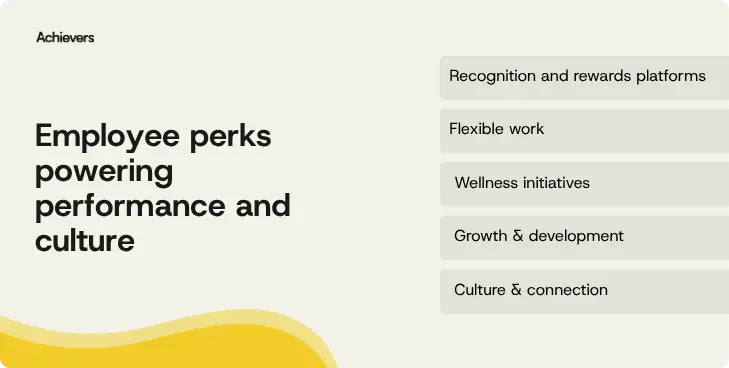
To effectively drive retention, enhance performance, and strengthen culture, the most impactful employee perks share common characteristics: they make appreciation visible, genuinely support how individuals work, and reinforce a connection to the company’s culture and values. Below is an overview of perk categories that consistently deliver significant impact:
Recognition and Rewards Employee Perks
These perks are designed to integrate recognition into the everyday work experience, ensuring it is timely, specific, and tied to meaningful contributions.
- Points-based Recognition Programs: These allow employees to earn redeemable points for contributions, offering personalized rewards and increasing engagement. They move beyond generic awards by giving employees choice.
- Peer-to-Peer Recognition Platforms: Empowering colleagues to acknowledge each other’s efforts fosters a culture of mutual appreciation, building trust and strengthening team bonds.
- Manager Spot Awards: Granting managers the autonomy to issue immediate awards for exceptional work reinforces positive behaviors in real-time, proving far more effective than delayed praise.
- Values-based Recognition: Directly linking rewards to actions that exemplify company core values helps to translate abstract principles into tangible, observable behaviors, aligning individual efforts with organizational mission.
- Personalized Service Milestone Recognition: Moving beyond generic certificates, personalized recognition for tenure acknowledges an employee’s unique journey and impact, fostering loyalty and demonstrating that experience is valued.
- Team-based Recognition: Celebrating collective achievements encourages collaboration, breaks down silos, and reinforces the understanding that success is often a shared endeavor.
- Celebration Budgets for Managers: Providing managers with flexible budgets allows for authentic and timely team celebrations, empowering leaders to creatively acknowledge wins without bureaucratic hurdles.
- Recognition Tied to Performance Check-ins: Integrating appreciation into ongoing performance conversations ensures continuous feedback and reinforcement of progress and effort, rather than confining recognition to annual reviews.
Flexibility and Work-Life Employee Perks
These perks acknowledge that sustainable performance is inextricably linked to work-life balance, fostering trust and reducing burnout.
- Flexible Work Schedules: Allowing employees to adjust their work hours promotes better work-life integration, demonstrating trust and reducing stress.
- Hybrid or Remote Work Options: Providing choice in work location expands talent pools, boosts employee satisfaction, and reflects the realities of modern work.
- Summer Hours or Compressed Work Weeks: Offering extended time off during specific periods or condensing work hours (e.g., four-day work week) respects personal time and helps prevent fatigue.
- Meeting-Free Focus Time: Designating uninterrupted blocks for deep work signals that productivity is about quality and concentration, not just calendar density, reducing cognitive overload.
- Paid Volunteer Time: Enabling employees to contribute to causes they care about during work hours reinforces purpose and connects individual values to organizational impact.
- Caregiver Support Perks: Offering resources, flexibility, or financial aid for employees with caregiving responsibilities acknowledges life outside work, crucial for retention during demanding periods.
- Time-Off Bonuses During Peak Periods: Rewarding intense work cycles with additional rest demonstrates acknowledgment of sustained effort and supports employee recovery.
Benefits-Adjacent Employee Perks
These perks extend traditional benefits, making well-being, security, and growth more accessible and user-friendly.
- Mental Health Support Stipends: Providing financial assistance for therapy, counseling, or wellness apps signals that mental well-being is a genuine organizational priority.
- Benefits Navigation/Concierge Services: Simplifying the complex world of benefits helps employees maximize their existing packages, reducing confusion and increasing perceived value.
- Preventive Health Incentives: Encouraging proactive health measures like screenings or wellness check-ups supports long-term employee health and can reduce future healthcare costs.
- Financial Wellness Coaching: Offering guidance on budgeting, debt management, and long-term financial planning alleviates a significant source of employee stress, improving focus at work.
- Student Loan or Tuition Assistance: Investing in employees’ educational goals demonstrates a commitment to their growth beyond their current role, aiding in both upskilling and retention.
- Retirement Planning Support: Providing resources and guidance for future planning offers peace of mind and reinforces a long-term commitment to employees.
Growth and Development Employee Perks
These perks signal an investment in employees’ future, fostering skill development, career mobility, and sustained engagement.
- Learning and Development Stipends: Granting flexible funds for courses, certifications, or conferences empowers employees to pursue growth aligned with their aspirations, including external resources like LinkedIn Learning.
- Certification Reimbursement: Supporting industry-specific certifications builds critical capabilities within the organization while boosting employee confidence and marketability.
- Mentorship Programs: Connecting employees with experienced leaders or peers accelerates learning, facilitates relationship building, and provides clear pathways for career progression.
- Internal Mobility or "Gig" Opportunities: Allowing employees to explore new roles or projects within the company prevents attrition by offering diverse growth experiences internally. This is particularly effective for attracting and retaining top talent.
- Career Pathing Tools: Providing clear tools and resources for talent development helps employees visualize and plan their growth trajectory within the organization, replacing ambiguity with clarity.
- Recognition for Skill Development: Acknowledging progress in learning, not just outcomes, motivates continuous development and cultivates a growth mindset within the workforce.
Culture and Connection Employee Perks
These perks focus on strengthening belonging, reinforcing shared values, and fostering meaningful connections within teams and the organization.
- Onboarding Buddy Programs: Pairing new hires with experienced colleagues helps them feel welcomed, supported, and integrated from day one, improving early engagement and reducing time-to-productivity.
- Purpose-driven Team Events: Organizing events focused on genuine connection, collaboration, or community service (rather than forced fun) builds authentic relationships and shared experiences.
- Employee Resource Groups (with time to participate): ERGs provide crucial spaces for connection, advocacy, and belonging for diverse groups, most effective when employees are actively supported to participate.
- Recognition Rituals in Team Meetings: Embedding gratitude into regular team rhythms normalizes appreciation and makes it a consistent, visible part of daily work.
- Experiential Rewards and Lifestyle Perks: Offering rewards like travel vouchers, unique learning experiences, cutting-edge technology, or personalized lifestyle benefits creates lasting memories and emotional connections beyond monetary value.
Common Pitfalls in Employee Perk Programs
Even with the best intentions, employee perk programs can fall short if treated as mere add-ons rather than strategic signals. Several common mistakes can undermine their effectiveness:
- Infrequent or Annualized Perks: When perks appear only once a year (e.g., during open enrollment or as a holiday bonus), they become disconnected from daily effort. Effective perks reinforce appreciation in the moment, not long after the work is done. Infrequent recognition leads employees to perceive it as optional or exclusive.
- Designing Exclusively for Desk-Based Employees: Many perk programs inadvertently favor office-based roles, alienating frontline, hourly, or remote employees. Perks that require email access, intranet logins, or physical office presence exclude significant portions of the workforce, leading to feelings of unfairness and eroding trust.
- One-Size-Fits-All Rewards: Generic perks, while easy to implement, rarely resonate with a diverse workforce. Employees have varied needs, lifestyles, and motivations. Programs offering choice and flexibility consistently yield greater impact because they respect individual preferences rather than making broad assumptions.
- Prioritizing Cost Savings Over Perceived Value: The cheapest perk is rarely the most effective, nor is the most expensive always the most meaningful. When perk selection is driven solely by cost, offerings often feel transactional or impersonal. Employees value thoughtfulness, relevance, and intentionality far more than the price tag.
Fundamentally, employee perk programs do not fail due to a lack of organizational care. They fail when perks are infrequent, inaccessible, or disconnected from the reality of employees’ daily work lives. Avoiding these common mistakes isn’t about doing more; it’s about making each perk count where it truly matters.
Crafting a Future-Proof Perk Strategy: The Achievers Approach
The most effective employee perk programs are characterized by intentionality, responsiveness, and a deep understanding of what employees genuinely value. They are not built on assumptions but on active feedback. Organizations like Achievers play a pivotal role in guiding companies to "get their perks right" by emphasizing consistent recognition of effort, holistic support for well-being, and continuous reinforcement of core values.
Successful perk strategies are founded on continuous employee feedback, leveraging pulse surveys, short check-ins, and focus groups to understand what resonates, what is overlooked, and what employees truly desire. Listening—and critically, acting—on this feedback is paramount to ensuring perks remain relevant and impactful.
To translate feedback into actionable insights, organizations must track key performance indicators (KPIs) such as:
- Employee Engagement Scores: Measuring overall levels of involvement and enthusiasm.
- Voluntary Turnover Rates: Tracking the percentage of employees leaving voluntarily.
- Perk Utilization and Satisfaction Rates: Understanding which perks are used and how employees perceive their value.
- Employee Net Promoter Score (eNPS): Assessing employees’ willingness to recommend their workplace.
The guiding principle is clear: if employee perks feel generic, they will fail to motivate. If they are difficult to access or use, their impact will be negligible. And if they are not continuously measured and shaped by authentic employee feedback, they will inevitably miss their mark.
In conclusion, employee perks no longer need to be extravagant to be effective. Their power lies in being meaningful, accessible, and intrinsically aligned with how people experience work every day. By adopting a strategic, data-driven approach to perks, organizations can cultivate cultures where every individual feels seen, heard, and genuinely appreciated. This transformation elevates perks from mere "extras" to fundamental drivers of organizational success, enabling companies to attract, retain, and inspire their workforce, ultimately shaping culture with purpose.