From May 11 to May 17, 2026, National Nurses Week will once again cast a much-deserved spotlight on the unwavering dedication, profound skill, and boundless compassion exhibited by the millions of registered nurses who form the bedrock of healthcare systems across North America and beyond. With an estimated 4.7 million registered nurses in the U.S. and over 478,000 Canadian registered nurses, these professionals consistently uphold patient care, often navigating demanding environments with remarkable resilience and commitment. Commencing annually on May 12, International Nurses Day—a date chosen to honor the birth of Florence Nightingale, the founder of modern nursing—this week-long observance serves as a vital reminder for healthcare organizations, policymakers, and the public alike to acknowledge and reinforce the indispensable contributions of nurses. It is a period for comprehensive recognition, moving beyond symbolic gestures to address the systemic support and appreciation that nurses require to thrive in their critical roles.
Historical Roots of Nurses’ Appreciation
The tradition of dedicating a specific period to honor nurses is deeply rooted in the history of the profession. International Nurses Day, celebrated globally on May 12, marks the anniversary of Florence Nightingale’s birth in 1820. Nightingale, a pioneering figure, revolutionized nursing practices during the Crimean War and established the first professional nursing school, laying the groundwork for modern healthcare. Her legacy underscores the foundational principles of sanitation, patient advocacy, and rigorous training that continue to define nursing today.
In the United States, efforts to recognize nurses nationally began decades ago. The first Nurses Week was observed in October 1954, coinciding with the 100th anniversary of Nightingale’s mission to Crimea. However, it wasn’t until 1974 that President Richard Nixon proclaimed a National Nurses Week. The observance gained more permanent footing in 1982 when President Ronald Reagan signed a proclamation designating May 6 as National Recognition Day for Nurses. Finally, in 1990, the American Nurses Association (ANA) expanded the celebration to a full week, from May 6 to May 12, solidifying it as an annual event. Canada also adopted a similar tradition, with National Nursing Week established to highlight the contributions of its nursing professionals, often aligned with International Nurses Day. This chronology reflects a growing societal understanding of nursing’s pivotal role, evolving from sporadic recognition to a sustained annual tradition.
The Contemporary Nursing Landscape: Challenges and Demands
As National Nurses Week 2026 approaches, the nursing profession finds itself at a critical juncture, navigating a complex array of challenges intensified by recent global health crises. The sheer volume of nurses—4.7 million in the U.S. and over 478,000 in Canada—underscores their collective strength, yet also highlights the immense pressure on individual practitioners. Nurses serve in diverse capacities, from acute care hospitals and long-term care facilities to community clinics, schools, and private homes, providing direct patient care, managing complex cases, educating patients and families, and advocating for public health initiatives.
The COVID-19 pandemic, in particular, exposed and exacerbated many pre-existing vulnerabilities within the nursing workforce. Nurses were on the front lines, risking their own health and well-being, grappling with unprecedented patient loads, resource shortages, and the emotional toll of widespread illness and death. This period led to heightened rates of burnout, compassion fatigue, and mental health issues among nurses, a reality that continues to impact the profession in 2026. Data from various nursing associations consistently indicates that a significant percentage of nurses report feeling emotionally exhausted, with many contemplating leaving the profession entirely.
Beyond the pandemic’s lingering effects, chronic staffing shortages remain a pervasive issue. An aging nursing workforce, coupled with an aging population requiring more complex care, creates a demand that often outstrips the supply of new graduates. The American Association of Colleges of Nursing (AACN) and the Canadian Association of Schools of Nursing (CASN) continue to advocate for increased funding for nursing education programs and faculty development to address this gap. Furthermore, workplace violence against nurses remains a significant concern, with studies showing that healthcare workers, particularly nurses, experience a disproportionately high rate of assaults compared to other professions. These multifaceted challenges underscore the imperative for comprehensive support systems, not just during Nurses Week, but throughout the year.
Beyond Symbolic Gestures: The Imperative for Meaningful Recognition
While celebratory events during National Nurses Week are valuable for boosting morale, true recognition extends far beyond superficial gestures. Healthcare administrators and organizational leaders are increasingly tasked with implementing strategies that foster genuine appreciation and support, thereby improving nurse retention, job satisfaction, and ultimately, patient outcomes. The psychological benefits of feeling valued are profound; recognized employees exhibit higher engagement, productivity, and loyalty. For nurses, whose work is inherently stressful and emotionally demanding, this sense of value can be a critical buffer against burnout.
Meaningful recognition encompasses several dimensions. Formal recognition, such as awards for excellence in patient care, leadership, or innovation, provides public acknowledgment of outstanding contributions. Informal recognition, like a simple "thank you" from a supervisor or peer, often carries immense weight, affirming daily efforts. Peer-to-peer recognition programs, facilitated by digital platforms, empower nurses to celebrate each other’s achievements, fostering a supportive team environment. Leadership-driven recognition, where administrators actively engage with nurses, solicit feedback, and visibly act on concerns, demonstrates a profound commitment to their well-being.
Healthcare administrators can leverage Nurses Week as a catalyst for launching or reinforcing these long-term strategies. This includes investing in professional development opportunities, such as advanced certifications, specialized training, and mentorship programs, which signal a commitment to career growth. Implementing robust wellness programs that address mental health, stress management, and physical well-being is crucial. Furthermore, establishing clear, consistent feedback mechanisms, where nurses feel heard and their input leads to tangible improvements in their work environment, transforms appreciation from a moment into an ongoing dialogue. By integrating these practices, organizations can cultivate a culture where nurses feel continuously valued, not just annually.
Fostering a Culture of Inclusion and Support
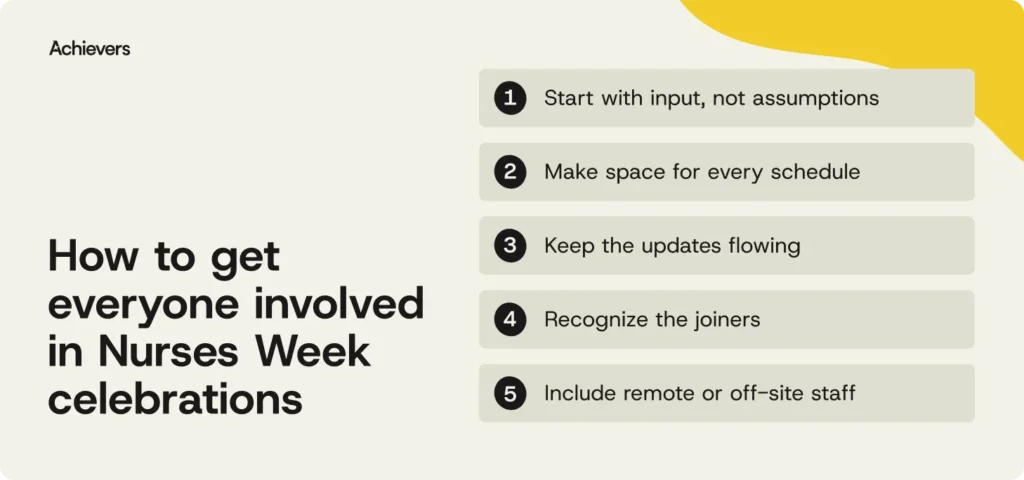
Celebrating National Nurses Week effectively requires a broader, more inclusive approach that extends beyond the nursing department itself. True appreciation flourishes in an environment where every member of the healthcare ecosystem understands and respects the vital role nurses play. This means involving all staff—from physicians and allied health professionals to administrative support, environmental services, and dietary teams—in recognition efforts. When everyone participates, it reinforces the interconnectedness of healthcare delivery and strengthens the collective commitment to patient care.

Inclusivity in celebration can take many forms. Educational initiatives during Nurses Week can inform non-nursing staff about the breadth of nursing responsibilities and the challenges nurses face, fostering empathy and collaboration. Joint recognition events that celebrate all healthcare professionals, with a special emphasis on nurses, can build camaraderie. Encouraging personalized messages of thanks from patients, families, and colleagues through digital platforms or physical message boards creates a powerful, community-wide affirmation.
When an organization successfully cultivates an inclusive environment, participation in recognition isn’t merely a compliance checkbox; it becomes a genuine moment of connection and shared purpose. This fosters a stronger organizational culture, where mutual respect and support are paramount, ultimately benefiting patient care and staff morale across the board. The image of a cohesive team, all working together and appreciating each other’s contributions, is a powerful antidote to the fragmentation and isolation that can sometimes plague large healthcare institutions.
From Week-Long Observance to Year-Round Advocacy
The true impact of National Nurses Week is realized when its momentum translates into sustained, year-round advocacy and support for the nursing profession. Nurses consistently go above and beyond, and their recognition should reflect that enduring commitment. Nurses Week offers a prime opportunity to not only celebrate but also to listen intently to nurses’ needs and lead with purpose in addressing systemic issues. While celebratory treats and events are welcomed, what nurses fundamentally require is to feel seen, heard, and supported in a tangible, lasting manner.
Moving from episodic recognition to everyday advocacy involves several critical steps. Policy considerations are paramount. Advocating for safe staffing ratios, which directly impact nurse workload and patient safety, is a key area. Fair compensation, competitive benefits, and robust mental health resources are also essential to attract and retain talent. Legislative efforts to protect nurses from workplace violence and to ensure adequate personal protective equipment (PPE) further demonstrate a commitment to their well-being.
Investing in nurse education and career advancement opportunities is another pillar of year-round advocacy. This includes tuition reimbursement programs, leadership training, and pathways for specialization. Furthermore, leveraging technology to facilitate continuous feedback and recognition can transform organizational culture. Modern platforms can enable real-time appreciation, track performance, and provide data-driven insights into nurse sentiment, allowing leaders to proactively address concerns and reinforce positive behaviors. This systematic approach ensures that the insights gained during Nurses Week lead to concrete, actionable improvements in nurses’ daily working lives, long after the decorations are taken down.
Statements from Key Stakeholders and Broader Implications
Leading nursing organizations, such as the American Nurses Association (ANA) and the Canadian Nurses Association (CNA), consistently emphasize that National Nurses Week serves as a crucial platform to not only celebrate but also to galvanize support for policy changes that improve working conditions and enhance professional development. These organizations routinely issue statements during this period, calling on governments and healthcare systems to invest more in the nursing workforce, ensure safe staffing levels, and address the mental health crisis facing nurses.
Healthcare executives and administrators, recognizing the critical role nurses play in patient satisfaction and operational efficiency, often echo these sentiments. Many healthcare systems utilize Nurses Week to publicly reaffirm their commitment to fostering supportive work environments, investing in professional growth, and prioritizing nurse well-being. These statements frequently highlight new initiatives related to burnout prevention, flexible scheduling, and enhanced safety protocols. Government officials, from local leaders to national representatives, also typically issue proclamations acknowledging nurses’ invaluable contributions to public health and expressing gratitude for their service, often linking their efforts to broader public health goals.
The broader implications of this annual observance are significant. It serves as an annual reminder to the public about the complexity and criticality of nursing work, fostering greater understanding and appreciation. For aspiring healthcare professionals, it showcases nursing as a dynamic and rewarding career path, potentially influencing recruitment into the profession. Moreover, the focus on nurses’ well-being during this week can spark dialogue and drive innovation in healthcare management, pushing organizations to adopt more humane and supportive practices that ultimately benefit both caregivers and patients.
The Future of Nursing: Sustaining the Backbone of Healthcare
As we look towards National Nurses Week 2026 and beyond, the future of nursing hinges on a collective commitment to sustaining the backbone of our healthcare systems. Projections indicate a continued demand for nurses, driven by an aging population with increasing chronic health conditions, advancements in medical technology, and the need for more complex care coordination. The U.S. Bureau of Labor Statistics, for instance, projects strong growth in registered nursing employment over the next decade. This underscores the urgent need for proactive strategies to not only attract new talent but also to retain experienced nurses within the profession.
This involves addressing the root causes of burnout and turnover, fostering environments where nurses feel respected, empowered, and professionally fulfilled. It means prioritizing competitive salaries and benefits, ensuring access to mental health services, and implementing policies that promote work-life balance. Furthermore, empowering nurses to participate in decision-making processes, from unit-level protocols to system-wide strategic planning, can enhance their sense of ownership and professional agency.
Ultimately, the well-being of nurses is inextricably linked to the quality and safety of patient care. A supported, healthy, and engaged nursing workforce translates directly into better patient outcomes, reduced medical errors, and more compassionate healthcare experiences. National Nurses Week is a powerful spark, but its real impact comes from transforming this annual observance into a continuous commitment—a fundamental aspect of healthcare culture that champions, advocates for, and truly appreciates its nurses, every single day. Here’s to the nurses who continuously show up, problem-solve, advocate, and make care more human. It is incumbent upon all of us to show up for them—during Nurses Week, and every day after.