
The U.S. Equal Employment Opportunity Commission (EEOC) concluded its 2025 fiscal year on September 30, recording its lowest level of litigation activity in more than ten years. With only 93 merit lawsuits filed throughout the year, the Commission signaled a dramatic departure from the aggressive enforcement seen during the Biden administration. This decline marks a significant turning point for the agency, which has been reshaped by swift leadership changes, unprecedented personnel actions, and a fundamental realignment of ideological priorities following the return of the Trump administration. While the agency entered the year with a robust budget and a deep pipeline of charges, the resulting litigation output represents one of the lowest totals in the past three decades, reflecting a period of profound transition and internal reorganization.
A Year of Unprecedented Leadership Upheaval
The trajectory of the EEOC’s 2025 fiscal year was largely dictated by political developments and a series of executive actions that altered the agency’s governing structure. Following the inauguration in January 2025, President Trump took the anticipated step of elevating Andrea Lucas to the position of Acting Chair. However, the administration also moved to terminate General Counsel Karla Gilbride, a move that echoed President Biden’s earlier termination of a Trump-appointed General Counsel.
More significantly, the administration took the unprecedented step of firing EEOC Commissioners Charlotte Burrows and Jocelyn Samuels, despite both having years remaining on their statutory terms. This action challenged the traditional understanding of the EEOC as an independent agency where commissioners are generally protected from removal without cause. The immediate result was the loss of a quorum, leaving only Acting Chair Lucas and Commissioner Kalpana Kotagal at the helm. Without a quorum, the Commission’s ability to authorize high-profile, systemic, or "pattern or practice" litigation was severely restricted, contributing directly to the low volume of filings.
Chronology of Filings: A Tale of Two Administrations
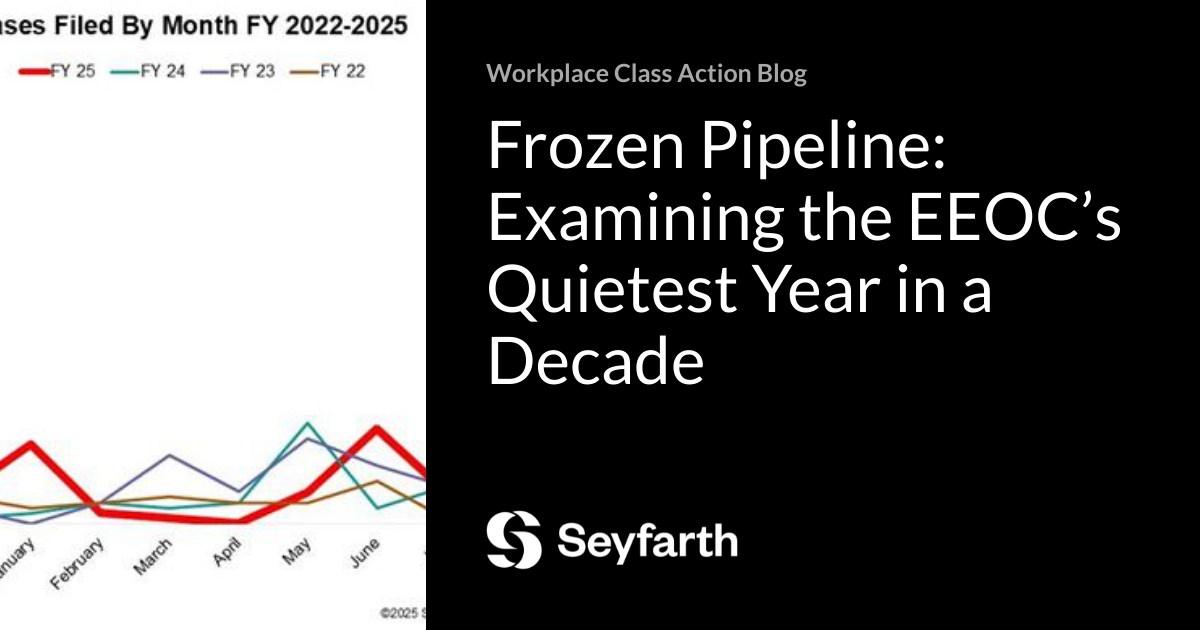
The timing of the EEOC’s litigation activity in FY 2025 provides a clear window into the agency’s internal shifts. The year began under the momentum of the previous administration, with the Commission filing 24 lawsuits in the first four months. January 2025 alone saw 15 filings, a surge interpreted by legal analysts as a "lame-duck" effort by outgoing enforcement personnel to initiate actions before the change in leadership.
Following the transition in late January, litigation activity fluctuated. A surprising secondary surge occurred in June 2025, with 18 lawsuits filed—a five-year high for that specific month. However, the traditional "September surge," which usually sees a massive influx of cases as the agency seeks to meet year-end quotas, was notably muted. In September 2025, the EEOC filed 35 lawsuits, a sharp decline compared to the 56 filings in September 2024 and the staggering 71 filings in September 2023. This deceleration suggests that the agency’s new leadership is prioritizing a more selective, targeted approach to litigation rather than the high-volume strategy pursued by their predecessors.
Geographic Trends and District Office Activity
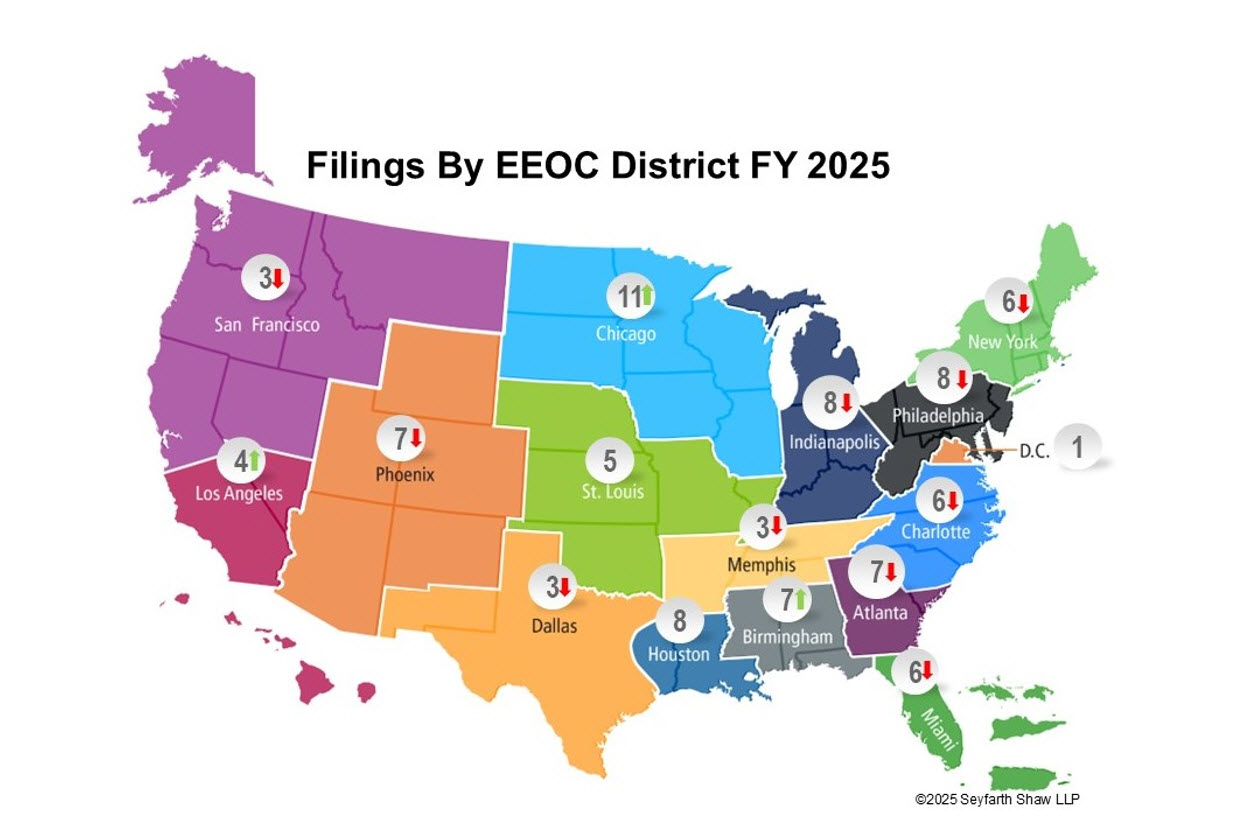
The distribution of lawsuits across the EEOC’s 15 District Offices reveals a shift in where the agency is concentrating its remaining resources. The Chicago District Office reclaimed its position as a leader in enforcement, filing 11 merit lawsuits. Other active regions included Philadelphia, Indianapolis, and Houston, each contributing eight filings. These offices have historically maintained a steady flow of litigation, regardless of the national political climate.
In contrast, West Coast offices that were powerhouses during the Obama and Biden eras remained uncharacteristically quiet. The Los Angeles, New York, and San Francisco offices filed only four, six, and three lawsuits, respectively. This continues a downward trend for these coastal districts that has persisted for several years. The lack of activity in these major metropolitan centers suggests either a shift in regional enforcement priorities or a significant backlog in the administrative processing of charges in those jurisdictions.

Subject Matter Analysis: The Pivot in Enforcement Priorities
While the total number of filings dropped, the composition of the EEOC’s docket offers critical insights into the types of claims the current administration deems worthy of federal intervention.
The Persistence of Disability and Pregnancy Claims
The Americans with Disabilities Act (ADA) remains a cornerstone of EEOC activity. The Commission filed 34 disability-related lawsuits in FY 2025, a figure that actually exceeds the number filed in FY 2022. The agency continues to focus on "invisible" disabilities, including mental health conditions such as PTSD, anxiety, and depression, as well as vision and hearing impairments.
Similarly, pregnancy-related discrimination saw a rise in prominence. With 10 lawsuits filed under the Pregnancy Discrimination Act and the newly enacted Pregnant Workers Fairness Act (PWFA), this category surpassed the Age Discrimination in Employment Act (ADEA) in volume. Acting Chair Lucas has publicly emphasized the protection of pregnant workers as a core mission, aligning with the administration’s focus on family-centric workplace protections.
The Religious Freedom Surge
One of the most notable shifts in FY 2025 was the increase in religious discrimination litigation. After years of record-high charges—fueled in part by COVID-19 vaccine mandate disputes—the EEOC filed 11 lawsuits asserting religious discrimination or failure to accommodate religious beliefs under Title VII. In August 2025, the EEOC issued a formal statement touting its commitment to protecting religious freedom, with Acting Chair Lucas criticizing previous "woke policies" that she claimed forced workers to choose between their faith and their livelihood.

The Retreat from LGBTQ+ Litigation and "Gender Ideology"
Perhaps the most dramatic ideological shift occurred regarding LGBTQ+ rights. In early 2025, the EEOC issued a statement asserting that "biological sex is real" and "immutable," signaling an end to the agency’s pursuit of cases involving gender identity or pronoun usage. Following an executive order aimed at "defending biological truth," the EEOC moved to dismiss several pending lawsuits involving transgender workers that had been initiated under the Biden administration. While private plaintiffs have intervened to keep some of these cases alive, the EEOC itself has ceased filing new actions in this area.
Race, National Origin, and "Anti-American Bias"
Race and national origin filings plummeted to a ten-year low, with only three such lawsuits filed in FY 2025. Interestingly, two of these filings involved theories of "reverse discrimination," where the agency alleged that American workers or non-Japanese workers were being passed over in favor of foreign nationals. This aligns with a February 2025 press release in which the Acting Chair vowed to protect American workers from "anti-American bias," reflecting a broader "America First" approach to labor enforcement.
Legal Constraints and the Absence of Quorum
The decline in litigation volume is not solely a matter of policy preference; it is also a matter of legal authority. The current lack of a quorum at the Commission level has significant procedural implications. Under existing delegations of authority, the General Counsel can file "routine" cases independently. However, the Commission must typically vote on cases that involve:
- Systemic or "pattern or practice" discrimination.
- Major expenditures of agency resources.
- Positions that challenge established Circuit Court precedent.
- Issues likely to generate significant public controversy.
Because the current leadership lacks the votes to authorize these complex matters, the EEOC’s 2025 filings were largely limited to individual, smaller-scale claims. This forced focus on "routine" litigation has effectively sidelined the agency’s ability to pursue the massive, headline-grabbing class actions that defined previous years.
Implications for the Employer Community
For employers and corporate legal departments, the EEOC’s FY 2025 activity provides a roadmap for risk management. While the overall threat of an EEOC-initiated lawsuit has statistically decreased, the agency remains a formidable opponent in specific sectors.
- Industry Focus: The healthcare industry remains a primary target for EEOC investigations, particularly regarding ADA accommodations and religious exemptions.
- Small and Mid-Sized Businesses: FY 2025 data shows the EEOC is increasingly willing to sue smaller regional businesses and local government entities, rather than focusing exclusively on the Fortune 500.
- The Private Bar Effect: Employers should be aware that the private plaintiff’s bar often monitors EEOC filings to identify emerging trends. Even if the EEOC retreats from certain areas—such as LGBTQ+ rights—private litigants may fill the void, emboldened by the administrative charges that continue to flow through the agency’s intake system.
- Compliance Priorities: Employers should prioritize updating their religious accommodation and pregnancy leave policies. Given the Acting Chair’s vocal support for these areas, they represent the highest likelihood of federal enforcement action.
As the EEOC enters the 2026 fiscal year, the legal community expects continued stability in this lower-volume, targeted approach. However, should the Senate confirm new commissioners and restore a quorum, the agency may once again find the legal footing to expand its litigation reach, albeit under a very different ideological banner than in years past. For now, the "sluggish" pace of the EEOC serves as a period of relative calm for employers, provided they stay aligned with the agency’s new, more traditionalist enforcement pillars.








