
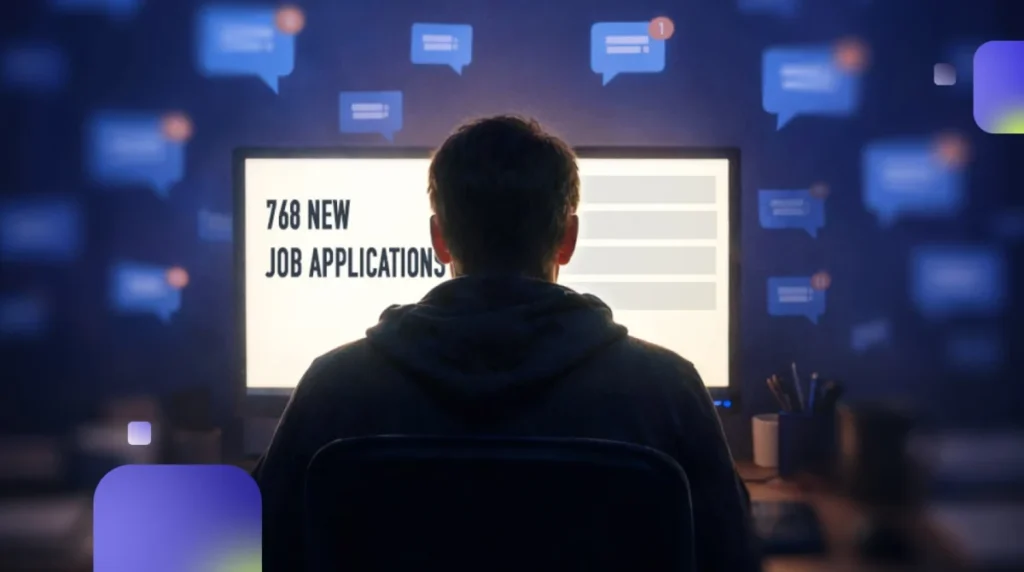
A profound transformation is reshaping the landscape of talent acquisition, a shift increasingly evident across platforms like Workable, where approximately 10% of all job applications are now being submitted via AI mass-apply tools. This burgeoning trend compels employers to confront a critical question: is this a genuine disruption demanding strategic adaptation, or merely a misunderstood evolution in candidate behavior? The answer, according to industry leaders, leans heavily towards the former, necessitating a fundamental recalibration of hiring strategies.
The digital metamorphosis of job seeking has been a continuous journey, accelerating dramatically with technological advancements. For decades, the arduous process of job searching involved poring over newspaper classifieds, meticulously typing cover letters, and physically mailing applications. The late 1990s heralded the advent of the internet and online job boards, democratizing access to opportunities and fundamentally altering how candidates connected with potential employers. This first wave of digital disruption, initially met with skepticism by some, quickly became the ubiquitous standard. Today, in the mid-2020s, artificial intelligence marks the next, perhaps even more significant, paradigm shift, embedding itself deeply into the very fabric of the job application process.
Workable CEO Nikos Moraitakis offers crucial insight into this evolving dynamic, dispelling a common misconception among recruiters. "These aren’t ‘fake’ candidates. The vast majority are real people with real resumes," Moraitakis asserts. This statement underscores a critical distinction: the tools may be AI-powered, but the intent and the individuals behind them are authentic. Candidates are increasingly leveraging AI to streamline their job search, from generating tailored cover letters to automating the submission of applications across multiple platforms. This efficiency is driven by a competitive job market where applying to a high volume of positions is often perceived as a necessary strategy to secure interviews. The motivation is not to deceive but to maximize reach and opportunity in an increasingly crowded digital space.
For many talent acquisition professionals, the initial surge in AI-assisted applications has evoked a sense of "pollution," a perception of overwhelming noise that obscures genuine talent. The instinctive reaction for some is to implement measures to block these applications entirely, viewing them as an impediment to efficient screening. However, Moraitakis cautions against such a knee-jerk response, drawing a powerful historical parallel. "Refusing AI-assisted applications in 2025 is a little like refusing applications that came from the web in 1997," he states. This analogy serves as a potent reminder of past technological shifts that were initially met with resistance but ultimately became indispensable. Just as employers who eschewed web-based applications risked missing out on a vast pool of qualified candidates in the late 20th century, those who block AI-assisted submissions today risk excluding proactive, tech-savvy individuals who are simply utilizing the most current tools available to navigate the modern job market.
The implications of this resistance are substantial. In an era where digital literacy and adaptability are highly valued skills, candidates who embrace AI tools for their job search often represent a forward-thinking demographic. Blocking their applications not only narrows the talent pool but also sends a potentially negative signal about an organization’s openness to innovation. Furthermore, it undermines the very purpose of talent acquisition: to find and attract the best possible candidates, regardless of the technological conduit through which their application arrives.
Workable’s strategic response to this evolving landscape is one of adaptation rather than resistance. Recognizing that AI tools for candidates are not a fleeting trend but an embedded component of modern job seeking, the company is focusing on improving the signals that truly matter. The core challenge, as Workable identifies it, is to effectively separate "signal from noise" amidst an ever-increasing volume of applications, whether human-generated or AI-driven. This necessitates a more sophisticated approach to understanding who is applying, their level of intent, and how frequently they engage with opportunities.
To address this, Workable is enhancing its platform to provide clearer identity and intent signals throughout the inbound funnel. Leveraging its vast dataset and unique insights derived from operating at a massive scale, Workable aims to equip hiring teams with the tools to discern genuine interest and suitability. This involves developing advanced algorithms that can analyze behavioral patterns, application consistency, and other data points that indicate a candidate’s seriousness and fit, beyond the mere submission of a resume. For instance, while a candidate might use an AI tool to apply to hundreds of jobs, Workable’s systems could identify patterns suggesting which applications are genuinely aligned with their skills and aspirations, or whether certain applications represent a more thoughtful engagement. This proactive approach helps employers navigate the heightened volume, ensuring that valuable candidates do not get lost in the deluge. As Moraitakis succinctly puts it, "The winners will be the employers with tools that can separate signal from noise."
The burgeoning volume of AI-assisted applications also brings into sharp focus the imperative for recruiters themselves to embrace AI. As application volume continues its upward trajectory, the manual processing and screening of candidates become unsustainable. This necessitates a symbiotic relationship where "AI must help process AI." Workable is at the forefront of equipping recruiters with advanced screening tools designed to ensure both efficiency and fairness. These tools leverage AI to automatically filter, categorize, and even rank applications based on predefined criteria, significantly reducing the time recruiters spend on initial reviews. This ensures that the screening process remains effective, identifying top talent more rapidly, while simultaneously safeguarding against potential human biases that can inadvertently creep into manual reviews. The goal is to free up recruiters from repetitive administrative tasks, allowing them to focus their expertise on more strategic activities like interviewing, candidate engagement, and building relationships. Moraitakis encapsulates this necessity with another profound statement: "We’re going to need AI as a countermeasure to AI."
The broader implications for talent acquisition are profound and multifaceted. The integration of AI is expanding the scale of processes that were once considered inherently human and intimate. While the essence of hiring—finding the right person for the right role—remains unchanged, the methodologies for achieving this are undergoing a radical overhaul. Recruiters now require modern tools that not only enhance efficiency but also ensure that the hiring process remains effective, fair, and ultimately rooted in informed human judgment. This means developing AI systems that augment human decision-making, providing data-driven insights without entirely replacing the nuanced understanding that only a human can bring to evaluating cultural fit, soft skills, and long-term potential.
Looking ahead, the trajectory is clear: candidate tools will continue to evolve and become even smarter, and application volumes will inevitably increase. This ongoing technological arms race between candidate-side and employer-side AI tools will redefine the competitive landscape of talent acquisition. For employers, staying ahead means continually investing in advanced platforms that can adapt to these changes, providing the intelligence needed to make astute hiring decisions. It also implies a shift in the skill sets required for recruiters, moving towards a more analytical, tech-savvy approach where understanding data and leveraging AI tools becomes as crucial as traditional interviewing techniques.
Workable’s mission, however, remains steadfast amidst this technological flux: to empower employers to find and hire great people. The company recognizes that the core human element of hiring, the connection between an individual and an organization, must be preserved and enhanced, not diminished, by technology. The goal is not to automate away human interaction but to optimize the initial stages of the funnel so that human judgment can be applied more effectively to the most promising candidates.
The current job market is not merely undergoing a temporary adjustment; it is experiencing a fundamental structural change that will not revert to previous norms. As Moraitakis concludes, "The job market isn’t going back. It’s time to build the infrastructure that lets great hires rise to the top – no matter how they knock on the door." This forward-looking perspective highlights the urgency for organizations to embrace innovation, to develop robust, AI-powered infrastructures that can intelligently process the new wave of applications, and ultimately, to ensure that talent can be identified and cultivated in an increasingly digital and AI-driven world. The future of hiring is here, and it demands adaptability, technological fluency, and a renewed focus on the critical signals that reveal true talent.






