
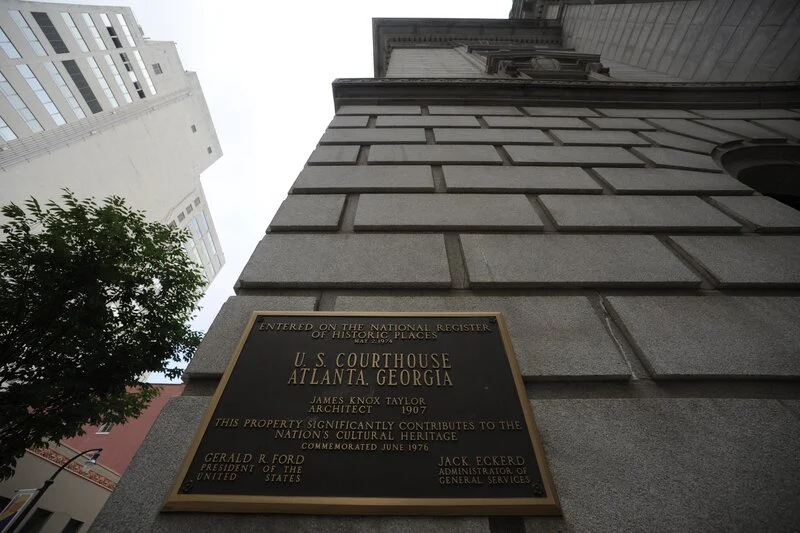
The U.S. Court of Appeals for the Eleventh Circuit has affirmed a lower court’s decision to deny a preliminary injunction against Executive Order 14063, a Biden-era mandate requiring project labor agreements on federal construction projects valued at $35 million or more. In a significant victory for the administration’s labor policy, the appellate panel ruled that an association of builders failed to demonstrate a substantial likelihood of success on the merits of their claims, which argued that the mandate exceeded executive authority and violated federal procurement laws. This decision reinforces the federal government’s ability to set labor conditions for major infrastructure investments, marking a pivotal moment in the ongoing legal tug-of-war between organized labor advocates and open-shop contracting groups.
The Core of the Legal Challenge
The litigation centers on Executive Order 14063, titled "Use of Project Labor Agreements in Federal Construction Projects," which President Biden signed in early 2022. The order requires that for "large-scale" construction projects—defined as those with a total estimated cost to the federal government of $35 million or more—all contractors and subcontractors must negotiate or become party to a project labor agreement (PLA) with one or more appropriate labor organizations.
A Project Labor Agreement is a pre-hire collective bargaining agreement that establishes the terms and conditions of employment for a specific construction project. These agreements typically include provisions for wages, benefits, dispute resolution procedures, and, most importantly for the government, "no-strike" and "no-lockout" clauses intended to prevent work stoppages.
The plaintiffs, led by the Associated Builders and Contractors (ABC), a national trade association representing non-union construction firms, sought to block the mandate. They contended that the executive order violates the Competition in Contracting Act (CICA) and the Administrative Procedure Act (APA). The ABC argued that by requiring PLAs, the government effectively shuts out non-union contractors who do not wish to operate under union-style work rules, thereby reducing competition and increasing costs for taxpayers.
However, the Eleventh Circuit’s ruling found that the district court did not abuse its discretion in determining that the plaintiffs had not met the high bar required for a preliminary injunction. The court noted that the President possesses broad authority under the Federal Property and Administrative Services Act (FPASA), often referred to as the Procurement Act, to issue policies that promote "economy and efficiency" in federal contracting.
Historical Context and Executive Evolution
The use of PLAs in federal contracting has been a partisan flashpoint for decades, with the policy landscape shifting significantly between administrations.
- The George W. Bush Era: In 2001, President Bush issued Executive Order 13202, which prohibited federal agencies from either requiring or prohibiting PLAs on federal construction projects. The goal was to maintain "neutrality" regarding labor agreements.
- The Obama Era: In 2009, President Obama reversed this with Executive Order 13502, which encouraged federal agencies to use PLAs for projects exceeding $25 million but did not mandate them.
- The Biden Era: President Biden’s Executive Order 14063 took the Obama-era policy a step further by transitioning from "encouragement" to a "mandate" for projects over $35 million. This shift was designed to ensure that the massive influx of federal spending from the Infrastructure Investment and Jobs Act (IIJA) and the Inflation Reduction Act (IRA) would result in stable, high-quality jobs.
The Eleventh Circuit’s decision acknowledges this historical precedent, suggesting that the executive branch has long exercised discretion over labor-related procurement policies, provided they are tied to the functional goals of the procurement process.
Timeline of the Litigation
The journey to the Eleventh Circuit began shortly after the final rule implementing the executive order was published.
- February 4, 2022: President Biden signs Executive Order 14063.
- December 22, 2023: The Federal Acquisition Regulatory (FAR) Council issues the final rule to implement the order, setting the effective date for January 22, 2024.
- March 2024: Associated Builders and Contractors (ABC) and its Florida First Coast chapter file a lawsuit in the U.S. District Court for the Middle District of Florida. They argue the mandate is an overreach of executive power.
- Late 2024: The District Court denies the plaintiffs’ request for a preliminary injunction, ruling that the ABC failed to prove that the mandate would cause irreparable harm or that they were likely to win on the legal merits.
- 2025: The case is appealed to the Eleventh Circuit.
- April 21, 2026: The Eleventh Circuit issues its ruling, affirming the district court’s denial of the injunction.
Supporting Data and Economic Implications
The scale of the projects affected by this ruling is immense. According to data from the Office of Management and Budget (OMB), federal construction spending on "large-scale" projects (over $35 million) accounts for a significant portion of the total federal construction budget.
In the fiscal years following the passage of the Infrastructure Investment and Jobs Act, the federal government has overseen hundreds of projects that meet this threshold. These include the modernization of federal buildings, the construction of military installations, and major civil works projects handled by the U.S. Army Corps of Engineers.
Proponents of the mandate point to studies suggesting that PLAs can lead to better project outcomes. A 2023 report from the Economic Policy Institute (EPI) argued that PLAs help manage complex projects by providing a steady supply of highly skilled labor and reducing the administrative burden of dealing with multiple different unions and work rules on a single site.
Conversely, the ABC has cited data suggesting that PLA mandates can increase construction costs by 12% to 18%. Their research indicates that because 88.3% of the U.S. construction workforce does not belong to a union, mandates effectively limit the pool of bidders to a small fraction of the industry, potentially driving up prices due to lack of competition.
Official Reactions and Industry Perspectives
The ruling has drawn sharp reactions from both sides of the labor-management divide.
The Biden Administration and Labor Advocates:
The White House hailed the decision as a victory for American workers. A spokesperson for the Department of Labor stated, "Project Labor Agreements ensure that the biggest, most complex federal projects are completed on time and on budget by the best-trained workers in the world. This ruling affirms the President’s authority to use every tool at his disposal to build a stronger middle class."
Sean McGarvey, President of North America’s Building Trades Unions (NABTU), echoed these sentiments. "The Eleventh Circuit has recognized what we have known all along: PLAs are a proven model for success. They eliminate the risk of strikes and ensure that federal tax dollars are spent on projects that provide living wages and safe working conditions."
Industry Opponents:
On the other side, the Associated Builders and Contractors expressed deep disappointment and signaled that the legal battle is far from over. "We are disappointed that the court has allowed this anti-competitive mandate to stand for now," said Ben Brubeck, ABC Vice President of Regulatory, Labor, and State Affairs. "This executive order discriminates against the vast majority of the construction workforce and will lead to higher costs for taxpayers at a time when inflation is already a major concern. We will continue to fight this in the courts on the merits of the full case."
Legal Analysis and Broader Implications
The Eleventh Circuit’s refusal to grant an injunction hinges on the interpretation of the "Economy and Efficiency" clause of the Procurement Act. For decades, courts have given the President wide latitude to determine what policies promote the efficient operation of the government. By framing the PLA mandate as a tool to prevent work stoppages and ensure a reliable labor supply, the administration successfully argued that the order has a "sufficient nexus" to the goals of the Procurement Act.
However, legal experts suggest that the case is not yet fully settled. While the preliminary injunction was denied, the underlying lawsuit—challenging the permanent legality of the rule—will continue in the district court.
"The standard for a preliminary injunction is very high," noted a legal analyst specializing in federal procurement. "The court isn’t saying the ABC is definitely wrong; they are saying the ABC hasn’t yet proven they are definitely right. The discovery phase of the trial may reveal more about whether these mandates actually achieve the efficiency they claim, or if they are purely political instruments."
The implications of this ruling extend beyond the Eleventh Circuit. Other circuits may see similar challenges, and if a split develops between different appellate courts, the issue could eventually reach the U.S. Supreme Court.
Impact on Future Federal Contracting
For contractors, the immediate impact of the ruling is clear: for any federal project exceeding $35 million, they must be prepared to work under a PLA. This requires non-union firms to make a difficult choice:
- Adaptation: Modify their business models to accommodate union-negotiated work rules, benefit contributions, and hiring hall procedures for the duration of the federal project.
- Avoidance: Forego bidding on large-scale federal contracts, potentially losing out on a significant revenue stream as infrastructure spending continues to peak.
- Joint Ventures: Partner with unionized firms to navigate the requirements of the PLA.
For the federal government, the ruling provides the green light to continue implementing its labor agenda. Agencies like the General Services Administration (GSA) and the Department of Defense (DOD) will continue to incorporate PLA requirements into their Requests for Proposals (RFPs), confident that the legal framework supporting these requirements has held up under appellate scrutiny.
As the 2026 construction season approaches, the industry will be watching closely to see how these requirements affect bid participation and project timelines. With billions of dollars in federal infrastructure projects currently in the pipeline, the Eleventh Circuit’s decision stands as a major pillar of the current administration’s economic and labor policy.








