
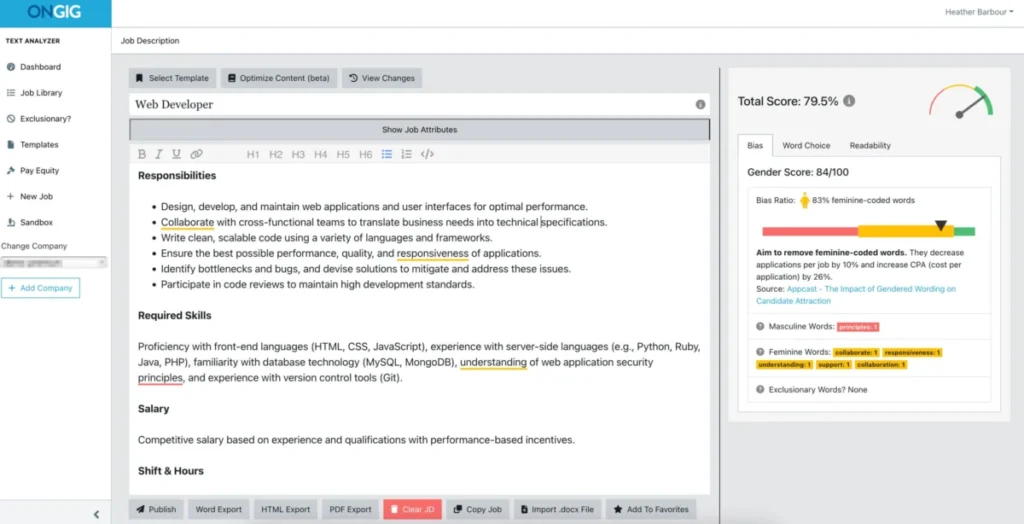
The intricate landscape of modern talent acquisition presents a myriad of challenges for organizations of all sizes. From crafting compelling narratives to ensuring regulatory compliance and fostering diversity, the humble job description (JD) has evolved from a mere listing of duties into a critical strategic asset. Amidst this complexity, the emergence of automated job description builders, exemplified by solutions like Ongig’s Text Analyzer, marks a significant technological leap, promising to revolutionize how companies attract, engage, and secure top talent.
The Evolving Crucible of Talent Acquisition: Why Job Descriptions Matter More Than Ever
For decades, the creation and management of job descriptions largely remained a manual, often fragmented, process. In smaller enterprises, HR managers or even department heads would individually draft JDs, a task that, while seemingly straightforward for a limited number of roles, often suffered from subjectivity and inconsistency. As organizations scaled, this challenge amplified exponentially. A study by the Society for Human Resource Management (SHRM) indicates that companies spend an average of 42 days to fill an open position, with a significant portion of this time dedicated to administrative tasks like drafting and refining job descriptions. Inefficient JD processes contribute directly to this extended time-to-hire, leading to increased recruitment costs and lost productivity.
Beyond mere efficiency, the quality and content of a job description profoundly impact a company’s ability to build a robust and diverse hiring pipeline. Effective JDs are the first impression a potential candidate has of a role and the organization. They must be detailed yet concise, accurate, and consistent across departments, while also projecting an objective, professional, and inclusive image. Research from Career Plug highlighted that 52% of job seekers turn down opportunities due to poor experiences with prospective employers, underscoring the critical role of every touchpoint, including the initial job advertisement. A poorly written, jargon-laden, or biased JD can deter qualified candidates, reduce application rates, and ultimately undermine strategic talent goals.
The contemporary focus on Diversity, Equity, and Inclusion (DEI) further elevates the importance of meticulously crafted job descriptions. Organizations are increasingly recognizing that diverse companies outperform their less inclusive counterparts, with some studies showing a 36% increase in profitability. However, unconscious bias in language can inadvertently exclude underrepresented groups. Terms that are masculine or feminine-coded, or exclusionary phrases, can subtly signal an unwelcoming environment, shrinking the talent pool before the interview process even begins. The imperative to attract a broad spectrum of talent necessitates a shift towards gender-neutral, objective, and culturally sensitive language in all recruitment materials.
Furthermore, the regulatory landscape surrounding employment is in constant flux. Compliance with mandates from bodies like the Office of Federal Contract Compliance Programs (OFCCP) in the United States, which ensures non-discrimination and affirmative action by federal contractors, is paramount. Job descriptions must adhere to Equal Employment Opportunity (EEO) guidelines, safeguarding against any form of discrimination. The increasing scrutiny on pay transparency, with new laws requiring salary ranges to be included in postings in several jurisdictions, adds another layer of complexity. Manually ensuring every JD meets these evolving standards across a large organization is a monumental, often error-prone, task.
Ongig’s Text Analyzer: An AI-Powered Solution for Modern Recruitment
Addressing these multifaceted challenges, Ongig has positioned its automated job description builder, Text Analyzer, as a comprehensive solution designed to streamline the entire JD lifecycle—from initial creation to ongoing management and optimization. The platform leverages artificial intelligence (AI) and natural language processing (NLP) to empower HR teams and hiring managers to produce high-quality, compliant, and inclusive job descriptions at scale.
Creating New Job Descriptions with AI-Driven Efficiency
For organizations starting new recruitment drives or expanding into new roles, Text Analyzer offers an intuitive starting point. Users can initiate the creation process by simply inputting a job title. The AI then draws upon vast datasets of successful job descriptions and industry best practices to generate a foundational draft. This capability dramatically reduces the time and effort traditionally associated with drafting JDs from scratch.
The tool provides customizable templates, allowing organizations to embed their unique brand voice, preferred sections, and core values directly into the JD generation process. For instance, a user can select sections like "Required Skills," "Diversity & Inclusion Statement," or "Mission Statement," and the AI will populate these with relevant, context-aware content. The ability to quickly generate a comprehensive draft allows teams to focus on fine-tuning specific details rather than spending hours on initial composition.
Once a draft is generated, Text Analyzer’s "Optimize Content" function comes into play. This feature is crucial for refining the text, automatically addressing common issues such as masculine bias, overly long sentences, and corporate jargon. By clicking "Rewrite Now," the AI intelligently rephrases content to enhance clarity, conciseness, and inclusivity, directly contributing to a more engaging and accessible job posting.
Optimizing for Readability and Inclusivity: The Science of Engagement
A core strength of Text Analyzer lies in its sophisticated analysis capabilities, particularly its readability score and bias detection. Under the "Section Finder" tab, the platform not only identifies essential JD sections but also explains their strategic importance, often backed by current workforce data. For example, it might highlight the value of a "Flexible Location" section by noting that 32% of professionals would consider a pay cut for remote work opportunities. This data-driven approach helps recruiters understand the impact of each element on candidate attraction.
After optimization, users typically observe a significant increase in their job description’s overall score, reflecting improved readability and inclusivity. The platform actively flags potentially biased language by underlining words and offering neutral alternatives. For instance, hovering over "support" might reveal it as a feminine-coded term and suggest "help" as a gender-neutral replacement. This granular feedback empowers users to make informed choices, systematically removing barriers for underrepresented candidates and ensuring the language resonates with a broader audience. The ability to easily replace masculine-coded or exclusionary words ensures that JDs are truly gender-neutral and welcoming. Users can also view a comparison of versions, allowing them to track and evaluate the impact of the suggested changes.
Ensuring Compliance in a Dynamic Regulatory Environment
Compliance is a non-negotiable aspect of modern recruitment. Text Analyzer simplifies this complex requirement by incorporating checks against the latest regulatory standards, including OFCCP rules. A simple checkbox activation allows the platform to scan for instances of potential discrimination, helping organizations maintain their status as Equal Employment Opportunity (EEO) employers.
This compliance feature is particularly pertinent in light of evolving governmental directives, such as the Trump administration’s emphasis on merit-based hiring criteria and the scrutiny of DEI initiatives in federal contracting. By ensuring JDs are free from discriminatory language and promote fair opportunity, Ongig’s tool helps companies mitigate legal risks, streamline hiring contracts, and uphold a reputation for ethical recruitment practices. Such proactive compliance not only prevents costly legal battles but also strengthens employer branding, fostering trust among employees, investors, and clients alike.
Managing and Updating Existing Job Descriptions at Scale
For organizations with extensive libraries of existing job descriptions, the challenge shifts from creation to maintenance. Outdated JDs can misrepresent roles, fail to attract contemporary talent, and fall out of compliance. Text Analyzer addresses this by offering robust tools for reviewing, updating, and reformatting existing content.
The platform can ingest existing JDs and perform a comprehensive quality review, checking for consistency, readability, and biased language. This automated audit capability drastically cuts down on the human labor typically required for such a task, freeing up HR professionals for more strategic initiatives. Users can leverage the tool to remove jargon, simplify complex sentences, and inject more inclusive language, thereby improving conversion rates from prospective employees.
The ability to perform comparative analysis between different job descriptions and against company standards ensures uniformity across the organization. If manual updates are preferred, Text Analyzer still provides valuable guidance, scoring JDs on various factors and offering actionable suggestions for improvement. This blended approach allows for flexibility while maintaining a high standard of quality and consistency.
Large-Scale Reformatting and Bridging the JD-Job Posting Gap
Consistency in formatting is crucial for a cohesive employer brand. Text Analyzer excels in large-scale reformatting, comparing existing JDs against preferred organizational templates and automatically making necessary edits. This ensures that all job postings adhere to company-wide standards for structure, content, and branding. Locked templates within the system prevent unauthorized edits, guaranteeing consistency and compliance across all departments and roles. This feature is particularly valuable for large enterprises that struggle with disparate JD formats originating from various teams.
Furthermore, Ongig’s platform offers a critical bridge between internal job descriptions and external job postings. With a single click, JDs can be reformatted into attractive, candidate-centric job postings. This shortcut significantly boosts the talent acquisition team’s efficiency, improving the speed-to-job market rate. The tool also optimizes job postings for search engine optimization (SEO), enhancing visibility on job boards and increasing candidate conversions. By ordering sections to prioritize what candidates seek (e.g., "What You’ll Do," "Salary," "Making an Impact"), the platform ensures job ads are highly engaging and relevant to the target audience.
The Centralized JD Library: A Single Source of Truth
Managing thousands of job descriptions across an enterprise can be an administrative nightmare. Ongig’s cloud-based, centralized JD library provides a reliable and intuitive solution. This single source of truth prevents the hassle of outdated content and potential legal issues. The library offers useful details at a glance, including the job title, status (active/non-active), last updated date, and a compliance score.
This systematic management ensures that hiring teams are always in sync, working with the most current and compliant versions of JDs. The ability to easily edit, update, and delete entries fosters agility in recruitment strategies, allowing organizations to adapt quickly to market demands and internal changes.
Impact and Success Stories: Quantifiable Results
The real-world impact of Ongig’s Text Analyzer is evidenced by a range of success stories across diverse industries:
- Increased Application Rates: A global employment website utilizing Text Analyzer for its 60,000 job postings reported a remarkable 133% jump in total application starts and a 21% rise in applications from women. This highlights the direct correlation between optimized, inclusive language and a broader, more diverse applicant pool.
- Healthcare Sector Efficiency: In the demanding healthcare sector, one client successfully revamped over 5,000 job postings for standardization and inclusivity. Another large healthcare client, managing over 100,000 job postings monthly, achieved complete automation of their JD process, showcasing significant operational streamlining.
- Enhanced Candidate Quality in Entertainment: An entertainment industry enterprise focused on inclusivity and consistency in its JDs saw a 100% increase in candidate quality, demonstrating the tool’s ability to attract top-tier talent by crafting more appealing and accurate role descriptions.
- Diversity in STEM and Finance: An aerospace technology agency, aiming to address gender imbalance in traditionally male-dominated fields like engineering and finance, observed a 22% increase in female applicants after integrating Text Analyzer. Similarly, a major insurance organization, targeting underrepresented groups, achieved a 4X increase in applications from these demographics, illustrating the profound impact of inclusive language on diversity recruitment goals.
These case studies underscore how nuanced changes facilitated by an automated builder can lead to significant, measurable improvements in recruitment outcomes, from boosting application volumes to enhancing candidate quality and fostering greater diversity.
Broader Implications for the Future of HR
The advent of sophisticated automated job description builders like Ongig’s Text Analyzer signals a fundamental shift in the role of HR and talent acquisition. By automating administrative burdens and providing intelligent assistance for content creation and optimization, these tools enable HR professionals to transition from transactional tasks to more strategic endeavors. They can dedicate more time to candidate engagement, talent strategy, and fostering a truly inclusive workplace culture.
The integration of AI into JD management is not merely about efficiency; it’s about elevating the entire recruitment process to a higher standard of fairness, transparency, and effectiveness. It empowers organizations to build stronger employer brands, reduce legal risks, and, most importantly, connect with a wider, more diverse talent pool that is critical for innovation and sustained growth in the 21st century economy. As the demand for talent continues to intensify and the regulatory environment evolves, automated JD builders are poised to become an indispensable component of every forward-thinking HR technology stack.






