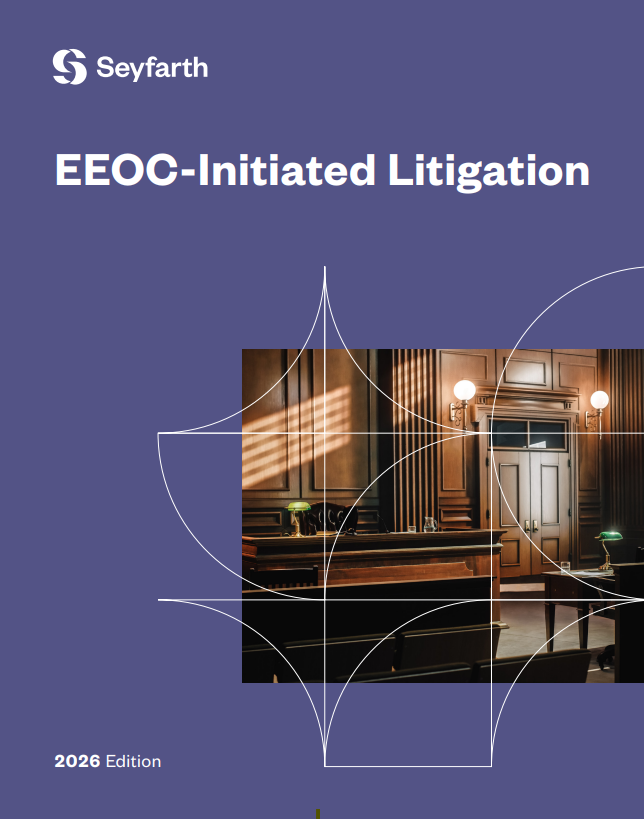
The legal landscape governing American workplaces underwent a seismic shift over the past twelve months, a reality documented in exhaustive detail by the newly released annual report from Seyfarth Shaw LLP. As the Equal Employment Opportunity Commission (EEOC) continues to pivot its strategy toward high-impact, systemic litigation, the 2026 edition of this comprehensive desk reference serves as a critical post-mortem of 2025 and a roadmap for the regulatory challenges awaiting employers in the coming year. The report, titled EEOC-Initiated Litigation: 2026 Edition, arrives at a moment when corporate counsel and human resources departments are grappling with the most aggressive enforcement environment witnessed in decades.
According to the analysis, 2025 represented a watershed year for the EEOC, characterized by a departure from traditional mediation-heavy approaches in favor of a "litigation-first" posture. This transition has been fueled by a combination of increased federal funding, a stabilized commission membership, and a refined Strategic Enforcement Plan (SEP) that prioritizes emerging issues such as artificial intelligence in hiring, the protection of vulnerable workers in the "gig economy," and the robust enforcement of the Pregnant Workers Fairness Act (PWFA).
A Transformative Year for Federal Oversight
The 2026 edition emphasizes that the "dramatic" changes observed in 2025 were not merely incremental but structural. Following a period of relative institutional stability, the EEOC in 2025 leveraged its full regulatory weight to challenge long-standing corporate practices. Seyfarth Shaw’s report identifies a clear trend: the commission is no longer content with settling individual charges of discrimination. Instead, it is increasingly focusing its resources on "systemic" cases—those involving alleged patterns or practices of discrimination that affect large groups of employees across entire organizations or industries.
This shift is reflected in the sheer volume and complexity of the filings recorded throughout the 2025 fiscal year. The report notes that the EEOC’s legal activity peaked during the final quarter of the fiscal year, a traditional "surge" period that saw dozens of lawsuits filed in a matter of weeks. However, unlike previous years where the surge was dominated by smaller individual claims, the 2025 surge included a significant proportion of class-based actions targeting systemic barriers to recruitment and promotion.
Chronology of Enforcement: The 2025 Timeline
The evolution of EEOC enforcement in 2025 followed a distinct trajectory, beginning with a focus on policy guidance and culminating in a wave of high-stakes litigation.
In the first quarter of 2025, the commission focused heavily on the implementation of updated guidance regarding the use of automated systems and artificial intelligence (AI) in employment decisions. As companies increasingly turned to algorithmic tools to screen resumes and evaluate performance, the EEOC issued a series of warnings that "technological neutrality" is not a defense against disparate impact claims.
By the second quarter, the focus shifted toward the Pregnant Workers Fairness Act (PWFA) and the Providing Urgent Maternal Protections (PUMP) for Nursing Mothers Act. The report highlights a string of lawsuits filed during this period against mid-sized and large retailers, alleging failure to provide reasonable accommodations such as additional breaks or light-duty assignments.
The third and fourth quarters of 2025 saw the culmination of several multi-year investigations into systemic harassment and discriminatory hiring practices. Notably, the EEOC launched several high-profile suits against tech firms and manufacturing giants, alleging that their recruitment algorithms and "culture-fit" assessments inherently biased the selection process against older workers and minority candidates.
Statistical Analysis of Litigation Trends
The data compiled in the 2026 Edition provides a sobering look at the financial and operational risks facing modern employers. According to Seyfarth Shaw’s findings, the EEOC filed approximately 148 new merits lawsuits in fiscal year 2025, a figure that remains consistent with the aggressive filing rates seen in the previous year but represents a 20% increase over the five-year average.
Of these filings, disability discrimination under the Americans with Disabilities Act (ADA) remained the most frequent basis for litigation, accounting for nearly 35% of all new suits. This was closely followed by Title VII claims involving race and sex discrimination. However, the most significant statistical outlier in 2025 was the rise in retaliation claims. Retaliation now features in over 50% of all EEOC filings, either as a standalone claim or in conjunction with other charges, signaling the commission’s intent to protect "whistleblowers" who report workplace misconduct.
The report also tracks the monetary recovery for aggrieved parties. In 2025, the EEOC secured over $500 million in monetary relief through litigation and administrative enforcement, one of the highest totals in the agency’s history. This figure includes several multi-million dollar settlements in systemic cases involving sexual harassment and discriminatory background check policies.
The Impact of Artificial Intelligence and Algorithmic Bias
Perhaps the most forward-looking section of the Seyfarth Shaw report involves the EEOC’s crackdown on "algorithmic discrimination." As the workplace becomes more digitized, the commission has identified the "black box" of AI hiring tools as a primary frontier for enforcement.
The 2026 Edition analyzes several key decisions from 2025 where courts began to clarify the standards for employer liability when using third-party AI vendors. The EEOC has maintained that employers cannot delegate their civil rights obligations to software providers. If an algorithm produces a biased result, the employer—not the software developer—is held liable. This has prompted a massive wave of internal audits across the Fortune 500, as companies scramble to ensure their automated tools comply with the "four-fifths rule" and other federal benchmarks for adverse impact.
Official Responses and Industry Reactions
The legal community has reacted to the findings of the 2026 Edition with a mixture of caution and urgency. Leading employment defense attorneys suggest that the EEOC’s current trajectory indicates a period of "regulation through litigation," where the commission uses lawsuits to set new legal precedents rather than waiting for legislative changes.
"The 2026 report confirms what we have been seeing on the ground: the EEOC is emboldened," said a senior partner at a national employment firm, commenting on the general trends noted in the analysis. "They are looking for ‘test cases’ that can redefine what constitutes a reasonable accommodation or a discriminatory hiring practice in the modern age. For employers, the margin for error has never been thinner."
Conversely, advocacy groups for employee rights have praised the EEOC’s aggressive stance. Representatives from various civil rights organizations have noted that the focus on systemic litigation is the only effective way to dismantle "institutionalized" barriers that individual lawsuits fail to reach.
Broader Impact and Implications for 2026
Looking ahead, Seyfarth Shaw’s report predicts that 2026 will be defined by the "maturation" of the trends established in 2025. Employers should expect continued scrutiny of Diversity, Equity, and Inclusion (DEI) programs. Following various court challenges to affirmative action and corporate diversity initiatives, the EEOC has signaled that it will closely monitor how companies adjust their DEI strategies to ensure they do not inadvertently violate Title VII’s prohibition on race-based decision-making.
Furthermore, the report anticipates an increase in "intersectionality" claims—lawsuits where plaintiffs allege discrimination based on a combination of protected characteristics, such as race and age, or gender and disability. This complexity requires human resources teams to adopt more sophisticated data tracking and compliance mechanisms.
The 2026 Edition concludes with a set of strategic recommendations for employers. These include:
- Conducting Proactive Audits: Regularly reviewing hiring algorithms and compensation structures to identify and rectify pay disparities before they trigger an EEOC investigation.
- Enhanced Training: Moving beyond "check-the-box" anti-harassment training toward immersive programs that address subtle forms of bias and the specific requirements of the PWFA.
- Robust Documentation: Maintaining meticulous records of the interactive process for disability and pregnancy accommodations, as these remain the most common flashpoints for litigation.
- Vendor Management: Scrutinizing the contracts and methodologies of third-party HR technology providers to ensure compliance with federal anti-discrimination laws.
As the EEOC continues to evolve into a more litigious and data-driven entity, the EEOC-Initiated Litigation: 2026 Edition stands as an essential resource for those tasked with navigating the complexities of the American workplace. The "dramatic" shifts of 2025 are no longer anomalies; they are the new standard for federal oversight in the mid-2020s. For corporate leaders, the message of the report is clear: in an era of heightened enforcement, the best defense is a proactive, data-backed offense focused on compliance and cultural transparency.