
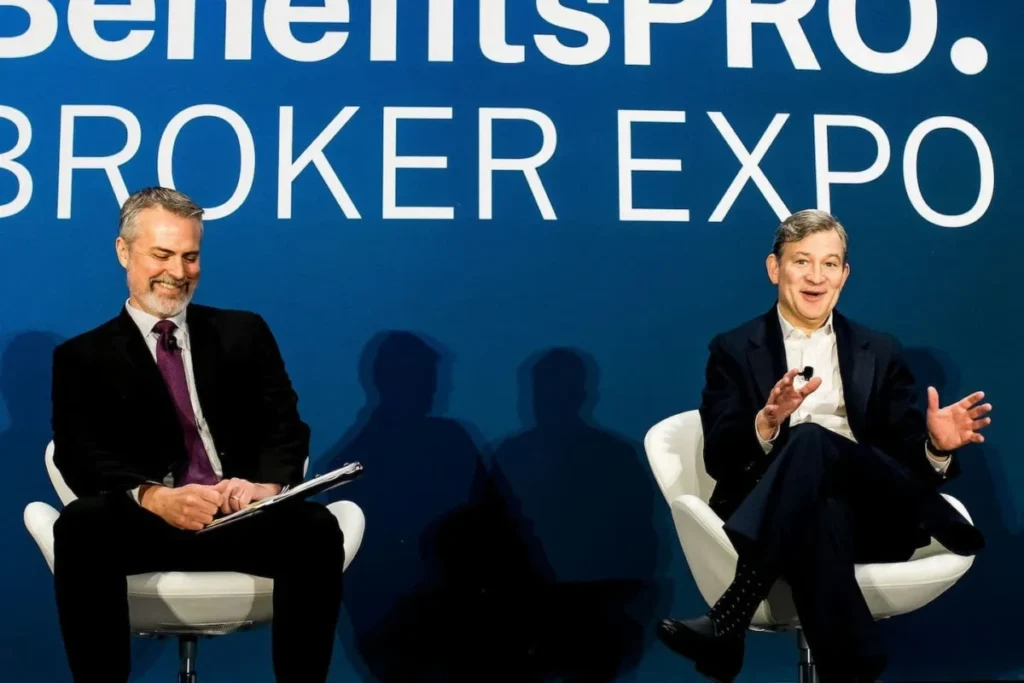
The employee benefits landscape, a dynamic and often overwhelming sphere for both employers and their workforces, is currently grappling with an unprecedented surge in mental health challenges, prominently featuring widespread burnout. This critical issue took center stage at the BenefitsPRO Broker Expo, held in Chicago from April 28-30, where veteran journalist and mindfulness advocate Dan Harris delivered a compelling keynote address. Harris, a former news anchor and correspondent for ABC News, shared his profound personal journey from professional high-stress and a public panic attack to finding solace and a new purpose in practical meditation, offering invaluable insights into navigating the modern workplace’s mental health complexities.
The expo, a premier gathering for benefit brokers, consultants, and HR professionals, serves as a vital platform for discussing emerging trends, regulatory changes, and innovative solutions in the employee benefits sector. This year, the pervasive issue of employee well-being, particularly mental health and burnout, dominated many discussions, reflecting a growing recognition across industries of its profound impact on productivity, employee retention, and overall organizational health. Harris’s keynote was particularly timely, resonating with an audience acutely aware of the statistic that over half of Americans are currently experiencing burnout, a figure that underscores a national crisis with significant economic and social ramifications.
The Evolving Landscape of Employee Well-being
The employee benefits industry is in a perpetual state of flux, driven by technological advancements, evolving workforce demographics, and shifting societal expectations regarding work-life balance and mental health support. Historically, benefits packages primarily focused on physical health, retirement planning, and basic life insurance. However, the 21st century has brought a paradigm shift, compelling employers to adopt a more holistic view of employee well-being that explicitly includes mental, emotional, and financial health. The COVID-19 pandemic further accelerated this shift, exposing vulnerabilities in existing support systems and amplifying pre-existing stressors, leading to a dramatic increase in reported cases of anxiety, depression, and, critically, burnout.
Burnout, as defined by the World Health Organization (WHO) in its International Classification of Diseases (ICD-11), is an occupational phenomenon conceptualized as resulting from chronic workplace stress that has not been successfully managed. It is characterized by three dimensions: feelings of energy depletion or exhaustion; increased mental distance from one’s job, or feelings of negativism or cynicism related to one’s job; and reduced professional efficacy. Its prevalence has become a significant concern for human resources departments and benefit providers alike, prompting a re-evaluation of current strategies and the exploration of new interventions.
Dan Harris’s Journey: From Newsroom Stress to Mindfulness Advocacy
Dan Harris’s personal narrative provides a poignant illustration of the profound impact of high-stress environments on mental health. For 21 years, Harris was a prominent figure at ABC News, where he hosted prestigious programs such as Nightline and the weekend editions of Good Morning America. His career immersed him in the intense, often harrowing world of broadcast journalism, frequently requiring him to cover conflict zones and report on traumatic events from war-torn countries. This relentless exposure to human suffering and the constant pressure of a demanding news cycle took a severe toll on his mental well-being.
Harris openly shared his struggles with depression and his attempts to self-medicate with recreational drugs to cope with the immense stress and emotional fallout of his work. This period culminated in a widely publicized incident in 2004: a live, on-air panic attack during a broadcast of Good Morning America. This moment, which he describes as the most embarrassing of his life, was also a pivotal turning point. In the immediate aftermath, Harris feared his career was irrevocably over. However, this crisis ultimately served as a catalyst for profound personal change and a new professional direction.
The Genesis of "10% Happier": A Practical Approach to Mindfulness
Following his on-air panic attack, Harris embarked on a journey of self-discovery, exploring various avenues for mental health improvement. He initially approached meditation with skepticism, viewing it as a "woo-woo" or mystical practice. However, driven by a desperate need for effective coping mechanisms, he delved into its practical applications. His rigorous journalistic instincts led him to investigate the scientific basis of mindfulness and meditation, discovering a wealth of research supporting its benefits for stress reduction, emotional regulation, and overall well-being.
This exploration led to a profound transformation in his life and, subsequently, his career. In 2014, Harris published 10% Happier: How I Tamed the Voice in My Head, Reduced Stress Without Losing My Edge, and Found Self-Help That Actually Works—A True Story. The book, which became a #1 New York Times bestseller, demystified meditation, presenting it as a practical, secular tool accessible to anyone, regardless of their spiritual beliefs. It resonated deeply with a broad audience, particularly those in high-stress professions, who sought tangible methods to manage anxiety and improve their mental resilience without feeling like they had to abandon their ambitious drives.
The success of the book spawned a popular podcast, also titled 10% Happier, where Harris interviews scientists, meditation teachers, and other experts about the intersection of mindfulness, well-being, and modern life. He also co-founded the 10% Happier app, further expanding the reach of his practical approach to meditation. Through these platforms, Harris has become a leading voice in the secular mindfulness movement, advocating for its integration into daily life as a means to achieve greater calm, clarity, and overall happiness.
The Broader Implications for Employee Benefits and HR
Harris’s keynote at the BenefitsPRO Broker Expo underscored a critical message for the benefits industry: addressing mental health and burnout is no longer merely a compassionate gesture but a strategic imperative. The financial costs associated with untreated mental health conditions and burnout are staggering. According to the American Psychiatric Association, mental health conditions cost the global economy an estimated $1 trillion each year in lost productivity. Furthermore, studies by the National Alliance on Mental Illness (NAMI) indicate that serious mental illness costs America $193.2 billion in lost earnings per year. These figures highlight the direct impact on a company’s bottom line through increased absenteeism, presenteeism (being physically present but not engaged), higher turnover rates, and elevated healthcare expenditures.
For benefit brokers and HR professionals, this means a significant shift in how they design and implement employee wellness programs. The traditional approach, often reactive and focused on EAPs (Employee Assistance Programs) as a primary solution, is proving insufficient in the face of widespread burnout. There is a growing demand for proactive, preventative strategies that integrate mental wellness into the fabric of the workplace culture.
Key Themes from Harris’s Keynote and Industry Trends:
While the specific "8 nuggets of wisdom" from Harris’s keynote were not detailed, his public work and the context of the expo allow for a clear inference of the themes he would have emphasized. These likely included:
- Destigmatizing Mental Health: Encouraging open conversations about stress, anxiety, and burnout in the workplace, moving away from the historical silence and shame.
- Practical Mindfulness: Promoting meditation not as a spiritual endeavor but as a scientifically-backed cognitive exercise for improving focus, emotional regulation, and resilience.
- Micro-Habits for Macro-Impact: Advocating for small, consistent practices that can significantly improve mental well-being over time, making mindfulness accessible even to busy professionals.
- Employer Responsibility: Highlighting the role of organizations in creating work environments that support mental health, beyond just offering benefits. This includes fostering psychological safety, managing workloads, and promoting work-life integration.
- The Business Case for Well-being: Articulating how investments in mental health support translate into tangible benefits for companies, such as reduced healthcare costs, increased productivity, and enhanced employee loyalty.
- Leadership by Example: Encouraging leaders to openly discuss their own mental health practices, thereby normalizing self-care and reducing stigma.
- Beyond Band-Aids: Emphasizing comprehensive, integrated wellness strategies rather than fragmented solutions.
- Resilience as a Skill: Positioning mental resilience not as an innate trait but as a skill that can be developed and strengthened through practices like mindfulness.
Supporting Data and Expert Perspectives
The urgency of addressing mental health in the workplace is corroborated by numerous reports. A 2023 survey by the American Psychological Association found that 77% of workers reported experiencing work-related stress in the past month, with burnout being a significant factor. Furthermore, the rising cost of mental health treatment is a concern for employers; a study by the Kaiser Family Foundation revealed that mental health and substance abuse spending increased by 54% from 2009 to 2019.
Industry experts widely concur with Harris’s message. "The traditional ‘pull yourself up by your bootstraps’ mentality is not only outdated but actively harmful," states Dr. Anya Sharma, a corporate wellness consultant. "Organizations that ignore the mental health crisis among their employees do so at their peril. Proactive, preventative measures, including stress reduction techniques like mindfulness, are essential components of a modern, competitive benefits package."
Benefit brokers are increasingly positioned as strategic advisors, guiding employers through the complexities of integrating mental health services. This involves not just offering EAPs, but also exploring telehealth options for therapy, mindfulness apps, resilience training programs, and even re-evaluating workplace policies to promote better work-life balance. The "silent burnout" referenced in related industry discussions underscores the insidious nature of the problem, where employees may suffer in silence, leading to disengagement and eventual attrition without visible signs.
Future Implications and a Call to Action
The presence of a keynote speaker like Dan Harris at a prominent industry event like the BenefitsPRO Broker Expo signifies a crucial turning point. It illustrates that mental health and mindfulness are no longer niche topics but mainstream concerns with profound implications for the future of work. For employers, the call to action is clear: prioritize employee mental well-being as a core business strategy. This involves:
- Investing in Comprehensive Mental Health Benefits: Moving beyond basic EAPs to include access to therapy, counseling, mindfulness programs, and mental health coaching.
- Fostering a Culture of Openness: Creating a workplace where employees feel safe to discuss mental health challenges without fear of reprisal or judgment.
- Training Leaders and Managers: Equipping those in leadership positions with the skills to recognize signs of burnout, offer support, and model healthy work practices.
- Promoting Work-Life Integration: Implementing policies that support flexible work arrangements, reasonable workloads, and the importance of disconnecting from work.
- Leveraging Technology: Utilizing digital tools and platforms to provide accessible and scalable mental wellness resources.
The journey from a personal crisis to becoming a leading advocate for mindfulness underscores a powerful truth: vulnerabilities can be transformed into strengths, and personal struggles can inform solutions for broader societal challenges. Dan Harris’s address at the BenefitsPRO Broker Expo served as a potent reminder that in the fast-paced, ever-changing world of employee benefits, the human element—our collective mental well-being—must remain at the absolute center of every strategy and every solution. The industry’s capacity to adapt and innovate in this critical area will determine not only the health of its workforce but also the resilience and sustainability of organizations in the years to come.







