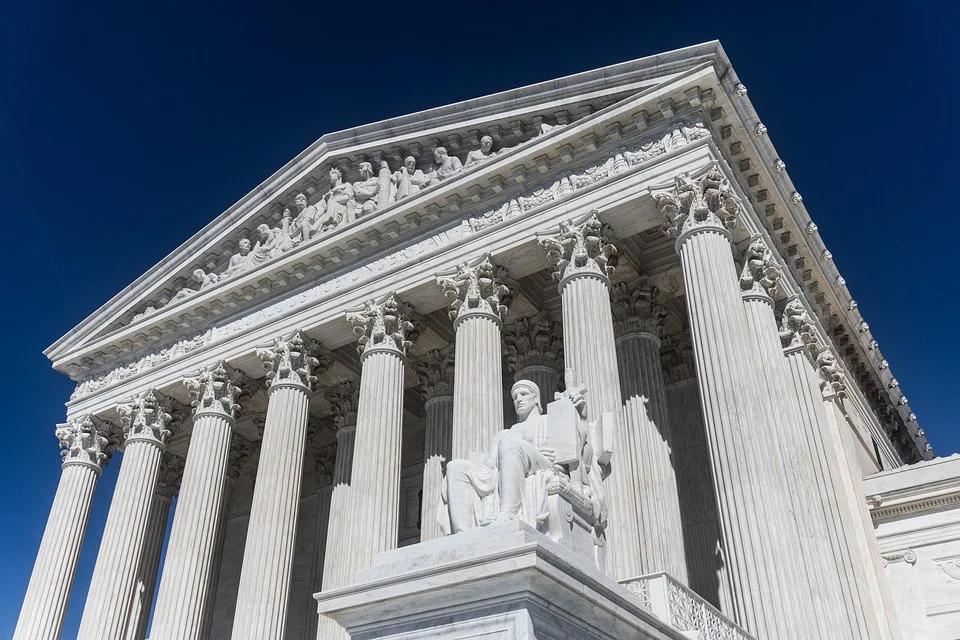
The United States Supreme Court issued a surprising procedural pivot on June 5, 2025, by dismissing the writ of certiorari in the highly anticipated case of Laboratory Corporation of America Holdings v. Davis. By declaring the writ "improvidently granted," the nation’s highest court declined to resolve a fundamental question that has long plagued the federal judiciary: whether a class action for damages can be certified under Federal Rule of Civil Procedure 23 when the proposed class includes members who have not suffered a concrete injury under Article III of the Constitution. This dismissal leaves a significant circuit split intact and preserves the status quo for employers and corporate defendants, who now face continued uncertainty regarding the scope of massive class-action liabilities in jurisdictions like the Ninth Circuit.
Background of the Labcorp Dispute
The litigation originated from a challenge to the accessibility of patient service centers operated by Laboratory Corporation of America (Labcorp). In an effort to streamline the check-in process, Labcorp implemented on-site, self-service touchscreen kiosks. While these kiosks were designed to provide convenience, they were not natively accessible to blind or visually impaired patients without third-party assistance. Labcorp maintained that it provided reasonable accommodations by ensuring front-desk staff were available to assist patients or perform the check-in process manually using the same underlying technology.
However, plaintiffs Luke Davis and Julian Vargas, both of whom are legally blind, filed a class-action lawsuit alleging that the kiosks violated Title III of the Americans with Disabilities Act (ADA). Crucially, the lawsuit also invoked the California Unruh Civil Rights Act. Under California law, any violation of the ADA is automatically considered a violation of the Unruh Act, which allows plaintiffs to seek statutory damages of $4,000 per violation. Because the Unruh Act provides a path to monetary recovery that the federal ADA does not—the ADA generally only permits injunctive relief and attorney’s fees—the case carried immense financial stakes.
The Certification of an "Overinflated" Class
The central controversy of the case arose during the class certification phase. The district court certified a class that potentially encompassed more than 100,000 blind individuals across California. Based on the statutory damages formula of the Unruh Act, Labcorp faced a potential liability exceeding $500 million per year.
During discovery, evidence emerged suggesting that a substantial portion of the class members may not have suffered any actual harm. Some individuals had never visited a Labcorp facility during the relevant period, while others preferred using the front-desk staff regardless of whether a kiosk was available. Despite these discrepancies, the district court maintained the class certification, a decision that was later affirmed by the U.S. Court of Appeals for the Ninth Circuit. Labcorp’s primary argument before the Supreme Court was that certifying a class that includes uninjured members violates the "predominance" requirement of Rule 23(b)(3), as well as the constitutional requirements for standing.
Procedural Chronology and the Supreme Court’s Pivot
The journey of Laboratory Corporation of America Holdings v. Davis through the federal court system highlights the procedural complexities of modern class litigation:
- Initial Filing: The plaintiffs filed their complaint in a California federal district court, seeking class-wide statutory damages under the Unruh Act.
- Class Certification: The district court certified the class of blind individuals, despite Labcorp’s protests that many members lacked a concrete injury.
- Interlocutory Appeal: Labcorp sought an immediate appeal to the Ninth Circuit. While this was pending, the district court issued a clarifying order regarding the class definition, though it did not fundamentally reduce the size or scope of the class.
- Ninth Circuit Affirmation: The Ninth Circuit upheld the certification, reinforcing a standard that allows for the inclusion of uninjured members at the certification stage, provided the named plaintiffs have standing.
- Certiorari Granted: The Supreme Court agreed to hear the case in late 2024 to resolve whether Rule 23 permits the certification of classes containing uninjured members.
- The Dismissal: On June 5, 2025, the Court issued a one-sentence per curiam order dismissing the case as "improvidently granted" (DIG), effectively ending the appeal without a ruling on the merits.
Justice Kavanaugh’s Dissent and the TransUnion Precedent
The dismissal was not unanimous in its sentiment. Justice Brett Kavanaugh issued a lone dissent, expressing frustration with the Court’s decision to bypass the merits of the case. Kavanaugh argued that the issue was "straightforward" and that the Ninth Circuit’s approach was inconsistent with both the text of Rule 23 and the Supreme Court’s 2021 ruling in TransUnion LLC v. Ramirez.
In TransUnion, the Supreme Court held that "every class member must have Article III standing in order to recover individual damages." Justice Kavanaugh, who authored the majority opinion in TransUnion, reiterated in his Labcorp dissent that if a class member has not been injured, they cannot share a "common" legal or factual question with those who have. He warned that allowing classes to be "overinflated with uninjured members" creates an environment where defendants are coerced into massive settlements to avoid the risk of "annihilating" statutory damages, even when no actual harm occurred to the vast majority of the class.
Kavanaugh also dismissed the plaintiffs’ argument that the case was moot due to the district court’s clarifying order, calling the argument "insubstantial" because the core legal error—the certification of uninjured members—remained unaddressed.
Statistical Context of ADA and Class Action Filings
The Labcorp case is emblematic of a broader trend in federal litigation. According to data from Seyfarth’s ADA Title III tracking, federal lawsuit filings related to accessibility have hit record highs in recent years. California remains the epicenter of this litigation, largely due to the lucrative nature of the Unruh Act’s statutory damages.
- Annual Filings: Approximately 10,000 class action lawsuits are filed annually in U.S. federal courts.
- ADA Dominance: ADA Title III cases account for a significant percentage of these filings, with California and New York consistently leading the nation in volume.
- Financial Impact: In the employment and consumer sectors, class action settlements frequently reach into the hundreds of millions of dollars. The Labcorp case, with its $500 million annual exposure, illustrates the "blackmail settlement" pressure that Justice Kavanaugh referenced in his dissent.
Implications for Employers and Corporate Defense Strategy
The Supreme Court’s refusal to rule in Labcorp v. Davis means that the legal landscape for class actions remains fragmented. For employers and businesses operating within the jurisdiction of the Ninth Circuit, the risk of "all-inclusive" class certifications remains high.
Legal analysts suggest that defendants must now double down on individualized discovery at the pre-certification stage. By gathering evidence that specific class members did not experience a "concrete" or "particularized" injury, defendants can argue that individual questions of standing outweigh the common questions of the case. This strategy aims to defeat the "predominance" requirement of Rule 23(b)(3), which is essential for any class seeking monetary damages.
Furthermore, the dismissal highlights the importance of the "standing" defense. While the Supreme Court did not issue a new ruling, the existing precedent in TransUnion still requires that any class member who actually receives a payout must have standing. Defendants may argue that even if a class is certified, the process for identifying and weeding out uninjured members would be so administratively burdensome that the class is "unascertainable" or "unmanageable."
Future Outlook: Waiting for the Next Test Case
The Supreme Court’s decision to "DIG" the Labcorp case suggests that a majority of the justices felt the specific procedural history of this case made it an imperfect vehicle for a definitive ruling. However, the underlying constitutional tension between Rule 23 and Article III is not going away.
Other circuits, such as the Second and Eleventh, have taken more restrictive views on the inclusion of uninjured members, creating a "circuit split" that the Supreme Court will eventually be forced to address. Until then, the Ninth Circuit will continue to be a preferred venue for plaintiffs’ attorneys seeking to leverage large class sizes to secure high-value settlements.
For the business community, the Labcorp dismissal is a missed opportunity for clarity. While it does not represent a loss on the merits, it leaves the door open for continued "overinflated" litigation. Employers are advised to review their digital and physical accessibility policies and prepare for rigorous challenges to class certification by focusing on the lack of uniform injury across proposed class populations. The legal community now looks toward the next major class action on the docket to see if the Court will finally reconcile the administrative convenience of Rule 23 with the constitutional requirements of Article III standing.