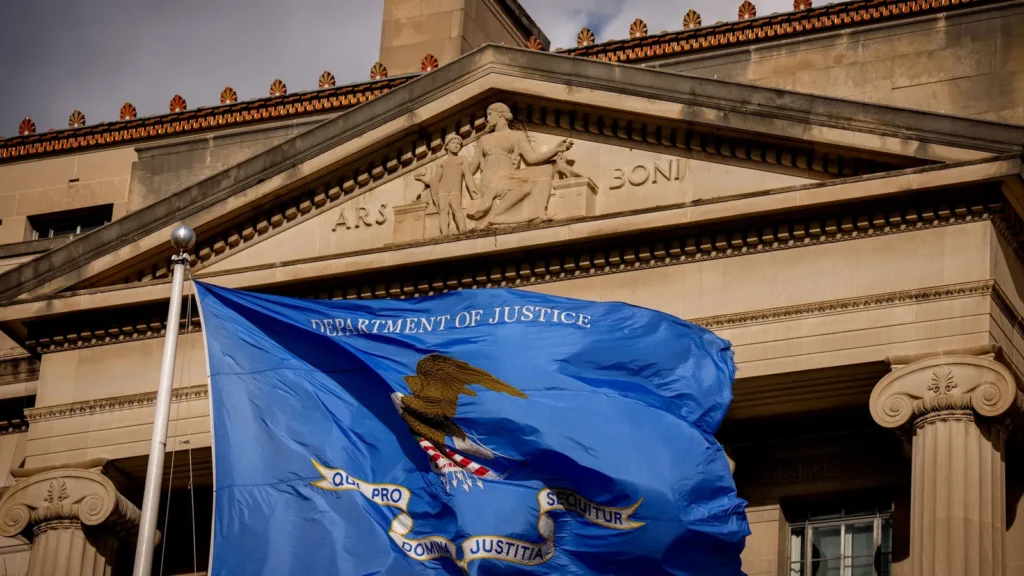
The U.S. Department of Justice (DOJ) has initiated a significant lawsuit against Cloudera, a prominent data management software company, alleging systemic discrimination against U.S. workers in favor of foreign visa holders seeking permanent residency. The civil complaint, filed with the Office of the Chief Administrative Hearing Officer (OCAHO), asserts that Cloudera violated federal civil rights and labor laws by establishing a separate, effectively non-functional, hiring channel for U.S. applicants, thereby undermining the integrity of the Program Electronic Review Management (PERM) process. This action underscores a renewed governmental focus on ensuring equitable employment practices amidst ongoing debates over immigration and domestic job protection.
The lawsuit, made public on April 29, 2026, centers on allegations that Cloudera orchestrated a hiring scheme that disadvantaged U.S. workers who applied for positions for which the company sought to sponsor temporary visa holders for permanent residency. According to the DOJ, Cloudera established a parallel application process for U.S. workers, directing them to submit their applications via a specific email address that was reportedly not operational. This alleged deliberate impediment effectively deterred qualified U.S. candidates from applying, creating an unfair advantage for foreign workers whom Cloudera intended to sponsor.
"America’s civil rights and labor laws are clear: if you want to sponsor people with temporary visas for permanent residency, you cannot discriminate against U.S. workers," a DOJ spokesperson stated, reiterating the department’s firm stance on the matter. The agency emphasized that such practices constitute a direct violation of the Immigration and Nationality Act (INA), which prohibits discrimination based on citizenship status in hiring, recruitment, and employment.
Unpacking the Allegations: Cloudera’s Alleged Discriminatory Practices
The core of the DOJ’s complaint against Cloudera revolves around the alleged manipulation of the PERM labor certification process. The PERM program, administered by the U.S. Department of Labor (DOL), is a crucial step for U.S. employers seeking to sponsor foreign workers for permanent residency (green cards). Its fundamental premise is to protect the U.S. labor market by ensuring that foreign workers are not hired for positions where qualified, willing, and available U.S. workers exist.
Under PERM regulations, employers must conduct a rigorous recruitment process to test the U.S. labor market before they can certify that there are no qualified U.S. workers for a particular job opening. This typically involves advertising the position in various media, including newspapers, professional journals, and online job boards, and carefully reviewing all applications from U.S. workers. Only if the employer can demonstrate that no U.S. worker is qualified and available for the role can they proceed with sponsoring a foreign national.

The DOJ’s complaint details how Cloudera allegedly circumvented these requirements. By providing a non-functional email address for U.S. applicants, the company ostensibly fulfilled the advertising requirements while simultaneously creating an insurmountable barrier for domestic candidates. This practice, the DOJ argues, constitutes an intentional act of discrimination, treating U.S. workers "less favorably" than their foreign counterparts.
Assistant Attorney General Harmeet Dhillon, heading the Civil Rights Division of the DOJ, underscored the severity of the alleged actions. "Employers cannot use the PERM sponsorship process as a backdoor for discriminating against U.S. workers," Dhillon asserted in a public statement. "The Division will not hesitate to sue companies who intentionally deter U.S. workers from applying to American jobs." This statement signals a clear warning to other employers who might be engaging in similar practices.
The Protecting U.S. Workers Initiative: A Renewed Enforcement Focus
This lawsuit is a direct outcome of the DOJ’s "Protecting U.S. Workers Initiative," which was relaunched in 2025 with an invigorated mandate to combat employment discrimination against U.S. citizens and other protected workers. The initiative aims to vigorously enforce the anti-discrimination provisions of the Immigration and Nationality Act (INA), particularly those that safeguard U.S. workers from unfair hiring practices related to temporary and permanent visa programs.
The initiative’s relaunch in 2025 followed a period of heightened scrutiny on immigration-related employment practices, reflecting broader policy shifts aimed at prioritizing U.S. labor. Since its revival, the initiative has already yielded significant results, securing at least 10 settlements in the past year alone. These settlements addressed various allegations of illegal discrimination against U.S. workers in favor of individuals holding temporary employment visas, such as H-1B visas. The types of discrimination uncovered have ranged from explicit job postings favoring visa holders to more subtle recruitment tactics that effectively exclude U.S. applicants. The Cloudera case, however, marks a significant escalation, transitioning from settlement agreements to a full-fledged civil lawsuit, indicating the DOJ’s determination to pursue legal action against companies deemed to be in egregious violation.
The OCAHO, the administrative court where the complaint was filed, holds jurisdiction over INA cases and is tasked with adjudicating such disputes. Its decisions can result in significant penalties, including monetary fines, back pay to affected workers, and injunctive relief requiring companies to alter their hiring practices.
Cloudera’s Defense: An Unintended Technical Glitch?
In response to the serious allegations, Cloudera issued an emailed statement to HR Dive, asserting its commitment to fair and lawful recruitment practices. The company stated that it "takes the department’s allegations seriously and has fully cooperated with DOJ from the start." Cloudera acknowledged the issue with the recruiting email address but characterized it as an unintentional technical malfunction rather than a deliberate act of discrimination.

"The recruiting email address in question was simply not working as intended," the company explained, seeking to portray the issue as an operational oversight rather than a calculated strategy to exclude U.S. workers. Cloudera vehemently denied any discriminatory intent, stating, "We do not discriminate against U.S. workers — or anyone — on the basis of citizenship status."
Furthermore, Cloudera expressed its belief that "the government’s claims misunderstand both our hiring processes and our intent." The company indicated its intention to "address the matter through the appropriate legal channels" and affirmed its continued cooperation with the DOJ to resolve the situation. Due to the pending litigation, Cloudera stated it could not offer further comment at this time. This response sets the stage for a potentially protracted legal battle, where the company will need to convincingly demonstrate that the non-functional email was indeed an error and not part of a discriminatory scheme.
Broader Context: The Evolving Landscape of Immigration and Employment
This lawsuit unfolds against a backdrop of intensified government efforts to scrutinize immigration-related employment practices, particularly during the Trump administration. The overarching policy directive, often encapsulated by the "Buy American, Hire American" executive order, aimed to prevent potential discrimination against U.S. workers and tighten restrictions on various immigrant worker programs, notably the H-1B visa.
The H-1B visa program, which allows U.S. employers to temporarily employ foreign workers in specialty occupations, has been a frequent target of criticism, with concerns raised about its potential misuse to displace U.S. workers or depress wages. While the Cloudera case directly concerns the PERM process for permanent residency, the underlying principle of protecting U.S. workers from discriminatory practices spans across both temporary and permanent immigration pathways.
Further amplifying this environment of increased vigilance, the U.S. Equal Employment Opportunity Commission (EEOC) published a crucial technical assistance document in November (prior to the article’s publication date). This document clarified how "anti-American bias" can manifest as a form of national origin discrimination, thereby violating Title VII of the Civil Rights Act of 1964. Title VII prohibits employment discrimination based on race, color, religion, sex, and national origin. The EEOC’s guidance explicitly stated that discriminatory job postings, such as those indicating "H-1B preferred" or "H-1B only," could constitute illegal national origin discrimination.
This guidance from the EEOC provides an important legal parallel and context for the DOJ’s actions. While the DOJ lawsuit against Cloudera focuses on citizenship status discrimination under the INA, the EEOC’s stance on "anti-American bias" highlights a broader regulatory push to ensure that U.S. workers are not unfairly disadvantaged in the job market, irrespective of the specific legal statute invoked. The coordinated efforts by different federal agencies demonstrate a comprehensive approach to addressing perceived abuses in foreign worker programs.

Implications for Employers and the Tech Industry
The Cloudera lawsuit carries significant implications for employers across all sectors, particularly those in the technology industry that heavily rely on foreign talent and frequently utilize the PERM and H-1B programs. The case serves as a stark reminder of the stringent compliance requirements associated with these immigration programs and the severe consequences of failing to adhere to anti-discrimination laws.
For HR departments and legal counsel, the lawsuit underscores the critical need for meticulous review of recruitment practices, especially when positions are being advertised for PERM labor certification. Companies must ensure that their recruitment efforts for U.S. workers are not just procedurally compliant but genuinely accessible and fair. Any perceived barriers, whether technical glitches or intentional design flaws, can expose companies to substantial legal risk, reputational damage, and financial penalties.
The tech industry, often a vocal proponent of high-skilled immigration to address talent shortages, will need to navigate this heightened scrutiny carefully. While companies often argue that foreign talent fills critical skill gaps, the government’s position is clear: this cannot come at the expense of qualified U.S. workers. The Cloudera case could prompt a re-evaluation of internal hiring policies, an increase in compliance audits, and potentially lead to more conservative approaches to PERM applications.
Beyond the immediate legal ramifications for Cloudera, this lawsuit is likely to send a chilling effect throughout the employer community. It reinforces the message that the government is actively monitoring recruitment processes and is prepared to take aggressive enforcement action against perceived violations. This could lead to:
- Increased Scrutiny: Employers may face more detailed audits of their PERM applications and recruitment records by both the DOL and DOJ.
- Enhanced Training: HR professionals and hiring managers will require more robust training on anti-discrimination laws and PERM compliance.
- Technological Solutions: Companies may invest in more transparent and auditable digital recruitment platforms to prevent and disprove allegations of inaccessible application channels.
- Reputational Risk: The negative publicity from such lawsuits can impact a company’s ability to attract top talent, both domestic and international, and could affect investor confidence.
The outcome of the Cloudera case will undoubtedly set an important precedent, further defining the boundaries of acceptable recruitment practices within the U.S. immigration framework. It will clarify the level of diligence and good faith employers must demonstrate to prove they are genuinely testing the U.S. labor market before seeking to sponsor foreign workers for permanent residency. As the legal proceedings unfold, all eyes will be on the OCAHO to see how it interprets Cloudera’s "unintended" technical glitch versus the DOJ’s allegations of intentional discrimination. This case is poised to shape the future of employment-based immigration compliance for years to come.