The landscape of corporate communication and educational technology is undergoing a fundamental shift as podcasting transitions from a hobbyist medium into a core strategic asset for Learning and Development (L&D) departments. As organizations grapple with "screen fatigue" and the need for mobile-friendly, asynchronous training, the demand for high-quality audio content has surged. Investing in the correct podcasting equipment is no longer merely a technical requirement for creators; it is a strategic decision for Instructional Designers and Learning Experience Designers who aim to build scalable, high-impact knowledge-sharing ecosystems.
The Strategic Emergence of Audio-Based Learning
The integration of podcasts into corporate environments reflects a broader trend toward "micro-learning" and "just-in-time" training. According to industry data, the global podcasting market is projected to reach over $130 billion by 2030, driven largely by the professional services and education sectors. For L&D teams, the podcast offers a unique advantage: it allows employees to consume leadership insights, compliance updates, or technical training during commutes or administrative tasks, effectively reclaiming "dead time" for professional development.
However, the efficacy of audio learning is intrinsically tied to production quality. Research into Cognitive Load Theory suggests that poor audio quality—characterized by background noise, echo, or "plosives"—increases the mental effort required to process information. This "cognitive friction" leads to lower retention rates and decreased learner engagement. Consequently, the selection of podcasting equipment has become a foundational element of modern instructional design, moving beyond simple recording toward the creation of immersive learning experiences.
Core Components: The Anatomy of a Professional Podcast Setup
Building a functional podcasting system requires an understanding of the signal chain—the path audio takes from the speaker’s mouth to the digital file. Whether for a solo internal subject matter expert or a global leadership series, the following components represent the industry standard for audio production.
1. Microphones: The Source of Quality
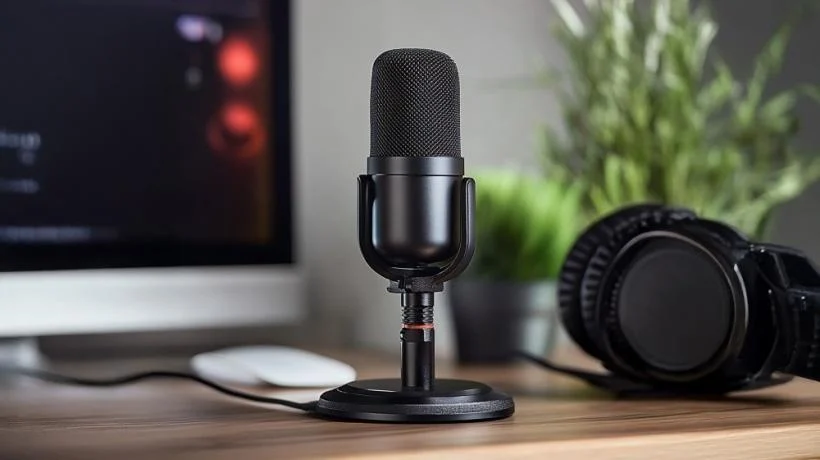
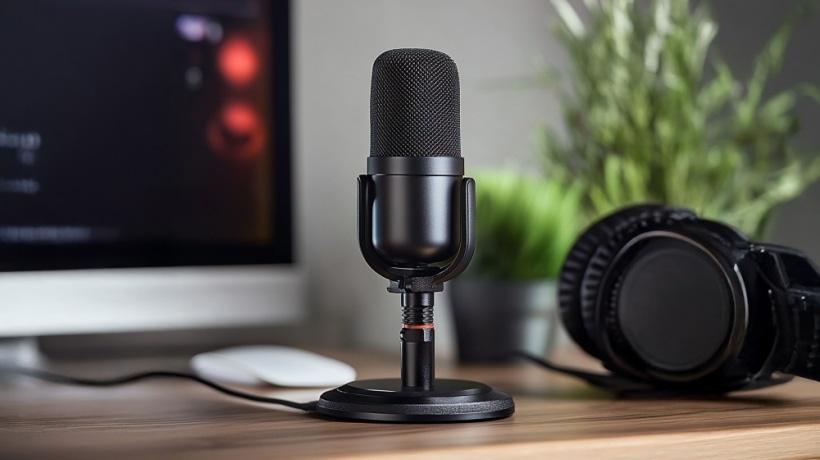
The microphone is the most critical investment in the signal chain. For professionals, the choice typically falls between two categories:
- USB Microphones: These are ideal for beginners and individual contributors. They plug directly into a computer, bypassing the need for an external interface. While convenient, they are often limited in terms of upgradeability and multi-mic setups.
- XLR Microphones: These are the professional standard. They require an audio interface or mixer to connect to a computer. XLR microphones offer superior sound depth and allow for long cable runs without signal degradation. Within this category, "Dynamic" microphones are generally preferred for non-studio environments because they are less sensitive to background noise compared to "Condenser" microphones.
2. Monitoring and Audio Interfaces
High-quality, closed-back headphones are essential for "monitoring"—the act of hearing exactly what is being recorded in real-time. Closed-back designs prevent the audio from the headphones from "leaking" back into the microphone.
For those using XLR microphones, the Audio Interface serves as the bridge. It converts the analog signal from the microphone into a digital signal (A/D conversion). Modern interfaces also provide "phantom power" for condenser mics and pre-amps to boost the signal of dynamic mics like the industry-standard Shure SM7B.
3. Digital Audio Workstations (DAW)
The software used to capture and edit audio is the final pillar. While beginners may start with free tools like Audacity or GarageBand, professional L&D teams often migrate to Adobe Audition or Hindenburg Narrator. These platforms offer advanced features like multi-track editing, noise reduction algorithms, and automated loudness normalization to ensure consistent volume across all learning modules.
Chronology of Implementation: From Pilot to Enterprise Scale
The transition from a conceptual idea to a functioning podcast program within an organization typically follows a structured timeline. Industry experts suggest a 12-week roadmap for successful implementation:
- Weeks 1-3: Strategy and Purpose. Defining the "Why." Is the podcast for onboarding, executive transparency, or technical upskilling? This phase involves identifying the target audience and the metrics for success (e.g., completion rates, employee feedback).
- Weeks 4-6: Procurement and Environment Setup. Selecting equipment based on the defined strategy. During this phase, organizations often designate a specific room for recording, applying acoustic treatments such as foam panels or bass traps to minimize "slap-back" echo.
- Weeks 7-9: Technical Training and Pilot Recording. Instructional designers learn the software workflow. A "Pilot Episode" (Episode 0) is recorded to test the equipment under real-world conditions.
- Weeks 10-12: Distribution and Feedback Loop. The podcast is integrated into the Learning Management System (LMS). Initial data is gathered to optimize sound levels and content pacing for future episodes.
Comparative Analysis: Beginner vs. Professional Tiers
The financial investment required for a podcasting setup varies significantly based on the intended output.
The Beginner/Solo Setup ($150 – $400):
Designed for the individual Instructional Designer or a subject matter expert working from home. This setup prioritizes ease of use and portability.
- Equipment: High-quality USB Dynamic Mic (e.g., Audio-Technica AT2005USB), basic foam pop filter, and consumer-grade closed-back headphones.
- Outcome: Clear, intelligible audio suitable for internal briefings and localized training.
The Professional/Studio Setup ($1,500 – $5,000+):
Designed for high-stakes leadership communication or external-facing branded content.
- Equipment: XLR Dynamic Microphones (e.g., Shure SM7B or Electro-Voice RE20), professional audio interface (e.g., Focusrite Scarlett or Universal Audio Apollo), cloud-lifters for signal boost, and professional acoustic treatment.
- Outcome: Broadcast-quality audio that reflects the organization’s brand and ensures maximum learner focus.
Technical Data: The Impact of Environment on Audio Fidelity
A common misconception in podcasting is that expensive equipment can compensate for a poor recording environment. In reality, a $400 microphone in a room with hard surfaces (glass, hardwood, high ceilings) will sound worse than a $50 microphone in a room with soft furnishings.
Data from acoustic engineering studies show that "reverb time"—the time it takes for sound to decay by 60 decibels—should ideally be under 0.5 seconds for speech recording. In a standard office environment, reverb time often exceeds 1.5 seconds. L&D teams can mitigate this by using "portable vocal booths" or simply choosing smaller, carpeted rooms. This environmental optimization is a low-cost, high-return activity that significantly improves the professional polish of the final product.
Official Responses and Industry Perspectives
Leading voices in the eLearning industry emphasize that the hardware is merely a tool for a larger pedagogical goal. "The technology must be invisible," says one senior Learning Experience Designer at a Fortune 500 firm. "If the learner is thinking about the crackle in the audio or the echo in the room, they aren’t thinking about the leadership principles we are trying to teach."
Furthermore, HR departments are increasingly viewing podcasts as a tool for "Humanistic Learning." By hearing the actual voice of a leader or a peer, employees feel a sense of connection that text-based modules cannot replicate. This "parasocial" element of podcasting is being leveraged to improve company culture and employee retention in remote-work environments.
Broader Implications and Future Trends
As podcasting becomes a staple of the L&D toolkit, several emerging trends are likely to shape the next decade of audio learning:
- AI-Enhanced Post-Production: Tools like Descript are already allowing creators to edit audio by editing text. AI noise-cancellation (such as Krisp or Adobe Podcast AI) is making it possible to record high-quality audio in less-than-ideal environments.
- Immersive Audio: The rise of spatial audio and "3D sound" offers potential for high-fidelity simulations, particularly in safety training or soft-skills coaching where environmental awareness is key.
- LMS Integration: Future Learning Management Systems will likely offer native "audio-first" players that allow for offline listening, speed adjustment (1.5x, 2x), and automated transcription for accessibility (ADA compliance).
Conclusion: Systems Over Hardware
Effective podcasting for organizations is not about purchasing the most expensive microphone on the market. It is about building a repeatable, scalable system that aligns with the organization’s learning objectives. By focusing on clarity, consistency, and environment, L&D professionals can transform the way knowledge is distributed.
The decision to invest in professional podcasting equipment is an investment in the "internal brand" of the company. In an era where information is abundant but attention is scarce, high-quality audio serves as a signal of value, encouraging employees to tune in, engage, and grow. Whether starting with a simple USB setup or a multi-mic professional studio, the goal remains the same: to provide a clear, uninterrupted path for knowledge to travel from the expert to the learner.