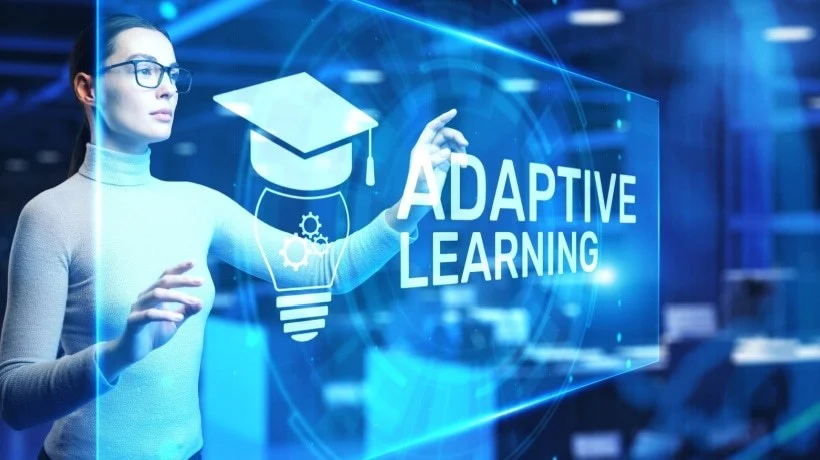
Corporate leaders are currently navigating a significant paradox: record-breaking investments in Learning and Development (L&D) are coinciding with a widening global skills gap. While organizations spent over $370 billion on training globally last year, 87% of executives report that their teams lack the necessary skills to meet future business demands. This disconnect stems from a reliance on "generic personalization"—recommendation engines that suggest courses based on surface-level interests rather than operational needs. In response, a strategic shift is occurring toward adaptive learning paths, a data-driven methodology that algorithmically maps individual capabilities to specific role demands and business Key Performance Indicators (KPIs). By replacing static curricula with dynamic, responsive development cycles, enterprises are reporting 36% faster time-to-competence and a 28% improvement in measurable KPIs, effectively transforming L&D from a cost center into a strategic engine for revenue and growth.
The Evolution of Corporate Training: From Seminars to Algorithmic Paths
The transition to adaptive learning paths represents the fourth generation of corporate education. In the late 20th century, training was primarily event-based, consisting of physical seminars and workshops. The advent of the Learning Management System (LMS) in the early 2000s digitized this content but maintained a "one-size-fits-all" linear structure. The 2010s saw the rise of the Learning Experience Platform (LXP), which introduced Netflix-style recommendations. However, these recommendations often lacked alignment with business objectives, leading to high engagement with low utility.
The current era of adaptive learning paths utilizes artificial intelligence and real-time data integration to create a "living" curriculum. Unlike its predecessors, an adaptive path does not just recommend content; it recalibrates the learner’s journey based on their performance, role requirements, and the organization’s immediate priorities. This evolution is driven by the necessity of the modern workplace, where the half-life of a learned skill has dropped to approximately five years, and even less in technical fields.
Precision Competency Mapping and Role-Based Blueprints
The foundation of a successful adaptive learning strategy lies in granular competency mapping. Generic training fails because it addresses roles as monoliths—treating all "Sales Managers" or "Software Engineers" as having identical needs. Adaptive paths begin with a "Role Blueprint," which breaks down a professional position into specific, measurable skills and sub-skills.
Precision targeting involves identifying the "Skill Atoms" required for a specific function. For instance, a sales representative’s path is not merely about "selling," but is subdivided into prospecting, objection handling, CRM hygiene, and closing techniques. By mapping these atoms against an individual’s existing proficiency levels, the adaptive algorithm can bypass what the employee already knows and focus exclusively on their "Zone of Proximal Development." This surgical approach to training ensures that high-performers are not bored by redundant content, while those struggling receive the specific scaffolding required to bridge their gaps.
Aligning Learning Outcomes with Business KPIs
A primary criticism from Chief Financial Officers regarding traditional L&D is the lack of measurable ROI. Adaptive learning paths address this by utilizing a "Revenue-First Design" philosophy. Instead of starting with what employees need to learn, the process starts with what the business needs to achieve.
If a telecommunications company identifies a 15% churn rate due to poor customer service interactions, the adaptive learning path for support agents is automatically adjusted to prioritize empathy training and complex problem-solving modules. By linking the training directly to the churn rate KPI, the organization can track the direct impact of the learning intervention. Leading enterprises now utilize "Level 4" outcomes from the Kirkpatrick Evaluation Model—measuring the degree to which targeted outcomes occur as a result of the training. Data indicates that when learning is tied to specific business metrics, completion rates increase fourfold because employees perceive the immediate relevance of the training to their daily tasks and career progression.
The Role of Failure in Adaptive Recalibration
Traditional corporate training is often designed for a "path of least resistance," where learners move linearly from one module to the next regardless of true mastery. Adaptive learning paths introduce the concept of "Failure-Driven Adjustment." In this model, assessments are not merely hurdles to be cleared but diagnostic tools used to reroute the learner.
When a learner fails to demonstrate mastery in a specific simulation or assessment, the algorithm does not simply ask them to "try again." Instead, it identifies the underlying cognitive gap and provides alternative instructional materials—perhaps a different medium, such as a video instead of a text-based module, or a more foundational prerequisite. This smart recalibration prevents "over-confidence bias," where employees believe they have mastered a skill simply because they have completed a course. By embracing "productive failure," organizations ensure that by the time an employee completes a path, their competence is verified through data, not just attendance.
Cross-Functional Intelligence and Skill Transferability
One of the most significant advantages of an enterprise-wide adaptive learning ecosystem is the ability to spot "Transfer Intelligence." Siloed training programs often miss the synergies between different departments. An adaptive system, however, can recognize that a data analyst in marketing and a risk assessor in finance share 70% of the same core competencies in statistical modeling.
By identifying these transferable skills, organizations can foster internal mobility and agility. When a new role opens in a high-growth department, the adaptive platform can scan the workforce to find individuals whose learning paths have already equipped them with a majority of the required competencies. This reduces hiring costs and improves employee retention, as workers see clear, data-supported pathways for career transitions within the company.
Real-Time Performance Integration
The most advanced adaptive paths are those that sync with daily work reality through "Live Performance Linkage." This involves integrating the learning platform with the tools employees use every day, such as Salesforce, Jira, or Microsoft Teams.
For example, if a project manager’s performance data in Jira shows a consistent delay in sprint planning, the adaptive learning system can trigger a "just-in-time" micro-learning module on agile estimation techniques. This removes the barrier between "working" and "learning," making development a continuous process rather than a scheduled interruption. This real-time integration ensures that the training is always contextual, addressing the specific challenges an employee is facing in the moment.
Empowering Managers as Force Multipliers
While the technology provides the framework, the human element remains critical. Frontline managers drive an estimated 70% of the impact in employee development. Adaptive learning paths empower managers by providing them with "Dashboard Clarity." Instead of vague reports on course completion, managers receive data on specific competency gains and remaining gaps within their teams.
This allows for more effective one-on-one coaching. A manager can see exactly where an employee is struggling and provide targeted mentorship that complements the digital path. Furthermore, adaptive paths can be used for "Career Pathing," where managers and employees co-create a roadmap for future promotions based on the skills the employee is currently acquiring. This alignment between leadership and the learning platform creates a culture of continuous improvement and accountability.
The Technology Stack: Orchestrating the Ecosystem
To scale adaptive learning across a global enterprise, a robust and unified technology stack is required. Fragmented ecosystems—where the LMS, performance data, and HR records exist in silos—are the primary inhibitors of adaptivity.
The architecture must include:
- A Unified Data Layer: Ensuring that all learner data is accessible and standardized.
- AI-Driven Orchestration Engine: The "brain" that analyzes performance and determines the next best learning action.
- API Connectivity: The ability to pull data from CRMs, ERPs, and other business tools to inform the learning path.
- Content Agnosticism: The platform must be able to pull from various sources, including internal documents, third-party providers (like LinkedIn Learning), and user-generated content, to provide the best resource for the specific need.
Overcoming Implementation Challenges
The transition to adaptive learning is not without hurdles. Organizations often struggle with "Data Debt"—incomplete or inaccurate records of employee skills. Additionally, there is often cultural resistance to the idea of "failure-driven" learning, as employees may fear that failing an assessment will negatively impact their performance reviews.
Leading enterprises solve these challenges by:
- Starting with High-Impact Pilots: Implementing adaptive paths in revenue-critical functions like sales or technical support first to prove the ROI.
- Establishing a "Safe to Fail" Culture: Decoupling learning assessments from formal performance ratings to encourage genuine skill development.
- Investing in Data Hygiene: Prioritizing the cleaning and categorization of existing competency data before launching the algorithmic engine.
Future Implications: Engineering Workforce Excellence
As AI continues to evolve, the precision of adaptive learning paths will only increase. We are moving toward a future where "training" as a discrete activity disappears, replaced by a seamless, lifelong development ecosystem. In this environment, the role of L&D shifts from "content curator" to "strategic orchestrator," aligning the growth of every individual with the overarching success of the enterprise.
For forward-thinking leaders, adaptive learning paths are no longer a luxury but a strategic imperative. By engineering a workforce where skills, roles, and revenue align perfectly, organizations can ensure they remain resilient in the face of market volatility. The future of work belongs to those who do not just manage training, but who use data to engineer excellence, ensuring that every employee is equipped to contribute maximally to the organization’s most critical priorities. Through continuous, contextual, and capability-focused development, adaptive learning paths are turning the promise of workforce transformation into a measurable reality.