In a significant development for the human resources technology sector, Gloat, a recognized leader in skills intelligence and talent marketplaces, has officially entered the burgeoning field of AI Agents for HR. This strategic move, announced this week, underscores the intensifying competition among core HR technology providers to harness the transformative power of artificial intelligence. Gloat’s new offering, dubbed Gloat Agentic HR, aims to empower organizations to rapidly develop and deploy sophisticated AI agents that integrate seamlessly with widely used platforms such as Microsoft Copilot, Teams, and Slack, while leveraging existing enterprise business rules and security protocols established within systems like Oracle, Workday, and SuccessFactors.
The Evolving Landscape of HR Technology and the Rise of AI Agents
The introduction of Gloat’s Agentic HR platform arrives at a pivotal moment for enterprise HR technology. For decades, HR departments have relied on a complex web of systems to manage their workforce. These foundational "systems of record" include robust Human Capital Management (HCM) suites like Workday, SAP, Oracle, and UKG, which house critical employee data, payroll information, and core HR processes. These systems, in turn, are often augmented by a vast ecosystem of specialized applications, ranging from learning management systems (LMS) and applicant tracking systems (ATS) to time-tracking and IT provisioning tools. It is not uncommon for large enterprises to utilize hundreds of such applications, with a significant portion directly impacting the employee experience.
In recent years, the employee experience layer has seen substantial innovation, with platforms like Microsoft Viva, Zoom’s Workvivo, and Firstup gaining traction. However, many of these solutions were not originally designed with "agentic" capabilities in mind—the ability for AI to proactively understand user context, maintain intelligence, and perform tasks on their behalf.
The emergence of AI agents represents a significant architectural shift. These agents are designed to move beyond simple information retrieval or task execution. They possess a degree of intelligence, learning about individual users and their needs to offer personalized assistance and automate complex workflows. The HR technology market is now witnessing an influx of these agent-based tools, originating from both agile startups and established enterprise software giants.
Understanding the Layers of Agentic AI Architecture
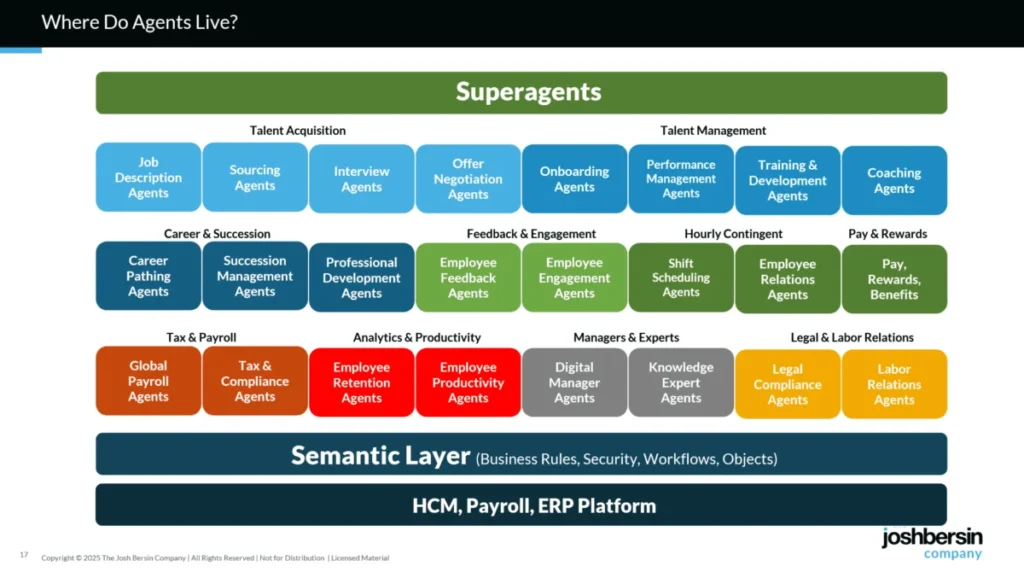
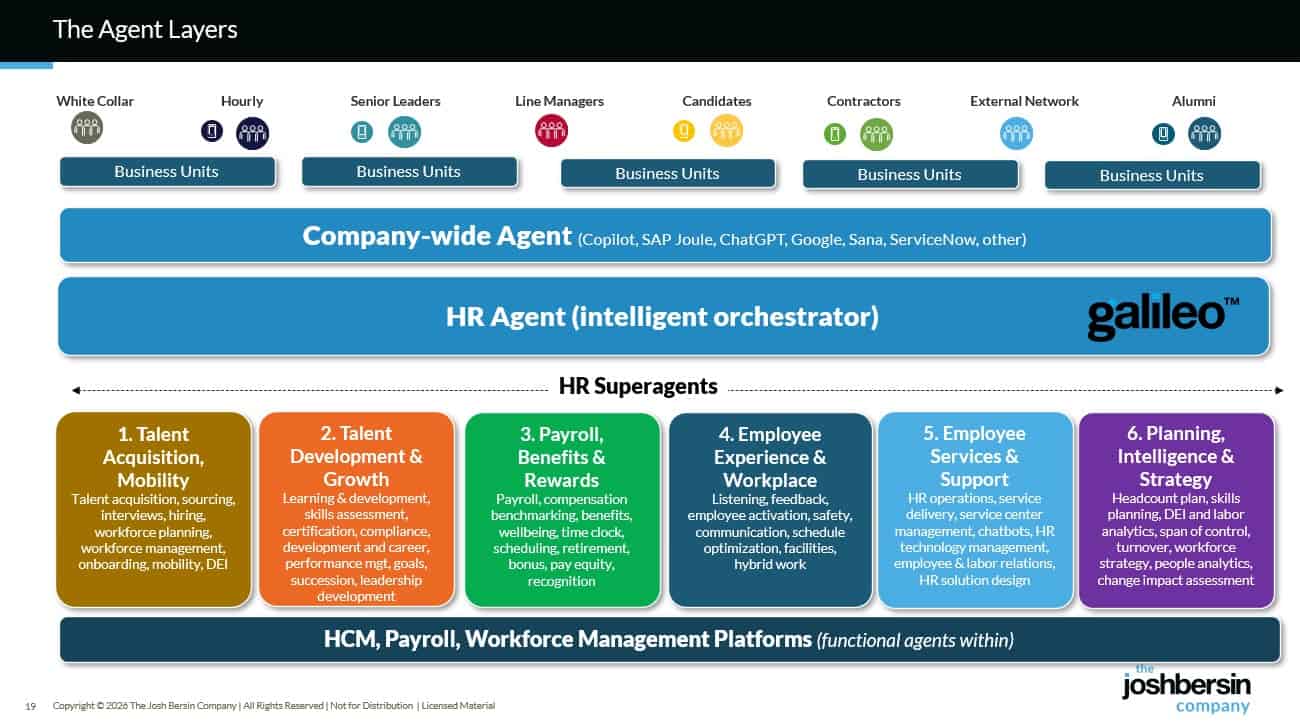
To fully grasp the significance of Gloat’s announcement, it is essential to understand the layered architecture of AI agents as outlined by industry analysts. This framework helps delineate the roles and interactions of different technologies in the AI-driven enterprise.
Layer 1: Systems of Record
At the base of this architecture are the foundational systems that store and manage an organization’s core data. These include the aforementioned HCM and Enterprise Resource Planning (ERP) systems. They are the authoritative sources for employee, financial, customer, and operational data.
Layer 2: Cross-System Applications and Employee Experience Platforms
Built upon the systems of record are applications designed to integrate data and processes across multiple systems. This layer includes enterprise service management platforms like ServiceNow, which has become a dominant player in managing complex enterprise workflows. It also encompasses the growing category of employee experience platforms, such as Microsoft Viva, Slack, and Google Workspace, which aim to centralize communication, collaboration, and employee self-service. While these platforms enhance connectivity, they were not inherently built to function as intelligent agents.
Layer 3: AI Agents
This is the layer where the true innovation in agentic AI resides. These agents are characterized by their ability to maintain user intelligence and act autonomously on behalf of the user. In the HR domain, this translates to agents capable of understanding complex queries, proactively offering solutions, and executing tasks across various HR functions. Hundreds of such tools are emerging, from specialized startups to features embedded within larger enterprise suites.
Layer 4: Superagents
At the apex of this architecture are "Superagents." These advanced tools act as orchestrators, stitching together and leveraging the capabilities of multiple functional agents to provide a highly intuitive, "walk-up-and-use" experience for employees and HR professionals. They aim to simplify complex interactions by presenting a unified interface for a wide range of AI-powered services.
The market for agent development tools is rapidly expanding, with offerings from established players like Oracle (Agent Studio), SAP (Joule Studio), and Workday (Sana) alongside emerging solutions from Microsoft (Copilot Studio), Leena.ai, and ServiceNow (bolstered by acquisitions like MoveWorks). The foundational AI models from companies like Anthropic, OpenAI, and Google also play a crucial role in powering these agents.
The Complexity of Implementing Agentic HR: Bridging Business Rules and Legacy Systems
While the promise of agentic HR is immense, its practical implementation presents significant challenges. A core hurdle lies in bridging the gap between the capabilities of AI agents and the intricate web of business rules, security protocols, and legacy systems that define an organization’s unique operational landscape.
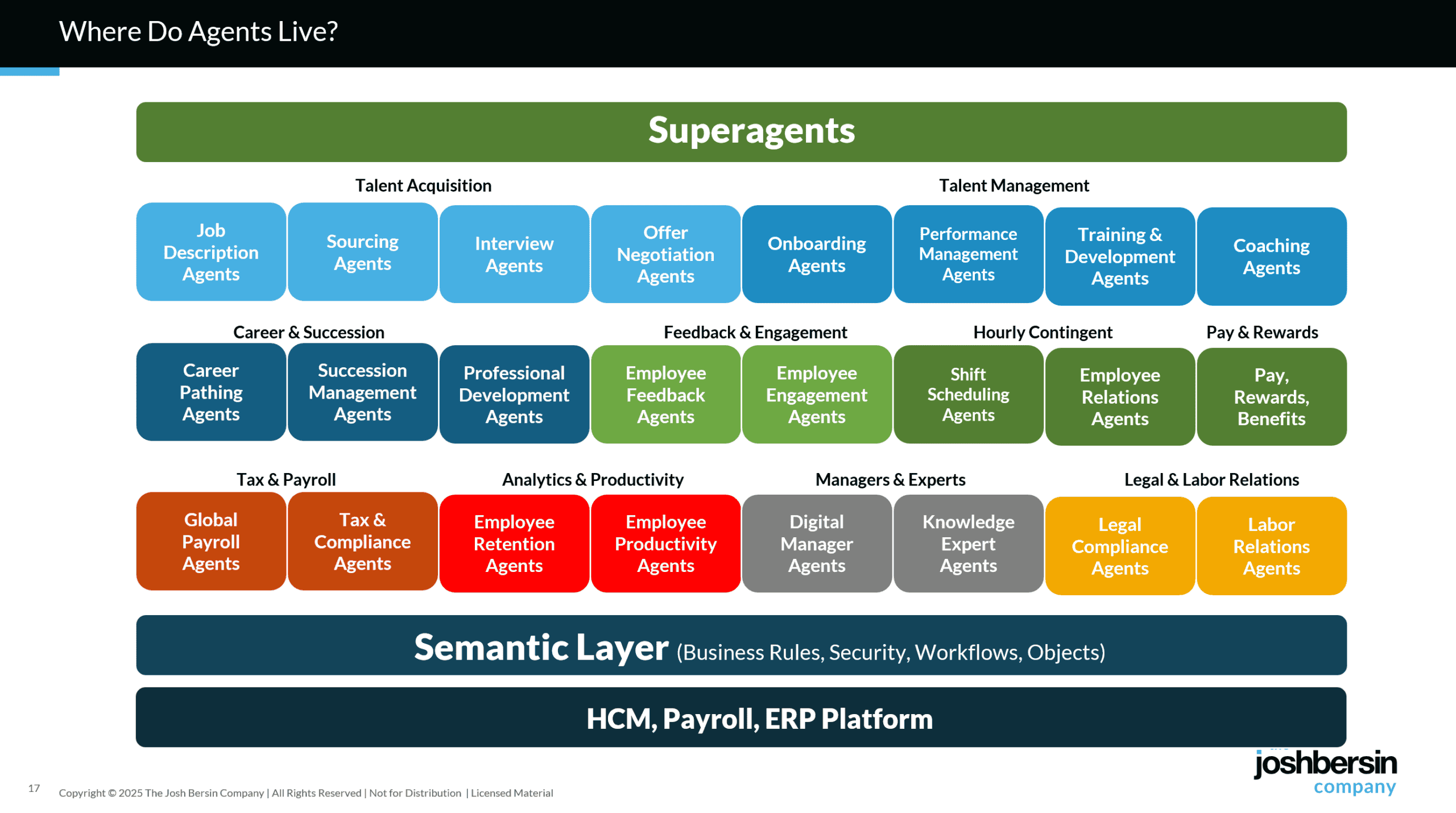
Consider a hypothetical payroll reconciliation agent. While a vendor like Workday or Oracle might offer such a tool, its effectiveness hinges on its ability to accurately interpret and apply a company’s specific payroll policies, tax regulations, and employee data structures. This necessitates a deep understanding of the organization’s unique "business objects"—such as its career frameworks, performance review models, or compensation structures. These rules are not static; they evolve with business strategy and market conditions. The challenge for agent developers is to ensure these agents can dynamically access and apply these rules without requiring constant manual re-engineering.
Furthermore, for agents to perform truly sophisticated tasks, they must be able to communicate and collaborate with other agents and systems. For example, an agent tasked with workforce redeployment—identifying employees suitable for new roles due to shifting business priorities—would need to access data from skills intelligence platforms, learning systems (to assess training needs), HRIS (for employee profiles), and potentially even financial systems (to understand budgetary constraints). This interconnectedness highlights the critical importance of a robust "agent architecture."
Gloat’s Strategic Entry: Loomra and the Power of Workforce Context
Gloat’s entry into the agentic HR space with Gloat Agentic HR, powered by its proprietary "Loomra" semantic layer, aims to address these very challenges. Loomra is described as an "agent-driven auto-discovery ‘injector’" designed to meticulously mine, replicate, and maintain an organization’s entities, workflows, and business rules. This process ensures that the agents built on the Gloat platform are intrinsically aware of and aligned with the company’s established operational logic and security parameters, even as underlying HCM systems are updated.
This capability is particularly noteworthy. While major HCM vendors are integrating AI studios and agent development tools, they often operate within their own proprietary ecosystems. Gloat’s approach, by creating an externalized semantic layer, offers a potentially more flexible and interoperable solution. Loomra leverages nearly a decade of aggregated, anonymized enterprise workforce data, building sophisticated models of skill adjacencies, career trajectories, organizational dynamics, and workforce relationships across millions of employees globally.
This deep, contextual understanding of the workforce is Gloat’s key differentiator. Unlike agents that merely retrieve information, Gloat’s agents can perform higher-order reasoning. For instance, instead of simply answering "show me employees who know Python," a Gloat agent could proactively identify which employees possess the transferable skills to transition into AI engineering roles within the year, pinpoint teams most vulnerable to future skill gaps, or recommend optimal talent redeployments in response to evolving business objectives. This moves beyond transactional HR to strategic workforce planning.
Gloat is leveraging this expertise to offer pre-built agents for critical areas where it has deep domain knowledge, including Workforce Redeployment, Career Development, Internal Talent Sourcing, Succession Planning, and Learning & Reskilling. The platform also provides an intuitive agent builder, allowing organizations to visually construct their own custom agents that integrate directly into widely used communication and collaboration tools like Microsoft Teams and Slack.
The "War for Enterprise Agents": A Battle for Context and Integration
The launch of Gloat Agentic HR signals the intensification of the "war for enterprise agents." While many vendors are offering AI agent capabilities, the true battleground lies not just in the agents themselves, but in their ability to integrate seamlessly with existing enterprise infrastructure and provide meaningful business context.
Major players are investing heavily. Workday, for example, is embedding AI capabilities directly into its platform and has partnered with Sana to offer enhanced AI functionalities. Oracle’s Agent Studio and SAP’s Joule Studio aim to empower their respective customer bases to build agents that leverage their core systems. ServiceNow, a leader in workflow automation, is also enhancing its agent offerings, recognizing the critical role of intelligence in enterprise service management.
Gloat’s proposition is to provide an open, context-aware platform that can augment rather than replace existing HCM systems. By offering a unique workforce context engine in Loomra, Gloat aims to differentiate itself in a crowded market. The challenge will be to convince organizations that Gloat’s tools are not only easier to use and more deeply integrated than those offered by their incumbent HCM vendors, but also provide a richer, more predictive understanding of their workforce.
Broader Implications and Future Outlook
The rise of agentic HR, as exemplified by Gloat’s latest offering, has profound implications for the future of work.
- Enhanced Employee Experience: Agents can streamline mundane tasks, provide instant access to information, and offer personalized career guidance, leading to a more engaging and productive employee experience.
- Strategic Workforce Planning: The ability of agents to analyze complex workforce data and predict future needs will empower HR leaders to make more informed strategic decisions regarding talent acquisition, development, and deployment.
- Increased Operational Efficiency: Automation of routine HR processes through intelligent agents can free up HR professionals to focus on more strategic initiatives and employee engagement.
- The Shift to "Systems of Context": As highlighted by the evolution of agentic AI, the focus is shifting from mere "systems of record" to "systems of context." Companies that can effectively leverage context—understanding not just what data exists, but its meaning and implications—will gain a significant competitive advantage.
The market for application development tools has historically seen new platforms emerge and gain traction based on their ability to align with existing technological infrastructure and address specific business needs. Gloat’s innovative approach to workforce context and agent development positions it as a significant contender in this rapidly evolving landscape. As early customers begin to implement and utilize these new agentic HR solutions, the true impact and long-term viability of Gloat’s strategy will become clearer. The company’s success will hinge on its ability to demonstrate superior integration, contextual intelligence, and ease of use in a fiercely competitive market, potentially reshaping how organizations manage and leverage their most valuable asset: their people.