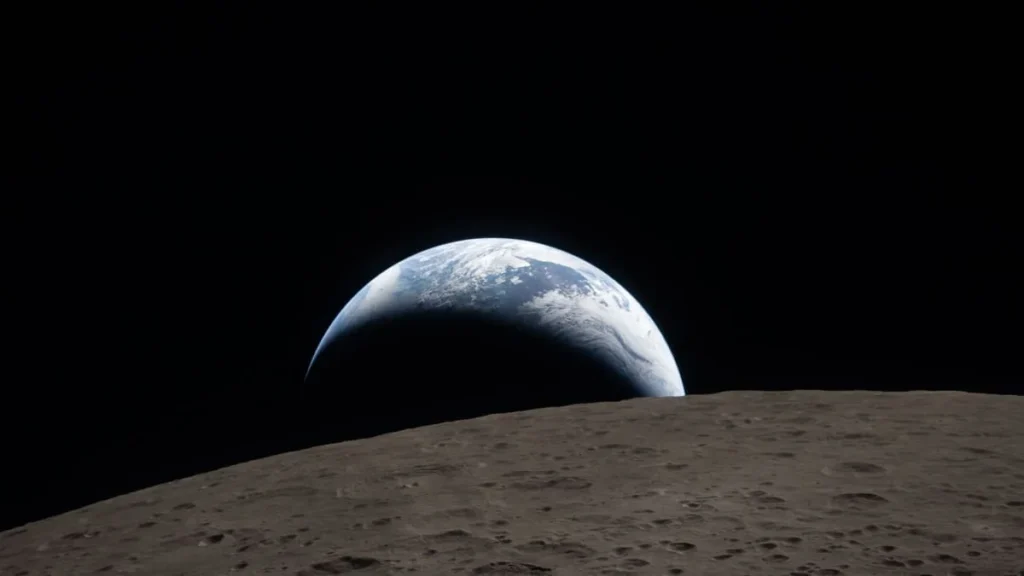
Despite significant advancements in space exploration, including the triumphant return of NASA’s Artemis II mission, a recent comprehensive survey indicates that the general public remains largely hesitant about embarking on space tourism ventures. This intriguing finding, unearthed from the Global Rescue Spring 2026 Traveler Sentiment and Safety Survey, suggests a considerable chasm between the proven capabilities of human spaceflight and the willingness of ordinary individuals to participate in it as a leisure activity. While the dream of vacationing among the stars has long captivated humanity, the practical realities of exorbitant costs and the perception of absolute risk continue to anchor potential spacefarers firmly to Earth, even as the possibility of lunar travel inches closer to reality.
The initial observation, which first surfaced through an email received by industry publication Personnel Today, highlighted a seemingly distant concern for HR professionals: the notion of employees requesting leave for space holidays. Historically, HR’s involvement in employees’ holiday choices extends only to ensuring compliance with leave policies, with perhaps an eyebrow raised at a particularly adventurous terrestrial trip. However, the burgeoning, albeit nascent, space tourism industry introduces a new dimension of risk, cost, and logistical complexity that could, in the future, necessitate entirely new policy frameworks. The current data, however, suggests that such concerns remain far off, with most individuals still in the “pre-hesitant” stage of even contemplating space travel as an option.
The Evolving Landscape of Space Tourism and Exploration
The concept of space tourism, once confined to the realm of science fiction, has steadily moved towards tangible reality over the past two decades. The journey began in earnest with individuals like Dennis Tito, the American engineer and entrepreneur who, in 2001, became the world’s first space tourist, paying an estimated $20 million to visit the International Space Station (ISS) via a Russian Soyuz spacecraft. His pioneering flight, arranged through Space Adventures, opened the door for several other wealthy individuals to experience orbital travel in the years that followed.
The early 2000s also saw the emergence of private companies dedicated to making space accessible beyond government agencies. The Ansari X Prize, awarded in 2004 to SpaceShipOne, a suborbital spacecraft developed by Scaled Composites, demonstrated the feasibility of private reusable spacecraft. This milestone galvanized the nascent commercial space industry, paving the way for ventures like Virgin Galactic, Blue Origin, and SpaceX.
Key Players and Their Offerings:
- Virgin Galactic: Founded by Richard Branson, Virgin Galactic focuses on suborbital spaceflights, offering a few minutes of weightlessness and views of Earth from the edge of space. The company has successfully completed several crewed test flights and began commercial service in 2023, with tickets initially priced around $250,000, later rising to $450,000.
- Blue Origin: Jeff Bezos’s Blue Origin operates the New Shepard suborbital rocket system, also providing brief trips to space. Their first crewed flight took place in 2021, with subsequent missions carrying various passengers, including Bezos himself. Pricing for Blue Origin flights has not been publicly disclosed but is widely believed to be in a similar range to Virgin Galactic, potentially exceeding $1 million per seat according to some reports.
- SpaceX: Elon Musk’s SpaceX has pushed the boundaries of orbital and deep-space travel. While not solely focused on tourism, SpaceX has conducted several groundbreaking private missions, including Inspiration4 in 2021, the first all-civilian orbital spaceflight, and is planning further private missions like Polaris Dawn. Tickets for these orbital missions are significantly more expensive, reportedly in the tens of millions of dollars. SpaceX’s long-term vision includes lunar tourism and eventually Martian colonization.
The Artemis Program and Its Significance:
NASA’s Artemis program represents a critical national and international endeavor to return humans to the Moon and establish a sustainable lunar presence. The Artemis II mission, central to the survey’s context, is a crewed test flight designed to orbit the Moon, demonstrating NASA’s Orion spacecraft’s capabilities with astronauts aboard before a lunar landing mission. The successful return of Artemis II marks a major milestone in re-establishing human lunar exploration and advancing plans for a sustained presence on the Moon. While Artemis II itself is not a tourism mission, its success is pivotal in building public trust and demonstrating the safety and reliability of deep-space human operations, which could indirectly influence future perceptions of space tourism. The survey, conducted shortly after this success, aimed to gauge whether such achievements translated into greater public enthusiasm for private space travel.
Survey Highlights: Cost and Risk as Primary Deterrents
The Global Rescue Spring 2026 Traveler Sentiment and Safety Survey provides granular data illustrating the deep-seated reservations many travelers hold regarding space tourism. Dan Richards, CEO of the Global Rescue Companies and a member of the US Travel and Tourism Advisory Board at the US Department of Commerce, succinctly noted, "The Artemis II mission proves what’s possible, but traveller sentiment makes clear that possibility doesn’t equal demand, at least not yet." This statement underscores the fundamental disconnect the survey reveals.
The Economic Barrier:
Unsurprisingly, cost emerges as the most significant impediment to widespread interest in space tourism. The survey’s findings on pricing are stark:
- Only approximately 10% of travelers would consider paying up to $250,000 for a space trip.
- Fewer than 2% would be willing to pay $750,000 or more.
- A staggering 74% of travelers indicated that none of the proposed price points, including options exceeding $1 million, were acceptable.
These figures highlight a profound affordability gap. Current prices for even suborbital flights from companies like Virgin Galactic ($450,000) already exceed what 90% of the surveyed population considers acceptable. Orbital flights, costing tens of millions, remain entirely out of reach for virtually everyone. This suggests that for space tourism to transition from an ultra-luxury niche to a broader market, a revolutionary reduction in cost, likely through advanced reusable technologies and economies of scale, would be necessary. The current perception is that space travel is an indulgence reserved for the ultra-wealthy, not a viable holiday option for the average person, no matter how adventurous.

The Perception of Absolute Risk:
Beyond cost, the inherent risks associated with space travel represent another formidable barrier. Despite the successful return of Artemis II and the increasingly robust safety records of commercial space companies, the specter of catastrophic failure looms large in the public imagination. The survey quantified these concerns:
- A majority of respondents, 56%, cited catastrophic mission failure as their primary safety concern. This reflects a rational apprehension given the historical rarity and complexity of spaceflight, where errors can have irreversible consequences.
- "Being stranded" ranked as the second-highest concern at 17%, highlighting fears of being stuck in space or at a remote extraterrestrial location.
- Concerns about getting sick or injured during the trip were relatively low, at just under 7%. This suggests that while minor discomforts or medical issues are perceived as manageable (and presumably covered by specialized travel insurance), the fundamental existential risks are what truly deter potential travelers.
Dan Richards elaborated on this perception, stating, "Space travel introduces a category of risk that most travellers have never had to evaluate. The consequences are absolute, and that heavily shapes perception." This psychological hurdle is significant. Unlike terrestrial travel, where risks are often probabilistic and consequences typically manageable, space travel presents a scenario where failure can mean total loss. This binary outcome – complete success or catastrophic failure – is a difficult concept for the average traveler to reconcile with the idea of a leisure trip. The perception is not merely about the probability of an event, but the severity of its outcome.
Gender Disparity in Interest:
The survey also noted a subtle but discernible gender gap, with women expressing even less interest in space tourism than men, by a few percentage points. While the survey did not delve into the reasons behind this disparity, potential factors could include differing risk appetites, varying leisure priorities, or even the historical marketing of space exploration, which has traditionally been more male-dominated. Further research would be needed to understand the nuances of this observation, and indeed, as the original article playfully suggested, perhaps a "gender space gap measurement" could become a future metric for the industry.
Implications for the Space Tourism Industry
The findings of the Global Rescue survey present both challenges and clear directions for the nascent space tourism industry. The path forward demands a multi-pronged approach addressing both the economic and psychological barriers.
Technological Advancements and Cost Reduction:
For space tourism to move beyond its ultra-niche status, significant technological breakthroughs are needed to dramatically reduce launch costs. This includes:
- Greater Reusability: Companies like SpaceX are already pioneering fully reusable rocket systems, which are crucial for lowering per-launch costs. Further advancements in this area are vital.
- Mass Production: Scaling up manufacturing of spacecraft components and vehicles could drive down unit costs.
- Alternative Propulsion Systems: While long-term, future propulsion technologies could make space travel more efficient and affordable.
- Infrastructure Development: The development of spaceports, orbital habitats, and lunar bases could eventually create economies of scale for support services, further reducing costs.
Building Trust and Mitigating Perceived Risk:
The industry must actively work to demystify space travel and build public confidence. This involves:
- Transparent Safety Data: Clearly communicating safety records, redundancy measures, and emergency protocols in an accessible manner.
- Public Education: Showcasing the rigorous training astronauts and space tourists undergo, and the layers of engineering and operational safety.
- Gradual Exposure: Starting with shorter, less complex missions and gradually building towards more ambitious ones, allowing public perception to evolve alongside technological maturity.
- Personalized Risk Assessment: While the consequences are absolute, helping individuals understand the actual probabilities involved, perhaps by comparing them to other high-risk activities, could be beneficial.
Expanding Market Appeal:
Beyond the current demographic of wealthy adventurers, the industry needs to consider how to appeal to a broader audience. This might involve:
- Diverse Marketing: Moving beyond a purely technical or adventurous narrative to highlight other aspects, such as the unique perspectives gained (the "overview effect"), scientific opportunities, or even romantic appeal.
- Accessibility Initiatives: Exploring options for different price points, perhaps through tiered experiences or even lottery systems for subsidized trips, although this is a long-term vision.
- Addressing Gender Gaps: Tailoring marketing and outreach efforts to better engage women, potentially by showcasing diverse role models and highlighting different benefits of space travel.
Regulatory Frameworks:
As space tourism grows, robust international and national regulatory frameworks will be essential. These frameworks must address:
- Safety Standards: Establishing clear and enforceable safety guidelines for commercial human spaceflight.
- Liability and Insurance: Defining responsibilities in case of accidents and ensuring adequate insurance coverage for passengers and operators.
- Environmental Impact: Addressing concerns about space debris, emissions, and the long-term sustainability of frequent launches.
- Passenger Rights: Outlining rights and responsibilities for space tourists, similar to those in the aviation industry.
The Future Outlook
While the Global Rescue survey paints a picture of current public reluctance, it does not spell the end for space tourism. Rather, it provides a realistic assessment of the hurdles that must be overcome. The success of missions like Artemis II continues to inspire, pushing the boundaries of human endeavor and making the once-impossible seem increasingly within reach. The challenge for the commercial space industry is to bridge the gap between "possible" and "desirable" for the mass market.
The dream of space travel remains potent. As technologies mature, costs decrease, and safety records become more extensive, public perception will inevitably shift. What is currently a prohibitively expensive and seemingly risky proposition for the vast majority may, in decades to come, become a more accessible, albeit still premium, form of travel. For HR professionals, the day when an employee’s request for leave to trek the lunar surface or orbit Mars becomes a genuine administrative concern might still be far off. But the ongoing developments in space, coupled with evolving public sentiment, mean that future policy considerations for such extraordinary leave requests are no longer entirely within the realm of science fiction. The journey to making space tourism a mainstream reality is long, but surveys like this provide crucial waypoints for the industry to navigate.