The persistent challenges of crafting, updating, and managing effective job descriptions have long plagued human resources departments and recruiters across industries. From nascent startups to sprawling multinational corporations, the intricate dance of defining roles, attracting top talent, and ensuring compliance demands an increasingly sophisticated approach. In response to this evolving landscape, automated job description builders, such as Ongig’s Text Analyzer, are emerging as pivotal solutions, promising to streamline operations, enhance inclusivity, and elevate the overall efficacy of talent acquisition strategies.
The Evolving Landscape of Talent Acquisition
Modern recruitment is a complex ecosystem, far removed from the days of simple classified ads. The "war for talent" has intensified, driven by factors such as specialized skill demands, global competition, and shifting workforce expectations, particularly post-pandemic trends like remote work preferences. Simultaneously, the emphasis on diversity, equity, and inclusion (DEI) has moved from a commendable aspiration to a fundamental business imperative, with studies consistently linking diverse workforces to increased innovation and profitability. Navigating this environment requires precision, consistency, and an acute awareness of legal and ethical considerations in every facet of the hiring process.
The Critical Role of the Job Description
At the heart of every successful hire lies a well-crafted job description (JD). Far more than a mere list of duties, a JD serves as the initial touchpoint between a company and potential candidates, acting as a crucial marketing tool for the role and the organization’s brand. Effective job descriptions are instrumental in:
- Attracting a Diverse Talent Pool: By employing inclusive language and removing unconscious bias, JDs can broaden reach and appeal to candidates from various backgrounds, a vital step in building a diverse pipeline.
- Reducing Candidate Churn: Clear, engaging, and accurate descriptions set realistic expectations, minimizing mismatches and reducing the likelihood of candidates dropping out during the hiring process or shortly after being hired.
- Enhancing Employer Branding: A professional, consistent, and forward-thinking JD reflects positively on the company culture and values, strengthening its reputation as an employer of choice.
- Ensuring Compliance: In an era of increasing regulatory scrutiny, JDs must adhere to legal standards concerning equal employment opportunity (EEO), pay transparency, and non-discrimination.
A 2023 Career Plug report highlighted the tangible impact of poor candidate experiences, revealing that 52% of job seekers would decline an opportunity due to negative interactions with prospective employers. This statistic underscores the profound influence of every stage of the hiring process, beginning with the job description itself.
Traditional Hurdles in Job Description Management
Historically, managing job descriptions has been fraught with difficulties. For smaller organizations, the task often falls to HR generalists or even hiring managers who may lack specialized training in crafting objective, engaging, and compliant language. This can lead to inconsistencies, inadvertent biases, and missed opportunities to attract top talent. As companies scale, these issues are magnified. Large enterprises often contend with hundreds, if not thousands, of unique roles, each requiring its own JD. Maintaining consistency across different departments, ensuring adherence to evolving company standards, and preventing the proliferation of outdated or biased language becomes an enormous, labor-intensive undertaking. The manual review and update process is not only time-consuming but also prone to human error, making it challenging to achieve the desired level of quality and uniformity.
Automated Job Description Builders: A Strategic Imperative
The advent of automated job description builders marks a significant paradigm shift in talent acquisition. These sophisticated platforms leverage artificial intelligence (AI) and machine learning to tackle the complexities of JD creation and management, transforming a previously cumbersome process into an efficient, strategic function. Ongig’s Text Analyzer stands as a prime example of this innovation, offering a comprehensive suite of features designed to empower HR professionals.
Ongig’s Text Analyzer: A Deep Dive into Functionality
Ongig’s Text Analyzer provides a multifaceted solution, addressing the entire lifecycle of a job description, from initial drafting to ongoing management and compliance.
Creating New Job Descriptions with AI
One of the most compelling features is the ability to generate new job descriptions from scratch with remarkable ease. Recruiters can simply input a job title, such as "Web Developer," and the AI-powered tool rapidly drafts a comprehensive JD. Users can then select desired sections based on custom company templates or Ongig’s research-backed recommendations, ensuring that essential elements like "Required Skills," "Diversity & Inclusion," and "Mission Statement" are included. This initial draft serves as a robust starting point, significantly reducing the time and effort traditionally associated with crafting new postings. The collaborative editing features allow teams to refine the content to perfectly match the specific requirements of the role.
Enhancing Quality and Inclusivity: Readability and Bias Detection
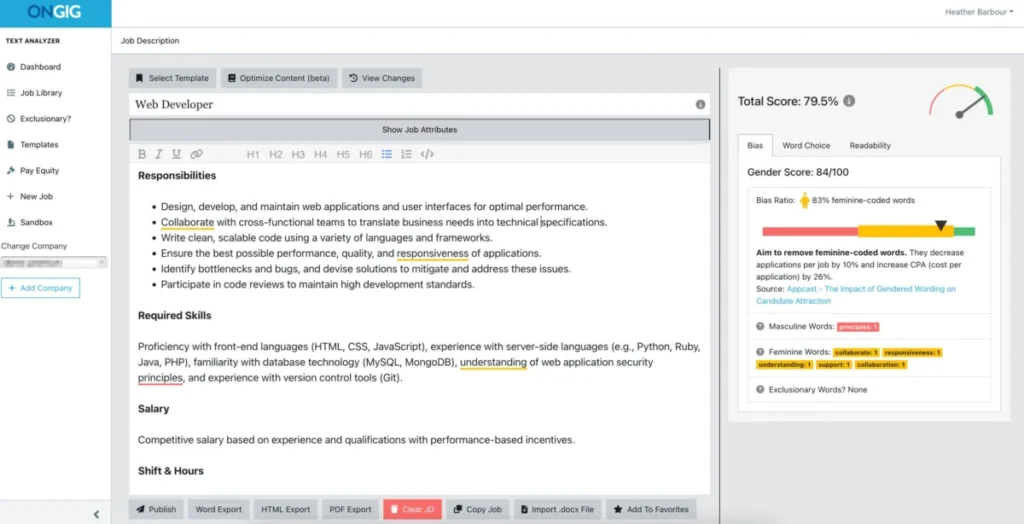
Beyond mere generation, Text Analyzer excels in optimizing the quality and inclusivity of job descriptions. The platform provides a "readability score," offering insights into the clarity and accessibility of the text. It actively identifies and flags instances of unconscious bias, such as masculine-coded terms or exclusionary language. For example, the tool might highlight "support" as a feminine-coded term and suggest a more neutral alternative like "help." This capability is critical, as research indicates that even subtle linguistic biases can deter qualified candidates, particularly women and underrepresented groups, from applying. The ability to instantly rewrite content to reduce bias and shorten complex sentences directly contributes to a broader and more diverse applicant pool.
Navigating the Compliance Maze: OFCCP and EEO
Compliance is a non-negotiable aspect of modern recruitment. Regulations from bodies like the Office of Federal Contract Compliance Programs (OFCCP) demand strict adherence to non-discriminatory hiring practices. Ongig’s Text Analyzer integrates these compliance checks, allowing users to verify that their JDs align with the latest OFCCP rules and EEO standards. This automated vigilance helps companies mitigate legal risks, reinforces their commitment to equal employment opportunity, and strengthens their employer brand as an ethical and inclusive organization. The platform’s ability to check for discrimination instances supports merit-based talent acquisition decisions, a critical factor in today’s regulatory environment.
Revitalizing Existing Job Descriptions: Updating and Consistency
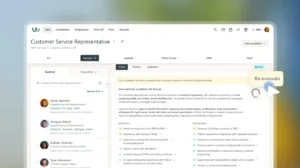
For organizations with vast libraries of existing job descriptions, Text Analyzer offers invaluable tools for review and update. Old JDs can quickly become obsolete, containing outdated requirements, biased language, or inconsistent formatting. The automated builder can ingest existing content and analyze it for quality, consistency, and language, flagging areas for improvement. This allows HR teams to efficiently refresh their entire catalog of job postings, ensuring that every description is current, compliant, and optimized for conversion. The ability to perform comparative analysis between different versions further aids in maintaining high standards.
Standardization and Scale: Large-Scale Reformatting and Template Management
Maintaining consistency across a large volume of job descriptions, especially in decentralized organizations, is a formidable task. Text Analyzer addresses this by allowing companies to establish and enforce standardized templates. These templates can be customized to reflect the organization’s unique branding, tone, and preferred sections (e.g., salary, benefits, company culture statements). Once configured, critical sections can be "locked" to prevent unauthorized edits, guaranteeing uniformity across all postings. This capability is particularly beneficial for large-scale reformatting initiatives, ensuring that every JD adheres to company-wide standards without requiring extensive manual oversight.
Transforming JDs into Engaging Job Postings: SEO and Candidate Experience
A job description is an internal document, but a job posting is a public advertisement. Ongig’s platform bridges this gap by offering a streamlined process to reformat JDs into attractive, SEO-optimized job postings. By leveraging insights into candidate search behavior and preferred information hierarchy, the tool can rearrange and highlight sections that matter most to job seekers, such as "What You’ll Do," "Salary," and "Making an Impact." This optimization not only enhances visibility on job boards but also significantly improves the candidate experience, leading to higher engagement and conversion rates.
The Centralized JD Library: Management and Accessibility
Managing thousands of job descriptions across various departments can lead to disorganization and inefficiency. Ongig provides a centralized, cloud-based JD library that serves as a single source of truth for all hiring needs. This intuitive library offers at-a-glance details, including job title, department, status (active/non-active), and the last updated date. Such systematic organization ensures that hiring teams always have access to the most current and compliant versions, fostering consistency and streamlining the entire hiring workflow.
Seamless Integration: ATS and HRIS Compatibility
Recognizing that an automated JD builder is part of a larger HR technology ecosystem, Text Analyzer is designed for seamless integration with existing Applicant Tracking Systems (ATS) and other HR Information Systems (HRIS). Through API integrations, companies can establish a full-circle job creation workflow, pushing optimized job postings directly from the builder to their ATS. This interoperability eliminates manual data entry, reduces errors, and further enhances the efficiency of the recruitment process. Ongig also offers flexible, tiered plans, allowing organizations to scale their use of the tool according to their evolving needs, paying only for the features required.
Measurable Impact: Success Stories and Industry Validation
The practical benefits of automated job description builders are underscored by real-world success stories. Global organizations leveraging Ongig’s Text Analyzer have reported significant improvements across key recruitment metrics:
- Increased Application Rates: A major global employment website saw a remarkable 133% jump in total application starts and a 21% rise in applications from women after implementing Text Analyzer across 60,000 job postings. This demonstrates the profound impact of inclusive language on candidate attraction.
- Enhanced Candidate Quality: An entertainment sector enterprise experienced a 100% increase in candidate quality after revamping its job descriptions for inclusivity and consistency.
- Automation at Scale: A healthcare client managing over 100,000 job postings monthly achieved complete automation, drastically streamlining their recruitment operations. Another healthcare provider successfully revamped over 5,000 job postings, standardizing and infusing inclusivity throughout.
- Targeted Diversity Gains: An aerospace technology agency, focusing on gender imbalance in male-dominated fields like engineering and finance, reported a 22% increase in female applicants. Similarly, a large insurance organization using the tool to target underrepresented groups saw a fourfold increase in applications from these demographics.
These outcomes highlight not just operational efficiencies but also a tangible contribution to broader organizational goals related to diversity and talent quality. Industry surveys consistently reveal that diverse companies outperform their less inclusive counterparts, with some reports indicating a 36% increase in profitability. Furthermore, objective, skills-based hiring practices, enabled by tools like Text Analyzer, lead to a 2.6 times higher likelihood of organizations meeting their hiring targets.
Broader Implications for HR and Business Strategy
The adoption of automated job description builders signals a strategic evolution for HR departments. By offloading the repetitive, compliance-heavy aspects of JD management to AI, HR professionals can reallocate their time to more strategic initiatives, such as candidate engagement, talent pipelining, and developing robust employer branding campaigns. This shift transforms HR from a purely administrative function into a proactive, data-driven contributor to business growth. The ability to consistently produce high-quality, inclusive, and compliant job descriptions at scale directly contributes to stronger employer branding, reduced time-to-hire, improved quality of hire, and ultimately, a more productive and innovative workforce.
The Future of Talent Acquisition
As the global talent landscape continues to evolve, the integration of AI-powered tools into human resources processes will become increasingly indispensable. Automated job description builders represent a significant step in this direction, offering a powerful blend of efficiency, intelligence, and ethical consideration. By leveraging these technologies, companies can ensure their talent acquisition strategies are not only competitive but also fair, inclusive, and future-proof. Companies are exploring solutions like Ongig’s Text Analyzer to maintain an edge in the competitive race for talent, recognizing that the foundation of a great hire begins with a great job description.