The global talent landscape in 2026 presents an unprecedented challenge for large organizations, with a significant shortfall of highly skilled workers and widespread difficulties in filling critical roles. Data indicates a deficit of 2.5 million skilled professionals within major economies, alongside a staggering 75% of organizations reporting considerable hurdles in securing full-time positions. This acute talent scarcity underscores an urgent need for comprehensive reform and innovative strategies in recruitment practices across the globe. As businesses grapple with these evolving dynamics, the adoption of advanced methodologies becomes not merely advantageous but essential for sustained growth and competitive advantage.
The Evolving Landscape of Talent Acquisition
The current recruitment crisis is a culmination of several intertwined macro trends that have reshaped the global workforce over the past decade. Demographic shifts, particularly an aging workforce in many developed nations and declining birth rates, have led to a shrinking pool of new entrants into the labor market. Concurrently, rapid technological advancements, especially in areas like artificial intelligence, data science, cybersecurity, and cloud computing, have created a widening skills gap. Traditional educational and training pipelines often struggle to keep pace with the swift evolution of required competencies, leaving organizations scrambling for specialized expertise.
Furthermore, candidate expectations have undergone a profound transformation, particularly in the wake of global events like the pandemic. Today’s professionals, especially top-tier talent, prioritize flexibility, purpose-driven work, robust diversity and inclusion initiatives, and a strong, supportive company culture. The "Great Resignation" and subsequent "Great Reshuffle" highlighted a fundamental shift in employee priorities, compelling organizations to offer more than just competitive salaries. This complex interplay of demographic pressures, skill mismatches, and elevated candidate demands has forged a fiercely competitive hiring environment, making strategic talent acquisition a C-suite imperative rather than solely an HR function.
Leveraging AI for Enhanced Sourcing and Screening
In this challenging environment, artificial intelligence (AI) has emerged as a transformative force in recruitment. Over half of all large organizations have already integrated AI into their hiring processes, recognizing its potential to revolutionize sourcing, screening, and candidate management. AI-driven tools transcend basic automation; they offer sophisticated capabilities from generating nuanced job descriptions and meticulously screening curricula vitae (CVs) to automating extensive candidate searches across vast digital ecosystems.
The power of AI lies in its ability to expand talent sourcing far beyond traditional reach. AI-powered algorithms can seamlessly scan immense talent pools, identifying potential candidates from diverse platforms including specialized job boards, professional social networks, and even untapped internal databases. This capability allows recruiters to pinpoint individuals with specific skill sets and experiences that might otherwise remain undiscovered. Once potential candidates are identified, AI tools perform screening with remarkable accuracy and efficiency. Modern AI-powered recruitment platforms utilize Natural Language Processing (NLP) to analyze CVs, resumes, and portfolios against specific keywords, required skills, and desired experience profiles relevant to the job role. This not only significantly reduces manual review time but also enhances objectivity by focusing on quantifiable criteria.
The widespread adoption of AI-powered Applicant Tracking Systems (ATS) further illustrates this shift. Approximately 70% of enterprise-sized businesses now deploy ATS software for CV screening, signifying a critical investment in streamlining the hiring pipeline. These advanced ATS platforms come equipped with features such as automated CV screening, algorithm-informed candidate ranking, and smart scheduling functionalities. By simplifying the initial candidate selection process and accelerating hiring decisions, AI-powered ATS technology enables organizations to secure top talent before they are engaged by competitors. Industry reports, including a notable Google Case Study, indicate that ATS optimization can lead to a 70-80% reduction in manual screening time, effectively doubling the speed of hiring. This efficiency gain frees up human recruiters to focus on strategic engagement, personalized interactions, and critical decision-making, ensuring that the human element remains paramount in the final stages of talent acquisition.
Optimizing Job Descriptions with Advanced Analytics
One of the most frequently overlooked yet critically impactful areas in the hiring pipeline is the effectiveness of job descriptions. Suboptimally crafted job descriptions can severely limit the visibility of job postings, dilute the quality of the applicant pool, and, in some instances, inadvertently introduce bias into the recruitment drive. For large organizations aiming to attract and secure top-tier talent, relying solely on unoptimized job descriptions can be particularly detrimental.
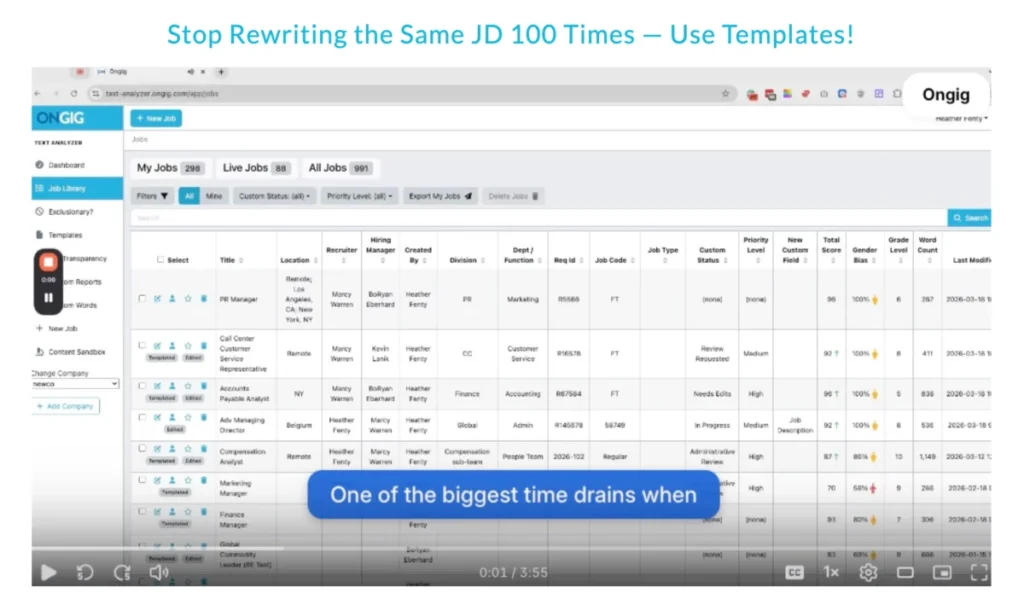
This is where specialized smart optimization tools become indispensable. Platforms like Ongig, for example, leverage data-driven insights to enhance job descriptions. These tools analyze various aspects, including the structure, language, and inclusivity of hiring advertisements, to maximize their appeal to a broader and more qualified talent pool. For instance, large-scale HR teams can utilize these platforms to identify and eliminate biased language, improve readability, and optimize for search engine performance (SEO). By ensuring job descriptions are clear, concise, and free from exclusionary terminology, organizations can attract a more diverse and high-caliber candidate base.
Effective job description optimization extends beyond simple grammar checks. It involves strategically incorporating relevant keywords that candidates are likely to search for, ensuring that postings rank highly on job boards and search engines. It also includes crafting a compelling narrative that reflects the company culture and values, making the role more attractive to passive candidates. Resources demonstrating how to remove gendered or ageist language, improve overall clarity, and enhance SEO performance are crucial for HR teams. By investing in these analytical tools and practices, companies can significantly improve the conversion rate from job view to application, ultimately securing better-fit candidates in a fiercely competitive hiring market. A well-optimized job description acts as the initial touchpoint for a positive candidate experience and a powerful statement of an organization’s commitment to fairness and diversity.
The Imperative of Proactive Talent Sourcing
In an environment where top talent is a scarce commodity, a reactive "post-and-pray" recruitment strategy is increasingly insufficient. Organizations that consistently face an unsatisfactory talent pool during recruitment drives must pivot towards proactive sourcing methodologies. This approach prioritizes building robust relationships with best-fit talent before a specific hiring need arises, effectively creating a continuously replenished pool of pre-qualified, ready-to-hire candidates.
The cornerstone of proactive sourcing is the development of robust talent community databases and strategic engagement. Platforms such as LinkedIn Talent Hub provide powerful tools for recruiters to identify, connect with, and nurture potential candidates over time. Direct outreach on professional social platforms, participation in industry forums, and fostering relationships at academic institutions or professional organizations are all vital components. The goal is to establish a strong employer brand that resonates with passive candidates, encouraging them to consider future opportunities with the organization. This long-term relationship building ensures that when a vacancy emerges, there is already a network of interested and qualified individuals to tap into, significantly reducing time-to-hire.
Furthermore, leveraging existing internal networks through effective employee referral programs has proven to be an exceptionally potent proactive sourcing strategy. Companies like Spotify have demonstrated the immense value of this approach, successfully filling 70% of their roles internally or through referrals. Employee referral programs capitalize on the networks of current employees, who are often excellent judges of cultural fit and technical competence. Referred candidates typically exhibit higher retention rates, faster onboarding, and are more cost-effective to hire compared to external hires through traditional channels. Incentivizing employees to refer qualified candidates not only broadens the talent search but also fosters a stronger internal culture, reinforcing the idea that the company values its people’s insights and connections. This systematic cultivation of relationships and internal resources dramatically cuts down the hiring pipeline, offering a distinct competitive advantage in the race for talent.
Centralizing Recruitment Data and Systems
A fragmented hiring process is a direct pathway to pipeline delays, missed opportunities, and ultimately, the loss of top talent to more agile competitors. Many large organizations still grapple with a mosaic of disparate HR systems and a reliance on manual data entry, which inevitably slows down operations. In the rapid-fire talent market of 2026, such inefficiencies are simply untenable.
The solution lies in centralizing the entire talent acquisition lifecycle within a unified, integrated system. Platforms like Access PeopleXD Evo exemplify this approach by consolidating all candidate data, recruitment tools, and HR functions into a single, cohesive ecosystem. This integration ensures that all information, from initial application to onboarding and beyond, resides in one accessible location. The benefits are manifold: it eliminates data silos, reduces manual errors, and provides a real-time, holistic view of the talent pipeline.
Centralized systems enable comprehensive automation of routine recruitment tasks. This includes not only advanced CV screening and sorting but also automated interview scheduling, compliance checks, background verification processes, and offer letter generation. By offloading these administrative burdens to intelligent systems, HR teams are liberated to dedicate more time and resources to strategic engagement with candidates, fostering deeper relationships, and focusing on high-value activities such as talent strategy development, employer branding, and improving candidate experience. The ability to access real-time analytics from a centralized data repository also empowers organizations to make data-driven decisions. They can identify bottlenecks in the hiring process, evaluate the effectiveness of different sourcing channels, measure the return on investment (ROI) of recruitment initiatives, and even predict future talent needs. This operational efficiency is critical for accelerating the hiring pipeline and ensuring that top talent is secured swiftly, before they are "snapped up" by organizations with more streamlined and integrated processes.
Cultivating a Superior Candidate Experience
In today’s interconnected world, one poor candidate experience can have far-reaching negative consequences, potentially damaging an organization’s brand reputation and future talent attraction efforts. Regardless of a business’s size, every candidate interaction—from the initial application to the final decision—must be met with the highest standards of communication, transparency, and efficiency.
For large organizations managing thousands of candidates during a single hiring session, maintaining a personalized and high-quality experience through manual means is practically impossible. This necessitates a strategic investment in automation to streamline and enhance candidate communication. Implementing automated status updates, for instance, keeps potential hires informed at every stage of the hiring pipeline, from application receipt to interview scheduling and final decision. This consistent communication prevents top talent from feeling "forgotten" within a large applicant pool, maintaining their engagement and interest.
The importance of swift communication cannot be overstated. According to experts at OpenArc, a significant 62% of candidates lose interest if they do not receive a response within a few weeks, and a substantial 48% have declined job offers due to excessively long hiring processes. These statistics highlight a critical competitive differentiator: organizations that prioritize quick follow-up emails, implement automated status notifications, and maintain transparent communication channels will invariably gain an advantage in the 2026 talent market. A superior candidate experience extends beyond mere updates; it encompasses a streamlined application process, clear expectations, personalized feedback (even for unsuccessful candidates), and respectful interactions at every touchpoint. This holistic approach not only strengthens the employer brand but also builds a positive reputation that can attract future talent through word-of-mouth and online reviews, solidifying the organization’s standing as an employer of choice.
Broader Implications and Future Outlook
The hiring landscape is undergoing a profound and irreversible transformation. The advent of AI, coupled with the imperative for workflow automation and real-time analytics, marks the dawn of a new, tech-infused HR sector. To successfully navigate and optimize their talent pipelines in 2026 and beyond, businesses must harness technology to its fullest potential while simultaneously adopting proactive, innovative strategies for talent acquisition.
The days when top recruits were passively delivered to large organizations are long past. In the current competitive environment, success hinges on an organization’s ability to actively source and engage the best candidates, often before a job application even goes live. This strategic shift requires not just a departmental adjustment but a fundamental reorientation of organizational priorities, elevating talent acquisition to a strategic imperative led from the highest levels of management.
Organizations that embrace these five critical strategies—leveraging AI, optimizing job descriptions, proactive sourcing, centralizing data, and enhancing candidate experience—will not only overcome the prevailing talent shortages but will also forge a significant competitive advantage. They will be better equipped to attract, engage, and retain the skilled workforce necessary to drive innovation, sustain growth, and maintain leadership in an increasingly dynamic global economy. The future of recruitment is not merely about filling vacancies; it is about strategically building and nurturing a talent ecosystem that continuously fuels organizational success.