The landscape of talent acquisition is undergoing a profound transformation, driven by the relentless evolution of search engine algorithms and the pervasive integration of artificial intelligence. By 2026, organizations that fail to adapt their job listings to these advanced digital environments — specifically Google for Jobs, major job boards, and emerging AI-powered platforms — risk isolating themselves from a vast pool of top-tier candidates. This shift necessitates a strategic re-evaluation of how job postings are conceived, structured, and presented, moving beyond traditional keyword-stuffing to embrace semantic understanding, data transparency, and human-centric clarity. The good news is that this pivot can be achieved through focused adjustments, ensuring that job descriptions are not only machine-readable but also genuinely engaging for prospective employees.
The Evolving Digital Frontier: AI and Semantic Search in Recruitment
The foundational change impacting job visibility stems from how search engines and recruitment platforms now process information. Traditional keyword-matching, once a cornerstone of search engine optimization (SEO), has largely been supplanted by semantic analysis. This sophisticated approach allows algorithms to interpret the context, intent, and meaning behind search queries and content. For job listings, this means that platforms like Google for Jobs, LinkedIn, and Indeed, alongside advanced AI hiring tools, prioritize comprehensive and well-structured descriptions over mere keyword repetition. A job posting’s ranking is now heavily influenced by its ability to clearly articulate the role, the specific data it contains, and its alignment with what candidates genuinely seek. Reports from industry analysts indicate that job postings leveraging semantic principles see up to a 40% increase in visibility compared to those relying on outdated SEO tactics. The implication is clear: if a role is struggling to gain traction, the primary culprit is often its underlying structure and textual composition. While keywords remain relevant, their usage must be natural, contextual, and directly pertinent to the job’s core requirements and responsibilities.
AI Overviews and Search Generative Experience (SGE): The New Paradigms
Google’s continued push towards AI-driven search experiences, particularly with AI Overviews and the Search Generative Experience (SGE), has fundamentally reshaped how information is consumed. AI Overviews directly surface concise answers within search results, requiring job listings to be meticulously crafted for AI parsing and citation. Vague or ambiguous descriptions are now summarily overlooked, as SGE prioritizes structured, specific content presented in natural language. Listings featuring complete sentences, detailed role specifications, and clear responsibilities are far more likely to be extracted and synthesized into AI-generated summaries, significantly boosting their visibility.
The criticality of schema markup, specifically JobPosting schema, has escalated dramatically. This structured data provides AI systems with a clean, machine-readable signal that explicitly defines the elements of a job. Without robust schema, even well-written human-readable content may struggle to achieve optimal algorithmic recognition. Furthermore, the accuracy of AI in detecting low-effort or duplicate content has improved, leading to harsher penalties for thin or redundant listings. The practical imperative for recruiters in 2026 is to approach job listing creation as if answering the question, "What does this role fundamentally involve?" — demanding complete, specific, and authentically human descriptions.
The Foundation of Visibility: Solid JobPosting Schema
At the core of optimizing job listings for modern search environments lies the implementation of robust JobPosting schema markup. This structured data acts as a critical interpreter, providing search engines with a clear, machine-readable map of the job’s essential details. Without it, even the most compelling job descriptions risk being poorly indexed or displayed. Google’s own documentation underscores the importance of comprehensive schema for achieving enhanced user experiences in search results, often manifesting as rich snippets or dedicated job search interfaces.
Key elements that are indispensable for effective JobPosting schema include:
@contextand@type: Defining the data as aJobPostingwithin the Schema.org vocabulary.title: The official job title.description: A detailed summary of the role, responsibilities, and requirements.datePosted: The date the job was published, crucial for freshness signals.validThrough: The expiration date of the posting, indicating its active status.hiringOrganization: Details about the hiring company (name, type, logo URL).jobLocation: Specifics about the job’s physical location, including address and country.jobLocationType: Clarifying if the role isTELECOMMUTE,HYBRID, orON_SITE.baseSalary: The salary range, including currency and frequency. This is increasingly vital for visibility.employmentType: Full-time, part-time, contract, etc.applicantLocationRequirements: Geographic restrictions for applicants (e.g., specific states or countries for remote roles).responsibilities: A clear list of duties.qualifications: Required skills, experience, and education.experienceRequirements: Specific years or types of experience needed.
Neglecting any of these elements can lead to suboptimal performance. To ensure proper implementation, recruiters are advised to regularly utilize tools like Google’s Rich Results Test, which validates schema markup and identifies potential errors that could hinder visibility.
Prioritizing Clarity Over Keyword Density
The era of keyword stuffing is definitively over. Modern search algorithms, especially those powered by AI, are designed to detect and penalize content that unnaturally repeats keywords. Instead, the emphasis has shifted to clarity, context, and natural language. Recruiters must transition from merely listing keywords to crafting narratives that genuinely explain the role. This involves detailing what constitutes success in the position, the specific tools and technologies candidates will utilize, the types of projects they will lead, and an authentic portrayal of the company culture.
Effective job descriptions now incorporate:
- Detailed narratives: Explaining the day-to-day responsibilities and strategic impact of the role.
- Quantifiable outcomes: Describing what success looks like in measurable terms (e.g., "drive a 15% increase in customer retention").
- Technology stack: Listing specific software, platforms, and methodologies used.
- Team dynamics: Providing insight into the team structure and collaborative environment.
- Growth opportunities: Outlining potential career paths and professional development.
- Company mission and values: Connecting the role to the broader organizational purpose.
- Helpful resources: Integrating links to company blogs, team pages, or relevant industry trends to provide a holistic view. For instance, a posting for travel nurses might link to current industry trends or average salary benchmarks to add valuable context.
The guiding principle should be to write as if engaging a highly qualified candidate in a direct, informative conversation, much like "explaining the role over coffee." This human-centric approach resonates better with both algorithms and job seekers.
Strategic Job Titles for Maximum Reach
While creativity in branding is often encouraged, job titles are not the place for it in the context of search optimization. Titles like "Growth Wizard" or "Sales Rockstar" may foster internal team spirit but significantly hamper external visibility. The objective is to align job titles with what candidates actually search for. Data from leading job platforms consistently shows that generic, widely recognized titles outperform quirky alternatives in search queries.
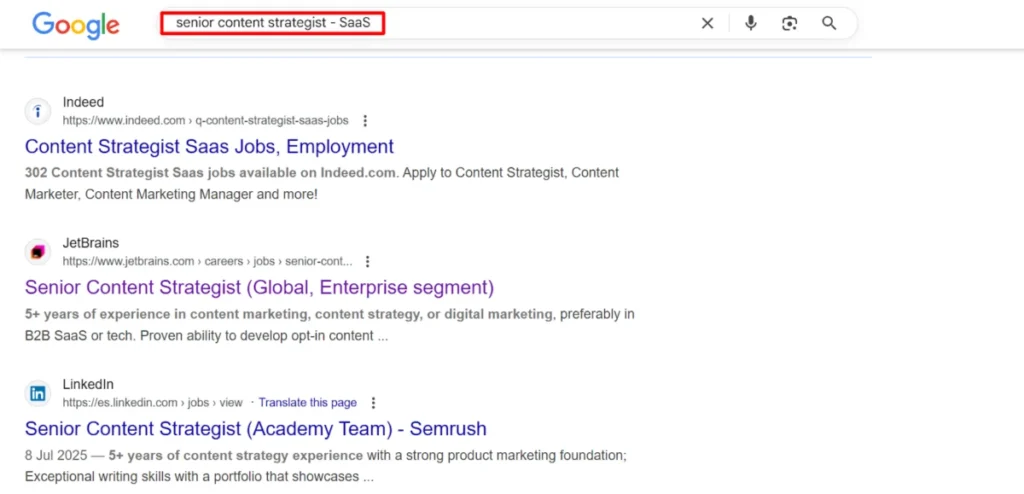
A highly effective formula for job titles is: Role + Level + Focus (Optional).
- Example 1: "Senior Content Strategist – SaaS"
- Example 2: "Entry-Level IT Support (Remote)"
- Example 3: "Marketing Manager, Digital Campaigns"
This format should be consistently applied across the page title, the main heading (H1), and the title field within the JobPosting schema. Any unique organizational flair can then be infused within the job description itself, after the primary title has served its purpose of attracting initial search traffic.
The Imperative of Salary Transparency
The debate over including salary ranges in job postings has largely concluded: transparency is paramount. Platforms like Google for Jobs and LinkedIn increasingly prioritize listings that provide salary details, often giving them higher visibility and preferential placement. Beyond algorithmic advantages, robust research, such as studies conducted by Glassdoor, indicates that candidates exhibit significantly higher trust in employers who are upfront about compensation. This transparency not only attracts more applicants but also contributes to higher retention rates and a more positive candidate experience throughout the hiring and onboarding processes.
Best practices for salary disclosure include:
- Clear ranges: Providing a realistic salary bracket (e.g., "$70,000 – $90,000 USD").
- Currency specification: Always include the currency (e.g., USD, EUR, GBP).
- Frequency: Specify if it’s annual, monthly, hourly, per project, or per word.
- Benefits overview: Briefly mention key benefits like health insurance, retirement plans, and paid time off.
- Location-based adjustments: If the salary varies by location for remote roles, indicate this clearly.
For project-based or contract work, providing a per-word, per-project, or hourly rate range is equally important. This level of detail empowers candidates to make informed decisions and reduces wasted effort on both sides.
Maintaining Freshness: The Importance of Timely Updates
Search engines are programmed to favor fresh, active content. A job posting that remains untouched for weeks can signal to algorithms that it is no longer current, leading to a decline in its visibility. Even minor updates can act as a crucial signal, indicating that the listing is still active and relevant. This doesn’t necessitate a complete rewrite, but rather a periodic refresh.
Strategies for keeping listings fresh include:
- Minor text adjustments: Tweaking a sentence, adding a new bullet point, or rephrasing a requirement.
- Updating
datePostedandvalidThrough: Even if the content remains largely the same, updating these schema fields signals freshness. - Adding new details: Incorporating recent company news, project updates, or team achievements.
- Reviewing and refining keywords: Ensuring natural language integration of relevant search terms.
- Rotating featured testimonials: Adding new employee quotes or success stories.
Regularly refreshing job postings, perhaps on a bi-weekly or monthly cycle for highly competitive roles, can significantly improve their sustained visibility in search results.
Precision in Location and Remote Status
Ambiguity regarding job location or remote status is a significant deterrent for both candidates and algorithms. It is imperative that the job title, schema markup, and detailed job description consistently and precisely articulate where the role can be performed. This consistency is crucial for ensuring the post appears in location-filtered searches and prevents confusion for applicants.
Specific clarifications include:
- Geographic specificity: "Remote – US only," "Hybrid – Austin, TX," "On-site – London, UK."
- Time zone requirements: For global remote roles, specifying preferred time zones (e.g., "Remote – PST preferred").
- Travel expectations: Clearly stating if the role requires travel and its estimated frequency.
- Distinguishing "remote": Emphasizing that "remote" truly means 100% remote, not merely flexible, and clarifying any geographical restrictions. Using "Work from Anywhere" if truly global, versus "Remote (within country X)."
This level of detail helps target the right candidates and enhances the listing’s discoverability in highly specific searches, a growing trend among job seekers.
Combating Content Duplication
A common but detrimental practice is posting identical job descriptions across numerous job boards or duplicating them on internal career pages without proper canonicalization. Search engines actively penalize or ignore duplicate content, typically indexing only one version (often arbitrarily chosen) and suppressing the others. This significantly reduces the overall visibility of the role.
Effective strategies to avoid duplication include:
- Unique descriptions: Crafting slightly varied versions of the job description for different platforms, tailoring language to the specific audience of each board.
- Canonical tags: Implementing canonical tags on career pages to indicate the preferred version of a job posting to search engines, directing all SEO credit to a single URL.
- Consolidating external postings: Leveraging aggregators and XML feeds that publish unique content directly, rather than manual, copy-pasted submissions.
- Platform-specific optimization: Customizing headings, bullet points, and calls to action for each platform’s interface and audience.
While this approach requires additional effort, the enhanced visibility and improved SEO performance across all channels make it a worthwhile investment.
Optimizing for Mobile Experience: A Non-Negotiable
The overwhelming majority of job seekers utilize mobile devices for their job search and application processes. A slow-loading, cluttered, or poorly formatted mobile experience on a career page or job listing can lead to immediate candidate abandonment, irrespective of the role’s appeal. Mobile-friendliness is not merely a convenience; it is a critical ranking factor for search engines.
To ensure an optimal mobile experience:
- Responsive design: Implementing a design that automatically adjusts to various screen sizes.
- Fast loading times: Optimizing images, minimizing code, and leveraging caching to ensure rapid page loads.
- Legible fonts and spacing: Using clear, readable fonts with adequate line spacing and paragraph breaks.
- Clickable elements: Ensuring buttons and links are large enough and spaced appropriately for touch interaction.
- Simplified forms: Streamlining application forms for mobile completion, minimizing required fields.
- Accessible content: Ensuring all content is easily navigable without excessive scrolling or zooming.
Recruiters should routinely test their career pages and job listings using tools like Google’s PageSpeed Insights to identify and rectify any mobile performance issues that could impact rankings and candidate engagement.
Data-Driven Improvement: Tracking Performance
The optimization process doesn’t conclude once a job post goes live; rather, that’s when the real work of refinement begins. Implementing robust analytics tools, such as Google Analytics, is essential for understanding how candidates discover and interact with job listings. This data provides invaluable insights into what attracts applicants and where potential drop-off points occur, offering actionable intelligence for continuous improvement. It’s crucial to differentiate this from Applicant Tracking System (ATS) data, which focuses on post-application metrics; for SEO, the focus is on pre-application engagement.
Key metrics and actions include:
- Traffic sources: Identifying where candidates are coming from (e.g., Google for Jobs, direct search, social media).
- Page views and time on page: Gauging interest in specific listings.
- Bounce rate: Indicating if the content is immediately relevant or if candidates quickly leave.
- Conversion rates: Tracking clicks to apply buttons.
- Search queries: Analyzing the terms candidates use to find the listings.
- A/B testing: Experimenting with different headlines, descriptions, or calls to action to see what performs best.
The continuous analysis of these metrics enables recruiters to iteratively refine their strategies, leading to stronger-performing listings that serve as a clear signal of a credible and attractive employer brand.
Strengthening Internal Link Architecture
An often-overlooked but impactful SEO strategy for job listings is the optimization of internal link structure. A well-organized internal linking strategy helps search engines efficiently crawl and index career pages, distributing "link equity" across relevant job posts. It also enhances the candidate experience by providing clear pathways for exploration within the company’s career site.
Effective internal linking ideas include:
- Related roles: Linking similar positions or roles within the same department.
- Career paths: Providing links to pages detailing potential growth trajectories within the company.
- Company culture pages: Linking to sections about benefits, values, employee testimonials, or DEI initiatives.
- Location-specific hubs: Creating landing pages for different office locations that link to all roles in that area.
- Departmental pages: Organizing jobs by department and linking between related functions.
- "See all jobs" calls to action: Prominently featuring a link back to the main career portal from individual job pages.
This interconnected web not only boosts SEO but also encourages candidates to explore more opportunities, potentially discovering roles they hadn’t initially considered.
Going the Extra Mile: Advanced Optimization Tactics
For organizations seeking to truly distinguish their talent acquisition efforts, several advanced tactics can significantly enhance job posting performance:
- Streamlined Application Process: Ruthlessly eliminate unnecessary steps in the application journey. Protracted forms, irrelevant psychometric tests, and excessive screening rounds create friction and lead to candidate drop-off. A concise, smooth application process respects the candidate’s time and improves completion rates.
- Proactive Promotion: Extend the reach of job postings beyond organic search. Share them strategically across relevant social media channels (LinkedIn, Twitter, Facebook, industry-specific groups), include them in targeted email newsletters, and consider niche job boards that cater to specific skill sets or demographics.
- Voice Search Optimization: As voice assistants become more prevalent, optimizing for natural language queries is crucial. Incorporate phrases like "we’re hiring a remote backend developer" or "jobs for data scientists in New York" into descriptions, anticipating how a candidate might verbally search for a role.
- Showcasing Company Ratings: Leverage schema markup to display aggregate ratings from reputable platforms like Glassdoor or Indeed directly within search results. This social proof can significantly enhance click-through rates and build immediate trust with potential applicants.
Broader Implications for Talent Acquisition
The collective adoption of these optimization strategies signifies a broader shift in talent acquisition from a reactive posting model to a proactive, data-driven, and candidate-centric marketing approach. Organizations that successfully navigate this transformation will gain a significant competitive advantage in attracting scarce talent, reduce time-to-hire, and improve the quality of their applicant pools. Conversely, those that cling to outdated practices will find their talent pipelines dwindling, struggling to fill critical roles in an increasingly competitive market.
This evolution underscores the growing convergence of recruitment with digital marketing and SEO expertise. HR departments and talent acquisition teams are increasingly collaborating with marketing professionals or developing in-house capabilities to manage their digital employer brand effectively. The rise of specialized platforms, such as Ongig (mentioned in the original article), that help automate the creation of search-optimized, inclusive, and on-brand job descriptions at scale, highlights the industry’s recognition of this complex challenge. Such tools can streamline the process, ensuring consistency, compliance, and optimal visibility across hundreds or thousands of job listings without requiring manual, labor-intensive overhauls.
Conclusion
The year 2026 marks a pivotal point in talent acquisition, where success hinges on the strategic integration of SEO best practices and AI-friendly content creation. The transition from keyword-centric optimization to semantic understanding, coupled with the rising influence of AI Overviews and SGE, demands a meticulous approach to job posting. Organizations must prioritize robust JobPosting schema, write with clarity and human appeal, use candidate-centric job titles, embrace salary transparency, and maintain dynamic, mobile-optimized listings. By avoiding content duplication, strategically linking internal resources, and continuously tracking performance, companies can ensure their critical roles reach the ideal candidates. These practices are not merely technical adjustments; they represent a fundamental shift towards a more transparent, efficient, and candidate-friendly recruitment ecosystem, ultimately strengthening an organization’s employer brand and securing its future talent pipeline.