Frontline workers, comprising nearly 80% of the global workforce, are the indispensable backbone of modern economies, yet they remain the most underinvested and misunderstood segment of the labor market. From the nurses tending to our health and the drivers delivering our goods to the hospitality staff serving our needs and the manufacturing teams producing our goods, these individuals are the direct conduits of value for businesses and the bedrock of daily life. In the United States alone, this critical workforce generates an astounding $6.5 trillion in wages, underscoring their immense economic significance. Recent research highlights a crucial trend: the frontline workforce is expanding at a pace significantly outpacing white-collar professions, largely due to the inherent difficulty in automating their roles through artificial intelligence. For chief executive officers and chief financial officers, this demographic represents a strategic imperative—they are the primary interface with customers, the deliverers of essential services, and often, the largest and most controllable cost center within an organization.
The Stark Reality of Underinvestment
Despite their pivotal role, frontline employees have historically received a disproportionately small share of organizational investment. Data reveals that spending on training, management development, and career advancement for this segment falls short of one-third of what is allocated to their white-collar counterparts. On average, frontline workers receive less than $400 annually for development, compared to over $1,500 for white-collar employees. This disparity is often justified by a perceived high turnover rate, leading to a flawed logic: "If we’re going to lose these people in a year or two, why spend money on long-term development?"
However, this rationale is demonstrably flawed. Companies that prioritize investment in their frontline staff witness significant improvements in employee tenure and productivity. A prime example is Costco, which offers its retail employees an average hourly wage of $26, substantially exceeding the industry benchmark of $17. Coupled with comprehensive healthcare benefits and clear pathways for career progression into management, Costco experiences an annual turnover rate of less than 8%, a stark contrast to the industry average exceeding 60%. This demonstrates a powerful correlation between strategic investment and tangible business outcomes.
The success of frontline-first companies extends beyond mere compensation and benefits. These organizations cultivate environments that foster effective communication, offer schedule flexibility, provide robust management support, and crucially, value employees’ time. The complexities inherent in managing a frontline workforce, however, present unique challenges.
Navigating the Complexities of Frontline Management
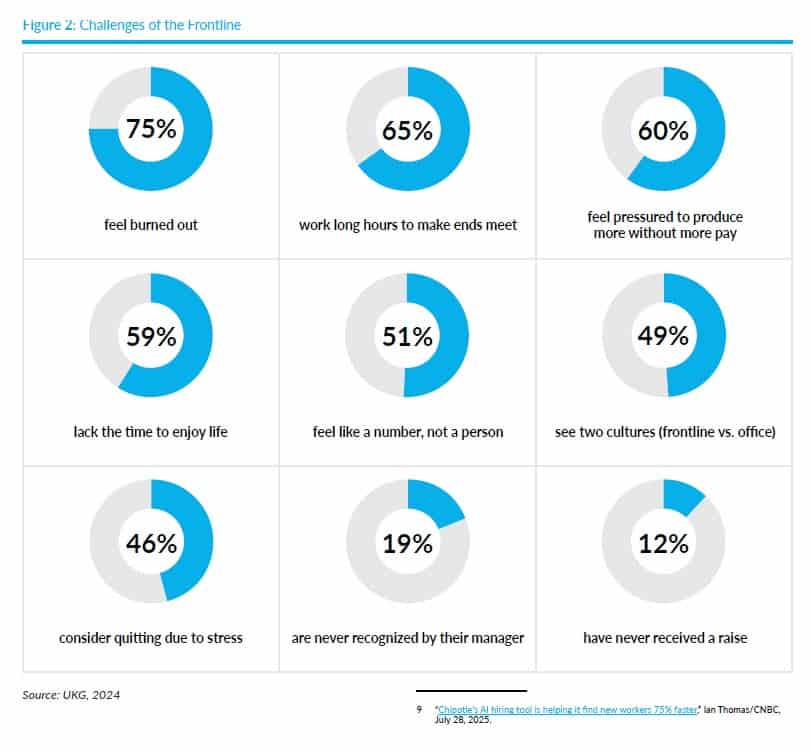
The intricate nature of frontline work often involves demanding physical labor, hourly wages, and the constant negotiation of schedules to accommodate personal needs, such as childcare or managing physical strain. Frontline employees frequently seek schedule flexibility, real-time visibility into their earnings, and concrete opportunities for professional growth. They contend with physical risks, high stress levels, long hours, and a perceived disconnect from their employers. When these fundamental needs are unmet, organizations suffer from reduced productivity, increased turnover, and escalating operational and financial challenges.
From a business perspective, optimizing frontline capacity is a direct driver of profitability. During periods of rapid demand fluctuation, supervisors and operations teams must efficiently reschedule shifts, accelerate hiring processes, or rapidly upskill existing personnel to bridge staffing gaps, all while revenue and brand reputation hang in the balance. Unpredictable schedules and insufficient work hours can lead to employee dissatisfaction, underperformance, and ultimately, departure. Furthermore, the dynamic nature of labor forecasting makes it difficult to accurately project expenses until timesheets are finalized, creating a substantial risk of budget overruns.
Consider a network of gyms or hair salons facing understaffing; this directly translates to lost revenue and diminished brand value. Companies like Chipotle have publicly acknowledged the competitive advantage derived from their workforce automation strategies, attributing recent sales growth, in part, to these advancements, as reported by financial analysts on CNBC.
Skills management is also paramount in frontline roles, particularly those requiring specialized technical expertise that directly impacts safety and operational integrity. Organizations must meticulously track certifications, safety training, and skill proficiencies to implement fair compensation structures that reward advanced capabilities. Many frontline jobs are physically demanding, necessitating employer-provided training in proper lifting techniques, body mechanics, and physical fitness to mitigate injury and enhance performance. For instance, a poultry manufacturer may invest in fitness training for employees handling heavy food products.
The Underrepresented Role of HR
Surprisingly, Human Resources departments are often not deeply involved in addressing frontline workforce issues. These responsibilities typically fall to supervisors and operations managers, who may themselves lack adequate training in personnel management. It is not uncommon for frontline staff to be promoted into leadership roles with minimal formal management training, creating a cascading effect of potential risks.
However, when HR departments actively engage, the impact can be transformative. During the COVID-19 pandemic, when numerous Marriott hotels faced closures, the Chief Human Resources Officer and CEO spearheaded the development of a comprehensive new management training program. This initiative proved exceptionally successful, necessitating a global overhaul of leadership development strategies and establishing a new operating model that integrated HR with operational teams to empower workers effectively.
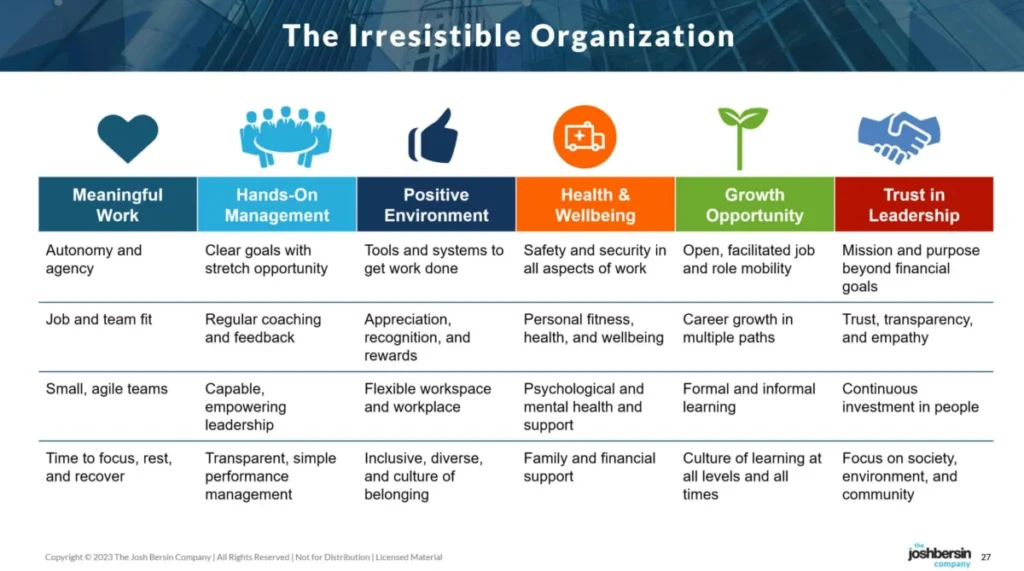
Our research, detailed in the "Irresistible" model, identifies 24 distinct areas of employee experience, each presenting unique complexities. Many frontline staff lack consistent access to computers or email, and their work often restricts phone usage during shifts. The need for immediate financial support, such as payday loans or access to real-time pay, highlights the necessity for financial literacy and support programs. Furthermore, a pervasive feeling of disconnection underscores the importance of effective communication and team-building initiatives.
The HR Technology Landscape’s Attempt to Bridge the Gap
The HR technology market has made numerous attempts to address the needs of the frontline workforce, yet solutions are often fragmented. Payroll and HR vendors frequently offer workforce scheduling tools that possess only tenuous connections to core HRIS and payroll systems. This siloed approach leads to challenges in managing skills across disparate platforms, disconnecting shift and work data from payroll and tax information, and hindering the accurate calculation of total labor costs.
Consider an employee who swaps shifts with a higher-paid colleague or relocates to a different jurisdiction. Will the HRIS and payroll systems accurately account for the tax implications and potential positional misalignment? Moreover, how can an employee access an integrated pay statement if the underlying data is not consolidated?
Leading HR technology providers are actively investing in this space. Workday, for instance, has made strategic acquisitions, including VNDLY and Paradox, to bolster its capabilities. SAP, a dominant force in industries with significant frontline workforces such as energy, manufacturing, and telecommunications, launched its new Total Workforce Management platform. Similarly, ADP, a major player in mid-market frontline industries, recently revamped its comprehensive workforce platform. Amidst these developments, the question of a clear market leader for frontline workforce solutions remains.
UKG: A Pioneer in Frontline Workforce Management
UKG, formerly known as Kronos, has emerged as a significant innovator in this sector, having pioneered time-tracking technologies, dynamic scheduling, and a frontline-first employee philosophy from its inception. The company, which invented workforce management solutions three decades ago, has evolved into a $5 billion powerhouse. Its offerings now encompass Human Capital Management (HCM), global payroll, pay optimization, dynamic labor optimization, high-volume hiring solutions, employee communication tools, voice-driven employee applications, integrated survey capabilities, recognition and well-being programs, and a suite of AI-powered agents designed to streamline operations.
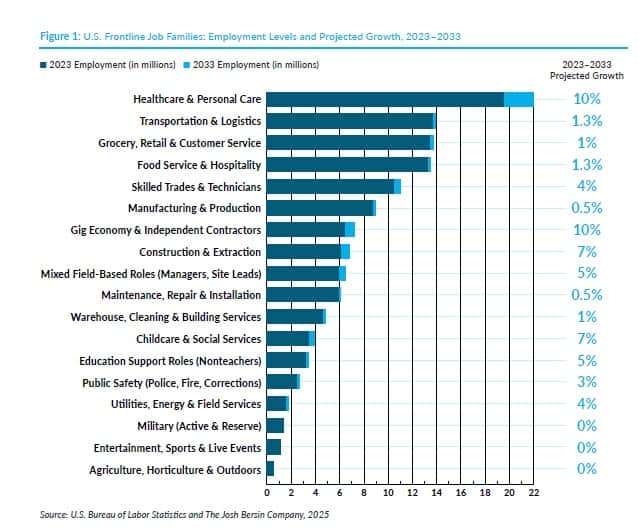
UKG positions its comprehensive solution as a "Workforce Operating Platform," an integrated suite meticulously designed to meet the diverse needs of C-suite executives, operations leaders, managers, and frontline workers alike. As CEO Jen Morgan articulated, "UKG understands the needs of frontline industries, workers, and what’s important to them."
UKG’s Unique Trajectory and Strategic Vision
The genesis of UKG’s success lies in its distinctive history and strategic foundation. Formed in 2020 through the merger of Ultimate Software and Kronos, the company consolidated Ultimate’s expertise in mid-market HCM and payroll with Kronos’s pioneering advancements in workforce management and timekeeping. Kronos, in particular, revolutionized the industry with its early development of worker time clocks and dynamic, optimized shift scheduling. Ultimate, conversely, built a reputation for its user-friendly and scalable cloud-based HRMS and payroll systems.
Under its current leadership, UKG has architected an integrated platform—the Workforce Operating Platform—that seamlessly unifies pay, scheduling, shift management, skills tracking, and core HR processes into a single, operationally coherent system. This platform approach streamlines critical workflows: every shift change, pay adjustment, jurisdictional tax update, overtime calculation, and employee record modification flows effortlessly across payroll, HCM, and scheduling modules.
Fundamental HR functions, including onboarding, compliance management, training, and performance management, are now integrated within the same environment as daily workforce operations. The outcome is a unified interface that simplifies the employee experience while equipping managers and leaders with AI-driven tools for optimizing scheduling, enhancing employee engagement, managing operations, and controlling costs.
Furthermore, UKG recognizes the profound influence of culture and leadership on the frontline workforce. In 2021, the company acquired "Great Place To Work" (GPTW), an organization renowned for its validated culture assessments and its role in Fortune Magazine’s annual "Best Companies to Work For" rankings. This integration allows UKG customers to access industry-specific benchmarks and gain insights into building trust and improving management practices. Currently, UKG serves over 80,000 organizations, generating approximately $5 billion in annual revenue and onboarding 1,500 new clients this year.
UKG’s Unwavering Commitment to the Frontline
UKG has consistently demonstrated a profound commitment to the frontline worker market. At its recent user conference, the company unveiled a series of new capabilities specifically engineered to address the urgent demands of frontline-first companies.
Workforce Intelligence Hub: Beyond Analytics to Action
A core innovation is the Workforce Intelligence Hub, which moves beyond traditional analytics to provide real-time planning and operational insights. This "hub," rather than merely an analytics tool, equips managers with actionable strategies, building upon Kronos’s legacy in operational efficiency. This integrated data platform enables sophisticated AI use cases, allowing for the creation of what UKG terms "Superagent" functionalities—capabilities unattainable through siloed systems. UKG stands out as one of the few vendors capable of transforming data insights into direct operational action for leaders.
Dynamic Labor Management Coupled with Rapid Hire
Another pioneering advancement is the integration of Dynamic Labor Management with Rapid Hire. This system combines real-time labor insights and benchmarking with a streamlined hiring solution to rapidly scale capacity. Following its November acquisition of Chattr, a company specializing in rapid hiring solutions that enable job seekers to apply for and accept positions with minimal effort, UKG has rebranded this offering. The "one-click hire" solution is perfectly suited for dynamic labor management scenarios. For instance, a restaurant manager facing an unexpected surge in customer traffic due to inclement weather, or anticipating a holiday rush, can now quickly open positions and fill them within hours. Potential employees can respond to job ads via their mobile phones, scan a QR code, and engage with UKG’s digital hiring assistant to apply instantly. This synergy creates opportunities for "Superagents" to directly contribute to business growth.
Voice-Enabled Frontline Worker Support: Project Alto
UKG is also introducing voice-activated AI agents designed to connect an employee’s schedule and personal calendar with the comprehensive UKG system, encompassing shift scheduling, pay, skills, and rewards. This initiative, codenamed "Project Alto," offers profound implications. Imagine a restaurant or transportation worker using a voice assistant to inquire about their November earnings and realizing they need an additional $500 for holiday shopping. Project Alto can process this request and, leveraging UKG’s integrated platform, recommend additional shifts or even present an opportunity to apply for a supervisory role. If the employee expresses interest, the system can suggest relevant training to prepare them for the potential promotion. This integrated experience, compatible with voice assistants like Siri, brings the full power of UKG’s platform directly to frontline workers, catering to their mobile and time-constrained lifestyles.
UKG Frontline Worker Network: Empowering Well-being
In further commitment to frontline empowerment, UKG has established a partner network providing UKG-powered workers access to third-party services focused on health, wealth, and well-being. The initial offerings concentrate on financial wellness and support, including partnerships with Chime, OnePay, and TurboTax, with plans for further expansion. This initiative is particularly crucial for frontline workers who often live paycheck to paycheck, providing them with essential financial resources and support.
UKG Beacon: Cultivating a Culture of Recognition
In late November, UKG acquired Mo, a UK-based employee recognition platform designed for effortless implementation. Employee recognition can range from simple expressions of gratitude, such as verbal "thank yous" or "shout-outs," to more structured rewards like gift cards and peer- or manager-delivered incentives. Previous research has indicated that companies with robust recognition programs experience a 70% lower voluntary turnover rate compared to their peers. Within frontline-first organizations, where every employee contributes directly to customer or patient care, even small gestures of recognition can significantly impact morale and retention. Beacon, the rebranded system, is integrated within the HR, payroll, and recruiting modules, featuring a feed of "moments," "boosts," and rewards that managers can extend to employees for anniversaries, career milestones, or sustained periods of excellent performance. UKG’s platform tracks these recognition events, enabling managers and executives to identify facilities or stores exhibiting high or low recognition trends. This functionality can be augmented by AI agents that prompt managers to acknowledge high performance if their recognition activities fall below company benchmarks.
The Future of Frontline Workforce Technology
The market for frontline workforce technology is poised for significant growth. UKG, under the leadership of Jennifer Morgan, is actively illuminating this critical segment and driving innovation. While many HR providers view the "frontline" as an incremental opportunity, UKG has established it as a core market focus, fostering a dynamic environment for innovation. Many of the integrated features within UKG’s new platform are applicable across all employee segments, providing UKG with leverage into a broader range of industries, including banking and insurance, that employ significant frontline staff.
The immediate opportunity lies in execution: bridging the long-standing gaps in employee experience, opportunity, and mobility for the 2.7 billion individuals who constitute the global workforce that "makes the world run." With Jennifer Morgan at the helm and a revitalized executive team, UKG appears well-positioned to lead in this emerging era of AI-powered frontline support, promising a brighter future for this essential segment of the global economy.
Additional Information: