The year 2026 presents Human Resources leaders with a multifaceted array of challenges, from persistent economic uncertainties and the accelerating disruption of artificial intelligence to widespread issues of low employee engagement. However, amidst these complex hurdles, data-driven solutions are emerging, with employee recognition identified as a critical component for navigating these turbulent times. Insights from the Achievers Workforce Institute’s (AWI) "2025 State of Recognition Report" underscore the pervasive nature of these challenges and highlight the tangible impact of well-implemented recognition strategies.
HR’s Biggest Headaches in 2026: Addressing the Core Issues with Recognition
The contemporary HR environment can often feel like an ongoing battle against a relentless wave of workplace adversities. Burnout, employee turnover, and disengagement are not merely buzzwords but significant operational challenges that demand proactive and effective solutions. While acknowledging and celebrating HR professionals, such as on HR Day, is a positive step, it is the consistent and meaningful practice of appreciation that offers a more profound remedy. This type of recognition, characterized by its authenticity, frequency, and relevance, serves to connect employees to their work’s purpose, enhance performance, and foster a sense of commitment that encourages retention.
Leveraging global employee data and the latest findings from the Achievers Workforce Institute (AWI), a clear picture emerges of the top 20 HR challenges anticipated in 2026. The underlying theme connecting the solutions to these pervasive issues is the strategic deployment of recognition. The fundamental need of employees, as revealed by the data, is not for extraordinary measures but for acknowledgment and visibility of their contributions.
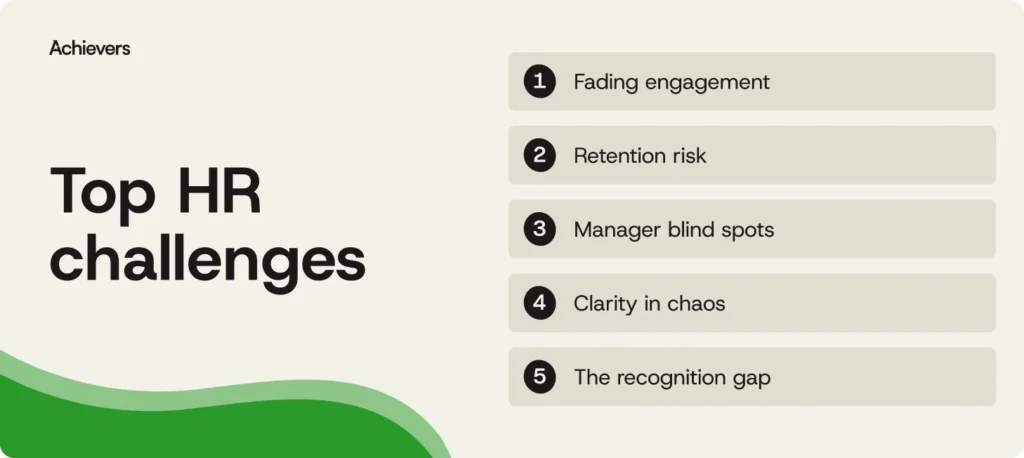
The Pervasive Challenge of Fading Engagement
A stark reality for 2026 is the dwindling engagement levels among the workforce, with a mere 26% of employees reporting feeling engaged in their roles. This pervasive disengagement can be directly countered by integrating recognition into the daily fabric of the workplace. The data indicates a significant correlation: employees who receive weekly recognition are three times more likely to report feeling engaged. This suggests that consistent, timely acknowledgment acts as a powerful catalyst for boosting morale and fostering a more invested workforce.
Mitigating Retention Risk Through Consistent Appreciation
The specter of high turnover looms large in 2026, with an alarming 22% of employees indicating plans to leave their current positions within the next year. In this competitive talent market, employee recognition emerges as a paramount retention strategy. The report highlights that weekly recognition dramatically enhances an employee’s likelihood of envisioning a long-term future with their company, increasing this prospect by a factor of six. This underscores the critical role of consistent appreciation in cultivating loyalty and reducing the costly impact of employee churn.
Addressing Manager Blind Spots in Recognition Practices
A significant disconnect exists in current recognition practices, with only 15% of employees reporting regular acknowledgment from their direct managers. This "manager blind spot" represents a missed opportunity to foster positive employee experiences. The solution lies in equipping managers with the skills and mandate to lead with recognition. Far from being a secondary concern, regular and authentic recognition from leadership is presented as a fundamental aspect of effective management and employee development in the modern workplace.
Restoring Clarity Amidst Workplace Chaos
In an era of rapid change and evolving expectations, a staggering 92% of employees report a lack of clarity regarding their roles and responsibilities. Recognition plays a crucial role in bridging this communication gap. Employees who receive weekly recognition are eleven times more likely to feel informed and confident during periods of organizational change. This suggests that consistent acknowledgment not only validates contributions but also serves as a reliable channel for communicating expectations and reinforcing organizational direction.
Bridging the Recognition Gap
A concerning trend identified is the decline in regular recognition. Weekly recognition, a key indicator of a healthy appreciation culture, has seen a significant drop from 29% to 19% in a single year. To counteract this trend, organizations must make recognition an omnipresent element of the work environment. This means embedding praise and acknowledgment seamlessly into daily interactions, team communications, and formal recognition platforms, ensuring that appreciation is a natural and consistent outflow wherever work occurs.
Combating Burnout and Low Productivity with Effort Recognition
The challenge of burnout and its direct impact on productivity is palpable, with only 25% of employees feeling they are operating at their peak efficiency. The data suggests that recognizing not just outcomes but also the effort invested in achieving them can significantly boost productivity. Employees who are regularly recognized are 2.6 times more likely to report being productive, indicating that acknowledging the journey, not just the destination, is vital for sustaining high performance.

Reconnecting Employees to Company Purpose
A significant disconnect exists between employees’ daily work and the overarching company purpose, with only 23% feeling their contributions are aligned. Recognition, when explicitly tied to organizational values, can powerfully illustrate an employee’s impact and clarify the link between their efforts and the company’s mission. This alignment is crucial for fostering a sense of meaning and motivation in the workplace.
Cultivating a Sense of Belonging Through Appreciation
The pervasive deficit in belonging is another critical challenge, with only 25% of employees reporting a strong sense of connection to their workplace. Recognition acts as a powerful builder of this essential element, with weekly recognition making employees nine times more likely to feel a sense of belonging. This highlights the profound impact of consistent acknowledgment on fostering an inclusive and welcoming environment.
Ensuring Recognition Resonates Beyond Rewards
A nuanced understanding of recognition is emerging, with only 21% of employees indicating that the most meaningful recognition includes a tangible reward. This suggests a shift towards valuing authentic, specific, and sincere appreciation. While rewards can be a component, the core of impactful recognition lies in the message of gratitude and acknowledgment itself.
Empowering Middle Managers Through Recognition
Manager effectiveness is undeniably a critical factor in organizational success, and recognition is identified as a foundational element of strong leadership. The data implies that embedding recognition into performance metrics and reviews for managers is essential. If managers are not actively engaging in recognition, their leadership effectiveness is inherently compromised.
Addressing the Rise of Quiet Quitting
The phenomenon of "quiet quitting" remains a significant concern, with 60% of employees actively seeking new opportunities or remaining open to offers. Recognition is presented as a direct antidote to this disengagement, fostering loyalty. Employees who feel recognized are 1.7 times more likely to envision a long-term career with their current employer, demonstrating its efficacy in cultivating a stable and committed workforce.
Revitalizing Peer-to-Peer Appreciation
The practice of peer-to-peer recognition, a vital component of a healthy organizational culture, is unfortunately rare, with only 15% of employees receiving weekly acknowledgment from their colleagues. Organizations must actively normalize and facilitate peer recognition, making it an accessible, visible, and valued aspect of the work environment.
Moving Beyond Rewards-Only Recognition
A clear preference for non-monetary recognition is evident, with nearly half (45%) of employees stating that recognition is most impactful when it is specific and non-monetary. This indicates that while rewards can supplement, the intrinsic value of genuine appreciation should be the primary focus. Rewards should serve as a tangible extension of gratitude, rather than the sole mechanism of acknowledgment.
Strengthening Cultural Consistency Through Recognition
A decline in recognition practices often leads to a drift in cultural consistency, which in turn can fuel disengagement. Recognition serves as a daily reinforcement of organizational culture, extending beyond initial onboarding or periodic company-wide announcements. Its consistent application helps to embed desired values and behaviors throughout the organization.
Advancing Diversity, Equity, and Inclusion (DEI) Through Recognition

Recognition plays a vital role in ensuring all employees feel seen, heard, and valued, particularly within diverse teams. By actively celebrating contributions from all individuals and departments, organizations can make workplace inclusion a visible reality through their recognition practices. This ensures that appreciation is equitable and extends across the entire organizational spectrum.
Recognizing the Journey of Development
While half of employees express a need for more growth opportunities, the recognition of effort toward learning and development often lags. Praising an employee’s development journey, not just their final achievements, can be as impactful as acknowledging successful outcomes. Phrases like "You’re growing" can resonate as strongly as "You nailed it."
Balancing Technology with Human Connection
While employee recognition platforms offer valuable tools, their effectiveness hinges on user adoption. The challenge lies in ensuring these platforms are not merely technological solutions but are integrated seamlessly into the daily workflow, promoting consistent use and easy mobile access. The aim is to augment human connection, not replace it.
Tailoring Rewards to Individual Preferences
The data reveals a clear preference for flexibility in rewards, with 71% of employees favoring gift cards while 45% prioritize non-monetary recognition. This disparity underscores the fact that a one-size-fits-all approach to rewards is ineffective. Offering choice and allowing employees to select rewards that truly resonate enhances the impact and perceived value of the recognition.
Achieving Global Scale in Recognition Programs
For multinational organizations, a recognition program that fails to scale across borders is inherently limited. Such limitations render the program invisible in key markets. The solution involves selecting platforms that can support global reward fulfillment, navigate local compliance regulations, and maintain cultural relevance across diverse regions.
Elevating Recognition from "Extra" to Essential
A persistent misconception is that recognition is an optional perk rather than a strategic imperative. The data unequivocally demonstrates that recognition is foundational to long-term business success, impacting culture, employee collaboration, retention, and overall performance. It is a critical business lever that requires strategic attention and data-backed justification.
The Strategic Imperative of Recognition in 2026
The insights gleaned from the AWI report provide a clear directive for HR leaders in 2026: recognition is not merely a feel-good initiative but a fundamental driver of organizational health and performance. When employees feel genuinely seen and appreciated, they are more likely to collaborate effectively, remain with the organization, and consistently demonstrate behaviors that lead to superior business outcomes.
The impact of consistent recognition is substantial. Employees who are recognized weekly demonstrate significantly higher levels of engagement, are more likely to feel a sense of belonging, and are better equipped to navigate organizational changes. When this recognition originates from a manager, these positive effects are amplified, creating a ripple effect throughout the team and the wider organization.
In conclusion, while the HR landscape of 2026 is undoubtedly complex, the path forward is illuminated by the power of strategic recognition. By making recognition frequent, meaningful, and consistently driven by leadership, organizations can effectively address many of their most pressing challenges and cultivate a more engaged, productive, and loyal workforce. Achievers is positioned to support organizations in implementing these vital recognition strategies.
The "2025 State of Recognition Report" by Achievers Workforce Institute serves as a critical resource for understanding these evolving HR challenges and the data-backed solutions that can pave the way for a more resilient and thriving workplace.