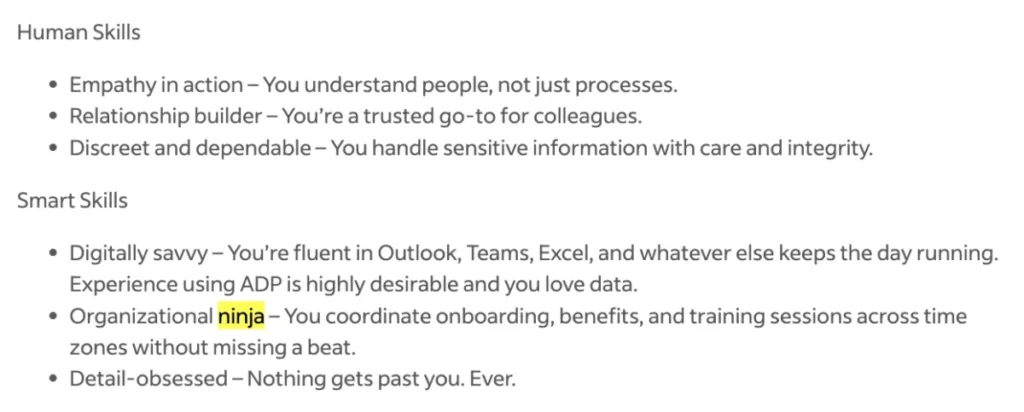
Job postings often serve as a prospective candidate’s initial, and sometimes only, impression of an organization. Yet, a significant number of these critical communications suffer from what can only be described as an "ick" factor—a pervasive sense of secondhand embarrassment or outright unprofessionalism that actively deters top talent. This phenomenon, characterized by cringeworthy language, outdated clichés, and a lack of transparency, has tangible negative consequences for talent acquisition, diversity, and ultimately, an organization’s employer brand. Candidates are increasingly discerning, quickly identifying and dismissing postings that feel disingenuous, outmoded, or indicative of a problematic workplace culture. They are not merely scrolling past; they are actively documenting and sharing these missteps within their professional networks, turning a simple job advertisement into a public relations liability.
A Deep Dive into Common Recruitment Missteps
The landscape of job advertising has evolved dramatically from simple classifieds to sophisticated digital platforms. However, many organizations fail to adapt their language and approach, clinging to practices that are now detrimental. Several recurring themes contribute to the widespread issue of unprofessional job postings:
1. Buzzwords That Backfire: "Rockstar, Ninja, Unicorn"
The intention behind using terms like "coding ninja," "marketing rockstar," or "HR unicorn" is often to inject enthusiasm and portray a dynamic company culture. However, in practice, these buzzwords have become stale and counterproductive. They convey a lack of seriousness about the role, often signaling that the hiring team isn’t entirely clear about the specific skills or attributes required. More critically, such informal and hyperbolic language can be alienating. Research indicates that overly casual or jargon-laden job descriptions can deter a significant portion of the talent pool, particularly those from underrepresented groups who may perceive such language as less professional or welcoming. Instead of attracting "magical" problem-solvers, these terms often communicate vagueness and an expectation for a candidate to somehow compensate for ill-defined organizational needs, fostering distrust from the outset.
2. The Vague Promise: "Thrive in a Fast-Paced Environment"
This cliché is a red flag for many experienced professionals. While a dynamic workplace can be appealing, "fast-paced" is often code for tight deadlines, unrealistic workloads, and a culture of constant "fire drills" that lead to burnout. Candidates today are highly attuned to work-life balance and sustainable employment practices. A 2023 survey by FlexJobs revealed that 73% of job seekers consider work-life balance a top priority. When a job posting uses such generic terms, it suggests a company either isn’t aware of these concerns or, worse, doesn’t care. Specificity is key: instead of a vague platitude, a company should articulate what constitutes its pace, how challenges are managed, and what support systems are in place to ensure employees can succeed without sacrificing their well-being.
3. Outdated Culture Cues: "Work Hard, Play Hard"
Once a popular mantra intended to signal a vibrant, engaging company culture, "work hard, play hard" has become a relic of a bygone era. It frequently implies a culture that glorifies overwork and an absence of healthy boundaries, where "playing hard" might be a thinly veiled expectation for after-hours socializing rather than genuine work-life integration. While a ping-pong table or office beer tap might seem appealing, modern candidates are looking for genuine support for their holistic well-being. They seek environments that value mental health, offer flexible arrangements, and provide opportunities for professional growth without demanding excessive hours. Companies that continue to use this phrase risk signaling an immature or exploitative culture, failing to attract individuals seeking sustainable careers.
4. Subtle Barriers: Gendered and Biased Language
The language used in job descriptions can subtly, yet significantly, influence who applies for a role. Words like "aggressive," "dominant," or "competitive" are often subconsciously associated with masculine traits, potentially discouraging female applicants. Conversely, terms such as "supportive," "nurturing," or "collaborative" can be coded as feminine, which might inadvertently deter male candidates or reinforce gender stereotypes. The impact of such bias is not trivial. Research from Harvard Business School demonstrated that vague job advertisements caused qualified women to apply 25% less often than men. However, when job requirements were made specific and neutral, women applied even more frequently than men. This highlights the critical need for gender-neutral and inclusive language, often requiring specialized tools and conscious effort to identify and mitigate subconscious biases embedded in recruitment texts.
5. Credibility Gaps: Unrealistic Experience Requirements
A common, almost comical, misstep is demanding "10+ years of experience in a tool that’s only been around for 5." This error, often a result of blindly reusing old templates or a lack of validation from hiring managers, severely undermines an organization’s credibility. It signals a disconnect between the recruiting team and the actual needs of the role, or worse, a fundamental misunderstanding of the industry landscape. Such inaccuracies frustrate qualified candidates who possess the relevant skills but are technically excluded by an impossible requirement. It leads to self-selection out of the application process and can reflect poorly on the company’s attention to detail and professional standards.
6. The Illusion of Flexibility: Ambiguous Workplace Models
In the post-pandemic era, "flexibility" has become a highly sought-after perk, but its vague application in job postings can be misleading. Simply stating "flexible workplace" or "hybrid" without detailing what this entails is insufficient and can lead to significant candidate frustration. Ambiguity around expectations—such as the number of required in-office days, the extent of remote work, or whether synchronous or asynchronous hours are expected—creates unnecessary guesswork for applicants. A 2023 study by Buffer found that 98% of employees want the option to work remotely at least some of the time. Companies that explicitly state their flexibility policies, detailing expectations and benefits, build trust and accountability from the outset, mentally preparing hires and fostering a more harmonious transition into their roles.
7. SEO Over Substance: The Pitfalls of Keyword Stuffing
While keywords are essential for improving the visibility of job descriptions on search engines and applicant tracking systems (ATS), an excessive or unnatural use of keywords—known as keyword stuffing—is counterproductive. Astute job seekers can easily spot a job description that appears to be AI-generated or contrived solely for algorithmic optimization. Such postings come across as inauthentic and suggest a company is more interested in filling a vacancy quickly than in genuinely attracting the right talent. A candidate-first approach, focusing on clear, compelling language that speaks to an applicant’s career aspirations and potential for growth, will always outperform a keyword-laden text that prioritizes search engine algorithms over human readability and engagement. A human-sounding job description fosters a stronger connection and a higher conversion rate among target talent.
8. Exclusionary Practices: The "Culture Fit" Trap
The pursuit of a "culture fit" has become a contentious concept in modern recruitment. While seemingly benign, explicitly seeking candidates who "fit our vibe" or "align with our culture" can inadvertently signal an organization’s resistance to diversity and unique perspectives. This approach can be particularly triggering for neurodivergent individuals or those from underrepresented backgrounds, who may interpret it as an immediate deal-breaker, fearing they won’t be accepted for their individuality. Instead of "culture fit," many organizations are shifting towards "culture add." This framework actively seeks individuals who can bring fresh insights, innovative ideas, and diverse experiences that enrich and evolve the existing workplace culture. Framing recruitment around "culture add" fosters an environment of inclusivity, welcoming personal expression and continuous improvement, rather than limiting talent growth to established, potentially exclusionary, norms.
9. Transparency Trouble: Tricky Salary Ranges
Pay transparency has rapidly become a gold standard in quality job descriptions, with several U.S. states and cities implementing salary disclosure laws. Providing a clear salary range demonstrates respect for a candidate’s time and effort. However, the manner of disclosure is crucial. Extremely broad salary ranges (e.g., "$60,000 – $100,000") can be as detrimental as omitting pay details entirely. Such expansive ranges are often perceived as deceptive, filled with potential loopholes that could lead to underpaying talent. Top candidates, especially in a competitive market, may interpret these ranges as unprofessional and avoid applying. To attract the best, salary spreads should ideally be kept within a 15-20% margin. If a wider range is necessary, it must be explicitly justified within the job description, for instance, by linking higher tiers to specific, demonstrable experience or leadership track records.
10. The Candidate Gauntlet: The "Bottomless Interview" Process
The candidate experience (CX) is paramount in today’s competitive talent market. A significant number of companies lose out on star talent due to overly complex, protracted, or poorly managed hiring processes. Forbes reports that up to half of companies have lost candidates due to cumbersome interview stages. Issues include biased questions, an excessive number of interview rounds, and punishing assessments (ee.g., requiring a full-fledged product presentation by the second meeting). Perhaps the biggest issue is surprising candidates with the process itself. A high-quality job description should include a transparent section outlining the hiring roadmap, detailing the number of interview stages, the types of assessments, and the company’s average response time. This level of transparency manages expectations, reduces anxiety, and empowers applicants to prepare effectively, reflecting positively on the organization’s respect for their time and effort.
The Broader Implications: Employer Branding, Diversity, and Business Success
Each of these missteps collectively erodes an organization’s employer brand. A cringeworthy job posting is not merely an inconvenience; it is a direct reflection of a company’s perceived culture, values, and professionalism. Good candidates, who are often in high demand, will scroll past, taking their talents elsewhere. This directly impacts the talent pipeline, making it harder and more expensive to attract and retain high-quality employees.
Furthermore, the language and structure of job postings have profound implications for diversity, equity, and inclusion (DEI). As noted by Harvard Business School research, vague or biased language actively discourages diverse talent. Similarly, Canva’s analysis of job postings found that jargon-heavy language disproportionately alienates younger and underrepresented talent. Research from the University of Florida also highlights that excessive workplace jargon hurts clarity and trust, particularly among early-career professionals. When job descriptions fail to be inclusive, organizations miss out on the diverse perspectives, innovation, and enhanced problem-solving capabilities that a varied workforce brings. This not only impacts social responsibility but also has tangible financial consequences, as diverse teams are often more productive and resilient.
Strategies for Crafting Compelling and Inclusive Job Descriptions
To counter these detrimental practices, organizations must adopt a strategic and intentional approach to job description writing:
-
Embrace Human-Centric Language: Write in a clear, specific, and authentic voice. Articulate the challenges and opportunities of the role plainly. If the job involves tight deadlines, state it, and explain how the team supports success. If collaboration is crucial, describe what that collaboration looks like in practice. Utilizing structured JD templates can aid in maintaining consistency and clarity.
-
Implement Robust Bias Review: Leverage technology, such as AI-powered text analyzers like Ongig, to identify and flag gender-coded words, corporate jargon, and other forms of bias. Supplement this with a peer review process involving individuals from diverse backgrounds to catch nuances that automated tools might miss. This dual approach ensures a more inclusive and welcoming message.
-
Prioritize Regular Updates: Job descriptions should not be static documents. The job market, technology, and organizational needs evolve rapidly. Review high-volume roles quarterly and other positions annually. Copy-pasting old descriptions from years past is a recipe for irrelevance and inaccuracy.
-
Seek External Feedback: Before publishing, share job descriptions with individuals outside the immediate hiring team or even external trusted advisors. Ask critical questions: "Would you apply to this role?" "Does anything sound off or unclear?" Fresh eyes often catch the "cringe" that internal teams might overlook due to familiarity.
-
Shift to Outcome-Based Descriptions: Instead of a lengthy list of tasks and expectations, redefine success for the first 90 days or the first year. This outcome-based approach creates a sense of purpose for new hires, clearly outlining what achieving success looks like and providing a compelling reason to commit to the role.
-
Leverage Skill-Based Hiring: Re-evaluate traditional requirements. Many roles do not strictly necessitate specific degrees or rigid academic qualifications, which can unnecessarily narrow the talent pipeline. Work closely with HR to distinguish "must-have" skills from "nice-to-have" credentials, focusing on demonstrable abilities and competencies over formal education or years of experience in a specific tool.
Conclusion: Elevating Recruitment Through Intentional Communication
The job posting is far more than a mere advertisement; it is a critical piece of communication that shapes perceptions, attracts or deters talent, and influences an organization’s reputation. Allowing cringeworthy or unprofessional language to persist in these vital documents is a costly oversight that damages employer brand, hinders diversity efforts, and compromises the ability to secure top talent. By embracing clarity, transparency, inclusivity, and a candidate-first approach, organizations can transform their job descriptions into powerful tools that genuinely connect with and convert the best professionals, ultimately elevating their recruitment strategy and strengthening their position in the competitive talent market.
Frequently Asked Questions (FAQs)
What makes a job posting cringeworthy?
Job postings become cringeworthy through the use of overused buzzwords (e.g., "rockstar," "ninja"), unrealistic or contradictory requirements, vague clichés (e.g., "fast-paced environment"), outdated slang, and a general lack of professionalism that makes them feel inauthentic or disrespectful of a candidate’s time.
How do I know if my job postings are outdated?
Signs of an outdated job posting include the use of buzzwords that were popular years ago, reliance on templates from previous decades, a lack of information about modern workplace benefits (like explicit flexibility policies), or requirements for tools/technologies that are no longer cutting-edge or even exist. If you haven’t reviewed and revised them in over a year, they are likely outdated.
Does job posting language affect inclusion?
Absolutely. Biased, gender-coded, or vague language can subtly or overtly discourage diverse talent, including women, individuals from underrepresented groups, and neurodivergent candidates, from applying. Inclusive wording, by contrast, broadens your reach and signals a welcoming environment.
What about my JD sections? Do they matter?
Yes, the content and order of job description sections are crucial. Key sections like salary range, benefits, and a clear "About the Role" (focusing on candidate impact) are essential. Placing information that benefits the candidate upfront, such as career advancement opportunities or learning prospects, acts as a hook, keeping applicants invested before detailing company values, vision, and mission.
Can software really fix this?
Yes, specialized software like Ongig’s text analyzer can be highly effective. These tools flag problematic language, suggest more inclusive and professional alternatives, identify jargon, and help ensure job postings are on-brand and bias-free, significantly streamlining the review process.
Should I depend on AI for JD creation?
AI can be a powerful assistant in drafting initial job descriptions, helping to reduce common errors, eliminate subconscious biases, and improve readability. However, it should not be the sole author. Always have your talent acquisition team review and "vibe check" AI-generated JDs before publication to ensure they accurately reflect the role, company culture, and resonate authentically with human candidates.
Is it okay to be funny or casual in job postings?
It is acceptable to be funny or casual if it genuinely aligns with your established company culture and doesn’t come off as forced or unprofessional. The key is authenticity and clarity. Avoid trying too hard to be "hip"; clear, direct communication that respects the candidate’s time and intelligence should always take precedence over cleverness.
What else should I note for JDs?
Beyond language, consider adopting skill-based hiring, especially in dynamic job markets. Work closely with HR to differentiate between "nice-to-haves" and essential requirements. Also, provide a clear roadmap of the hiring process, including the number of interview stages and average response times, to manage candidate expectations and enhance the overall candidate experience.