The pattern is familiar enough that it no longer surprises seasoned observers of corporate succession. A senior leader exits, triggering the inevitable succession discussion. What often follows is a quiet moment of internal bewilderment when the individual most widely assumed to be the natural successor – the dependable, deeply knowledgeable Number Two – is passed over for the top job. The role instead goes to someone else, perhaps an external hire, a candidate perceived as more "strategic," or occasionally, an individual with noticeably less operational depth.
Inside the organization, the reaction is typically a blend of surprise and quiet confusion. This was the person who knew every intricate detail of the business, understood where every lever sat, and possessed the unique ability to navigate decisions across entrenched silos. They were the calming force that quelled internal friction and prevented complex execution plans from collapsing under pressure. When critical issues arose, or the system threatened to buckle, this was invariably the person people called upon, the indispensable linchpin. Yet, when the ultimate leadership position opened, the board chose a different path. The explanation, when it arrives, is usually couched in familiar corporate vernacular: "The business needed transformation," "a different profile for the next phase," or "someone with a fresh perspective." What is rarely articulated directly, however, is a simpler, more profound truth: the Number Two became indispensable in the wrong role.
The Bedrock of Stability: Understanding the Deputy’s Core Value
Exceptional deputies, often holding titles like Chief Operating Officer, Executive Vice President, or Head of a major division, are the architects of organizational stability. Their remit involves absorbing the vast operational complexity that, if unfiltered, would overwhelm the top executive. They are the guarantors that commitments are delivered, that intricate systems function seamlessly even under immense strain, and that the daily machinery of the business continues to turn. In many organizations, the deputy becomes the living institutional memory, an invaluable repository of knowledge about critical relationships, common execution breakdowns, and the subtle tensions that require quiet management before escalating into visible crises.
This sustained performance fosters a particular kind of trust – not merely performative trust, but deep, operational trust. It is the unwavering confidence that one individual can consistently make difficult, interconnected systems work under immense pressure. Organizations genuinely value this form of leadership, often recognizing it with substantial financial rewards and internal accolades. However, this very capability sends a specific signal: competence and effectiveness in the present tense. This focus on current operational excellence, while crucial for day-to-day success, inadvertently frames the deputy as a steward of the existing, rather than an architect of the future.
According to a 2022 report by a leading executive search firm, while over 70% of internal hires for CEO roles previously held a C-suite position, only a fraction of these came directly from a COO or similar intensely operational role, unless they had successfully transitioned their focus well in advance. "The deputy’s role is inherently reactive and problem-solving," explains Dr. Evelyn Reed, a veteran leadership consultant. "They are celebrated for bringing order to chaos, for mitigating risks. This creates a perception that their strength lies in optimizing the known, rather than exploring the unknown."
The CEO Mandate: Navigating the Future Tense
Top leadership roles, by stark contrast, are almost invariably filled based on perceived capability in the future tense. The distinction is not a measure of raw intelligence or inherent talent; rather, it is about orientation and visible focus. A Number Two is primarily expected to make the existing system perform better, to refine and optimize current processes. A Number One, the chief executive, is fundamentally expected to decide whether the existing system itself remains fit for purpose, to redefine its boundaries, and to chart entirely new courses.
Deputies excel at reducing friction within established frameworks, ensuring efficient execution. Chief executives, however, are tasked with creating movement, often by challenging those very frameworks and defining new strategic directions. This fundamental difference explains why succession decisions can often appear illogical or even unfair from an internal perspective. The individual who possesses the most profound, granular understanding of the business is not always the one the board believes possesses the vision and capacity to redefine it for the future. This does not imply a lack of strategic capability in the deputy; often, they are acutely aware of the strategic imperatives. However, organizations, and especially their governing boards, tend to promote visible signals, not invisible or latent potential.
The demands on modern CEOs have never been more complex. In an era characterized by rapid technological disruption, geopolitical volatility, evolving environmental, social, and governance (ESG) expectations, and the imperative for digital transformation, boards are under immense pressure to appoint leaders who can anticipate and navigate these macro trends. "Boards are increasingly looking for leaders who can articulate a compelling vision for a company’s place in a rapidly changing world," commented a spokesperson for the National Association of Corporate Directors (NACD) in a recent forum. "Operational excellence is table stakes, but strategic foresight and the ability to drive transformational change are the differentiators."
The Visibility Trap: Present Focus vs. Future Vision
Visibility, or rather, the nature of one’s visibility, is profoundly shaped by how time is allocated. The deputy who dedicates the majority of their week to resolving immediate operational problems, meticulously reviewing delivery timelines, managing intricate stakeholder relationships, and stabilizing execution, gradually begins to project an image that is predominantly operational. This occurs irrespective of their underlying strategic acumen. Their visible actions reinforce a narrative of managing the present, solidifying their identity as the expert problem-solver and system maintainer.
Concurrently, another leader might consciously spend their visible time engaging in different activities: discussing emergent market shifts, actively reshaping business models, or articulating where the industry itself is likely to head over the next three to five years. Even if both individuals possess comparable intellect and strategic capability, their external perception diverges sharply. One appears to be diligently managing the present, while the other is clearly seen to be shaping the future. It is this crucial difference in visible contribution and focus that boards invariably notice and prioritize.
This dynamic is further exacerbated by the very nature of strategic work, which often unfolds in less visible, longer-term cycles compared to the immediate, tangible outcomes of operational problem-solving. Strategic initiatives often involve periods of ambiguity, experimentation, and difficult, speculative conversations about future possibilities, rather than the clear-cut metrics and resolutions of day-to-day operations.
The Paradox of Indispensability: A Golden Handcuff?
This creates a pervasive paradox that many high-performing deputies recognize only when it is too late. The very behaviors that elevate someone to an exceptional Number Two – unwavering reliability, rapid responsiveness, and the innate ability to be the person who consistently fixes problems – can simultaneously embed them too deeply within the machinery of the present. The organization, over time, subtly begins to perceive the deputy as absolutely essential to execution but less central to direction. Once this perception takes root, it becomes exceedingly difficult to reverse, primarily because capabilities that are not visibly and consistently demonstrated are often treated, by default, as capabilities that simply do not exist.
The fundamental issue is not whether the deputy can think strategically; often, they possess profound strategic insights honed by their deep understanding of organizational realities. The issue is whether there has been sufficient visible evidence of this strategic thinking in the context that matters most for top-level promotions. Such evidence is rarely generated during intense operational reviews, urgent crisis-management meetings, or routine performance dialogues. Instead, it emerges in different arenas: in the championing of long-term transformational initiatives, in navigating periods of strategic ambiguity, in articulating the organization’s unique industry positioning, and in leading difficult, forward-looking conversations about the organization’s fundamental purpose and next evolutionary phase.
However, engaging in these future-oriented activities demands significant time and mental bandwidth. Time spent shaping the future is, by definition, time not spent meticulously keeping the present stable. Organizations, in an ideal world, desire both a stable present and a clear future. Yet, the inherent structure and demands of the deputy role frequently make it nearly impossible to excel visibly at both simultaneously, creating a Catch-22 for ambitious individuals.
Organizational Rationale: The Boardroom Perspective
There is a compelling, albeit frustrating, logic behind these succession decisions, even when they cause internal discontent. Boards operate under the conviction that operational execution can be more readily strengthened around a visionary leader than strategic direction can be compensated for. A new chief executive, even one with a less granular operational background, can strategically hire strong operators, functional experts, and project managers to bolster execution beneath them. Conversely, profound uncertainty regarding the strategic direction at the very top is far harder, if not impossible, to effectively compensate for.
Consequently, succession decisions frequently overweight signals of strategic orientation and underweight demonstrable operational depth. This prioritization reflects a broader corporate fear: the fear of strategic stagnation. Most organizations fear becoming irrelevant or obsolete more than they fear temporary operational inefficiency. This deep-seated fear profoundly shapes who ultimately gets promoted to the pinnacle of leadership.
This emphasis, however, is not without its pitfalls. Occasionally, organizations overcorrect, appointing charismatic, visionary leaders who, while brilliant strategists, struggle profoundly with the operational realities of execution. The grand strategy might sound compelling on paper, but the organization, lacking sufficient operational coherence or the internal champion for execution, fails to translate that vision into tangible reality. This can lead to significant disruptions, missed targets, and ultimately, leadership changes. Yet, despite these risks, the perceived imperative for future-proofing the organization often trumps the desire for seamless continuity.
The Invisible Career Trade-Off: Delegating the Path to Promotion
The advice frequently offered to aspiring senior leaders sounds deceptively simple: "delegate more, think more strategically, spend less time in the weeds." However, this counsel often glosses over the harsh practical realities embedded within many deputy roles. If the strongest operator, the individual holding the system together, deliberately steps back from intensive operational involvement, there is often an immediate and tangible deterioration. Deadlines slip, cross-functional coordination weakens, and problems, instead of being preempted or quickly contained, escalate further before they even reach visible attention. The deputy is intimately aware of this precarious balance, having often been the one consistently shoring up the system.
This creates a profound dilemma: the very behaviors required to be perceived as ready for the top leadership role can directly conflict with the behaviors absolutely necessary to succeed, and be valued, in the role currently being performed. To effectively appear promotable, the deputy must paradoxically spend less time being indispensable in their current capacity.
Some deputies manage this transition with deliberate strategy. They delegate more aggressively, consciously tolerate a degree of operational imperfection, and purposefully redirect their attention and visible efforts toward longer-term priorities, external engagement, and strategic visibility. They actively seek out opportunities to present on future trends, engage with investors on strategic narratives, or lead cross-functional innovation initiatives.
Others, however, struggle immensely with this shift. Partly, this is because the organization has become genuinely over-reliant on their operational prowess, making it difficult for them to disengage without immediate negative repercussions. But also, high-performing operators often derive a significant portion of their professional identity and satisfaction from reliability itself, from being the go-to person who consistently delivers and solves problems. For them, walking away from operational involvement or allowing imperfections feels deeply irresponsible, a betrayal of their professional values. Consequently, they continue to immerse themselves in problem-solving, and in doing so, unwittingly reinforce the perception that their highest value lies in solving problems generated by someone else’s strategy, rather than in defining that strategy themselves.
The frustration generated by such succession decisions internally is therefore entirely understandable. The passed-over deputy often possesses a far deeper, more nuanced understanding of the organization’s informal networks, its true operational realities, and the institutional constraints that any grand strategy must eventually confront. Then, an external leader often arrives, armed with sharper language around transformation and innovation, but with a demonstrably thinner understanding of how the organization actually functions on a day-to-day basis. Sometimes, this infusion of fresh perspective is exactly what is needed, leading to successful transformations. But sometimes, organizations tragically mistake eloquent strategic vocabulary for genuine strategic capability, leading to missteps and cultural clashes. The deputy, watching someone with less operational credibility inherit authority over systems they themselves spent years stabilizing, feels a justifiable sense of injustice.
Still, it is critical to acknowledge that organizations are often responding to a genuine strategic imperative. The deputy who excels at preserving organizational continuity is not automatically the person best positioned to redefine the organization’s future. These are fundamentally different activities requiring distinct skill sets and orientations, and organizations rarely confuse them at the critical juncture of succession.
Evolving Leadership Dynamics: A New Understanding of Ambition
This dynamic is becoming increasingly visible, partly because younger leadership cohorts interpret ambition and career progression differently than previous generations. Earlier generations often operated under the implicit assumption that operational indispensability, combined with demonstrable loyalty and hard work, would eventually and automatically translate into advancement to the highest echelons.
Younger leaders, however, appear less convinced by this traditional linear path. Increasingly, they understand that visibility, narrative control, and strategic positioning are not merely secondary aspects of advancement; they are intrinsic components of advancement itself. This evolving understanding is demonstrably changing leadership behavior across organizations. More emerging leaders are consciously building external visibility earlier in their careers, actively seeking out strategic projects over purely operational ones, and meticulously optimizing not only for raw performance but also for how that performance is perceived and articulated within the organization and to the board.
Older leadership cultures sometimes misinterpret these behaviors as impatience, self-promotion, or a lack of commitment to the foundational work. However, viewed structurally, these actions are often a rational and adaptive response to the actual mechanics of how succession decisions are made in contemporary corporate environments. They reflect an acute awareness that the game has changed.
Conclusion: Indispensability as a Ceiling, Not a Ladder
For ambitious deputies, the implication is stark and often uncomfortable: operational excellence, while highly valued and often generously rewarded financially, is rarely sufficient on its own to secure the top leadership role. The organization may value an individual’s operational prowess enormously; it may celebrate their problem-solving acumen publicly and depend on it daily. But the leader who becomes too intimately associated with maintaining the present system can, over time, gradually cease to be perceived as the individual who will confidently define the future.
This is the inherent risk of indispensability. The more essential someone becomes to the smooth functioning of the current system, the more challenging it becomes for the organization – and crucially, for the board’s collective imagination – to envision them fundamentally redesigning that very system. Organizations promote not only on proven capability but, perhaps more critically, on imagination: on who they can vividly picture thriving in the role long before that role officially becomes vacant.
That vital organizational imagination is shaped by a continuous stream of signals: where a leader’s attention consistently goes, the nature of the conversations they initiate and occupy, and whether they are predominantly seen stabilizing execution or actively shaping strategic direction. Because succession decisions are rarely made solely on a checklist of competencies. They are made on a perception of readiness for what comes next. And that readiness is inferred from observable behavior, consistently demonstrated, long before the top role ever becomes available.
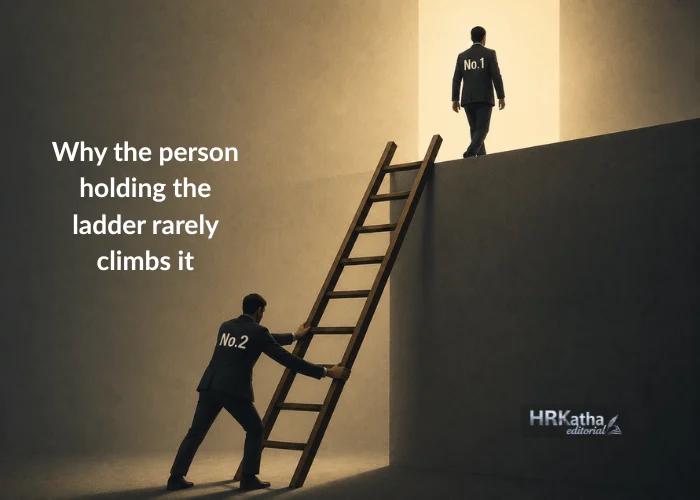
Which is precisely why so many truly great Number Twos, the indispensable figures who hold organizations together, often remain Number Twos. Not because they lack the intelligence, the drive, or even the strategic vision, but because the system itself learned to depend on them in a way that, ironically, confined their potential rather than elevating it. In the high-stakes game of corporate succession, indispensability, it turns out, is a ceiling, not a ladder.