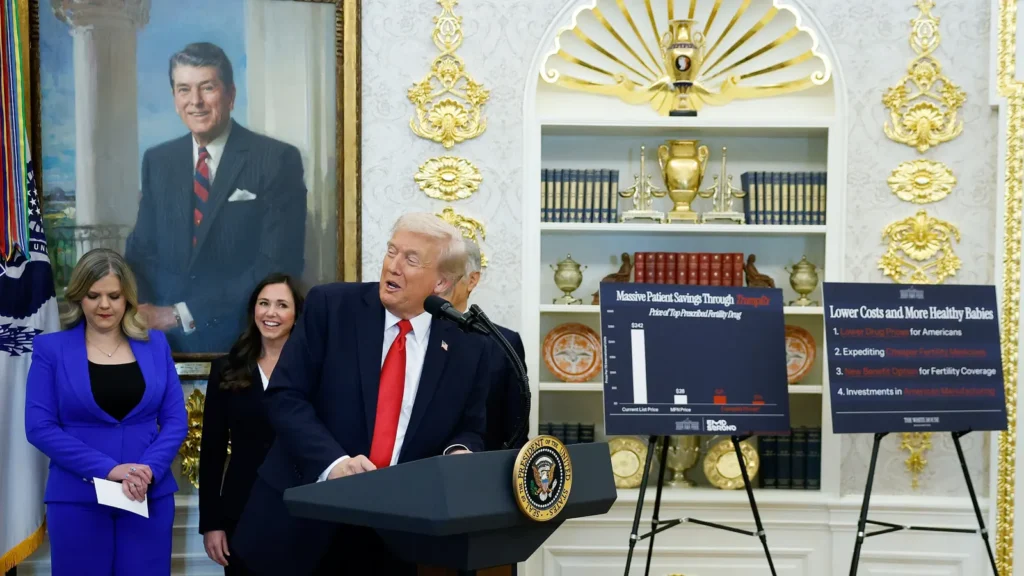
The proposed rule, a significant initiative within President Donald Trump’s labor agenda, aims to broaden the ability of employers to offer fertility benefits, specifically by exempting in vitro fertilization (IVF) and related treatments from certain federal health coverage laws. Published on May 11, 2026, this joint effort by the Department of Labor (DOL) and two other federal agencies is designed to address both the economic burden of infertility and the nation’s declining birth rates, building upon a prior executive order. The administration posits that by simplifying the regulatory landscape for employers, more American families will gain access to essential fertility treatments, thereby fostering family formation and stability.
A Deep Dive into the Proposed Regulation
The core of the new proposal centers on classifying certain fertility benefits as "excepted benefits" under existing federal health coverage statutes, including the Employee Retirement Income Security Act (ERISA), the Public Health Service Act (PHSA), and the Internal Revenue Code. These statutes typically mandate extensive requirements for group health plans, such as coverage for essential health benefits and prohibitions against pre-existing condition exclusions. Excepted benefits, however, are subject to fewer regulatory burdens, offering employers greater flexibility in their design and implementation. This category traditionally includes benefits like accident-only coverage, limited scope dental or vision benefits, and certain health flexible spending arrangements.
Under the proposed rule, fertility benefits, particularly those related to IVF, could be offered as "independent, noncoordinated excepted benefits," provided they meet specific criteria. These conditions generally ensure that the benefits are not an integral part of a comprehensive health plan, are offered separately, and do not coordinate with other health coverage. Additionally, the proposal reiterates that fertility benefits can also be offered as limited excepted benefits through Health Reimbursement Arrangements (HRAs), a mechanism that allows employers to reimburse employees for medical expenses, including premiums and qualified health care costs. This dual approach aims to provide multiple avenues for employers, recognizing the diverse landscape of employer-sponsored health plans.
Acting Labor Secretary Keith Sonderling emphasized the administration’s commitment, stating, "President Trump is committed to expanding access to fertility benefits so that more American families can have children, building on his longstanding efforts to support family formation and stability." This sentiment aligns with the broader "pro-family" and "pro-worker" rhetoric that has characterized much of the administration’s policy initiatives, seeking to alleviate financial pressures on families and bolster demographic trends.
The National Context: Declining Birth Rates and the Burden of Infertility

The impetus for this regulatory change is rooted in compelling demographic and public health data. The proposed rule explicitly references Centers for Disease Control and Prevention (CDC) statistics, which reveal a significant 9% decline in U.S. births between 2014 and 2024. This trend is not isolated, but rather part of a broader, decades-long shift in American demographics, with birth rates consistently falling below replacement levels. Factors contributing to this decline are multifaceted, including delayed childbearing, economic uncertainties, the rising cost of living and raising children, evolving career aspirations, and broader societal shifts in family structures.
Compounding this demographic challenge is the widespread prevalence of infertility. The CDC data cited in the rule indicates that approximately 1 in 5 Americans experience infertility, a condition defined as the inability to conceive after a year or more of unprotected intercourse. For many, the journey to parenthood involves complex and expensive medical interventions, with IVF being one of the most effective but also one of the costliest options. The administration’s February 2025 executive order had already highlighted the substantial financial burden, estimating IVF cycles to range from $12,000 to $25,000 each, often requiring multiple cycles for successful conception. This financial strain transforms infertility into not just an emotional struggle, but a profound economic one for millions of American families.
Beyond the direct costs of IVF, the journey through infertility often involves extensive diagnostic testing, medication, consultations with specialists, and potentially other assisted reproductive technologies (ART). These expenses, when not covered by insurance, can quickly accumulate, leading to significant debt, emotional distress, and disparities in access to care based on socioeconomic status, geographic location, and even racial or ethnic background.
Chronology of an Initiative: From Executive Order to Proposed Rule
The current proposed rule is a direct outgrowth of President Trump’s executive order issued in February 2025, titled "Expanding Access to In Vitro Fertilization." That order signaled the administration’s intent to prioritize fertility benefits as a key component of its labor and family policy agenda. It directed federal agencies to explore ways to increase access to IVF and other fertility treatments, acknowledging the prohibitive costs and the emotional toll of infertility.
- February 2025: President Trump issues an executive order focusing on the expansion of IVF access, highlighting the financial and emotional challenges of infertility.
- Late 2025: The Department of Labor, in conjunction with other federal agencies, begins drafting regulatory proposals to implement the executive order’s directives.
- May 10, 2026: The DOL, HHS, and IRS jointly announce the proposed rule, building on the 2025 guidance that allowed employers to offer fertility benefits as "independent, noncoordinated excepted benefits" or through HRAs.
- May 11, 2026: The proposed rule is officially published, initiating a 60-day public comment period. This period allows stakeholders, including employers, employees, advocacy groups, medical professionals, and the insurance industry, to provide feedback that can shape the final regulation.
- Mid-July 2026: The public comment period concludes, after which the agencies will review submissions and potentially make adjustments before issuing a final rule.
This timeline demonstrates a sustained effort by the administration to translate its policy goals into tangible regulatory changes, aiming for implementation within its current term.
Current Landscape of Employer-Sponsored Fertility Benefits

Despite the growing awareness of infertility and its impact, the adoption of comprehensive fertility benefits by employers remains relatively low. A 2024 survey conducted by the International Foundation of Employee Benefits Plans (IFEBP) revealed that only 42% of employers offered some form of fertility benefits that year. This figure, while representing an increase from previous years, still indicates a significant gap in coverage. Furthermore, the survey highlighted that specific offerings like IVF coverage, fertility medications, and genetic testing for infertility were provided by even smaller percentages of employers.
Employers who do offer these benefits often do so for a variety of strategic reasons. These include attracting and retaining top talent, enhancing diversity, equity, and inclusion (DEI) initiatives, and improving overall employee well-being. In competitive labor markets, robust benefits packages, including those for family planning, have become powerful tools for recruitment and employee satisfaction. However, the cost and administrative complexity of integrating fertility treatments into traditional health plans have historically been significant barriers for many organizations, particularly smaller businesses.
Reactions from Key Stakeholders
The proposed rule has elicited a range of reactions from various stakeholders, reflecting the complex nature of fertility care and health policy.
The American Society for Reproductive Medicine (ASRM), a leading professional organization for reproductive specialists, had previously commented on the administration’s 2025 guidance. While acknowledging that the guidance provided employers a "manageable way to support fertility care," ASRM also noted the inherent limitations of classifying fertility benefits as excepted benefits. Their analysis concluded that such benefits, due to their limited financial scope and voluntary nature, "do not provide or replace comprehensive fertility coverage." ASRM’s primary concern remains that these pathways, while a step forward, may not ensure meaningful access for all, particularly "lower-income workers, those with self-insured plans, or historically underserved populations." They will likely reiterate these concerns during the public comment period, advocating for more robust and equitable coverage solutions.
Infertility advocacy groups, such as RESOLVE: The National Infertility Association, are likely to cautiously welcome the proposal as a positive step towards increasing access, but also press for greater federal mandates or incentives to ensure broader and more comprehensive coverage. They understand that while exemptions can ease the burden on employers, they do not guarantee universal access or adequate financial support for the full spectrum of fertility treatments required by many individuals and couples.
From the employer perspective, benefits consultants anticipate a mixed reaction. Larger corporations with existing, more comprehensive benefits programs might find the new rule offers additional flexibility in structuring their offerings, potentially streamlining administrative processes. Smaller and medium-sized businesses, which previously might have been deterred by the cost and regulatory complexity, could view this as an opportunity to offer some level of fertility support without fully overhauling their primary health plans. However, concerns about the perceived "limited scope" and the financial implications of even excepted benefits will likely remain. Many employers will weigh the administrative ease against the actual value and comprehensiveness of the benefits they can provide under this framework.

The insurance industry will also be closely monitoring the developments. While the rule aims to simplify the offering of fertility benefits, insurers will need to develop new product lines or riders tailored to these "excepted benefit" categories. This could lead to more specialized fertility benefit plans, separate from standard health insurance policies. The industry will be keen on understanding the actuarial implications and the demand for such standalone products.
Broader Implications and Future Outlook
The proposed rule carries several significant implications, impacting the healthcare landscape, employer-employee relations, and national demographic trends.
- Increased Access (Potentially Limited): The most immediate implication is the potential for increased employer adoption of fertility benefits. By reducing regulatory hurdles, the administration hopes to incentivize more companies to offer at least some level of support for fertility treatments. However, the "limited scope" caveat highlighted by ASRM suggests that while more employees might gain access to some benefits, comprehensive coverage for the entire journey of infertility treatment may still be elusive for many.
- Shift in Benefit Design: The rule could accelerate a shift in how fertility benefits are designed and delivered. Instead of being fully integrated into core health plans, they might increasingly be offered as supplementary, standalone benefits. This could lead to a more fragmented healthcare experience for individuals undergoing fertility treatments, requiring them to navigate multiple benefit streams.
- Economic Impact: Expanding access to fertility benefits could have a positive, albeit modest, economic impact. It could reduce the financial burden on individuals, potentially freeing up household income for other expenditures. For employers, offering these benefits could translate into improved employee morale, higher retention rates, and a stronger competitive edge in the labor market.
- Public Health and Demographics: If successful in increasing birth rates, even marginally, the rule could contribute to addressing the nation’s demographic challenges. However, the impact on the overall birth rate will depend on the extent of employer adoption and the comprehensiveness of the benefits offered.
- Political and Social Discourse: The initiative intertwines with broader political debates around healthcare access, reproductive rights, and family policy. While aiming to support family formation, the specific mechanisms of the rule – particularly the emphasis on "excepted benefits" rather than mandatory comprehensive coverage – might draw criticism from those advocating for more robust and universal healthcare provisions.
- HHS’s Moms.gov Initiative: The simultaneous launch of Moms.gov by the U.S. Department of Health and Human Services provides a crucial complementary resource. This federal website, designed to offer resources and information for new and expectant mothers, underscores a holistic approach to supporting families, from conception through early parenthood. It signals an administrative focus not just on fertility access but on broader maternal and child health outcomes.
The 60-day public comment period will be critical in shaping the final contours of this rule. The feedback received from a diverse array of stakeholders will inform whether the final regulation truly strikes a balance between regulatory flexibility for employers and meaningful, equitable access to fertility care for all Americans grappling with infertility. As the nation continues to face demographic shifts and evolving family needs, the role of government and employers in supporting reproductive health will remain a central point of discussion and policy innovation.