

The landscape of corporate Learning and Development (L&D) has undergone a fundamental shift entering 2026, driven by a convergence of rapid artificial intelligence (AI) integration, escalating operational costs, and increasingly stringent data security protocols. For organizations looking to procure their first authoring tool or transition from a legacy system, the traditional checklist of features—once dominated by simple SCORM exports and basic quiz templates—is no longer sufficient. Today, the decision-making process must account for a complex ecosystem where speed to market, cross-departmental usability, and technological scalability dictate the success of a training strategy.
The Paradigm Shift in L&D Procurement
Historically, the selection of an authoring tool was a predictable technical exercise. Procurement teams and instructional designers focused on a granular comparison of branching logic, responsive design capabilities, and media libraries. However, as the workplace has evolved into a hybrid, tech-centric environment, the pressure on L&D teams has intensified. Organizations are now tasked with producing higher volumes of content for increasingly diverse audiences, often without a corresponding increase in personnel.
According to the Training Magazine 2025 Industry Report, the average training expenditure per learner has risen significantly, climbing from $774 to $874 within a single year. Paradoxically, while spending has increased, the average time employees spend in formal training has decreased from 47 hours to 40 hours annually. This "efficiency gap" highlights a critical tension: companies are paying more for training but have less time to deliver it. Furthermore, 41% of organizations identified a lack of resources or personnel as their primary hurdle. Consequently, the modern authoring tool must not only be powerful but must also act as a force multiplier for small teams.
The Hidden Cost of Complexity
One of the most significant shifts in 2026 is the recognition that software complexity is a hidden financial drain. In previous years, "feature richness" was a primary selling point. Today, industry analysts warn that overly complex interfaces can stifle production. When a tool requires weeks of specialized training or a dedicated "power user" to operate, it creates a bottleneck that delays the rollout of critical business information.
Modern L&D departments are increasingly democratizing content creation. While professional instructional designers (IDs) remain the architects of learning strategy, Subject Matter Experts (SMEs), HR managers, and regional leads are frequently called upon to contribute. A tool with a steep learning curve effectively locks these stakeholders out of the process.

Industry experts suggest that the most cost-effective tools in the current market are those that leverage existing skill sets. For instance, platforms like iSpring Suite AI have gained traction by integrating directly into Microsoft PowerPoint. By building upon a familiar interface, organizations can reduce onboarding time and allow non-technical staff to convert existing presentations into interactive eLearning modules with minimal friction. This approach minimizes the "time to launch," which has become a key performance indicator for L&D departments responding to fast-moving market changes.
Security, Compliance, and the IT Gatekeeper
In the 2026 regulatory environment, the role of Information Technology (IT) and compliance departments in software procurement has become central. Security reviews, once a final hurdle in the purchasing process, now frequently occur at the start of the "shortlist" phase. This shift is largely due to the rise of cloud-based authoring and the integration of generative AI, both of which raise concerns regarding data residency, intellectual property, and privacy.
Organizations in highly regulated sectors—such as healthcare, finance, and government—now require rigorous documentation before a tool is even trialed. Key considerations include:
- Data Hosting and Sovereignty: Where is the content stored, and does it comply with local regulations such as GDPR or CCPA?
- Accessibility Standards: Does the tool natively support WCAG 2.2 or Section 508 compliance to ensure inclusivity?
- Single Sign-On (SSO): Does the platform integrate with enterprise identity providers to manage user access securely?
- AI Ethics and Privacy: How does the vendor handle the data fed into AI prompts? Is the data used to train public models, or is it siloed within the enterprise?
Procurement experts recommend that L&D leads obtain an IT approval checklist before engaging with vendors. This proactive approach prevents the common pitfall of selecting a tool based on features only to have it vetoed by security auditors months later.
Evaluating AI Utility Over Hype
The "AI revolution" in eLearning has moved past the stage of novelty into a phase of practical application. By 2026, nearly every major authoring tool claims "AI capabilities," but the value of these features varies wildly. For a tool to truly enhance productivity, its AI must address specific production bottlenecks rather than simply acting as a chatbot wrapper.
The most effective AI integrations currently focus on the "blank page" problem. Modern tools can now ingest raw source documents, PDFs, or audio transcripts and generate a structured course draft, including suggested slide layouts, quiz questions, and interactive elements. This allows the human designer to move immediately into the role of editor and curator, rather than spending hours on manual data entry.
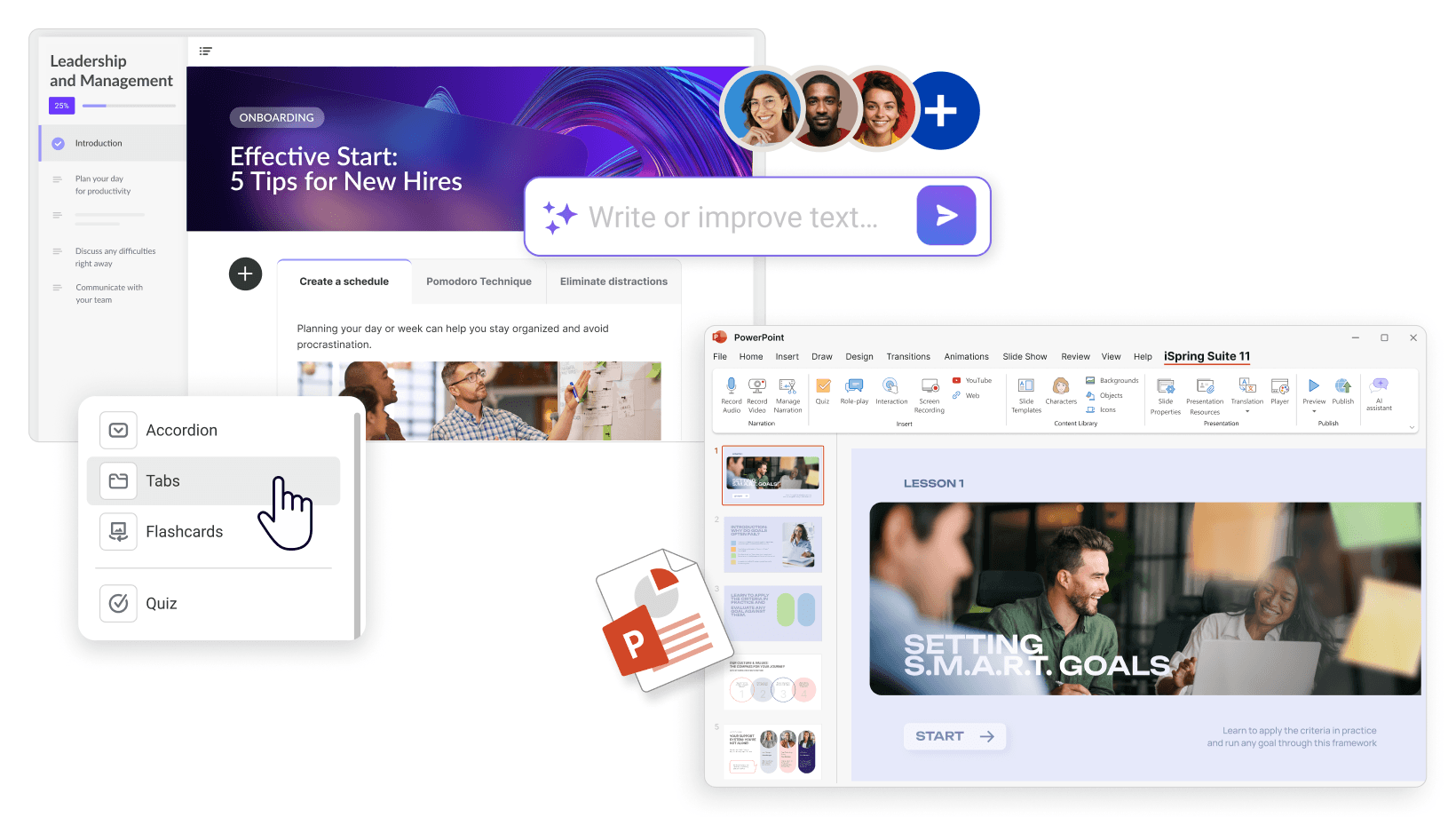
Furthermore, AI-driven localization has become a necessity for global enterprises. The ability to translate a course into 70+ languages and automatically generate synchronized AI voiceovers has reduced the cost of global rollouts by an estimated 60% compared to traditional manual translation services. When evaluating tools, stakeholders are encouraged to look for AI that assists in:
- Content Structuring: Turning raw notes into pedagogical frameworks.
- Assessment Generation: Creating context-aware quizzes to test retention.
- Media Creation: Generating or editing visuals and audio without external software.
- Localization: Seamlessly adapting content for diverse geographic regions.
Versatility and Multi-Scenario Support
As corporate training diversifies, the "one-size-fits-all" slide deck is becoming obsolete. Organizations in 2026 require tools that can support a wide array of learning scenarios within a single subscription. The economic impact of maintaining multiple specialized tools—one for software simulations, one for microlearning, and another for role-play practice—is becoming unsustainable for most budgets.
A versatile authoring suite must now provide:
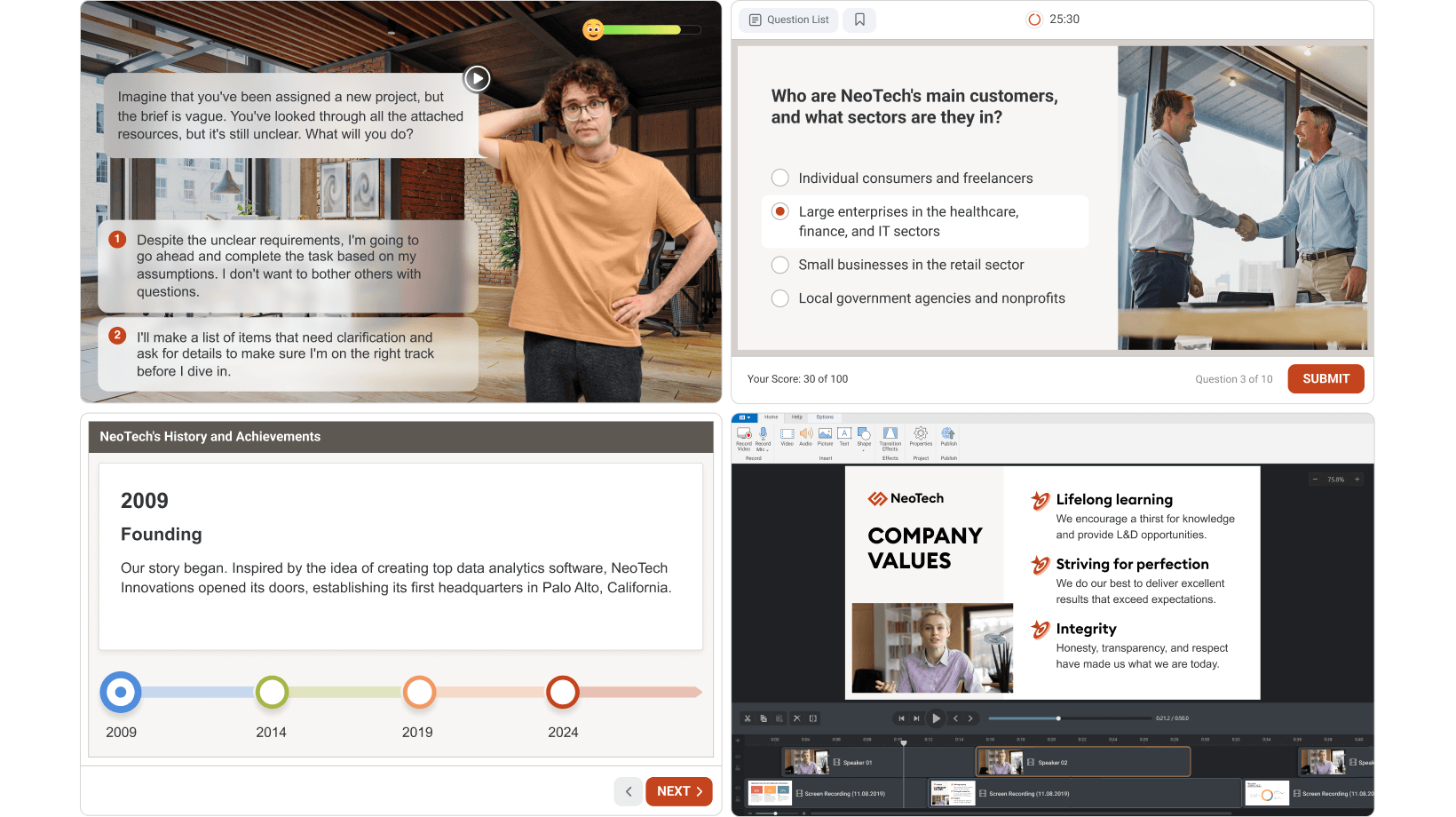
- Interactive Simulations: For software training where learners can practice in a risk-free, mirrored environment.
- Role-Play Scenarios: Utilizing branching logic to help sales or customer service teams practice difficult conversations.
- Video-Based Learning: Tools for recording screencasts and editing instructional video content.
- Responsive Microlearning: Content that reflows perfectly on mobile devices for "on-the-go" workers.
The integration of these formats into a single workflow allows for a cohesive learner experience and simplifies the technical stack for the IT department.
Vendor Relations and Long-Term Sustainability
The final pillar of modern tool selection is the stability and support model of the vendor. In an era of rapid software-as-a-service (SaaS) iterations, the relationship between the client and the provider is as important as the code itself.
Pricing flexibility has become a major talking point in 2026. Fixed, enterprise-only pricing models are losing ground to tiered structures that accommodate individual developers, non-profits, and small-to-medium businesses. Volume discounts and flexible seat management are essential for organizations that experience seasonal fluctuations in their L&D staffing.
Moreover, the importance of "human-in-the-loop" support cannot be overstated. As course production becomes more technically complex—involving SCORM/xAPI tracking, LMS integrations, and AI troubleshooting—24/7 access to expert support is a critical safety net. Feedback from industry professionals, such as training managers and HR officers, consistently emphasizes that rapid response times from vendor support teams are often the difference between a successful product launch and a costly delay.
Broader Impact and Industry Implications
The shift in authoring tool criteria reflects a broader trend toward "agile learning." Organizations are moving away from monolithic, once-a-year training events toward a model of continuous, bite-sized updates. This requires tools that are not just powerful, but nimble.
The implications for the workforce are significant. As AI handles the more mundane aspects of content production, the role of the Instructional Designer is shifting toward high-level strategy, learner experience (LX) design, and data analysis. The goal is no longer just to "build a course," but to solve a business problem through targeted, efficient knowledge transfer.
In conclusion, the authoring tool market of 2026 demands a strategic approach to procurement. By prioritizing low learning curves, rigorous security compliance, multi-format versatility, and genuine AI utility, L&D leaders can build a sustainable content engine. The focus must remain on tools that empower the entire organization to contribute to the knowledge ecosystem, ensuring that training remains relevant, timely, and, above all, impactful in an increasingly fast-paced corporate world. As training spend continues to rise, the ability to prove ROI through efficient production and high learner engagement will be the defining metric of success for L&D departments worldwide.






