The discourse surrounding effective organizational and societal progress often hinges on two frequently conflated concepts: management and leadership. While both are indispensable for achieving objectives and navigating change, they represent distinct functions with unique focuses. Understanding this fundamental difference is not merely an academic exercise; it is crucial for fostering environments where individuals and teams can thrive, and where organizations can achieve their most ambitious goals. This exploration delves into the core definitions of management and leadership, examining their respective responsibilities, and introduces a powerful framework – Direction, Alignment, and Commitment (DAC) – that offers a comprehensive, outcome-oriented perspective on what truly constitutes leadership.
Distinguishing Management from Leadership: A Foundational Clarity
At its heart, management is about the meticulous orchestration of resources and processes to ensure the smooth execution of day-to-day operations. Managers are tasked with planning, organizing, and problem-solving to achieve efficiency and quality. Their focus is on the tangible aspects of work: assigning tasks, monitoring progress, ensuring deadlines are met, managing budgets, and resolving conflicts that arise within the operational framework. A good manager excels at delegation, ensuring that each team member understands their role and contributes effectively to immediate objectives. They are the architects of efficiency, the guardians of operational integrity, and the problem-solvers who keep the gears of an organization turning.
Leadership, conversely, operates on a broader, more inspirational plane. Leaders are concerned with influencing, motivating, and empowering others to reach their full potential. They possess the capacity to see the "big picture," to connect disparate pieces of information, and to identify and fill gaps that might otherwise impede progress. Leaders articulate a compelling vision, fostering innovation and investing in the holistic growth of both individuals and the collective system. They inspire teams to rally around a common purpose, driving them towards shared aspirations. While managers ensure that things are done right, leaders ensure that the right things are being done, often by challenging the status quo and charting new territories.
The interplay between management and leadership is symbiotic. An organization cannot succeed without the structured efficiency of management, nor can it truly innovate and inspire without the visionary drive of leadership. The most effective professionals, regardless of their formal title, draw upon both skill sets, adapting their approach based on the demands of the moment and the specific challenges they face. Recognizing whether a situation calls for the precision of management or the expansive vision of leadership is a hallmark of advanced effectiveness.
Defining Leadership Through Its Tangible Outcomes: Direction, Alignment, and Commitment (DAC)
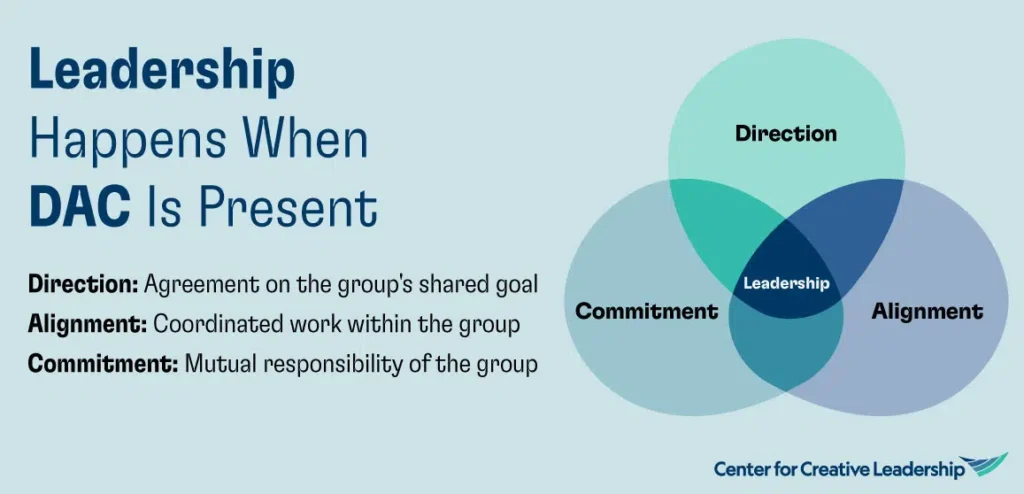
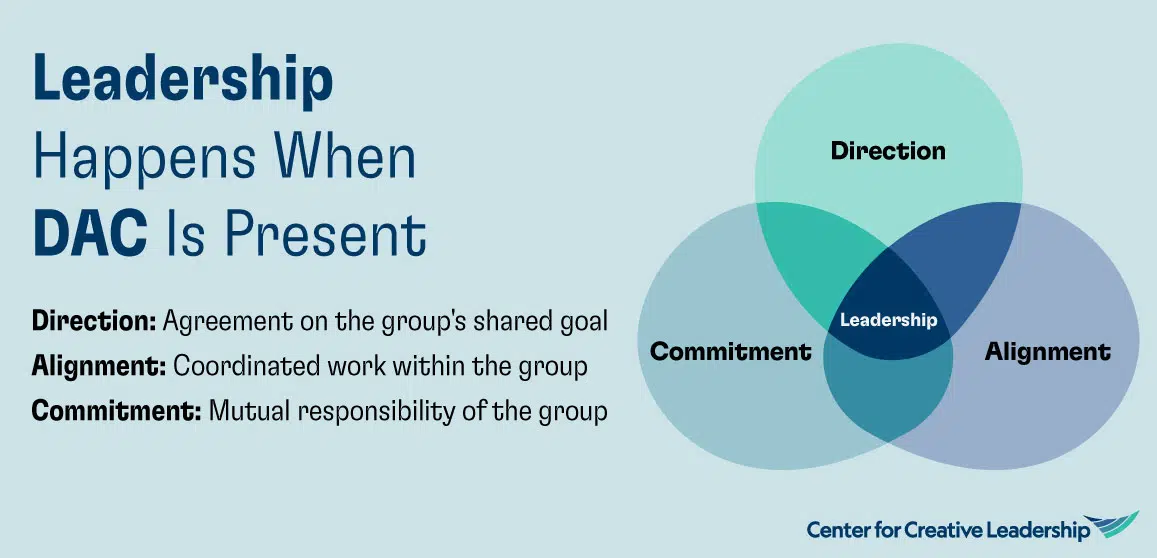
To move beyond the often-subjective definitions of leadership, extensive research, particularly from institutions like the Center for Creative Leadership (CCL), has distilled the essence of leadership into three critical, measurable outcomes: Direction, Alignment, and Commitment, collectively known as DAC. This framework shifts the focus from the individual leader or their followers to the observable results of leadership in action. When these three elements are present, leadership is demonstrably occurring.
This DAC model posits that leadership is not a solitary endeavor but a dynamic social process, a product of the collective actions, interactions, and exchanges among multiple individuals. While formal leaders play a crucial role in setting the tone and creating the conditions for DAC to flourish, every member of a group or organization contributes to its presence or absence. This perspective acknowledges that leadership can emerge from any level and that diverse styles, personalities, and cultural backgrounds can all contribute to achieving these vital outcomes.
Direction: Charting the Course
Direction, within the DAC framework, represents a shared understanding and agreement on the overall goals and aspirations of a group, team, or organization. It answers the fundamental question: "Where are we going?" This collective agreement on objectives serves as a vital compass, guiding efforts and ensuring that time, energy, and resources are channeled effectively. When direction is clear, individuals understand what initiatives to embrace and which to decline, how to prioritize their tasks, and how their individual contributions fit into the larger mosaic of organizational purpose.
Effective direction setting transcends simply announcing targets or articulating a vision. It involves purpose-driven leadership that imbues clarity, inspires motivation, and fosters a deep-seated belief in the shared mission. This clarity ensures that everyone is rowing in the same direction, minimizing wasted effort and maximizing the impact of collective endeavors. Without clear direction, even the most efficient team can find itself adrift, expending considerable effort without moving closer to its intended destination.

Alignment: Synchronizing the Effort
If direction defines the destination, then alignment describes the pathway and the coordinated movement towards it. Alignment ensures that each individual understands their specific role and how it interlocks with the work of their colleagues. It signifies a state of coordination and synchronization across the group, reducing confusion and miscommunication. This synchronized effort leads to enhanced efficiencies, minimizing redundant tasks, duplication of efforts, and the need for excessive oversight.
In today’s increasingly distributed work environments, achieving and maintaining alignment presents unique challenges. Remote and hybrid teams, operating across different time zones and geographical locations, can struggle with a lack of synchronicity. This can lead to feelings of isolation, reduced contribution, and confusion regarding individual roles and overarching project status. Effective leadership in such contexts requires a deliberate focus on both relationships and tasks, actively building trust and fostering interdependence. Intentionally cultivating open communication channels and ensuring equitable access to information are paramount for creating a cohesive and aligned workforce.
Commitment: Fostering Mutual Responsibility
Commitment represents a profound willingness among individuals to prioritize the success of the collective as a personal imperative. It is the understanding that individual success is intrinsically linked to the success of others. In a high-commitment environment, individuals trust that their colleagues will exert the necessary effort, fostering a balanced dynamic of give and take. This sense of "being in it together" replaces cultures of resistance or minimal effort, where managers often need to constantly monitor and follow up.
When commitment is strong, team members are more inclined to go the extra mile, demonstrating a genuine sense of accountability and a shared ownership mentality. This fosters an environment where change is embraced, shared goals are actively pursued, and significant cultural transformations become achievable. Commitment cannot be mandated; it must be cultivated. Effective leaders understand that respecting individual differences, actively seeking to understand employee experiences, and fostering a sense of belonging are crucial for building this essential element of leadership. When individuals feel their perspectives are valued and their contributions are recognized, they are more likely to invest themselves fully in the collective endeavor.
The Transformative Impact of a Refined Leadership Definition
Adopting a shared understanding of what leadership truly means—as an outcome of DAC—can significantly enhance its quality and consistency across an organization. This clarity allows for more accurate assessments of what is functioning well and where interventions are needed, leading to more targeted and effective strategies for improvement.
Diagnosing and Addressing Leadership Challenges
When progress stagnates or desired outcomes remain elusive, viewing leadership as the desired outcome of Direction, Alignment, and Commitment provides a powerful diagnostic tool. By observing for signs of weak DAC, leaders can pinpoint areas requiring attention. Indicators of unclear direction might include team members expressing confusion about goals or priorities, or a general lack of enthusiasm for initiatives. Misalignment often manifests as duplicated efforts, conflicting priorities, or bottlenecks in workflow. Low commitment can be identified through a lack of initiative, a prevalence of "checking the box" mentality, or a reluctance to take on additional responsibilities.
To gain a comprehensive understanding, it is vital to solicit multiple viewpoints. Engaging the team in candid conversations about the current state of DAC, while fostering psychological safety, allows for a more accurate picture of challenges and opportunities. This inclusive approach ensures that interventions are based on a holistic understanding of the situation, rather than relying solely on a single perspective.
Once issues are identified, targeted actions can be taken. If alignment is the primary challenge, the focus might shift to refining processes, improving communication channels, or clarifying roles and responsibilities. If direction is weak, efforts would center on articulating a clearer vision and ensuring buy-in. Addressing low commitment might involve initiatives to foster greater trust, recognition, and a sense of shared purpose. While there are no universal quick fixes, consistent, small-scale improvements in DAC can lead to substantial progress over time.
Cultivating Leadership at All Levels
A relational understanding of leadership underscores the importance of developing leadership capacity not just among those in formal leadership positions, but across the entire organization. This means investing in the collective, empowering teams and workgroups to contribute to leadership outcomes. When every individual understands their role in fostering Direction, Alignment, and Commitment, more leadership emerges organically, leading to a cascade of positive results: enhanced innovation, increased engagement, improved retention, and a more resilient and adaptable organization.
Developing this broad-based leadership capacity requires a strategic approach. It involves providing accessible and equitable development opportunities for all employees, from entry-level contributors to senior executives. This includes nurturing core leadership qualities such as integrity, self-awareness, courage, respect, compassion, and resilience. It also entails equipping individuals with the skills to navigate change, solve complex problems, and contribute meaningfully to shared goals.
Amplifying Leadership Potential Through Development
The effectiveness of leadership development programs is significantly amplified when they are accessible to all levels of an organization. Research consistently highlights inequities in access to leadership development opportunities, particularly for emerging professionals. Addressing these disparities by providing equitable access to training, mentorship, and challenging assignments is crucial for unlocking untapped potential.
Growing teams together, rather than focusing solely on individual development, can also yield profound results. When teams are empowered to collectively strengthen their Direction, Alignment, and Commitment, their ability to collaborate seamlessly and achieve exceptional outcomes is significantly enhanced. This approach recognizes that team effectiveness is a multifaceted construct, with talent and individual capabilities being only one component. The synergy created by strong DAC within a team amplifies its overall potential.
Scaling leadership development initiatives across an entire organization creates a unified vision, language, and set of behaviors that are directly linked to critical business needs. This enterprise-wide approach broadens learning, fosters equitable growth, builds new capabilities, and cultivates the social processes essential for effective leadership. Organizations that invest systematically in leadership development often witness significant improvements in employee engagement, retention, and overall organizational performance. These benefits are not confined to the corporate world; they extend to the social sector, where confronting complex societal challenges requires a collective, coordinated leadership effort.
The Societal Ripple Effect of Relational Leadership
Embracing a more relational and collective definition of leadership has far-reaching implications, extending beyond organizational boundaries into communities and society at large. When individuals, teams, and organizations cultivate greater Direction, Alignment, and Commitment, their collective capacity to address complex "wicked problems"—those characterized by deep-rooted, interconnected issues—is significantly enhanced. Systemic societal challenges, by their very nature, cannot be solved by individuals acting in isolation. They demand the collaborative efforts of many, working together to understand the underlying causes and devise sustainable solutions.
This realization underscores the transformative power of a leadership paradigm that prioritizes collective action and shared responsibility. By fostering a deeper understanding of what leadership means and how to create greater DAC, we unlock the potential for profound change, not only within our immediate spheres of influence but also in the wider world. This inclusive approach to leadership empowers more people to reach their full potential, accelerate progress, and discover better solutions, together.
Ultimately, the meaning of leadership is a dynamic construct that each individual, team, and organization can define and refine. By understanding leadership as the crucial outcome of Direction, Alignment, and Commitment, we equip ourselves with a powerful framework for identifying strengths, addressing weaknesses, and taking intentional action to foster greater leadership capacity. The result is a more empowered, effective, and collaborative future for all.