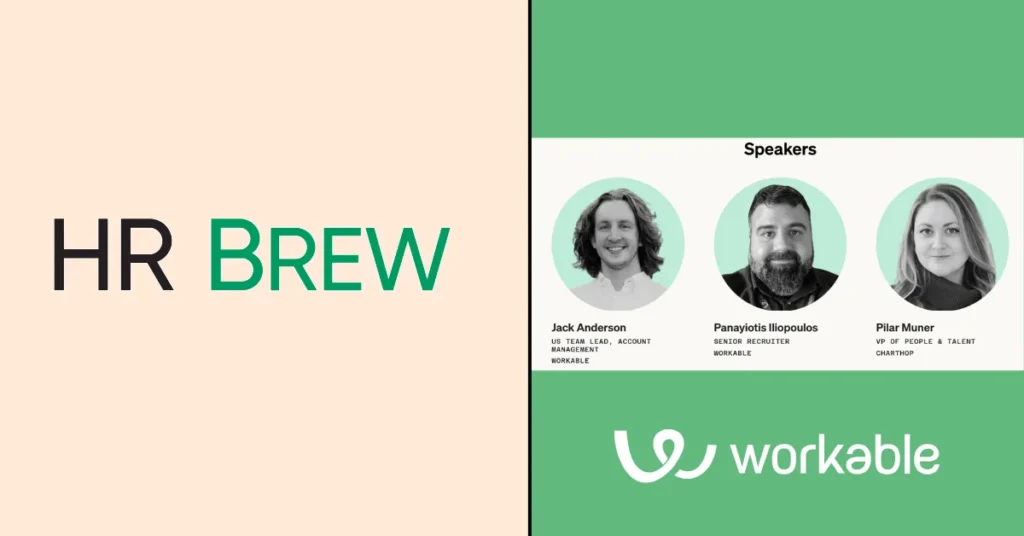
In an increasingly digitized world, the integration of Artificial Intelligence (AI) into the workplace has become an unavoidable reality, particularly within the dynamic field of human resources. Recognizing the profound implications and complex questions surrounding this technological shift, HR Brew recently convened a crucial discussion featuring industry leaders Panayotis Eliopoulos, Senior Recruiter, and Jack Anderson, US Team Lead of Account Management, both from Workable. The central inquiry driving their discourse was paramount: how should HR leaders strategically approach AI in the hiring process to ensure it remains ethical, practical, and fundamentally human-centered? The session offered critical insights into transparency, the role of Large Language Models (LLMs), and the distinct advantages of recruiter-specific AI embedded within Applicant Tracking Systems (ATS) over general consumer tools.
The discussion unfolded against a backdrop of rapid technological advancement and growing regulatory scrutiny. The global HR technology market, valued at over $24 billion in 2023, is projected to grow significantly, with AI-powered solutions forming a substantial segment. This growth is driven by the promise of enhanced efficiency, improved candidate experience, and data-driven decision-making. However, this enthusiasm is tempered by valid concerns regarding algorithmic bias, data privacy, and the potential erosion of human connection in a process that is inherently personal.
The Evolving Landscape of AI in Talent Acquisition
The journey of AI in talent acquisition began subtly, with early applications focusing on automating repetitive tasks. Initially, rudimentary algorithms helped with resume parsing and keyword matching, streamlining the initial stages of candidate screening. Over the past decade, however, the sophistication of these tools has escalated dramatically. Machine learning algorithms now power predictive analytics, identifying candidates most likely to succeed based on historical data, and natural language processing (NLP) enables chatbots to engage with applicants, answer FAQs, and even conduct preliminary interviews.
This evolution has not been without its challenges. Early implementations sometimes inadvertently perpetuated biases present in historical hiring data, leading to calls for greater fairness and transparency. Regulators globally have begun to take notice, with landmark legislations like the European Union’s AI Act proposing comprehensive rules for AI systems, and local ordinances such as New York City’s Local Law 144 specifically addressing automated employment decision tools (AEDTs). These developments underscore the critical need for HR leaders to adopt AI with a robust ethical framework, moving beyond mere efficiency gains to consider broader societal and individual impacts.
Key Insights from the HR Brew and Workable Dialogue
The discussion between HR Brew and Workable distilled five core principles for navigating the AI frontier in hiring, each offering practical guidance for talent teams.
1. AI Works Best When Integrated, Not Added Later
A central tenet highlighted by Workable’s experts was the superior performance of AI when it is natively built into the recruiting process rather than being bolted on as an afterthought. This integration ensures seamless data flow, consistent application of AI functionalities, and a more intuitive user experience for recruiters and candidates alike. When AI tools are an intrinsic part of an Applicant Tracking System (ATS), they can leverage comprehensive candidate data, historical hiring patterns, and job description nuances to provide more accurate and relevant insights.
For instance, an AI tool seamlessly integrated into an ATS can automatically screen resumes against specific job requirements, identify skill gaps or matches, and even suggest optimal times for interview scheduling based on recruiter availability and candidate preferences. This deep integration contrasts sharply with standalone AI tools that require data to be manually imported or exported, leading to inefficiencies, potential data inconsistencies, and a fragmented user experience. The implication is clear: investing in an ATS with embedded AI capabilities offers a more cohesive and powerful solution than attempting to stitch together disparate technologies. Industry data supports this, with reports indicating that companies leveraging integrated HR tech suites experience higher rates of user adoption and perceived value compared to those relying on fragmented systems. A 2023 survey by Deloitte found that 60% of organizations prioritize integrated HR platforms, recognizing their role in enhancing overall operational efficiency and strategic decision-making.
2. Human Judgment Remains Central to Hiring
Despite the advancements in AI, the Workable representatives emphatically stressed that human judgment remains irreplaceable in the hiring process. AI is a powerful augmentation tool, designed to handle routine, data-intensive tasks, thereby freeing up recruiters to focus on high-value activities that demand uniquely human skills. These include conducting empathetic interviews, assessing soft skills, evaluating cultural fit, negotiating offers, and building genuine relationships with candidates.
The nuanced understanding of human motivation, the ability to read non-verbal cues, and the capacity for strategic thinking—all critical for successful hiring—are beyond the current capabilities of AI. While AI can identify patterns in data, it cannot fully grasp the complexities of an individual’s personality, their potential for growth, or their alignment with a company’s unique culture. Recruiters leveraging AI effectively become strategic partners, using AI-generated insights to inform their decisions rather than letting algorithms dictate outcomes. This ensures that the hiring process remains person-centric, valuing the unique contributions and potential of each individual. A recent Gartner survey indicated that 75% of HR leaders believe AI will transform recruiting, but only 15% foresee it replacing human recruiters entirely, reinforcing the notion of AI as an assistant rather than a substitute.
3. Trust Depends on Transparency
The ethical deployment of AI in hiring hinges significantly on transparency. Both candidates and recruiters need to understand how AI tools are being used, what data they are processing, and how their outputs contribute to hiring decisions. This transparency is crucial for building trust and mitigating concerns about fairness and bias.
For candidates, transparency might involve clear disclosures about the use of AI for screening or assessment, alongside explanations of how human oversight is maintained. For recruiters and hiring managers, it means understanding the algorithms’ logic, their limitations, and the specific metrics or criteria they are evaluating. This prevents a "black box" scenario where decisions are made without clear accountability. Workable’s experts underscored that transparency also extends to the data used to train AI models. Ensuring that training data is diverse, unbiased, and regularly audited is paramount to preventing algorithmic discrimination. This commitment to openness aligns with emerging regulatory frameworks, such as the EU AI Act, which mandates clear information requirements for high-risk AI systems, including those used in employment. By fostering an environment of transparency, organizations can safeguard their reputation, ensure compliance, and cultivate a more equitable hiring experience for all.
4. Recruiter-Focused AI Outperforms General-Purpose Tools
The discussion highlighted a critical distinction between general-purpose AI tools, such as popular Large Language Models (LLMs) like ChatGPT, and specialized AI solutions designed specifically for recruiters within an ATS. While general LLMs are impressive in their ability to generate text and answer a wide range of queries, their utility in the highly specific and regulated domain of talent acquisition is limited. They lack the contextual understanding, domain-specific training, and compliance safeguards necessary for reliable use in hiring.
Recruiter-focused AI, conversely, is built upon vast datasets of resumes, job descriptions, interview transcripts, and hiring outcomes. This specialized training allows it to perform tasks like accurate resume parsing, skill matching, candidate ranking, and even interview question generation with far greater precision and relevance. Crucially, these specialized tools are often developed with compliance in mind, incorporating features that help mitigate bias and adhere to regulatory requirements. For example, a recruiter-focused AI might be trained to identify and flag potentially biased language in job descriptions or anonymize candidate data to reduce unconscious bias during initial screening. Workable’s stance reflects the industry’s growing recognition that generic AI, while powerful, cannot replace the precision and accountability offered by purpose-built solutions tailored to the unique demands of HR.
5. Workable’s Approach: Compliant, Context-Driven, and People-First
Workable’s philosophy on AI integration encapsulates these principles, aiming to deliver solutions that are not only technologically advanced but also ethically sound and user-centric. Their approach is founded on three pillars:
- Compliance: Workable emphasizes building AI tools that adhere to global data privacy regulations (like GDPR and CCPA) and anti-discrimination laws. This involves robust data security measures, transparent data processing practices, and continuous monitoring for algorithmic bias. For instance, their AI is designed to help organizations comply with laws such as NYC Local Law 144, which requires bias audits for automated employment decision tools.
- Context-Driven: Understanding that hiring is not a one-size-fits-all process, Workable’s AI is engineered to be context-aware. It processes information not in isolation but within the broader framework of a company’s specific job requirements, industry standards, and organizational culture. This ensures that AI suggestions and insights are relevant and actionable, tailored to the unique needs of each hiring scenario. This includes considering the nuances of different roles, industries, and geographic locations.
- People-First: At its core, Workable’s strategy prioritizes the human experience. AI is deployed to enhance, not diminish, the interactions between candidates and recruiters. By automating administrative burdens, AI frees up recruiters to engage more meaningfully with candidates, fostering a more positive and personalized experience. This people-first approach extends to designing user interfaces that are intuitive and empowering for recruiters, ensuring they remain in control and can easily interpret and override AI recommendations when necessary.
Implications for the Future of Talent Acquisition
The insights shared by Eliopoulos and Anderson from Workable, alongside HR Brew’s platform, highlight a pivotal moment for talent acquisition. The strategic adoption of AI is no longer optional but a critical differentiator for organizations seeking to attract and retain top talent in a competitive market.
The broader implications suggest a fundamental shift in the skill sets required for modern recruiters. Beyond traditional interviewing and negotiation skills, recruiters will increasingly need to develop data literacy, an understanding of AI principles, and a keen eye for ethical considerations. They will become curators and strategists, leveraging AI to gain efficiencies and insights, while dedicating more time to fostering human connections and building employer brands.
Furthermore, the responsible implementation of AI can significantly enhance diversity, equity, and inclusion (DEI) initiatives. By mitigating human unconscious bias in initial screening stages and providing objective data, AI can help organizations identify a broader and more diverse pool of qualified candidates. However, this potential is only realized if the AI itself is designed and monitored with DEI principles at its core.
The dialogue also underscores the ongoing need for collaboration between technology providers, HR professionals, and regulatory bodies. As AI capabilities continue to evolve at a rapid pace, a continuous exchange of knowledge and best practices will be essential to ensure that innovation serves humanity responsibly. The goal is not merely to automate, but to elevate the hiring process, making it more efficient, equitable, and ultimately, more human.
The full discussion, offering a deeper dive into these critical considerations, is available for those looking to further explore the intricate balance of technology and humanity in modern recruitment. As the HR landscape continues to transform, embracing AI with a clear ethical compass and a people-first mindset will be the hallmark of successful talent acquisition strategies.