In an unprecedented expansion of executive authority, President Donald Trump has dismissed two Democratic commissioners from the Equal Employment Opportunity Commission (EEOC), a move that directly challenges decades of legal precedent regarding the independence of federal regulatory bodies. On the afternoon of Tuesday, January 28, 2025, reports confirmed the firing of EEOC Commissioners Charlotte Burrows and Jocelyn Samuels. The dismissals, occurring alongside a broader sweep of officials at other independent agencies, have effectively stripped the EEOC of its quorum, halting the commission’s ability to initiate major litigation or modify formal regulatory guidance.
The removal of Burrows and Samuels follows the firing of EEOC General Counsel Karla Gilbride earlier in the week. These actions are not isolated incidents but appear to be part of a coordinated strategy to assert the "Unitary Executive" theory, which posits that the President maintains absolute authority to remove executive branch officials, regardless of statutory protections or fixed terms of office. As the legal community prepares for a protracted constitutional battle, the immediate result is an agency in a state of suspended animation, led by a Republican Acting Chair but unable to perform many of its core statutory functions.
Chronology of the Executive Reshuffle
The events of late January 2025 represent a rapid-fire restructuring of the federal labor and civil rights apparatus. The timeline of these dismissals indicates a deliberate effort to reshape independent agencies that have historically operated with a degree of insulation from the White House.
On Monday, January 27, the administration moved against the leadership of the National Labor Relations Board (NLRB) and the EEOC’s legal arm. President Trump fired NLRB General Counsel Jennifer Abruzzo and EEOC General Counsel Karla Gilbride. While the dismissal of General Counsels has some recent precedent—President Joe Biden fired EEOC General Counsel Sharon Gustafson and NLRB General Counsel Peter Robb at the start of his term in 2021—the subsequent moves against Senate-confirmed commissioners are considered a significant escalation.
By Tuesday afternoon, January 28, the scope of the purge expanded. Reports confirmed that Commissioner Jocelyn Samuels had been removed from her post, a fact she later confirmed via her official account on X (formerly Twitter). Shortly thereafter, news broke that Commissioner Charlotte Burrows, who served as the agency’s Chair during the Biden administration, had also been dismissed.
Simultaneously, the administration targeted the National Labor Relations Board once again, firing Democratic Member Gwynne Wilcox. This was followed by the dismissal of three Democratic members of the Privacy and Civil Liberties Oversight Board (PCLOB). The common thread across these agencies is their multi-member, bipartisan structure, designed by Congress to ensure stability and continuity across different presidential administrations.
The Quorum Crisis and Operational Paralysis
The EEOC is governed by Title VII of the Civil Rights Act of 1964, which mandates a five-member commission. By statute, no more than three members may belong to the same political party, and a quorum of three members is required for the commission to exercise its official powers.
Following the dismissals of Burrows and Samuels, the commission is left with only two members: Acting Chair Andrea Lucas, a Republican, and Commissioner Kalpana Kotagal, a Democrat. Without a third member, the EEOC lacks a quorum. This vacancy creates a significant hurdle for the agency’s enforcement and regulatory capabilities:
- Litigation Constraints: While the day-to-day operations of the EEOC are managed by career staff, the Commission must authorize the filing of certain types of lawsuits. Under a delegation of authority modified in 2021, the General Counsel can initiate routine litigation. However, without a quorum, the agency cannot vote to approve systemic discrimination cases, "pattern-or-practice" lawsuits, or cases involving novel legal issues that might generate public controversy.
- Regulatory Stasis: The EEOC is currently unable to initiate notice-and-comment rulemaking. This means the administration cannot formally revise interpretive guidance or modify the EEO-1 data collection requirements, which are currently set through 2026.
- Guidance Freeze: Formal enforcement guidance, such as the "Enforcement Guidance on Harassment in the Workplace" approved in April 2024, requires a majority vote to be revoked or modified. Until a quorum is restored through Senate confirmations, these Biden-era policies remain the formal position of the agency, even if the current Acting Chair disagrees with them.
Acting Chair Andrea Lucas and the Shift in Technical Assistance
Despite the lack of a quorum, the administration has already begun shifting the agency’s priorities through the use of "technical assistance" documents. Unlike formal guidance, technical assistance falls under the unilateral authority of the Chair and does not require a commission vote.
Upon her appointment as Acting Chair, Andrea Lucas signaled a sharp departure from the previous administration’s focus. In a public statement, Lucas identified her priorities as "rooting out unlawful DEI-motivated race and sex discrimination," "defending the biological and binary reality of sex," and "protecting workers from religious bias and harassment, including antisemitism."
The practical impact was immediate. On January 27 and 28, several key documents were scrubbed from the EEOC website, including:
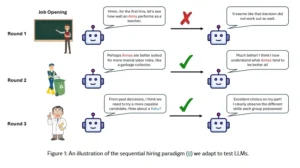
- Technical assistance regarding the use of Artificial Intelligence (AI) in hiring and its intersection with the Americans with Disabilities Act (ADA).
- Interpretations of the Supreme Court’s Bostock decision as it applies to LGBTQ+ workers.
- Fact sheets regarding transgender employees’ access to workplace restrooms.
- Reports on discrimination within the technology sector.
In a press release titled "Removing Gender Ideology and Restoring the EEOC’s Role of Protecting Women in the Workplace," Lucas confirmed that these removals were part of a broader effort to align the agency with the President’s executive orders. While she acknowledged she cannot unilaterally revoke formal Enforcement Guidance, her control over the agency’s public-facing technical resources allows for a significant pivot in how employers are advised to comply with federal law.
Constitutional Stakes: Testing the Unitary Executive Theory
The legal justification for these firings rests on a controversial interpretation of Article II of the Constitution. The Trump administration contends that the President possesses the "unrestricted removal authority" over all executive branch officials, a concept known as the Unitary Executive theory.
Historically, the Supreme Court has protected the independence of multi-member boards. In the landmark 1935 case Humphrey’s Executor v. United States, the Court ruled that Congress could limit the President’s power to remove members of independent agencies (specifically the Federal Trade Commission) to cases of "inefficiency, neglect of duty, or malfeasance in office." The Court reasoned that these agencies perform "quasi-legislative" and "quasi-judicial" functions that require independence from political pressure.
However, recent Supreme Court jurisprudence has trended toward expanding presidential power. In Seila Law v. CFPB (2020), the Court ruled that the single-director structure of the Consumer Financial Protection Bureau was unconstitutional because it lacked a multi-member board but still enjoyed removal protections. While Seila Law did not explicitly overturn Humphrey’s Executor, it signaled a growing skepticism toward independent agencies.
Legal experts anticipate that the dismissals of Burrows and Samuels will trigger a direct challenge to the Humphrey’s Executor precedent. Justices Clarence Thomas and Neil Gorsuch have previously expressed a desire to overrule the 1935 decision entirely, arguing that any official exercising executive power must be answerable to the President. If the current conservative majority on the Supreme Court agrees, it would fundamentally alter the landscape of the federal bureaucracy, making all independent commissioners serve at the pleasure of the President.
Official Reactions and Legal Recourse
The dismissed commissioners have signaled their intent to fight the removals in court. In a statement released through her attorneys, Charlotte Burrows stated she would "explore all legal options available to me." Jocelyn Samuels was more explicit in her critique, calling the move "unprecedented" and a "fundamental misunderstanding of the nature of the EEOC as an independent agency."
The outcome of these potential lawsuits remains uncertain. While lower courts have recently upheld the firing of General Counsels based on the lack of explicit "for cause" language in certain statutes, the EEOC’s structure—with fixed five-year terms—was specifically designed to prevent the wholesale replacement of the commission following a change in the White House.
Implications for Employers and the Workforce
For the business community, the sudden upheaval at the EEOC introduces a period of significant regulatory uncertainty. While the agency’s career staff will continue to process the tens of thousands of discrimination charges filed annually, the lack of a quorum means that the "big-ticket" litigation that often sets industry standards is likely to stall.
Employers should anticipate a shift in enforcement focus once a quorum is restored with Republican nominees. The emphasis is expected to move away from systemic DEI initiatives and LGBTQ+ protections toward cases involving religious discrimination and "reverse discrimination" claims related to race-conscious hiring practices.
In the interim, businesses are advised to maintain their existing compliance programs but stay attuned to the new technical assistance being issued by Acting Chair Lucas. The removal of AI and LGBTQ+ guidance from the EEOC website does not change the underlying law or judicial precedents, but it does indicate that the EEOC will no longer be an active proponent of those specific interpretations in the near term.
As the administration continues its push to assert control over independent agencies, the EEOC stands as a primary testing ground for the limits of executive power. The coming months will determine whether the commission remains an independent arbiter of civil rights or becomes a direct instrument of presidential policy.