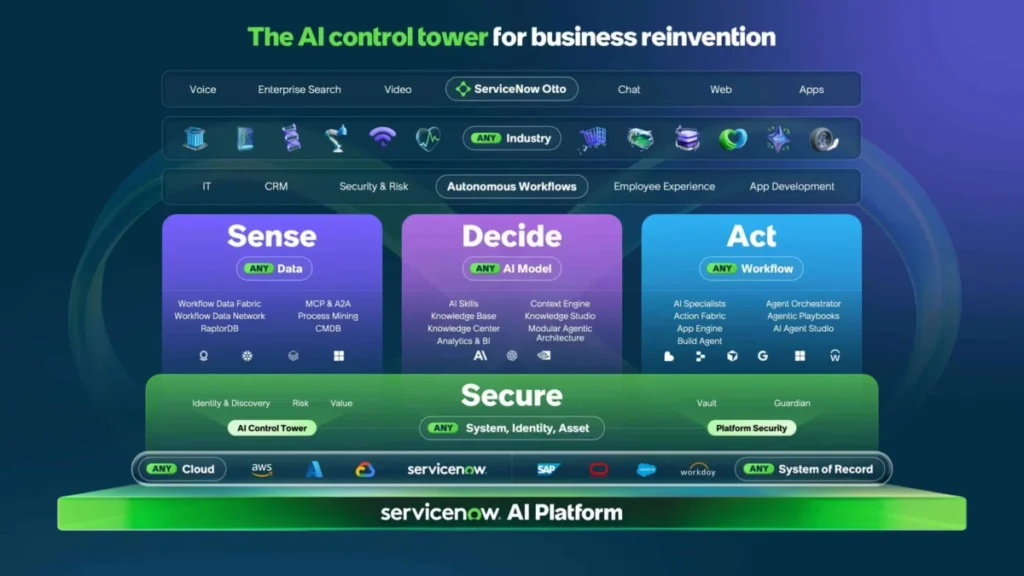
In a significant move signaling its intent to reshape the enterprise technology landscape, ServiceNow recently unveiled a comprehensive suite of announcements aimed at capturing a dominant position in the burgeoning market for AI agents. The company’s ambitious objective is to double its revenue to $30 billion within the next four years, a goal that hinges on its strategy to become the central control point for all AI agents operating within an organization. This includes managing their operations, ensuring security, and acting as the primary interface for their deployment and interaction. This strategic pivot, while aggressive, is framed by ServiceNow as a necessary response to the escalating complexity and potential chaos of enterprise AI adoption, a sentiment echoed by competitors like Microsoft and Workday.
The company’s vision, articulated through several new product and platform initiatives, positions ServiceNow as the essential "tollgate" for AI agents, demanding payment for the privilege of seamless integration and governance within the enterprise. This approach acknowledges the rapid proliferation of AI tools and the growing need for centralized management and security, a challenge that CIOs are increasingly grappling with. While the immediate concern for many organizations remains the practical implementation and demonstrable return on investment (ROI) of AI use cases, ServiceNow’s announcements suggest a proactive effort to address the underlying infrastructure and governance required for scalable AI deployment.
The Action Fabric: Orchestrating the AI Agent Landscape
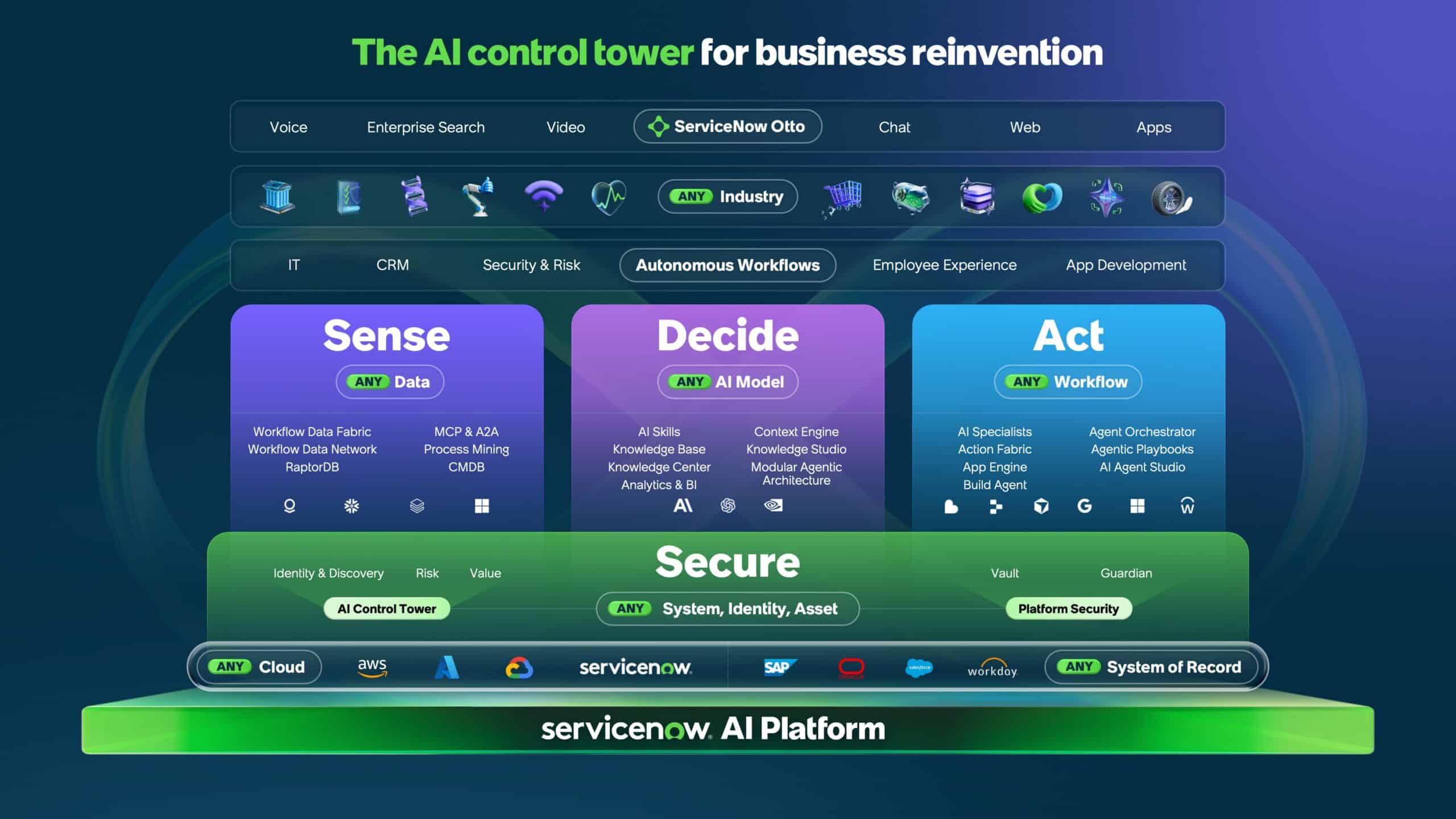
At the core of ServiceNow’s strategy is the introduction of its "Action Fabric," a sophisticated monitoring and management layer designed to govern, oversee, and control all AI agent activities within an enterprise. This concept mirrors similar ambitions from Microsoft with its Agent 365 and Workday’s Agent System of Record, highlighting a nascent industry consensus on the need for a unified AI governance framework.
ServiceNow’s Action Fabric, powered by its proprietary MCP server, is designed for universal compatibility:
- Universal Agent and Model Support: The platform emphasizes its ability to connect any AI agent, regardless of its origin or the underlying model, through the Action Fabric. This open approach aims to alleviate vendor lock-in concerns for AI tools.
- Open Integration for AI and Management Tools: The management capabilities are not only for agents but can also be invoked by agents themselves. This allows for the automation of management tasks and the integration of third-party management frameworks, fostering a more interconnected ecosystem.
- Comprehensive Governance and Security: A key promise of the Action Fabric is "Full Control; Full Trust." All AI agents integrated into the fabric are to be authenticated, have their permissions scoped, and be continuously audited and monitored by ServiceNow. This granular control is intended to build confidence in the deployment of AI across critical business functions.
This new offering builds upon ServiceNow’s two decades of investment in foundational IT management capabilities, including its robust Configuration Management Database (CMDB), Workflow Data Network, established business rules engines, Security Center, and identity and access control systems. The company is framing these existing assets as the bedrock upon which its AI management strategy will be built, positioning them for a significant "reinvention" in the context of AI governance.
Competitors are making parallel moves. Workday’s Agent System of Record and Agent Gateway aim to provide controlled access to its platform for external agents, while SAP is guiding agents to utilize its Business Accelerator Hub for business rule access, with usage-based metering. The choice between these platforms will likely depend on a company’s existing investment in specific vendor ecosystems, such as Workday or SAP, and their preferred development environments for AI agents.
Otto: The "Front Door" to Enterprise AI and Employee Experience
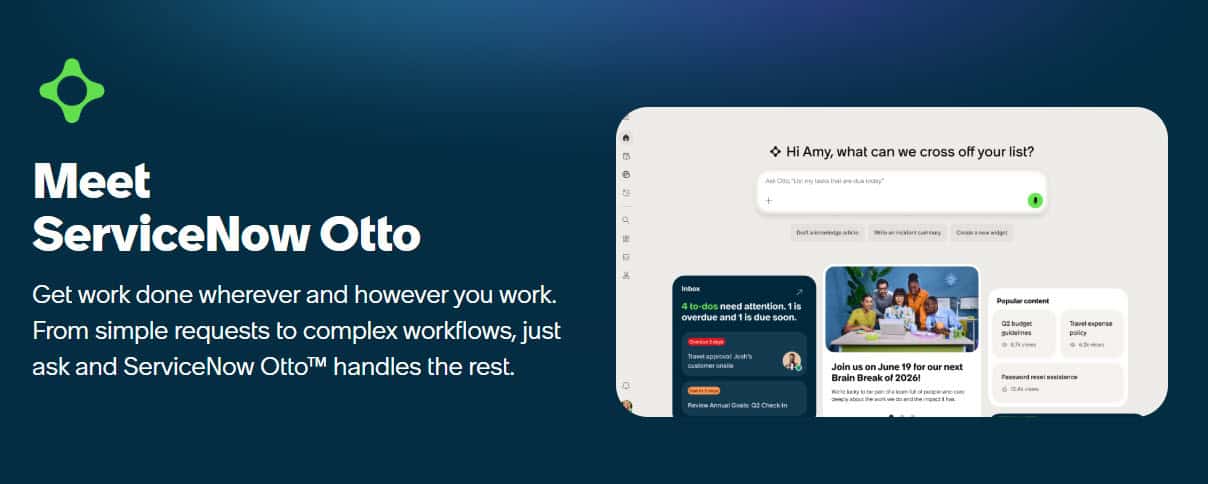
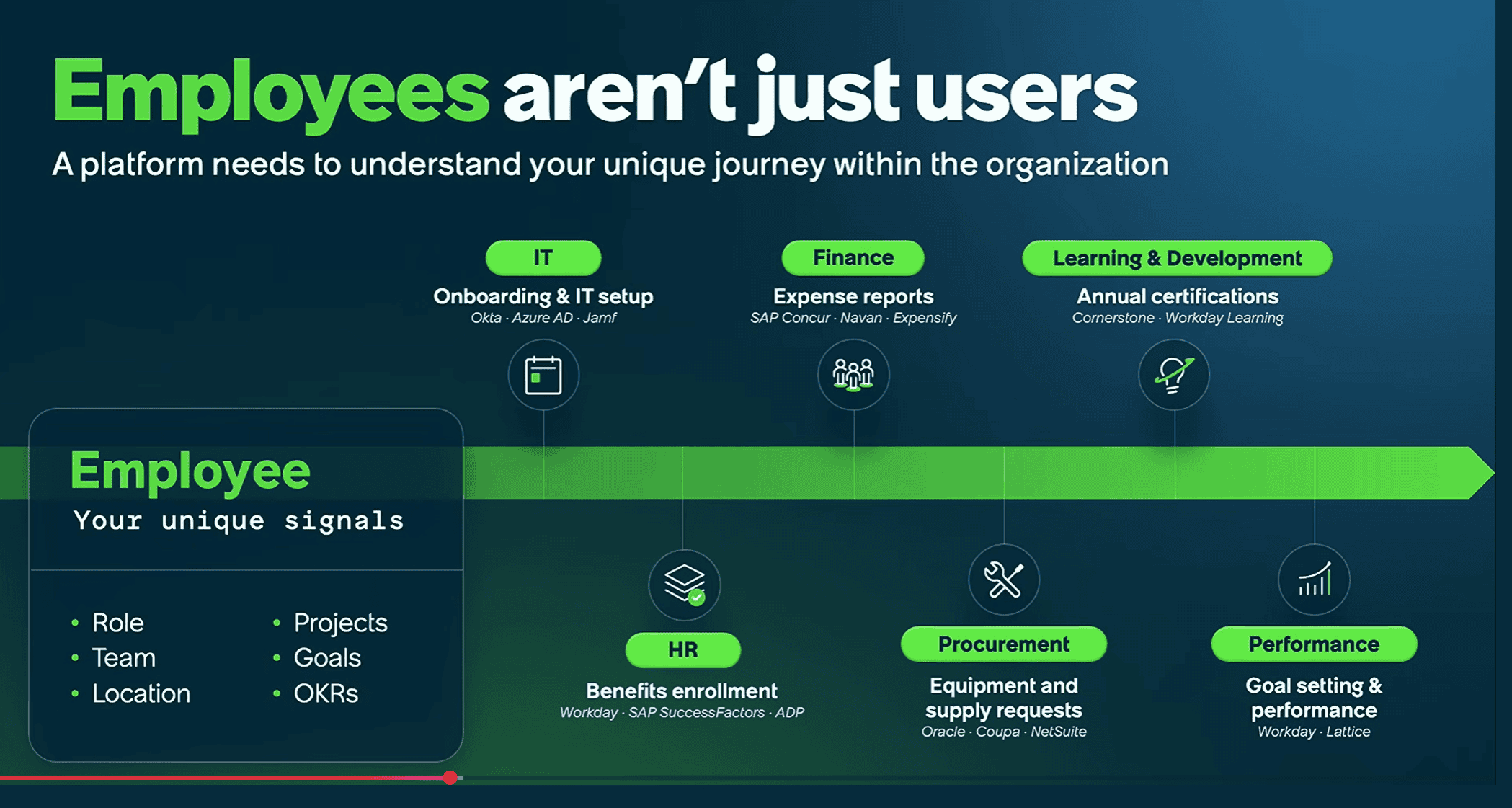
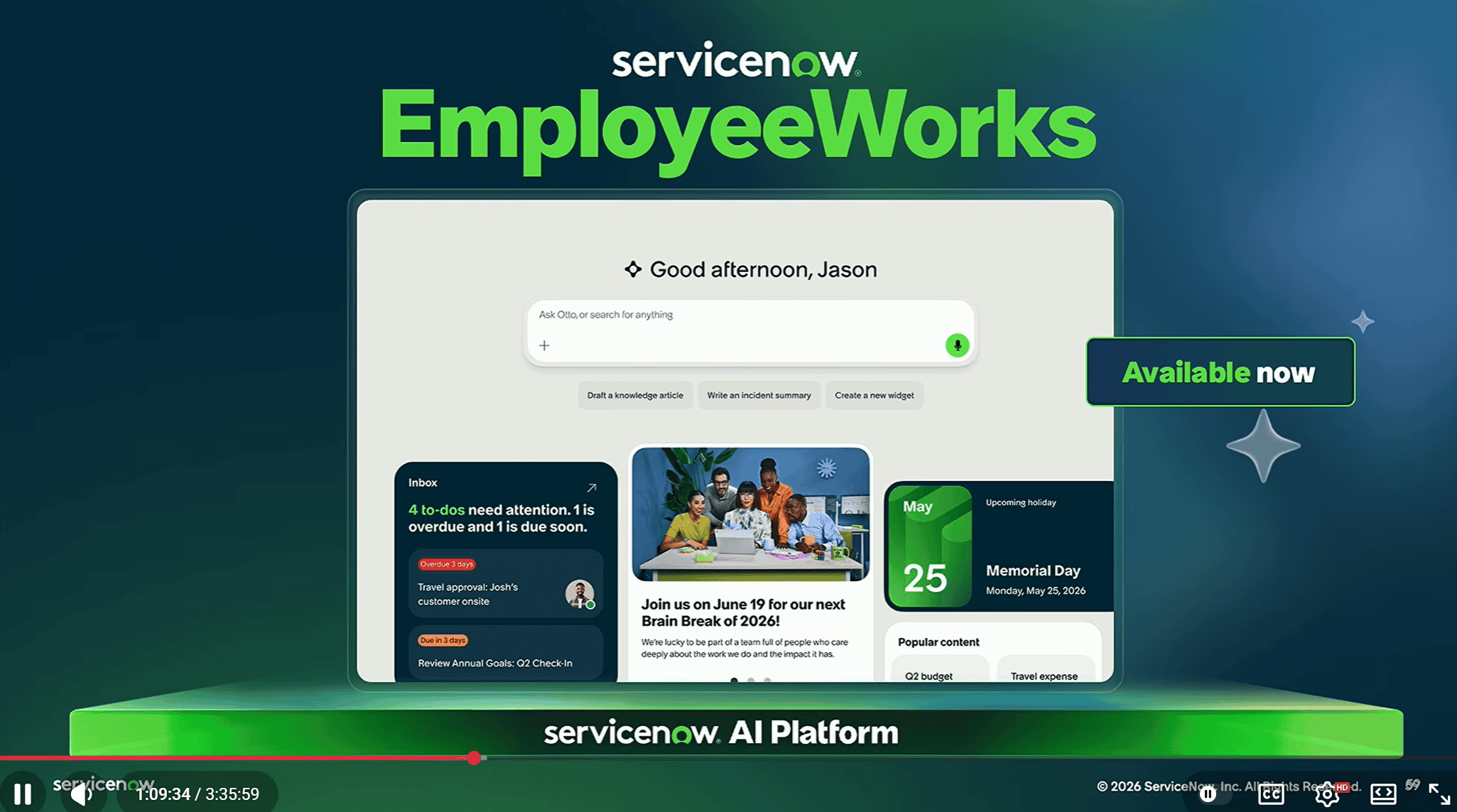
Complementing its Action Fabric, ServiceNow is rebranding and enhancing its Now Assist capabilities into "Otto," a persona-driven "Front Door" agent. This initiative positions Otto as the primary, friendly interface for employees to access any enterprise resource or service mediated by AI. This strategy directly competes with platforms like Workday’s Sana, which also aims to serve as a unified entry point for employees to interact with enterprise AI.
The integration of Moveworks into Now Assist and its rebranding as Otto signifies a commitment to creating a more intuitive and accessible employee experience. The branding of Otto as a distinct persona aims to foster a sense of familiarity and ease of use, transforming traditional employee self-service portals into a more dynamic and intelligent interaction point. ServiceNow is even positioning Otto as the new face of Employee Experience (EX), a significant redefinition of the EX market.
Bhavin Shah, founder of Moveworks, now leads the Otto initiative, underscoring the strategic importance of this integration. The broader umbrella branding of "EmployeeWorks" for these integrated solutions emphasizes ServiceNow’s intent to create a holistic employee engagement platform. This marks a departure from older terminology like "Employee Self-Service," signaling a more advanced, AI-driven approach to workforce enablement.
However, the success of Otto will depend on its ability to integrate deeply with a wide array of employee needs. The Employee Experience Platform (EXP) market is notoriously complex, requiring platforms to handle diverse inquiries ranging from HR policies and benefits to IT support and general knowledge management. Otto will need extensive integrations with various enterprise systems and data sources to effectively address the multifaceted demands of the modern workforce. The example of a crisis management agent for employees in Ukraine, which had to adapt to trauma, power outages, and geopolitical events, illustrates the breadth of scenarios such an agent might encounter, highlighting the need for robust and adaptable AI solutions. This competitive space also includes major players like Microsoft and Zoom, alongside numerous Human Capital Management (HCM) vendors.
The AI Control Tower: Governance, Security, and ROI for AI
ServiceNow’s vision extends to an "AI Control Tower," a sophisticated dashboard designed to "discover, observe, govern, and secure enterprise AI." This comprehensive tool aims to provide a holistic view of AI operations, detailing their performance, value contribution, and potential issues like hallucinations. The AI Control Tower also seeks to quantify the ROI of AI agents, enabling businesses to identify underperforming or excessively costly AI deployments.
This ambitious approach draws parallels to legacy IT management systems like IBM’s SystemView, which aimed to manage all computing resources within proprietary networks. ServiceNow’s CEO, Bill McDermott, frequently describes businesses as collections of complex, often conflicting workflows and rules. The AI Control Tower, in this context, represents an effort to bring order and manageability to the entire ecosystem of AI agents, workflows, and human interactions.
While the vision of centralized control and management is appealing to IT departments, the emphasis on monitoring and managing every decision raises questions about the balance between control and employee autonomy. The article implicitly cautions against overreach, referencing the Ritz Carlton’s philosophy of empowering employees to "use their own best judgment," suggesting that a purely mechanistic approach to AI governance might overlook the nuanced nature of human decision-making.
The ServiceNow Autonomous Workforce: Predefined AI Specialists
Further expanding its AI agent strategy, ServiceNow has introduced "The ServiceNow Autonomous Workforce," a collection of pre-defined "AI Specialists" designed for autonomous work across major business functions. This initiative aims to provide a standardized framework for AI roles, akin to job descriptions for human employees.
Examples of these AI Specialists include:
- Site Reliability AI Specialist
- AI Operations Specialist
- Level 1 Service Desk Specialist
- HR Service Delivery AI Specialist
- Case Management Specialist
- Third-party Screening Specialist
- Enterprise Architecture Specialist
- Vulnerability Exposure Specialist
This move aligns with emerging research, such as the "AI Blueprint for HR 2030," which categorizes AI agents into those that take action, set rules, or observe and monitor. ServiceNow’s AI Specialists can be seen as pre-packaged solutions for common enterprise functions, potentially accelerating AI adoption by offering ready-to-train agents for specific roles. This could lead to the centralization of tasks previously handled by multiple individuals, into highly efficient AI agents.
The naming of these AI roles is seen as a crucial step in operationalizing AI within organizations. The author suggests that AI agents might eventually name themselves based on their capabilities, reflecting a deeper level of autonomy. The integration of Galileo, an AI platform that acts as a "digital HR consultant," into Otto further underscores ServiceNow’s commitment to AI-driven HR transformation.
The Context Engine: Unifying Enterprise Operations
To provide a deeper understanding of enterprise operations, ServiceNow has launched the "Context Engine." This platform acts as a central context layer, identifying and locating existing business rules and metadata across various systems. The goal is to provide a unified view of the enterprise, encompassing organizational structures, privacy regulations, and business workflows, many of which originate from ERP and other core systems.
The Context Engine is described as a "graph of graphs," integrating ServiceNow’s workflow data network with knowledge, action, asset, and decision graphs. This comprehensive data integration is intended to allow the platform to continuously learn and adapt to how a business operates. The introduction of an "AI Analyst Specialist" for autonomous data analytics further supports this vision of intelligent data management and insight generation.
This area is highly competitive, with Microsoft’s WorkIQ and the Microsoft Graph offering similar contextual capabilities. Gloat’s Loomra also targets human capital applications with a contextual layer. The effectiveness of these platforms will hinge on their ability to seamlessly integrate with diverse enterprise systems and provide actionable insights derived from this unified context.
A Bold Vision for Revenue and Enterprise Transformation
ServiceNow’s expansive announcements paint a picture of a company aggressively positioning itself to capture a significant share of the enterprise AI market. The strategy leverages existing strengths in IT service management, workflow automation, and data management to create a comprehensive ecosystem for AI agents. The company’s goal of $30 billion in revenue within four years suggests a clear monetization strategy tied to the adoption and usage of these new AI governance and management tools.
The underlying economic argument for such investments is compelling for many enterprises. If AI agents can demonstrably replace or augment human labor, the cost of token fees and platform subscriptions may be offset by reduced payroll expenses. However, the article notes that the economic viability of AI agents is still being tested, citing instances where companies are re-evaluating AI investments in favor of human labor due to cost considerations.
The emphasis on "transforming work" rather than merely "automating work" suggests a deeper strategic intent. Before investing heavily in AI governance infrastructure, companies are encouraged to focus on redesigning their core processes and workflows to fully leverage AI’s potential. The article also highlights the importance of development environments, suggesting that the ease of building AI agents within platforms like Workday or Microsoft Copilot could influence purchasing decisions for management tools. The total cost of AI transformation, therefore, encompasses not only governance but also the development, maintenance, and business rule implementation for AI applications.
ServiceNow, alongside other major enterprise software vendors like Workday, Oracle, and SAP, is recognizing that enterprise AI represents a substantial revenue opportunity, shifting from traditional per-seat licensing models to usage-based monetization for AI agent services. This trend is further exemplified by the formation of new services companies by AI leaders like Anthropic and OpenAI, signaling a broader industry movement towards integrating AI products and services more deeply into enterprise operations.
Ultimately, the article concludes with a nuanced perspective on the role of AI in the workplace. While ServiceNow’s strategy focuses on control and management, the author reminds readers of the importance of human judgment and empowerment. The aspiration is for AI agents to liberate humans to think more creatively and strategically, rather than merely automating existing tasks. The future of enterprise AI, as suggested by the Ritz Carlton analogy, may lie in intelligent agents that augment human capabilities, enabling better decision-making at critical junctures. ServiceNow’s aggressive moves represent a significant step in defining the architecture and economics of this evolving AI-driven enterprise.