

The global education technology landscape is currently navigating a period of profound transition, moving away from the pandemic-era surge toward a more mature, competitive, and volatile market environment. For learning technology leaders, the realization that growth is rarely linear has become a fundamental principle of survival. As markets evolve and buyer expectations shift, the strategies that secured yesterday’s market share often prove insufficient for tomorrow’s demands. According to market research from Grand View Research, the global education technology market is projected to reach $437.5 billion by 2033, growing at a compound annual growth rate (CAGR) of 13.6%. This massive valuation underscores both the immense opportunity and the intensifying pressure for companies to reinvent themselves or risk obsolescence.
A corporate turnaround is frequently misunderstood as a mere financial recovery or a temporary spike in revenue. However, in the context of high-growth sectors like EdTech and HR Tech, a true turnaround represents a fundamental shift in a company’s trajectory. It involves a complete overhaul of how a brand is perceived by its customers, employees, and competitors. Industry analysts suggest that most corporate struggles do not stem from a lack of resources but from an adherence to outdated assumptions. When market forces shift—such as the current rapid integration of generative AI or the transition to skills-based hiring—companies that fail to adapt their core value proposition find themselves in a state of "painful stagnation."
The Strategic Framework of Successful Reinvention
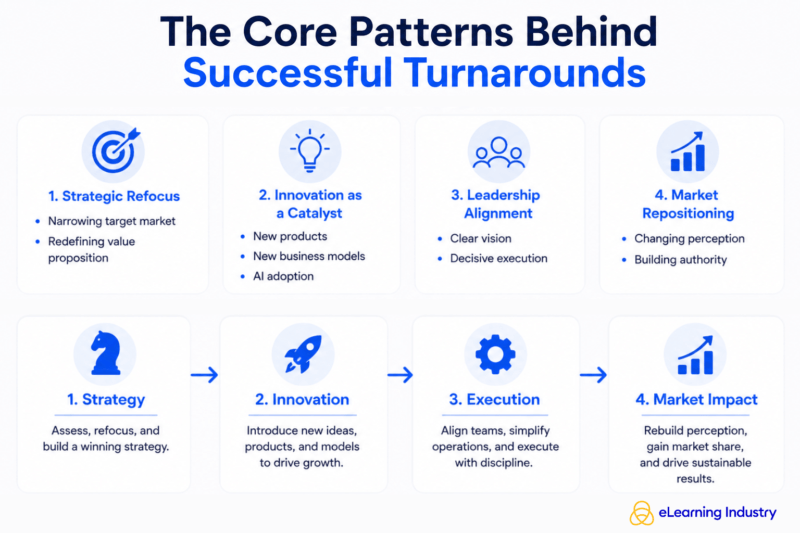
The companies that successfully navigate these cycles of stagnation rarely do so by accident. Instead, they follow a rigorous framework of strategic reinvention. This process begins with a "Strategic Refocus." Struggling brands often suffer from "mission creep," attempting to serve too many disparate audiences with a diluted message. By narrowing their focus to a specific, high-value market segment, leaders can sharpen their messaging and reposition themselves as specialists rather than generalists.
Innovation serves as the primary catalyst in this transformation. This does not always mean launching a new product; often, it involves rebuilding the business model itself. For instance, the transition from legacy on-premise software to Software-as-a-Service (SaaS) was the defining innovation of the last decade. Today, the innovation driver is likely the integration of personalized, AI-driven learning paths that provide measurable Return on Investment (ROI) for enterprise clients.
Furthermore, leadership alignment is the bedrock upon which these changes are built. Internal confusion is the greatest enemy of a turnaround. When the C-suite is not aligned on a singular vision, execution falters, and market momentum is lost. Successful leaders prioritize clarity, ensuring that every department—from product development to marketing—understands the new direction. This internal alignment is then mirrored externally through market repositioning, where the brand actively reshapes public perception through strategic storytelling and thought leadership.

A Chronology of Corporate Rebirth: Learning from Global Giants
To understand the mechanics of a turnaround, one must look at the historical precedents set by some of the world’s most influential technology firms. These case studies provide a roadmap for learning tech leaders currently facing their own "inflection points."
The Apple Renaissance (1997)
In the late 1990s, Apple was weeks away from bankruptcy. The return of Steve Jobs in 1997 marked the beginning of perhaps the most famous turnaround in business history. Jobs famously slashed Apple’s product line by 70%, focusing on a handful of high-quality products that prioritized design and user experience. By simplifying the brand’s identity and focusing on innovation, Apple rebuilt customer trust and created a cult-like loyalty that allowed it to eventually dominate the mobile and personal computing markets.
The Netflix Pivot (2007–2011)
Netflix provides a masterclass in anticipating market shifts. Originally a DVD-by-mail service, the company’s leadership recognized that the future of entertainment lay in digital streaming. Despite the high costs and the risk of cannibalizing their existing business, Netflix aggressively invested in streaming technology and, later, original content. This data-driven pivot allowed them to stay ahead of legacy media giants who were too slow to abandon their traditional models.
The Adobe SaaS Transition (2011–2013)
Adobe’s decision to move from perpetual software licenses to a subscription-based Creative Cloud model was initially met with fierce resistance from both customers and investors. However, leadership remained committed to the long-term stability of recurring revenue. This shift not only stabilized the company’s finances but also allowed for continuous product updates, ensuring that Adobe remained the industry standard for creative professionals.
The Microsoft Cloud Revolution (2014)
When Satya Nadella took the helm of Microsoft in 2014, the company was seen as a legacy giant losing ground to Google and Apple. Nadella’s "Cloud First, Mobile First" strategy shifted the focus away from the Windows operating system and toward Azure and collaborative tools like Teams. By fostering a culture of experimentation and empathy, Nadella transformed Microsoft into a modern, indispensable partner for the global enterprise.
Data and Market Realities in Learning Technology
The lessons from these giants are particularly relevant to the EdTech sector today. Current data indicates that enterprise buyers are becoming more discerning. They are no longer moved by "feature-rich" platforms; they are looking for solutions that solve specific operational challenges, such as the global skills gap or employee retention.
Strategic marketing for CEOs has shifted from lead generation to "authority building." In a tight market, companies that are perceived as industry educators and thought leaders capture a disproportionate share of the market. This is evidenced by the rise of B2B thought leadership as a primary driver of enterprise decision-making. According to industry surveys, nearly 50% of C-suite executives state that thought leadership content has directly influenced their decision to award business to a company.
The Role of Visibility and Thought Leadership in Driving Change
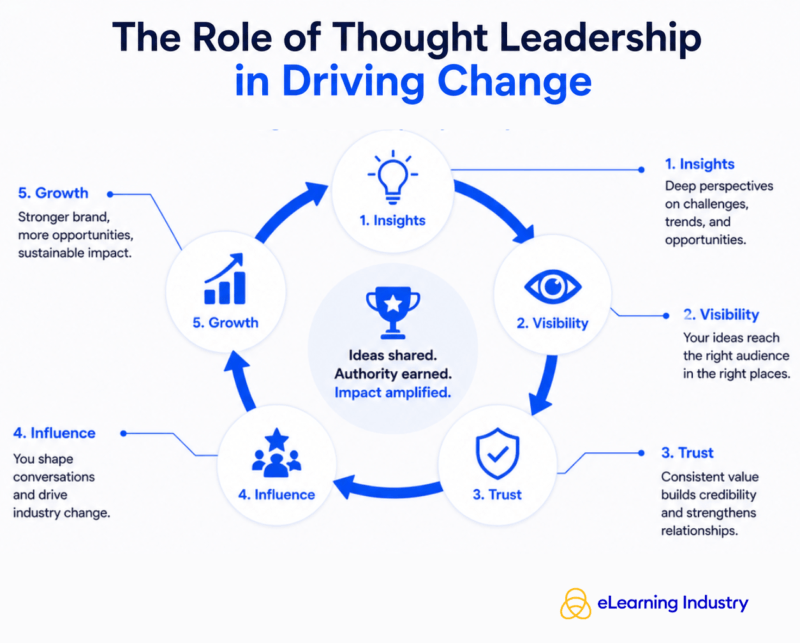
A turnaround executed in silence is rarely successful. For learning tech leaders, visibility is the fuel that accelerates the transformation process. When a company is undergoing internal changes, there is often a lag between the implementation of those changes and the market’s awareness of them. Consistent communication through podcasts, interviews, and webinars closes this gap.
Thought leadership serves several critical functions during a turnaround:
- Controlling the Narrative: It prevents competitors and market speculators from defining the company’s struggles.
- Building Credibility: By sharing insights on industry trends, leaders prove they have a pulse on the market’s future.
- Internal Morale: Publicly articulating a strong, clear vision boosts the confidence of employees, reducing turnover during periods of change.
- Attracting Partnerships: High-profile visibility makes a company more attractive to strategic partners and investors who are looking for "vibrant" brands.
Podcasts and long-form interviews have emerged as particularly effective tools for modern leadership. Unlike traditional advertising, these platforms allow for a nuanced discussion of complex topics. They humanize the C-suite, allowing leaders to explain the "why" behind difficult strategic decisions. Platforms like eLearning Industry’s podcasts provide a specialized stage for these leaders to reach a concentrated audience of decision-makers in the HR and corporate training space.
Implications for the Future of EdTech
As we look toward 2026 and beyond, the ability to execute a turnaround will be a defining characteristic of successful EdTech companies. The integration of AI is already creating a new "divide" in the market. Companies that can successfully pivot their legacy systems to incorporate meaningful AI-driven insights will thrive, while those that simply "bolt on" AI features without a strategic overhaul will likely face stagnation.
Operational agility will also become more critical. The speed at which a company can identify a market shift and realign its resources will determine its survival. This requires a move away from rigid, multi-year planning toward more iterative, agile methodologies that allow for rapid experimentation.
The broader impact of these turnarounds extends beyond individual company profits. As learning tech companies reinvent themselves to be more effective, the quality of global education and workforce development improves. Better tools lead to better learning outcomes, which in turn fuels global economic growth.
Conclusion and Strategic Outlook
Growth in the learning technology sector is a cyclical journey of evolution. The most successful brands are those that view stagnation not as a failure, but as a signal that it is time for reinvention. By following the patterns of strategic refocus, innovation, and leadership alignment—and by amplifying these efforts through consistent, high-impact visibility—leaders can write their own turnaround stories.
The path from $1M to $10M in Annual Recurring Revenue (ARR), and beyond to market leadership, is paved with difficult decisions and bold pivots. In an era where buyer trust is the ultimate currency, the leaders who stand up, share their vision, and lead the industry conversation will be the ones who define the future of how the world learns. The turnaround is not just about surviving the current market; it is about building the authority and resilience necessary to dominate the next one.






