
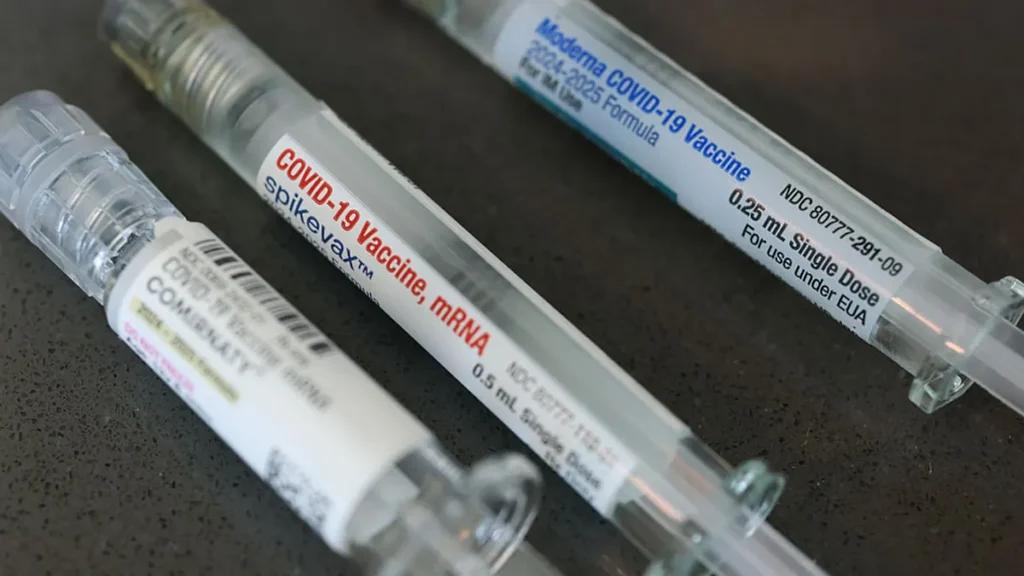
The U.S. Equal Employment Opportunity Commission (EEOC) has recently intensified its enforcement actions concerning COVID-19 vaccine religious exemptions, a move that appears to align with broader discussions surrounding religious freedom in the workplace. This heightened activity, including significant settlements and ongoing litigation, comes amidst a pointed critique from within the EEOC regarding the Biden administration’s overall handling of religious discrimination charges related to vaccine mandates. The cases highlight the enduring legal and ethical complexities employers face in balancing public health imperatives with employees’ sincerely held religious beliefs, even years after the peak of the pandemic.
Recent Enforcement Actions Highlight Enduring Legal Battles
Published on May 19, 2026, and reported by Emilie Shumway for HR Dive, recent developments reveal the EEOC’s continued commitment to litigating and settling cases stemming from the 2021-2022 period when COVID-19 vaccine mandates were widespread. These actions serve as a powerful reminder that the ramifications of pandemic-era workplace policies continue to shape employment law and corporate compliance.
One notable instance in March saw an unnamed "leading global technology company" agree to a substantial $15 million conciliation agreement. This settlement resolved charges that the company had unlawfully discriminated against a class of employees based on religion and disability. The discrimination reportedly occurred when the company denied their requests for COVID-19 vaccine exemptions and subsequently terminated their employment in 2021. The sheer magnitude of this settlement underscores the significant financial and reputational risks employers face when navigating complex accommodation requests.
Also in March, the EEOC initiated a lawsuit against an Illinois hospital. The suit alleges that the hospital unlawfully denied a Christian surgical technologist’s religious vaccine accommodation request in August 2021 and subsequently fired her a few months later. This case exemplifies the agency’s focus on individual complaints where employers are alleged to have failed in their obligations under Title VII of the Civil Rights Act of 1964.
Further solidifying its enforcement stance, AG Equipment Co. confirmed a settlement in an unspecified case, acknowledging the need for improvements in its workplace practices. In a statement to HR Dive, the company outlined several meaningful steps taken to strengthen its environment, including the addition of an employee hotline, implementation of a behavior-based safety program, establishment of more structured pay practices, and the development of a leadership team grounded in accountability, communication, and respect. This proactive response from AG Equipment Co. suggests a recognition of past shortcomings and a commitment to fostering a more inclusive and compliant workplace.
These cases, though processed years after the initial mandates, illustrate the EEOC’s long-term investigative and prosecutorial timelines, ensuring that alleged violations are addressed even as public attention to the pandemic wanes.
The Broader Context: COVID-19 Vaccine Mandates and Workplace Rights
The emergence of COVID-19 in late 2019 and its rapid global spread led to an unprecedented public health crisis. As scientific understanding of the virus evolved, the development of vaccines in late 2020 and early 2021 offered a critical tool in curbing transmission and severe illness. Governments, public health authorities, and many private employers moved to implement vaccine mandates as a measure to protect workforces, customers, and the broader community, particularly in healthcare settings and essential services.
These mandates, however, quickly intersected with existing legal frameworks protecting employee rights, most notably Title VII of the Civil Rights Act of 1964. Title VII prohibits employment discrimination based on religion and requires employers to reasonably accommodate an employee’s sincerely held religious beliefs, practices, or observances, unless doing so would impose an undue hardship on the employer’s business. This legal requirement became the cornerstone for employees seeking exemptions from vaccine mandates on religious grounds.
The challenge for employers was multifaceted: how to assess the sincerity of a religious belief, what constitutes a reasonable accommodation (e.g., remote work, masking, regular testing, reassignment), and when an accommodation would pose an "undue hardship." The EEOC itself issued extensive guidance throughout the pandemic to help employers navigate these complex issues, emphasizing an individualized assessment for each request.
Timeline of Key Developments in COVID-19 Vaccine Mandates and Legal Challenges:
- Early 2020: COVID-19 declared a global pandemic.
- December 2020: First COVID-19 vaccines receive Emergency Use Authorization (EUA) in the U.S.
- Spring-Summer 2021: Many employers, particularly in healthcare and federal contracting sectors, begin implementing vaccine mandates. The Biden administration announces mandates for federal employees and contractors.
- October 2021: OSHA issues an Emergency Temporary Standard (ETS) requiring large private employers (100+ employees) to mandate vaccines or weekly testing, though this was later stayed and withdrawn.
- Late 2021 – Early 2022: Peak period for religious and medical exemption requests, leading to widespread workplace disputes, terminations, and initial filings of discrimination charges with the EEOC.
- January 2022: The U.S. Supreme Court blocks the OSHA ETS for large private employers but allows the CMS mandate for healthcare workers.
- Mid-2022 onwards: While mandates recede in many sectors, legal challenges and EEOC investigations continue, focusing on past denials of accommodation and terminations.
- March 2026: EEOC announces major settlements (e.g., the $15 million tech company agreement) and new lawsuits (e.g., Illinois hospital).
- April 2026: EEOC issues a critique of the Biden administration’s "anemic" response to COVID-19 vaccine-related religious discrimination charges.
- May 2026: HR Dive reports on these ongoing enforcement efforts and the internal EEOC critique.
EEOC’s Critique of the Administration’s "Anemic" Response

A significant element of the current narrative emerged in April 2026, when the EEOC publicly critiqued the Biden administration’s response to COVID-19 vaccine charges as "anemic." This critique was released in conjunction with a multiagency "anti-Christian bias" report, suggesting a broader concern within certain government circles about perceived bias against Christian individuals.
The EEOC’s statement in April was stark: "The agency estimates it received over 10,000 charges of discrimination related to COVID-19 since January 2021, and almost all of those (9,800) alleged a violation of Title VII for failure to accommodate religion." Despite this massive influx of complaints, the EEOC noted, "Out of these thousands of Title VII charges, the Biden EEOC only found cause in approximately 400 (less than 4%) and from that set, the Biden EEOC only brought four, small lawsuits against private employers."
This data points to a significant disparity between the volume of religious discrimination claims filed and the proportion that led to formal "cause" findings or litigation by the agency itself. The critique implies that while the EEOC is actively pursuing some high-profile cases, the overall enforcement posture of the administration regarding these specific religious accommodation issues has been insufficient. This creates a tension where the EEOC, as an independent agency, is acting on certain charges while simultaneously calling out the executive branch for what it perceives as a lack of robust enforcement in this specific area. The implication is that despite a broader administrative focus or rhetoric on religious freedom, the concrete actions regarding COVID-19 vaccine religious exemptions have fallen short, leaving many complaints unresolved or unaddressed by the federal government’s primary enforcement agency.
Statistical Overview and Implications for Employers
The figures cited by the EEOC—over 10,000 COVID-19 related discrimination charges, with 9,800 specifically alleging religious accommodation failures under Title VII—paint a vivid picture of the scale of disputes that arose during the pandemic. The low percentage of "cause" findings (less than 4%) and even fewer lawsuits (only four against private employers) from the "Biden EEOC" as highlighted in the critique, raises questions about the agency’s capacity, strategic priorities, or interpretation of the legal standards for religious accommodation during a public health emergency.
For employers, these statistics underscore several critical points:
- High Volume of Claims: The sheer number of charges demonstrates the widespread conflict between vaccine mandates and religious beliefs.
- Complexity of "Sincere Belief": Determining the sincerity of a religious belief, as opposed to a personal preference, proved to be a significant challenge for HR departments, often leading to disputes.
- "Undue Hardship" Threshold: The legal standard for "undue hardship" under Title VII is lower than for disability accommodations under the ADA, meaning employers generally have more leeway to deny religious accommodations if they pose more than a de minimis cost or burden. However, the EEOC’s guidance stressed the need for thorough analysis.
- Legal Risk Persistence: Even with a low "cause" rate, the high-value settlements and ongoing litigation demonstrate that when the EEOC does find cause and pursues a case, the financial and legal consequences for employers can be substantial. This forces employers to continue to evaluate their past decisions and current policies.
Employer Perspectives and Challenges

During the pandemic, employers found themselves in an unenviable position, often caught between competing demands:
- Public Health Responsibility: A strong desire to protect their workforce and customers, especially in high-risk environments.
- Legal Compliance: Navigating rapidly evolving public health guidance and existing employment laws.
- Operational Continuity: Ensuring sufficient staffing and avoiding disruptions.
- Employee Relations: Managing diverse employee perspectives on vaccines and mandates.
Many employers invested heavily in developing exemption request processes, often requiring employees to submit detailed explanations of their religious beliefs. The challenge was often in distinguishing between sincerely held religious beliefs and secular, philosophical, or political objections, which are not protected under Title VII.
The current enforcement actions serve as a cautionary tale for employers, reinforcing the need for:
- Robust Accommodation Policies: Clear, well-documented policies for handling religious accommodation requests.
- Thorough, Individualized Review: Each request must be assessed on its own merits, avoiding blanket denials.
- Consistent Application: Ensuring that policies are applied fairly and consistently across the organization.
- Documentation: Maintaining meticulous records of all requests, communications, and decisions.
- Training: Equipping HR professionals and managers with the knowledge and skills to handle sensitive accommodation requests.
Implications for Future Public Health Crises and Religious Accommodation
The COVID-19 pandemic and the subsequent legal battles have undoubtedly reshaped the landscape of religious accommodation in the workplace. The ongoing EEOC enforcement actions and the internal critique of the administration’s response suggest several long-term implications:
- Increased Scrutiny of Religious Exemptions: Future public health emergencies are likely to see even greater scrutiny of vaccine mandates and religious accommodation processes. Employers will need to be better prepared to justify their decisions.
- Refined Legal Interpretations: Courts and the EEOC may further clarify the "sincerely held religious belief" standard and the "undue hardship" threshold in the context of public health. The Supreme Court’s 2023 Groff v. DeJoy decision, which raised the "undue hardship" standard for religious accommodation to require employers to show a "substantial increased cost" rather than merely a de minimis cost, will likely influence future cases, potentially making it harder for employers to deny accommodations. While this ruling came after many of the COVID-19 vaccine disputes, its spirit of strengthening religious protections could inform future enforcement.
- Political Dimensions of Religious Freedom: The "anti-Christian bias" report and the EEOC’s critique highlight the increasingly politicized nature of religious freedom debates, particularly when they intersect with public health policies. This could lead to more robust advocacy from religious freedom organizations and increased pressure on government agencies to enforce these protections.
- HR Preparedness: HR departments will need to integrate lessons learned from the pandemic into their crisis management and compliance strategies. This includes developing pre-emptive policies and training programs for managing health-related mandates and associated accommodation requests.
- Balancing Rights: The core tension between collective public health needs and individual religious freedoms will continue to be a defining challenge, requiring careful balancing by policymakers, employers, and legal institutions.
In conclusion, the EEOC’s persistent focus on COVID-19 vaccine religious exemption cases, even years after the peak of the pandemic, underscores the enduring legal and ethical complexities involved. The substantial settlements and ongoing lawsuits serve as a potent reminder of the high stakes for employers, while the internal critique from the EEOC itself highlights ongoing debates about the adequacy of federal enforcement in protecting religious liberties. As workplaces continue to evolve, these cases will undoubtedly contribute to a more nuanced understanding of religious accommodation, shaping HR policies and legal precedents for years to come.






