
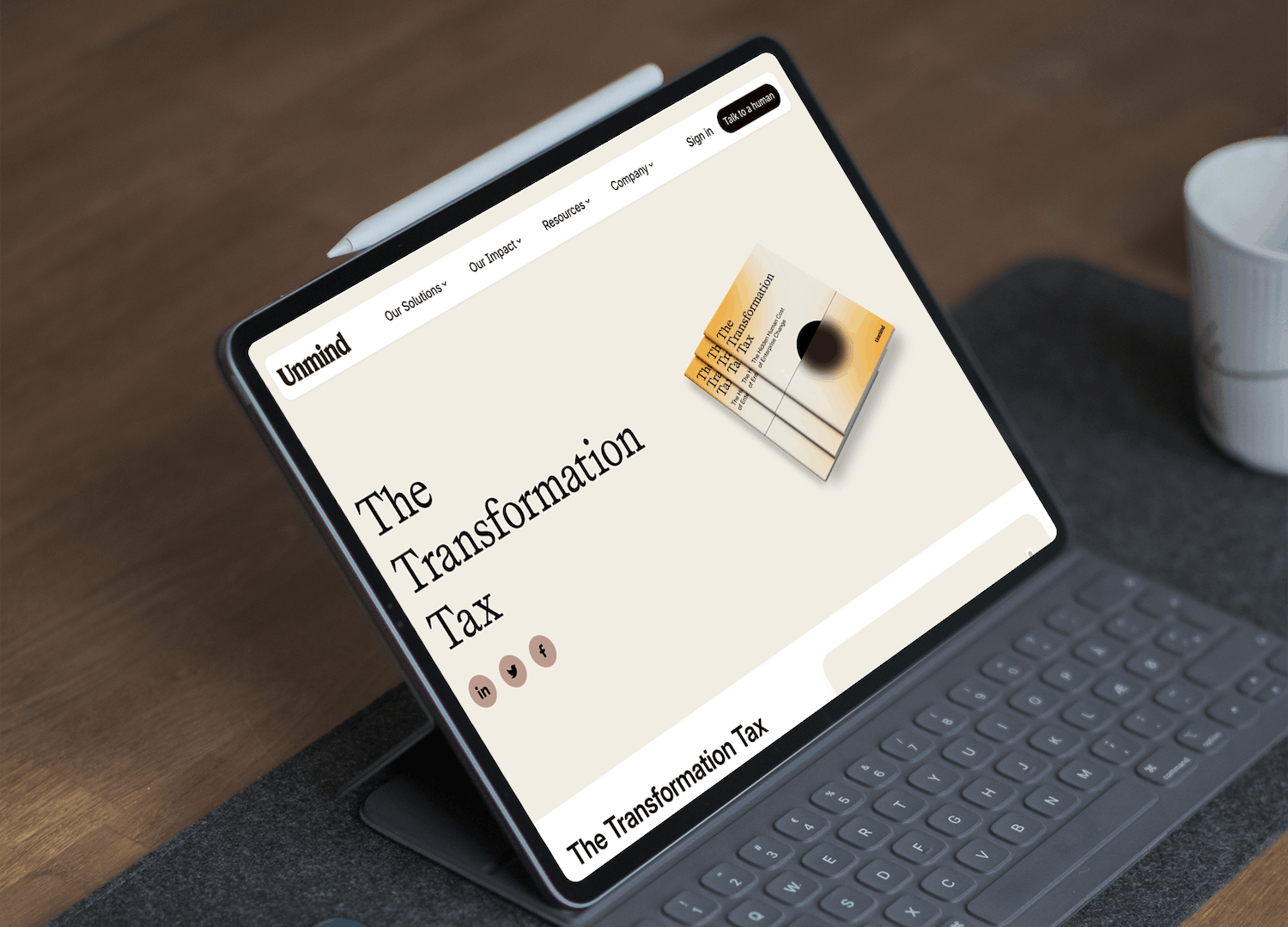
A groundbreaking report released in partnership with Unmind, titled "Transformation Tax: The Hidden Human Cost of Enterprise Change," reveals a critical shift in the modern workplace: change is no longer a discrete project but a perpetual state. This continuous flux, if not managed with meticulous care and strategic foresight, is exacting a significant human toll on employees, leading to widespread burnout, disengagement, and a decline in overall organizational health. The report, which synthesizes perspectives from Chief Human Resources Officers (CHROs) and cutting-edge research, paints a stark picture of the challenges facing businesses striving to adapt and thrive in an era of unprecedented disruption.
The core thesis of the report is that the relentless pace of organizational transformation, driven by technological advancements, market volatility, and evolving consumer demands, has created a persistent undercurrent of stress and exhaustion within the workforce. This "transformation tax" manifests in subtle yet damaging ways, impacting employee morale, productivity, and loyalty over the long term. The report argues that organizations have historically underestimated the cumulative impact of these ongoing changes, often viewing them as temporary disruptions rather than a fundamental alteration of the work environment.
The Evolving Landscape of Workplace Transformation
The concept of organizational transformation has evolved dramatically over the past few decades. Once characterized by distinct, large-scale projects with defined beginnings and ends – such as mergers, acquisitions, or major system implementations – transformation is now an ingrained operational reality. The digital revolution, the rise of agile methodologies, and the increasing speed of innovation have necessitated a more fluid and continuous approach to change management. Businesses are no longer undergoing transformation; they are living within it.
This shift has profound implications for human capital. Unlike traditional projects where employees might temporarily increase their workload or adapt to new processes, the current environment demands constant adaptation. This sustained pressure, coupled with potential uncertainties about the future, can erode psychological safety and create a sense of perpetual unease. The "Transformation Tax" report directly addresses this by highlighting that over half of employees now report feeling fatigued by ongoing change, a sentiment that directly correlates with decreased productivity and engagement.
The Human Cost of Unmanaged Change
The report meticulously details the tangible consequences of this unmanaged human cost. When organizations fail to adequately support their employees through periods of transformation, the repercussions are far-reaching. Stress levels escalate, leading to increased instances of burnout. Disengagement becomes more prevalent as employees feel disconnected from their work and the organization’s mission. Loyalty erodes as individuals seek more stable and supportive work environments.
This "transformation tax" is not merely an abstract concept; it has measurable impacts on key business metrics. Lower morale translates to reduced discretionary effort and a decline in creativity. Decreased productivity directly affects output and profitability. Diminished loyalty results in higher employee turnover, incurring significant recruitment and training costs. The report underscores that these are not isolated incidents but systemic issues arising from a failure to prioritize the human element during periods of significant organizational upheaval.
The Critical Role of Communication and Trust
A central theme emerging from the research is the paramount importance of transparent and consistent communication during times of change. The report highlights a striking statistic: employees are 80% more likely to trust their organization when communication is transparent. Trust, in this context, is not a nicety but a fundamental requirement for successful alignment and execution of strategic initiatives. When employees feel informed, understood, and privy to the rationale behind changes, they are more likely to embrace them and contribute positively.
Conversely, a lack of clear communication breeds uncertainty and speculation, which can quickly devolve into misinformation and anxiety. During transformation, where the landscape is inherently fluid, consistent updates, acknowledgments of uncertainties, and repeated reinforcement of key messages across multiple channels are essential. This extends to equipping managers with the necessary tools and talking points to have meaningful one-on-one conversations, ensuring that employees receive consistent and accurate information, not just through impersonal all-hands meetings.
Empowering Managers as Agents of Change
The report strongly advocates for empowering managers as the primary conduit for navigating change within their teams. The manager-employee relationship is identified as a leading driver of both productivity and employee wellbeing. During periods of transformation, this connection becomes even more critical. Managers are on the front lines, witnessing firsthand the impact of change on their team members and are best positioned to offer support, clarify priorities, and recognize progress.
To effectively fulfill this role, managers require dedicated time, comprehensive training, and appropriate tools. This includes fostering regular check-ins, helping teams set realistic priorities amidst evolving demands, and integrating quick recognition habits into weekly rhythms. Normalizing praise and celebrating incremental progress can significantly bolster morale and reinforce a sense of forward momentum, even when larger organizational shifts are underway.
Prioritizing Mental Health as Foundational Infrastructure
The "Transformation Tax" report argues for a fundamental shift in how organizations approach mental health, moving it from a peripheral "side program" to an integral part of their operational infrastructure. This means centralizing wellbeing resources, making them easily accessible and confidential for all employees. Furthermore, it calls for leadership to actively participate in destigmatizing mental health challenges by sharing their own experiences. This vulnerability can create a more open and supportive environment, encouraging individuals to seek help when needed.
Crucially, the report emphasizes that burnout is not solely an individual resilience issue but an organizational one. It necessitates systemic solutions that address workload management, clarity of roles and responsibilities, and adequate resourcing. When these foundational elements are mismanaged during transformation, the burden disproportionately falls on individuals, leading to unsustainable levels of stress and exhaustion.
Navigating the AI Revolution with Human Readiness
The accelerating integration of Artificial Intelligence (AI) into the workplace presents both immense opportunities and unique challenges, particularly within the context of ongoing transformation. The report acknowledges that a majority of employees report productivity gains through AI adoption. However, it concurrently highlights critical risks, including algorithmic bias, potential for errors, and the imperative to safeguard sensitive data.
To harness the benefits of AI while mitigating its risks, organizations must prioritize "people readiness." This involves upskilling the workforce to effectively utilize AI tools while simultaneously establishing clear governance and ethical guardrails. The strategic deployment of AI should aim to augment human capabilities and free employees to focus on higher-value, human-centered tasks that require creativity, critical thinking, and emotional intelligence.
Reinforcing Belonging Through Recognition and Purpose
In an environment characterized by constant change, fostering a sense of belonging is more vital than ever. The report suggests that strategic, values-based recognition is a powerful tool for achieving this. By linking day-to-day achievements to the broader organizational mission, recognition programs can help teams stay focused on what constitutes success, even amidst shifting priorities.
Small, frequent moments of appreciation are highlighted as particularly effective in boosting wellbeing and maintaining team cohesion. The report advocates for making recognition accessible across different locations and roles, ensuring that all employees feel seen, valued, and connected to the collective effort. This inclusivity is paramount in preventing feelings of isolation or marginalization that can arise during periods of significant organizational flux.
The Imperative for Sustainable Transformation
The findings of Unmind’s "Transformation Tax" report serve as a compelling call to action for leaders across all industries. Sustainable transformation, the report concludes, is inextricably linked to placing people at the forefront of every strategic decision. When organizations commit to open communication, equip their managers effectively, consistently recognize progress, and embed wellbeing as a non-negotiable priority, they foster an environment where performance and humanity can advance in tandem, rather than in opposition.
This approach, the report posits, is the most effective strategy for mitigating the "transformation tax" and cultivating a resilient, high-performing culture that is poised for success not just in the immediate future, but for the long term. The implications are clear: organizations that fail to address the human cost of change risk not only alienating their workforce but also undermining their own long-term strategic objectives and competitive advantage.
Looking Ahead: A New Paradigm for Change Management
The insights presented in the "Transformation Tax" report signal a potential paradigm shift in how organizations approach change. The traditional view of transformation as a project with a definable endpoint is becoming increasingly obsolete. Instead, businesses must embrace a continuous improvement mindset that integrates human wellbeing into the very fabric of their operational strategies. This requires a fundamental re-evaluation of leadership priorities, communication protocols, and the allocation of resources.
The growing preference among employees for employers who prioritize wellbeing over incremental salary increases, as indicated by the report, further underscores the urgency of this shift. As the workforce demographics evolve and employee expectations continue to rise, organizations that fail to adapt their approach to change management will find themselves at a significant disadvantage in attracting and retaining top talent.
The report’s practical recommendations offer a roadmap for HR professionals and business leaders seeking to navigate this complex landscape. By focusing on transparent communication, manager enablement, accessible wellbeing resources, thoughtful AI integration, and pervasive recognition, organizations can not only alleviate the negative impacts of continuous change but also leverage it as an opportunity to build stronger, more engaged, and ultimately, more successful enterprises. The "Transformation Tax" is a stark reminder that true progress is achieved when human capital is not merely a cost to be managed, but a vital asset to be nurtured and empowered.