
The career site has unequivocally transformed from a mere digital brochure into the quintessential first touchpoint for a candidate with an employer’s brand, a critical determinant in attracting and securing top-tier talent in an increasingly competitive global market. In 2026, the landscape of talent acquisition is defined by heightened candidate expectations, technological advancements, and a persistent demand for flexible work environments, making a well-designed, intuitive, and personalized career portal a strategic asset rather rather than a mere recruitment tool. This evolution underscores a significant shift in how companies must present themselves to prospective employees, moving beyond generic job postings to immersive brand experiences.
The Evolving Candidate Journey and Rising Expectations
The contemporary job seeker approaches the application process with a distinct set of expectations, largely shaped by their daily interactions with leading consumer-facing digital platforms. Research from Employ’s 2025 Job Seeker Nation Report starkly illustrates this shift, revealing that a staggering 71% of job seekers anticipate an application process to conclude in under 30 minutes. The report further highlights a critical pain point: 35% of candidates will abandon an application entirely if they perceive it to be excessively long or overly complicated. This data points to a direct correlation between application friction and the loss of potentially highly qualified talent. A clunky, difficult-to-navigate career site, therefore, no longer merely frustrates candidates; it actively drives them away, representing a tangible cost to the organization in terms of missed opportunities and a diminished talent pipeline. The modern candidate expects efficiency, clarity, and a seamless digital journey, mirroring the convenience they experience with e-commerce giants and streaming services.
Defining Excellence: Key Criteria for a Great Career Site in 2026
While foundational elements such as strong branding, compelling headlines, authentic storytelling, an intuitive job search user experience (UX), a clear Employee Value Proposition (EVP), and attractive perks remain vital, 2026 introduces several non-negotiable factors that distinguish leading career sites. These include advanced personalization driven by artificial intelligence, a truly mobile-first experience, and unambiguous communication regarding hybrid and remote work options. These elements are not merely enhancements; they are core expectations that significantly influence a candidate’s decision to apply.
The Imperative of AI and Hyper-Personalization
Candidates in 2026 expect the same level of personalized experience on a career site that they receive from platforms like Netflix or Amazon. This extends far beyond simple chatbots; it encompasses sophisticated job matching algorithms, dynamic content recommendations tailored to individual profiles, and intelligent candidate journeys that adapt in real-time. These AI-powered features aim to make the candidate feel that the site was specifically curated for their aspirations and skills, rather than being a generic, one-size-fits-all job board. However, the industry still faces significant challenges in fully leveraging this technology. Phenom’s State of Candidate Experience: 2025 Benchmarks Report revealed that a concerning 87% of Fortune 500 employers failed to effectively utilize AI and automation to hyper-personalize their career sites. This significant gap indicates that many large organizations are lagging in meeting modern candidate expectations, leaving a vast opportunity for those who can genuinely implement these features. The ability to offer a modern career site experience, one that feels bespoke and anticipates a candidate’s needs, is a crucial differentiator in the battle for top talent.
Mobile-First Framing: Beyond Responsiveness
The concept of "mobile-first" in 2026 transcends simply having a responsive website layout. Candidates now demand the capability to search, apply, and follow up on their applications entirely from their smartphones or tablets, without encountering any friction. The new benchmark for a superior mobile experience dictates that an application should take less than three minutes to complete, forms should auto-fill seamlessly, and there should be no jarring handoffs to third-party Applicant Tracking Systems (ATS) with disparate user interfaces. This seamless experience is particularly critical for hourly workers and those in retail or on-site roles, who frequently rely on mobile devices for their job searches and applications. A cumbersome mobile experience directly translates into a significant loss of applicants, highlighting the economic impact of neglecting this fundamental aspect of digital recruitment. With global mobile internet usage consistently rising, providing a flawless mobile application experience is no longer optional but a baseline requirement for any effective talent acquisition strategy.
Hybrid and Remote Work: A Foundational Expectation
In 2026, the availability of hybrid or remote work options has evolved into a baseline expectation that candidates actively screen for before even considering an application. Companies whose career sites fail to explicitly disclose flexible work arrangements risk losing high-caliber candidates to competitors who are more transparent and accommodating. This trend is particularly pronounced among Gen Z candidates, who are not only seeking flexible work but also meticulously scrutinize company social media channels and career sites for employee feedback and insights into company culture. Their decision-making process is deeply influenced by an organization’s commitment to work-life balance and a progressive work environment. A robust career site must therefore prominently feature its approach to flexible work, integrating it into the EVP and overall brand narrative.
Exemplary Career Sites: Benchmarking Best Practices
Several industry leaders have successfully integrated these modern criteria into their career sites, setting benchmarks for others to emulate. While the original content provides images and links, here we elaborate on how these companies likely embody the discussed principles, based on common best practices for each:
- Shopify: Renowned for its innovation in e-commerce, Shopify’s career site likely mirrors its product design philosophy: clean, intuitive, and user-centric. One can infer a strong emphasis on a seamless mobile application experience, potentially leveraging AI for personalized job recommendations and content that highlights its dynamic, entrepreneurial culture. Their site probably showcases employee testimonials and diverse career paths effectively.
- Babbel: As a language learning platform, Babbel’s career site would logically prioritize clarity, accessibility, and a global perspective. It likely features engaging multimedia, perhaps videos of diverse employees sharing their experiences, and clearly outlines international opportunities and flexible work policies. Personalization might involve recommending roles based on language proficiency or desired location.
- Frontier Airlines: For an airline, safety, teamwork, and customer service are paramount. Frontier’s career site likely emphasizes these values through compelling visual storytelling, showcasing a vibrant workplace culture. Given the nature of airline operations, their site would need to offer a highly efficient mobile application process for a diverse range of roles, from pilots to ground staff, potentially using location-based services for job matching.
- L’Oréal: A global beauty giant, L’Oréal’s career site would be expected to exude creativity, diversity, and global impact. It likely features sophisticated branding, rich storytelling about career growth and innovation, and a strong focus on its commitment to inclusion. Their use of AI might extend to personalized content showcasing specific brand initiatives or career tracks relevant to a candidate’s interests.
- Canva: As a design platform, Canva’s career site is undoubtedly visually stunning and highly engaging. It would likely prioritize an intuitive user experience, showcasing its vibrant company culture through employee-generated content and transparent communication about remote-first policies. Their site probably leverages AI to connect candidates with roles that align with their creative skills and interests.
- Spotify: A leader in audio streaming, Spotify’s career site would be expected to be dynamic, innovative, and reflective of its creative and tech-driven culture. It likely uses interactive elements, employee spotlights, and clear communication about its flexible work arrangements. Personalization could involve recommending roles based on a candidate’s skills and their demonstrated passion for music or technology.
- HubSpot: Known for its inbound marketing and sales software, HubSpot’s career site likely exemplifies its "Culture Code" – transparency, empathy, and growth. It would feature rich content about its values, comprehensive benefits, and a strong emphasis on professional development. Its AI capabilities might provide personalized career advice or content related to specific growth areas within the company.
- Marriott: A global hospitality leader, Marriott’s career site would focus on service, growth opportunities, and a diverse global workforce. It likely uses aspirational imagery and storytelling to highlight the diverse career paths available within the organization. For a company with numerous hourly and frontline roles, an exceptionally smooth and quick mobile application process would be crucial, potentially offering applications in multiple languages.
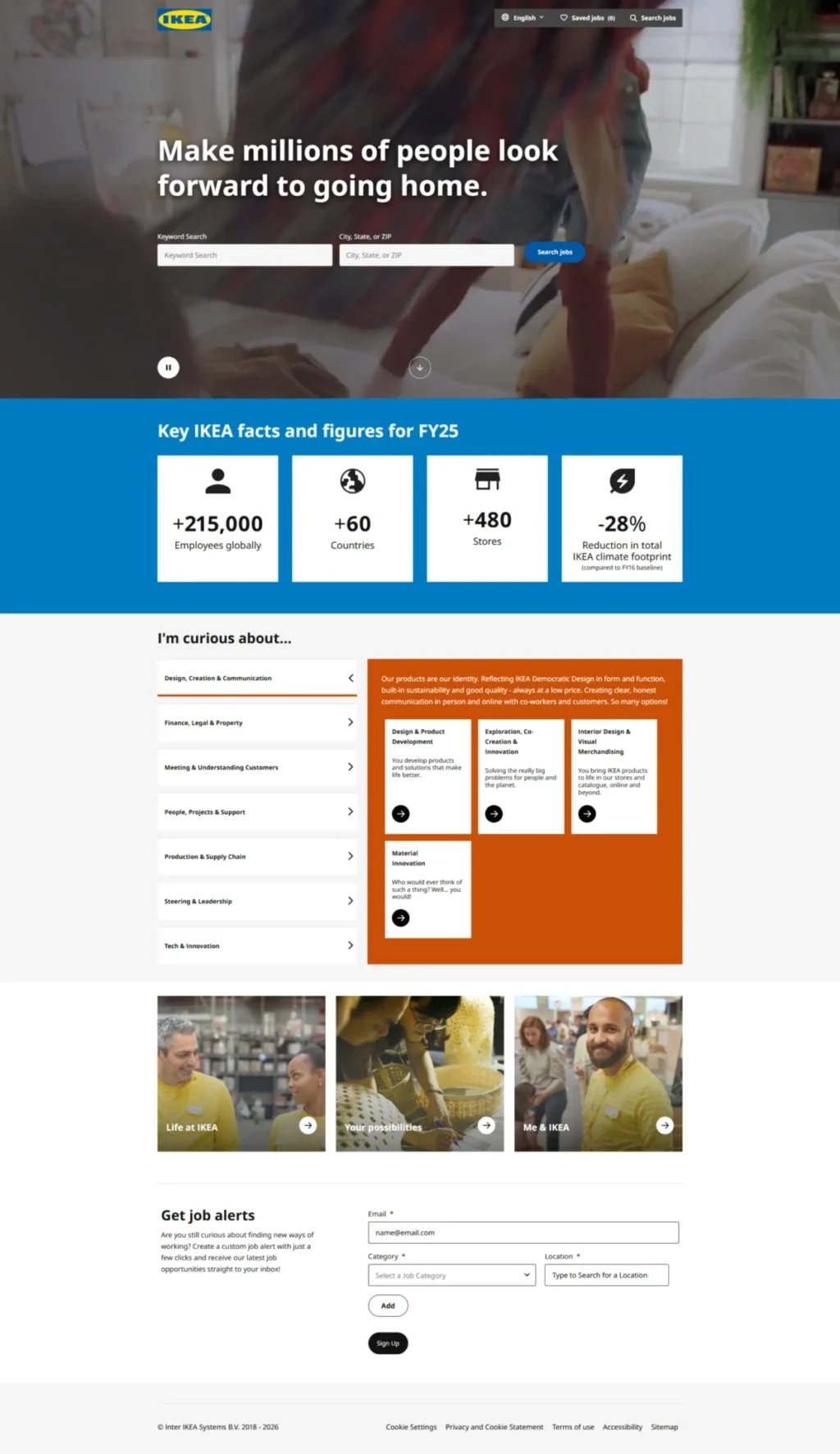
- Ikea: The Swedish furniture giant’s career site would likely emphasize its unique culture, sustainability efforts, and global reach. It would feature clear visuals, testimonials from employees worldwide, and highlight opportunities for growth within a values-driven organization. Ease of navigation and a mobile-friendly application process would be essential for reaching a broad talent pool across its retail operations.
- CVS Health: As a major healthcare provider, CVS Health’s career site would focus on purpose, community impact, and career development within a vital industry. It likely provides clear information on benefits, training programs, and the diverse roles available across its pharmacy, retail, and healthcare services. A streamlined mobile application and clear communication about work flexibility would be critical for attracting healthcare professionals.
Strategic Takeaways for Your Own Career Site
For organizations looking to elevate their talent acquisition efforts, there are several key actionable insights to "steal" from these industry leaders and the evolving candidate landscape:
- Streamline the Application Process: Ruthlessly optimize the application flow. Aim for a completion time under 3 minutes, implement auto-fill features, and eliminate any jarring transitions to external ATS systems. Every click saved is a potential candidate gained.
- Embrace Hyper-Personalization: Move beyond generic content. Invest in AI-powered tools for job matching, content recommendations, and dynamic candidate journeys. Make candidates feel seen and understood.
- Prioritize Mobile-First Design: Design for mobile devices first, ensuring a flawless experience from job search to application submission and follow-up. This is non-negotiable for reaching a broad and diverse candidate pool.
- Clearly Articulate Flexible Work Options: Be transparent about hybrid, remote, and flexible work policies upfront. This is a primary screening factor for many candidates in 2026.
- Amplify Your Employer Value Proposition (EVP): Clearly communicate your company culture, values, benefits, and growth opportunities. Use authentic storytelling, employee testimonials, and engaging multimedia (videos, infographics) to bring your brand to life.
- Ensure Accessibility: Design your site to be accessible to all candidates, including those with disabilities, adhering to WCAG guidelines. This broadens your talent pool and demonstrates inclusivity.
- Leverage Data Analytics: Continuously monitor site performance, candidate drop-off points, and conversion rates. Use data to identify areas for improvement and optimize the candidate experience.
- Integrate Social Proof: Feature employee stories, testimonials, and links to your social media channels where candidates can explore company culture and employee feedback.
- Proactive Engagement: Implement features like talent communities or email subscriptions to keep interested candidates engaged even if a suitable role isn’t immediately available.
Broader Impact and Implications
The stakes for career site excellence have never been higher. A strategically developed and continuously optimized career site directly impacts an organization’s ability to attract, engage, and convert high-quality candidates, ultimately bolstering its competitive advantage in the talent market. Companies that fail to adapt risk not only losing out on top talent but also damaging their employer brand reputation, which can have long-term repercussions on recruitment costs and overall business performance. Conversely, those that invest in a modern, candidate-centric career site are poised to build stronger, more diverse workforces, foster innovation, and drive sustainable growth. The evolution of the career site mirrors the broader digital transformation within HR, where technology and user experience are paramount to organizational success.
Conclusion
In 2026, the career site stands as a strategic pillar of any robust talent acquisition strategy. It is the digital storefront where an organization’s employer brand comes to life, dictating whether top talent chooses to engage or move on. By embracing personalization, prioritizing mobile experience, transparently communicating flexible work options, and continuously optimizing for candidate needs, companies can transform their career sites into powerful engines for talent attraction and retention. The investment in an exceptional career site is not merely an IT expenditure; it is an investment in the future workforce and the sustained success of the enterprise.
May 20, 2026 by Gem Siocon in Company Career Site
Shout Outs:
2025 Job Seeker Nation Report (by Employ)
State of Candidate Experience: 2025 Benchmarks Report (by Phenom)






