Employee service awards, once synonymous with a simple gold watch, a handshake, and polite applause, are undergoing a profound transformation. What was traditionally a perfunctory nod to tenure is now recognized as a critical strategic lever for fostering engagement, bolstering retention, and shaping organizational culture in an increasingly dynamic and competitive talent landscape. The passive gestures of yesteryear are proving insufficient for a modern workforce that actively seeks deeper meaning, genuine appreciation, and a tangible sense of being seen, heard, and valued by their employers.
The Evolving Landscape of Work and Recognition
For decades, the standard practice for recognizing employee loyalty involved milestone awards at significant anniversaries—typically 5, 10, 15, or 25 years. These often took the form of generic plaques, pins, or catalog gifts, presented in a formal, top-down manner. While well-intentioned, this traditional model often missed the mark on personalization and timeliness, failing to resonate with the evolving expectations of successive generations entering the workforce. The "gold watch" era, while symbolic of stability, offered little in the way of individualized recognition or ongoing appreciation.
The shift began subtly with the advent of a more mobile workforce and the rise of millennial and Gen Z employees, who prioritize purpose, flexibility, and continuous feedback over hierarchical structures and long-term, static careers. This demographic, now forming the majority of the global workforce, demands a more dynamic and personalized employee experience. The COVID-19 pandemic further accelerated this transformation, forcing organizations to re-evaluate their approaches to employee well-being, connection, and recognition in remote and hybrid work environments. The "Great Resignation" and ongoing talent shortages have underscored the urgency for companies to invest genuinely in employee appreciation as a core component of their talent strategy.
Statistical Imperatives: The Cost of Disconnection
The need for a reimagined approach to service awards is not merely anecdotal; it is strongly supported by compelling data. According to the Achievers Workforce Institute (AWI), a stark reality confronts many organizations: only one in four employees reports feeling appreciated at work. This pervasive lack of recognition is not a minor inconvenience but a significant contributor to broader organizational challenges. The AWI further reveals that more than half of the current workforce is actively considering leaving their current employer. This alarming statistic points not just to a retention problem, but fundamentally, to a widespread recognition deficit.
The financial implications of this disengagement are substantial. Research by Gallup consistently shows that highly engaged teams exhibit 21% greater profitability and 17% higher productivity. Conversely, employee turnover carries significant costs, often estimated to be between 50% and 200% of an employee’s annual salary, depending on the role and seniority. These costs encompass recruitment, onboarding, training, and the loss of institutional knowledge and productivity during the transition period. An absence of effective recognition directly contributes to this churn, turning a "nice-to-have" into a strategic imperative.
Defining the Modern Service Award: Beyond Tenure
In contemporary workplaces, an employee service award transcends its historical definition as merely a structured form of recognition tied to milestone anniversaries like 1, 5, 10, or 25 years. Today, it represents a pivotal opportunity to acknowledge not just the duration of an employee’s tenure, but the profound impact they have made, their continuous contributions, and how their individual efforts align with and advance the organization’s overarching purpose. It’s about celebrating the journey, the growth, and the personal investment an individual has made.
High-impact organizations are redefining service awards as an integral component of a comprehensive recognition strategy. This modern approach aims to reinforce company culture, strengthen emotional connections among employees, and celebrate the unique individual behind each milestone. This necessitates moving beyond generic gestures and crafting recognition experiences that are timely, deeply personal, and genuinely memorable—moments that employees not only cherish but are inspired to share.
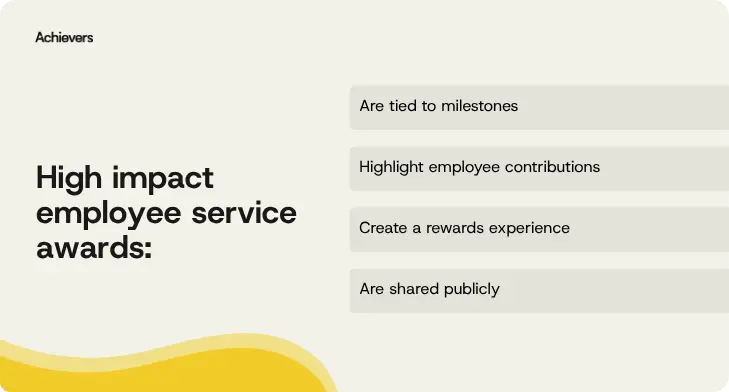
Key pillars of a high-impact program typically include:
- Personalization and Choice: Moving away from one-size-fits-all gifts towards options that resonate with individual preferences and life stages. This might include experiential rewards, professional development opportunities, or flexible gift cards.
- Timeliness and Frequency: Recognizing milestones more frequently, not just at multi-year intervals, and ensuring recognition moments occur promptly after the anniversary. This includes celebrating early career milestones (1, 2, 3 years) as much as long-term ones.
- Alignment with Company Values: Tying recognition directly to demonstrated behaviors that embody the organization’s core values, making the awards a living testament to the culture.
- Leadership Buy-in and Involvement: Ensuring that leaders at all levels actively participate in the recognition process, delivering personalized messages and making the celebration feel authentic and important.
- Peer-to-Peer Recognition Integration: Empowering colleagues to participate in celebrating milestones, fostering a broader culture of appreciation and communal acknowledgement.
- Visibility and Public Celebration: Creating opportunities for public recognition, whether through internal communication channels, team meetings, or company-wide events, to amplify the message of appreciation.
- Experiential Elements: Incorporating unique experiences that create lasting memories, such as a sabbatical, a bespoke training course, or a charitable donation in the employee’s name.
When these elements are seamlessly integrated, service awards transcend a simple one-time gesture, evolving into powerful moments of connection. These are the instances where employees genuinely feel valued and seen, driving sustained engagement and significantly improving retention rates.
The Tangible Business Impact: ROI of Recognition
Service awards, when strategically executed, play a unique and vital role within a holistic recognition framework. While daily, informal recognition reinforces positive behaviors in real-time, service awards create designated "milestone moments." These are invaluable opportunities for employees to pause, reflect on their journey, and reconnect with the cumulative impact of their contributions over time. In an era where feelings of appreciation and overall engagement are on the decline, the significance of these structured moments cannot be overstated.
These awards contribute profoundly to building organizational continuity and enhancing the overall employee experience. They signal that recognition is not arbitrary or reactive, but rather an intentional, consistent, and deeply ingrained aspect of the company culture. At their most effective, modern service awards achieve far more than simply marking time served. They:
- Boost Engagement and Morale: Employees who feel genuinely appreciated are significantly more engaged in their work. AWI data indicates that when employees feel valued, the positive effects ripple throughout the organization, leading to a 4x increase in intent to stay, a 3x higher sense of connection to their team, and a 3x increase in perceived productivity. This enhanced morale creates a more positive and collaborative work environment.
- Drive Retention and Reduce Turnover Costs: The direct correlation between recognition and retention is undeniable. Employees who feel appreciated are 17 times more likely to envision a long-term future with their current organization. This directly mitigates turnover risk, saving companies substantial recruitment and training costs. By anchoring recognition to meaningful milestones, service awards reinforce a message of long-term value, encouraging employees to stay.
- Cultivate a Stronger Organizational Culture and Employer Brand: Thoughtfully designed service awards reinforce company values and demonstrate a tangible commitment to employee well-being and growth. This strengthens the psychological contract between employer and employee, fostering a sense of loyalty and belonging. A robust recognition program also enhances the company’s employer brand, making it more attractive to prospective talent and providing a competitive edge in talent acquisition.
- ROI of Recognition: A Strategic Investment: Investing in a high-impact service award program is not an expense but a strategic investment with a measurable return. Beyond the direct savings from reduced turnover, engaged employees are more innovative, productive, and contribute positively to customer satisfaction, all of which drive bottom-line results. According to a SHRM report, organizations with strategic recognition programs experience 28.6% lower frustration levels than those without.
Navigating the Transition: Modern vs. Traditional Paradigms
The evolution of employee expectations has rendered traditional service award approaches increasingly ineffective. What once held symbolic value, such as a generic plaque or a company pin, now often feels impersonal and irrelevant if it lacks genuine meaning or choice. Today’s workforce values experiences, flexibility, and personalization.
Traditional Awards:

- Generic and Impersonal: Often a standard item or plaque with limited personalization.
- Infrequent: Typically awarded at wide intervals (e.g., 5, 10, 15 years), leading to significant gaps in recognition.
- Top-Down: Management-driven, with little input or involvement from peers.
- Tangible Objects: Focus on physical gifts, which may not always align with individual preferences.
- Limited Choice: Employees often have no say in the type of award received.
Modern Awards:
- Timely and Frequent: Recognize a broader range of milestones, including earlier career anniversaries (1, 2, 3 years) and potentially annual acknowledgments.
- Personalized and Choice-Based: Offer employees a selection of meaningful rewards, including experiential options, professional development, or charitable donations.
- Experiential: Focus on creating memorable experiences rather than just acquiring objects.
- Values-Aligned: Directly link the recognition to specific company values or contributions.
- Digitally Enabled: Utilize recognition platforms to streamline nominations, approvals, and delivery, making the process efficient and visible.
- Inclusive: Encourage peer-to-peer recognition and broader team involvement in celebrations.
The distinction between these two approaches extends beyond mere aesthetics; it profoundly impacts their effectiveness. Modern programs, by reflecting contemporary employee values and preferences, drive significantly stronger engagement, participation, and ultimately, greater loyalty.
Crafting an Effective Service Award Program
A truly effective service award program is not an accidental outcome; it is meticulously designed with intention, data-driven insights, and the employee experience at its core.
Strategic Milestone Setting: From Annual to Continuous Appreciation
Traditional programs often left vast gaps between recognition moments, particularly in the crucial early years of an employee’s tenure. Modern programs address this by celebrating:
- Early Milestones: Recognizing the 1-year, 2-year, and 3-year anniversaries is crucial for solidifying early engagement and combating early-career turnover. These initial years are often critical for an employee to feel integrated and valued.
- Consistent Progression: Maintaining regular recognition at 5, 10, 15, and 20+ years, but also considering annual acknowledgments, even if smaller, to reinforce continuous appreciation. The best programs acknowledge that every year of retention is a success worth celebrating.
- Best Practice: Implement an "always-on" recognition platform that allows for both milestone-based and day-to-day appreciation. This ensures that employees receive regular feedback and recognition, with service awards acting as amplified anchor points. Data from Benefits Canada indicates that more than half of employees report being recognized only a few times a year or less, highlighting significant "recognition gaps" that erode engagement.
The Art of Personalization: Making Every Award Count
A one-size-fits-all approach no longer meets employee expectations. Recognition must be relevant, authentic, and connected to the daily work and individual aspirations of the recipient. Employees seek recognition that reflects:
- Their individual contributions: How their specific work has made a difference.
- Their personal growth: Acknowledgment of skill development and career progression.
- Their values and preferences: Gifts or experiences that genuinely resonate with them.
High-impact programs differentiate themselves by: - Leader-Led Recognition: Managers are equipped and encouraged to deliver personalized, heartfelt messages that articulate specific contributions and their impact.
- Choice-Based Rewards: Offering a curated selection of rewards, from experiential vouchers to charitable donations or professional development funds, allowing employees to choose what truly motivates them.
- Connecting to Purpose: Highlighting how the employee’s tenure and contributions align with the company’s mission and values, reinforcing a sense of collective purpose.
Leveraging Technology: The Role of Recognition Platforms
The best service award ideas require robust infrastructure. A dedicated employee service award vendor or platform doesn’t just deliver rewards; it shapes the entire experience. Strong vendors typically provide:
- Flexible Reward Catalogs: Offering a diverse range of global and localized reward options, from gift cards and merchandise to experiential choices.
- Seamless Integration: Compatibility with existing HRIS and other internal systems for streamlined data management.
- Customization and Branding: Ability to brand the recognition experience to reflect company culture and values.
- Reporting and Analytics: Tools to track program engagement, budget allocation, and impact on key metrics.
- User-Friendly Interface: Intuitive platforms for both administrators and employees, ensuring ease of nomination, approval, and redemption.
- Global Capabilities: Support for multi-currency, multi-language, and diverse cultural preferences for international organizations.
Leadership as Catalysts: Championing Appreciation
The tone for recognition is set at the top. When senior leadership visibly champions service award programs, it sends a powerful message throughout the organization. This includes active participation in award presentations, sharing personal anecdotes about recipients, and consistently communicating the value of employee loyalty and contribution.
Implementation Best Practices and Common Pitfalls
Successful implementation of a modern service award program extends far beyond vendor selection. It requires careful planning, consistent execution, and ongoing refinement.
Do:
- Communicate the "Why": Clearly articulate the purpose and benefits of the new program to all employees and leaders.
- Train Leaders: Equip managers with the tools, templates, and training necessary to deliver meaningful and personalized recognition messages.
- Integrate with Culture: Weave service awards into broader cultural initiatives, linking them to company values and mission statements.
- Collect Feedback: Regularly solicit input from employees on what makes recognition feel most impactful and use this data for continuous improvement.
- Promote Visibility: Utilize internal communication channels (intranet, newsletters, team meetings) to highlight award recipients and their contributions.
Don’t:
- Make it an Afterthought: Avoid last-minute, rushed presentations that undermine the significance of the award.
- Use Generic Gifts Exclusively: Limit impersonal gifts that demonstrate a lack of understanding of individual preferences.
- Ignore Feedback: Neglect employee input, which can lead to a program that fails to resonate.
- Rely Solely on HR: Ensure recognition is a shared responsibility across all levels of leadership, not just an HR function.
- Underestimate the Power of Personalization: A generic email or mass announcement falls flat compared to a personalized message from a manager or senior leader.
At its core, a service award program is most effective when it is part of a broader, continuous recognition culture. When appreciation is a regular occurrence, not just reserved for milestone anniversaries, employees consistently feel seen, heard, and valued, fostering a more engaged and resilient workforce.
Future Outlook: The Future of Service Recognition
The evolution of service awards is far from over. Future trends are likely to include:
- Hyper-Personalization and AI-Driven Insights: Leveraging data analytics and AI to suggest highly personalized award options based on employee profiles, career aspirations, and previous recognition patterns.
- Global Consistency and Cultural Nuance: Developing sophisticated platforms that can deliver culturally appropriate and legally compliant recognition programs across diverse international teams while maintaining global equity.
- Integration with Career Development: Linking service awards more directly to career progression, offering mentorship opportunities, executive coaching, or specialized training as part of milestone recognition.
- Immersive Experiences: Exploring virtual reality or augmented reality elements for recognition ceremonies, especially for remote teams, to create a more engaging and memorable experience.
Conclusion: Service Awards as a Cornerstone of Sustainable Talent Strategy
Employee service awards are no longer a mere checkbox on an HR to-do list; they represent a strategic opportunity to translate recognition into tangible business results. In a global landscape characterized by declining employee engagement and persistent pressure on retention, organizations that differentiate themselves are those that prioritize and visibly demonstrate consistent, meaningful appreciation.
By embracing modern principles—personalization, timeliness, choice, and cultural alignment—companies can transform service awards from outdated traditions into powerful drivers of employee connection, cultural reinforcement, and long-term commitment. Platforms like Achievers empower organizations to elevate service awards beyond simple milestones, crafting them into impactful moments that resonate deeply with employees, fostering loyalty, and ultimately building a more engaged, productive, and resilient workforce.