This week, Cornerstone, a titan in the corporate learning technology sector with an estimated annual revenue of $1 billion, marking it approximately four times the size of its competitor Docebo, has unveiled its strategic pivot into the intricate and rapidly evolving landscape of artificial intelligence. This significant reinvention positions the company to address the seismic shifts occurring within the global corporate training and development market, a transformation directly influenced by the advent of generative AI. As the broader HR and learning industries brace for profound changes, as detailed in forthcoming analyses like HR 2030, Cornerstone’s move signals a critical juncture for established players and a potential catalyst for widespread industry disruption.
Cornerstone’s Established Dominance and the Looming AI Disruption
Cornerstone boasts an impressive client roster, serving over 7,000 enterprise customers, including many of the world’s most recognizable brands. The platform currently supports approximately 140 million users globally. While the company’s core revenue streams are derived from its robust Learning Management System (LMS) and Learning Experience Platform (LXP) software, a substantial portion also originates from its integrated talent management suite.
Founded 27 years ago as an e-learning platform provider, Cornerstone was an early pioneer in the "talent-driven learning platform" market. Over its history, the company has demonstrated a remarkable ability to either outpace or strategically acquire nearly every standalone LMS company that emerged in the last quarter-century. The total market for corporate learning and talent management solutions is estimated to be around $30 billion. However, this market is also heavily influenced by major human capital management (HCM) players such as Workday, Oracle, and SAP. Within this competitive arena, Cornerstone has carved out a dominant position, often lauded for its superior functionality compared to many of its peers.
Since its privatization in 2021 for $5.5 billion—a valuation roughly five times its current revenue—Cornerstone has actively pursued strategic acquisitions. These include EdCast, an LXP provider; Skyhive, a specialist in skills and labor market data; and Tailspin, a virtual reality (VR) content developer, alongside several smaller content acquisition firms. Despite its profitability, the company’s market valuation has seen limited growth, a situation attributed in part to a broader market contraction in traditional e-learning segments.

Cornerstone has been proactive in addressing these market dynamics. The company has focused on expanding its sales channels, promoting more comprehensive solution offerings, and enhancing its feature set. However, the perception of its brand as somewhat dated has led some customers to explore alternatives during renewal periods. This phenomenon is not unique to Cornerstone; many established technology platforms face challenges in maintaining customer engagement as newer, more innovative solutions emerge. The current market environment, however, is characterized by unprecedented speed of change, necessitating a more fundamental strategic recalibration. Cornerstone’s leadership team, including Himanshu Palsule, Michael Pawlyszyn, and Vincent Belliveau, are recognized for their extensive experience and execution-driven approach, suggesting a strong foundation for navigating this transition.
The AI Revolution: A Fundamental Shift in Learning Paradigms
The emergence of generative AI, exemplified by the widespread adoption of tools like ChatGPT in the fall of 2022, has marked the beginning of the end for the traditional "e-learning" or "published training content" market. This vast market, estimated to be worth over $400 billion, is undergoing a rapid and fundamental reinvention.
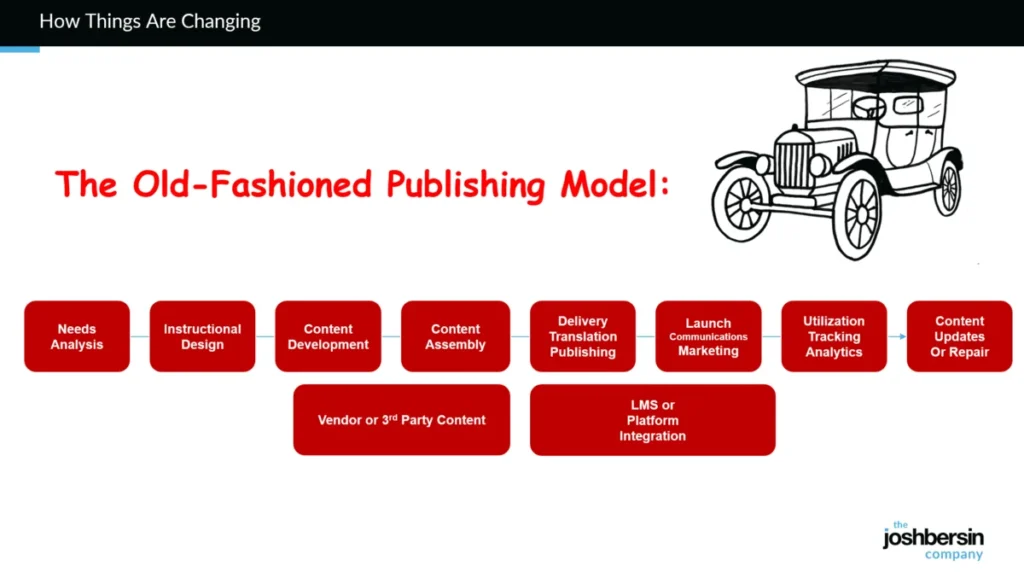
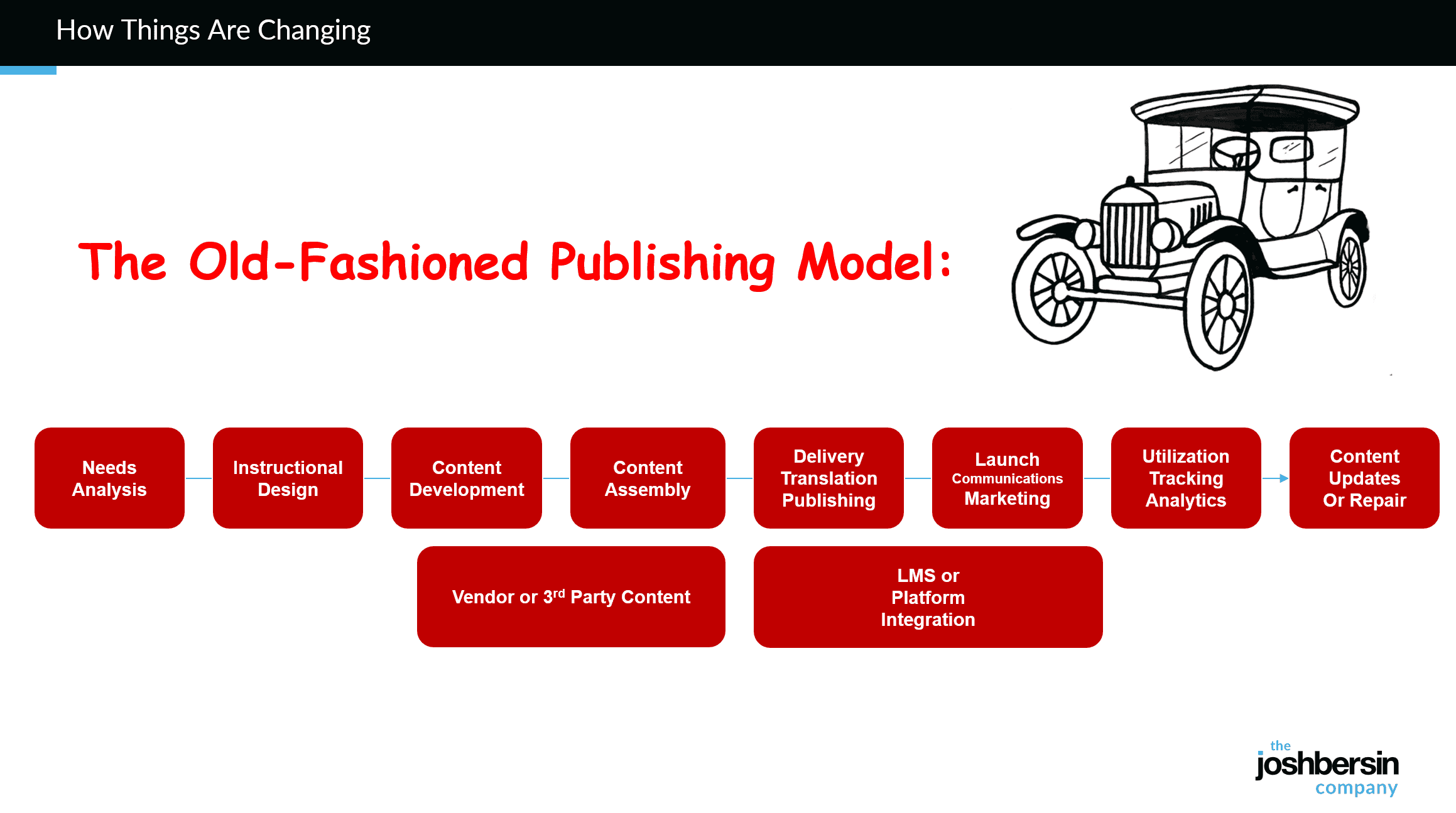
For three decades, the creation of corporate training content has followed a laborious and costly process. Companies have meticulously authored, published, and licensed educational materials, including courses, videos, assessments, and simulations. This content development, often undertaken by instructional designers, graphic artists, and subject matter experts, involved a significant investment of time and resources. Each knowledge domain—whether IT, sales, or leadership development—typically featured hundreds of content providers offering specialized solutions.
The creation of a single "course" was analogous to writing a book: it involved design, content sourcing, audience targeting, and months of development. Once built, content required translation into multiple languages, rigorous testing, and final "publication" into an LMS. This entire ecosystem was largely built upon the 35-year-old SCORM (Sharable Content Object Reference Model) tracking standard, which primarily focused on learner progress and completion metrics.
This established process, which employed millions of learning professionals, is rapidly becoming obsolete. Its inherent slowness, inflexibility for updates, and exorbitant costs are significant drawbacks. For instance, high-quality courses developed by platforms like LinkedIn can cost upwards of $50,000 each. Consequently, content providers, both external and internal L&D departments, often face severe constraints on time and budget, leading to questions about the return on investment for lengthy development cycles.
While the industry has a long history of deep pedagogical and design debates, the current paradigm is being challenged by AI’s ability to generate content with unprecedented speed and efficiency. This is not to suggest that AI-generated content is inherently flawed. On the contrary, AI-authored courses are demonstrating remarkable quality and are continually improving. The development and editing cycle for AI-generated content can be reduced from months to mere days or even hours, allowing for rapid iteration and refinement even if initial outputs are not 100% perfect.
The transformative potential of AI extends far beyond content generation. AI-powered learning experiences enable users to "ask questions" and receive direct answers, rather than passively navigating through static content. This conversational approach transforms a "course" into a dynamic, interactive learning resource, akin to a living expert. Crucially, AI facilitates personalized learning at scale, offering each employee a tailored version of the knowledge or skills they need—a capability that traditional SCORM-compliant materials have struggled to deliver effectively.
Furthermore, AI-powered learning environments can create interconnected knowledge ecosystems. If an employee needs to understand specific safety protocols for handling sulfur dioxide in a refinery, they can simply ask the system, rather than searching for a dedicated "sulfur dioxide safety" course. The AI can instantly access and synthesize information from all relevant learning materials and company data, providing a direct and relevant answer.
This shift fundamentally redefines corporate learning. While traditional learning often focuses on formal "learning," the reality of the modern workplace demands "enablement." Employees spend the vast majority of their day working, requiring immediate access to information, tips, advice, and knowledge to perform their roles effectively. AI-native learning experiences are exceptionally well-suited to this demand, offering a stark contrast to the limitations of using AI solely to generate SCORM courses.
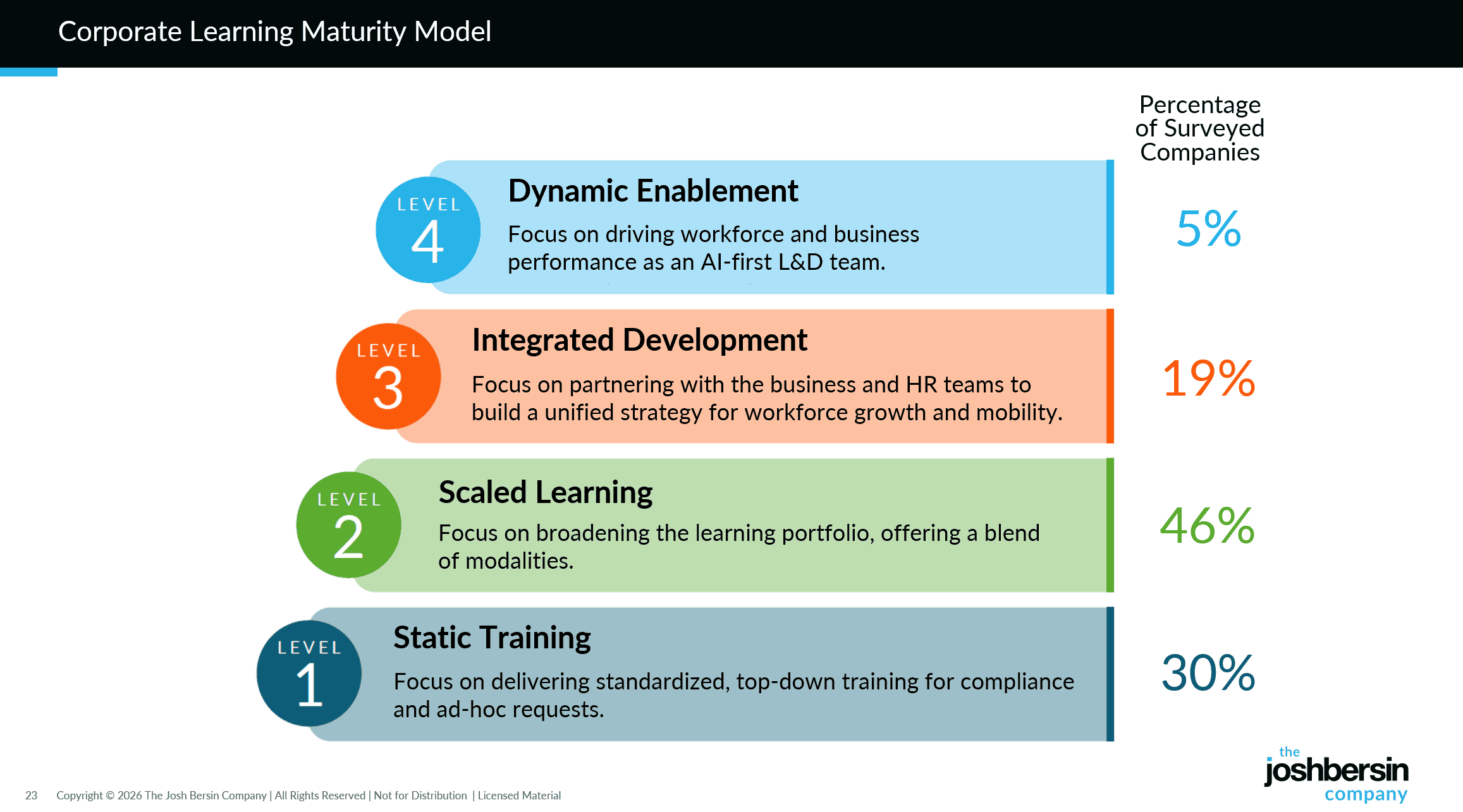
This evolution represents not just a revolution in Learning & Development (L&D) but a broader revolution in business operations. L&D functions are poised to become more streamlined, shifting from content production to a strategic enablement role. A significant portion of L&D staff may transition into business-facing roles, acting as direct enablers of operational success. In many cases, the reinvented L&D department may find its strategic alignment shifting away from traditional HR structures, becoming more integrated with core business functions, with compliance remaining a key HR responsibility. Research, such as the maturity models developed by industry analysts, indicates that companies operating at advanced levels of skill development are significantly more innovative and responsive, delivering content as challenges arise and earning high regard from business leaders.
Cornerstone’s Strategic Response: Workforce AI
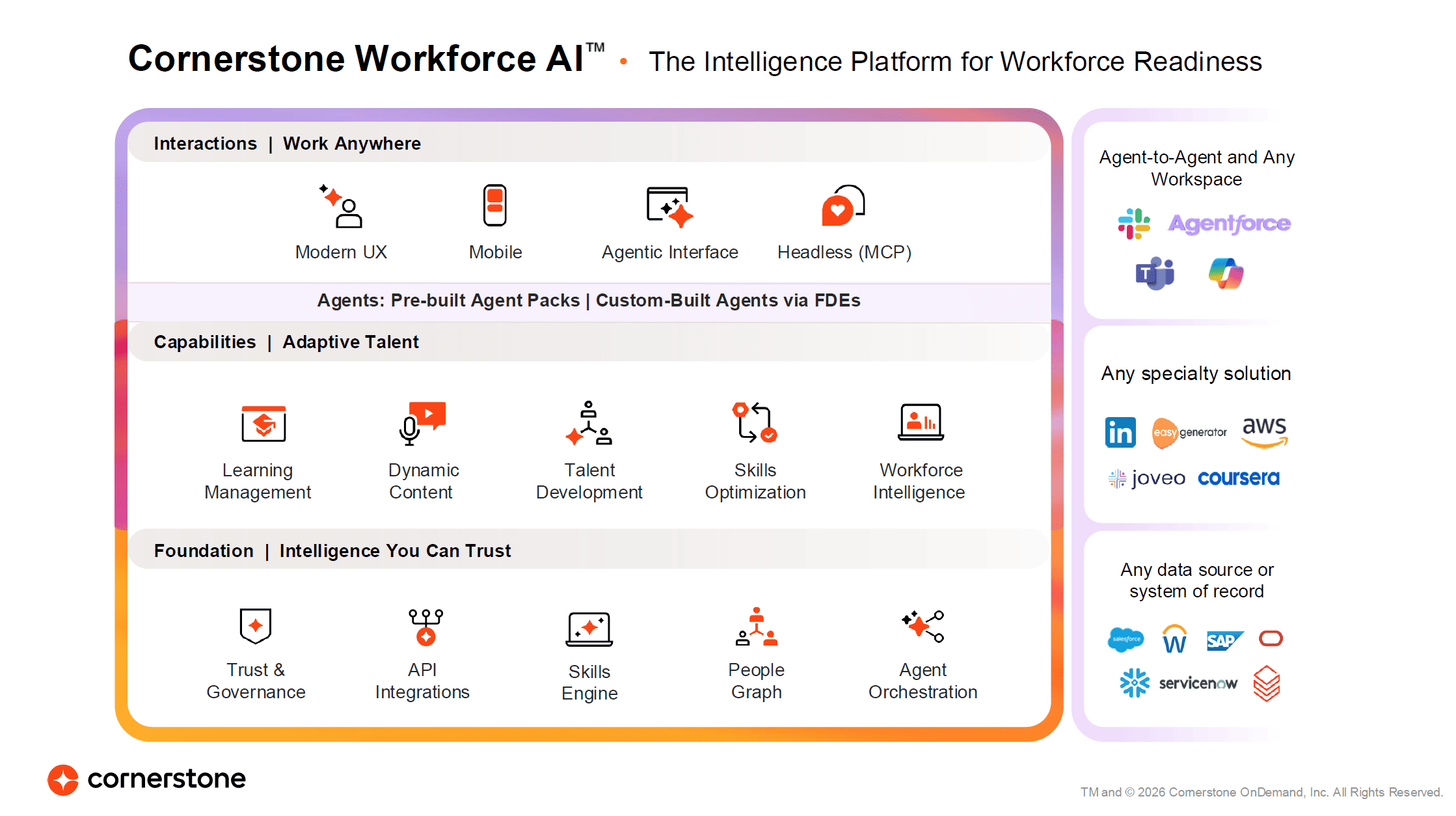
In light of these profound market shifts, Cornerstone has launched "Cornerstone Workforce AI," a comprehensive platform designed to reimagine its offerings for the AI era. This initiative, spearheaded by AI leader Guna Jayaraman, represents a significant reinvention for the company, aiming to integrate advanced AI capabilities into its core learning and talent management solutions.
The Workforce AI platform is architected around several key pillars:
- Skills and Capability Inference: Leveraging AI to understand and map employee skills and competencies.
- Open "People Graph": A foundational data layer designed to integrate information from diverse enterprise systems, including HRIS, LMS, project management tools, and employee engagement surveys. This "People Graph" aims to create a holistic view of each employee’s professional profile.
- Data Services: Incorporation of critical external data, such as labor market intelligence sourced from Skyhive, and the development of pre-built "Readiness Agents" designed to address immediate business challenges.
While some functionalities may still leverage elements of Cornerstone’s existing Galaxy platform, the new AI-powered capabilities are accessible either as standalone solutions or through upgraded license tiers. Early customer feedback from diverse sectors, including wealth management and media, alongside discussions with major technology firms like Cisco, highlights the platform’s potential to drive significant improvements in skills development, employee mobility, organizational redesign, and risk mitigation.
For example, a wealth management firm might utilize Workforce AI to identify skill gaps within its client-facing teams concerning new financial regulations, enabling targeted micro-learning interventions. Similarly, a media company could deploy the platform to facilitate the reskilling of its workforce for emerging digital content formats, enhancing agility and innovation.
While Cornerstone Workforce AI is not yet a fully "AI-native" platform in the same vein as some newer market entrants like Sana, it is rapidly converging towards that ideal. The company has already introduced AI content development tools and administrative agents for its LMS, with AI-native content features being integrated into both its existing and new product environments. The current suite of packaged Agents, while not yet fully customizable by end-users, effectively harnesses the extensive data and intelligence within the Workforce AI platform.
The Broader Market Landscape and Implications
The corporate learning technology market is witnessing the rapid ascent of new players, including Sana, Docebo, Absorb, Uplimit, and Arist, all of whom are building AI-native learning solutions from the ground up. Major AI players like OpenAI are also actively integrating content from established providers like Coursera, while companies like Anthropic are collaborating with enterprises to implement AI-driven learning solutions.
The future trajectory of corporate learning points towards a scenario where every employee possesses a personalized AI agent. These agents, such as Microsoft Copilot or similar future iterations, will possess a deep understanding of an individual’s role, work activities, communications, and digital footprint. By indexing all digital artifacts and communications, these agents can accurately assess an employee’s skills, experiences, strengths, and weaknesses. Augmenting this data with peer feedback and performance reviews further refines this comprehensive "People Graph."
This integrated approach, where a robust People Graph is combined with an AI-native learning platform, empowers AI agents to proactively provide personalized nudges, onboarding plans, or coaching interventions. This marks a significant departure from traditional, often slow, learning interventions such as extensive assessments or external coaching.
The implications for L&D professionals are substantial. The spending on traditional learning tools is projected to decline significantly, with AI budgets poised to absorb much of this investment. This seismic shift poses a direct challenge to companies like Cornerstone, requiring them to adapt swiftly to remain competitive. Moreover, L&D leaders who fail to embrace AI-native solutions risk obsolescence, as their budgets and roles may be questioned in an environment prioritizing immediate, AI-driven enablement. The narrative is shifting from "learning for learning’s sake" to "learning for enablement and business impact."
Cornerstone’s Path Forward
Cornerstone’s strategic dive into AI represents a monumental undertaking. While the management team expresses a degree of caution regarding the transition for existing customers, this move is critical for shaping the future of the market. The company holds a significant opportunity to leverage its established market position and customer base to lead in the AI-driven learning revolution.
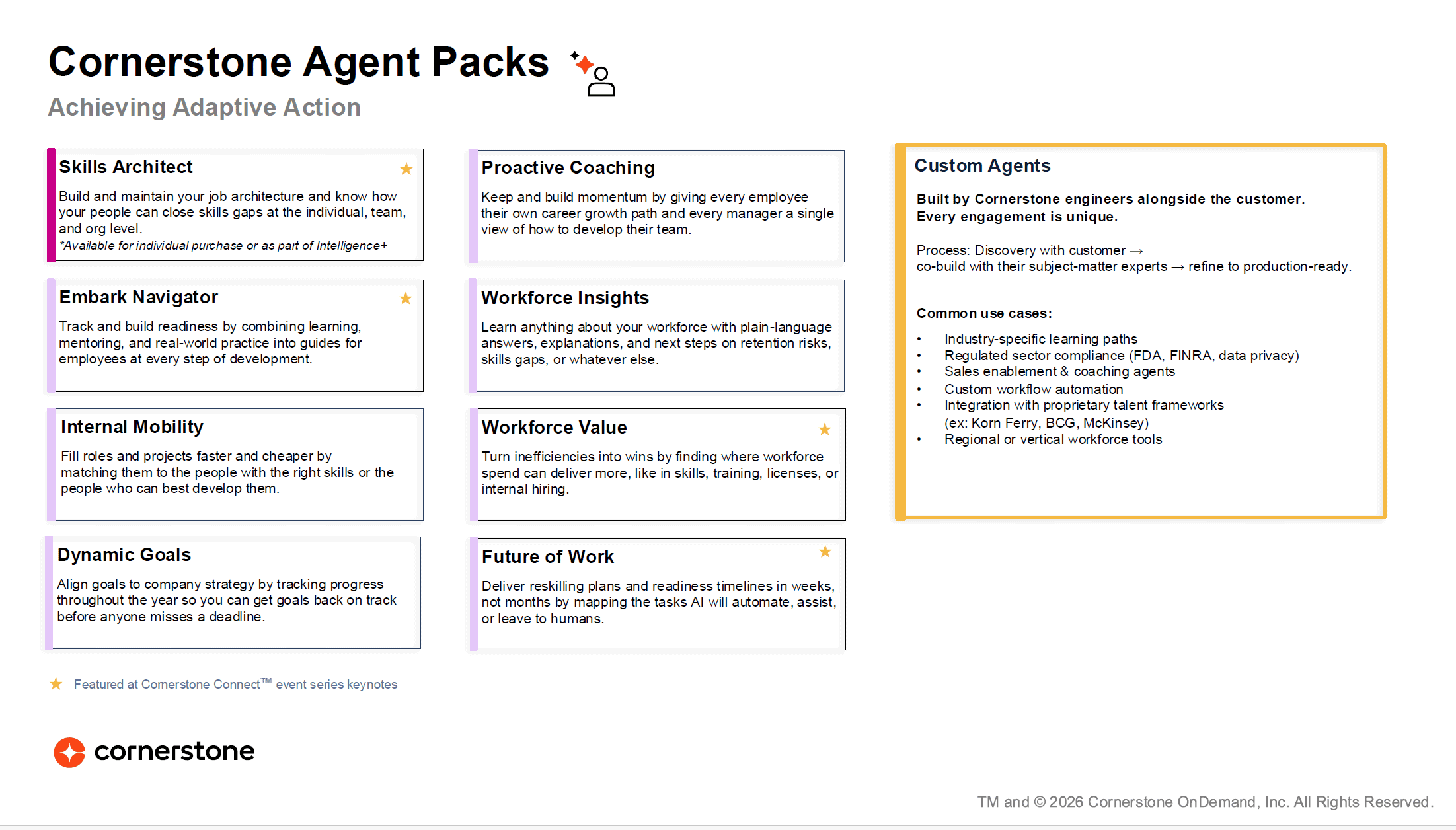
The market is dynamic, with new AI capabilities and solutions emerging daily. Cornerstone’s ability to clearly articulate the value proposition of its Workforce AI platform amidst this frenetic environment will be crucial. The platform’s underlying AI capabilities offer the potential for organizations to fundamentally rethink how they empower their employees, fostering a culture where every individual feels equipped to succeed through personalized, AI-driven support.
The ongoing evolution of HR and corporate learning signifies a profound reinvention. As companies navigate this new era, the integration of AI into learning and development is no longer an option but a necessity for sustained growth and competitive advantage. Cornerstone’s bold move positions it as a key player in this unfolding transformation, with the potential to redefine how organizations cultivate talent and drive business outcomes in the age of artificial intelligence.