
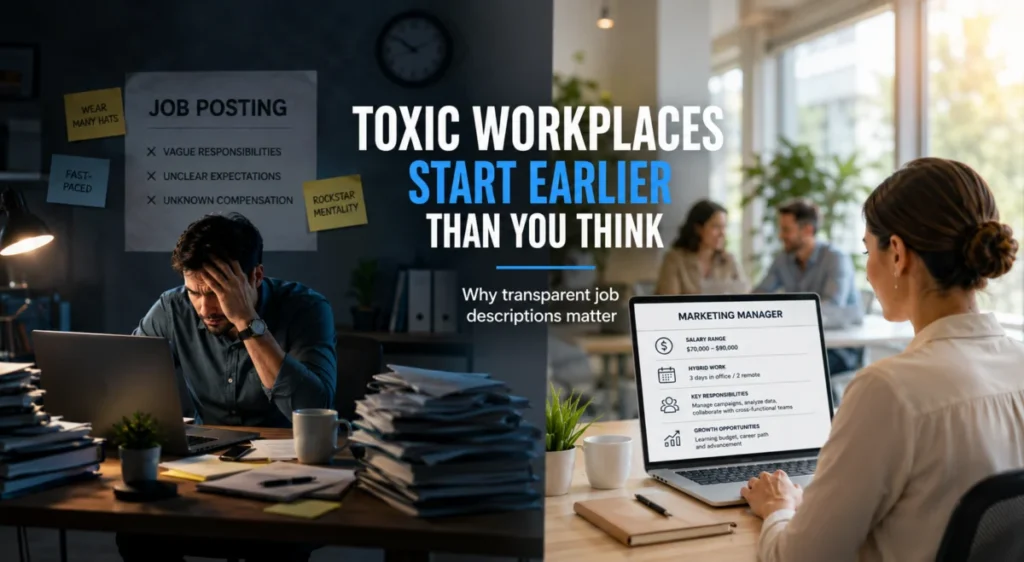
A startling report from Monster’s 2026 State of Workplace Mental Health reveals that a significant 71% of workers admit to remaining in jobs they identify as toxic. While public discourse on workplace toxicity often centers on managerial misconduct or interpersonal dynamics, a deeper examination suggests the root of this pervasive issue frequently lies much earlier in the employment lifecycle: within the job posting itself. The initial portrayal of a role, its responsibilities, and the organizational culture, as communicated in a job description, fundamentally sets the stage for the entire employee experience, often laying the groundwork for disillusionment and a compromised work environment.
The Silent Epidemic of Workplace Toxicity
The findings from Monster are not isolated. They underscore a growing awareness and concern regarding workplace mental health, which has become a critical topic in the wake of global shifts in work patterns and employee expectations. The "Great Resignation" and subsequent "Quiet Quitting" movements have highlighted a fundamental re-evaluation by employees of their relationship with work, prioritizing well-being, authenticity, and work-life balance. Toxic workplaces, characterized by poor communication, lack of accountability, unrealistic demands, and a disregard for employee welfare, contribute significantly to burnout, stress, anxiety, and depression among the workforce.
The economic ramifications of such environments are substantial. High employee turnover, a direct consequence of dissatisfaction, incurs immense costs related to recruitment, onboarding, and lost productivity. A 2019 Gallup study, for instance, estimated that actively disengaged employees cost the U.S. economy alone between $450 billion to $550 billion per year in lost productivity. While these figures predate the most recent reports, the underlying principles remain: a disaffected workforce is an inefficient and costly one. The Monster report’s 71% statistic serves as a stark warning: a vast majority are trapped in environments that are detrimental to their mental health, often due to a profound mismatch between expectation and reality.
The Deceptive Foundation: How Job Descriptions Seed Discontent
While management behavior is a crucial component of workplace toxicity, the problem frequently begins before a new hire even steps through the door. The job description, intended as an accurate blueprint of a role, often morphs into a marketing tool, prioritizing attraction over veracity. This strategic misrepresentation, whether intentional or not, creates a deceptive foundation that inevitably leads to employee dissatisfaction.
CareerPlug’s 2024 Candidate Experience Report provides concrete evidence, indicating that 26% of candidates cited "the role and responsibilities were different from what I expected" as a primary reason for declining a job offer. This early-stage disconnect prevents potentially good fits from joining and signals a fundamental flaw in the recruitment process. For those who do accept, the dissonance can be even more damaging. Employ’s 2025 Job Seeker Nation Report further reinforces this, revealing that 36% of respondents left a job within the first 90 days due to a profound disconnect between the promises made during the interview process and the actual reality of the role. This high rate of early attrition is a clear indicator of systemic issues stemming from inaccurate or misleading initial communications.
Misleading job descriptions manifest in various forms:
- Exaggerated Responsibilities: Inflating the importance or scope of a role, promising opportunities that do not exist, or presenting entry-level positions as highly strategic.
- Omission of Undesirable Tasks: Deliberately leaving out less appealing or more challenging aspects of the job that might deter applicants, leading to a "bait-and-switch" scenario.
- Vague Cultural Promises: Describing a "dynamic," "innovative," or "supportive" culture without providing concrete examples or demonstrating how these values are embodied, often masking a dysfunctional environment.
- Unrealistic Growth Paths: Suggesting rapid career progression or extensive training opportunities that are not actually available or are highly competitive.
- Downplaying Workload and Pressure: Failing to accurately convey the intensity, pace, or volume of work, leading to immediate overwhelm for new hires.
When candidates encounter a role that deviates significantly from what was advertised, the psychological impact can be profound. Feelings of betrayal, disillusionment, and reduced trust in the employer can set in quickly. This initial breach of trust can lead to disengagement, lower morale, and a pervasive sense of being misled, directly contributing to a toxic environment where employees feel undervalued and misunderstood.
A Timeline of Disillusionment: From Application to Attrition
The journey from a misleading job description to a toxic workplace often follows a predictable, albeit unfortunate, chronology:
- Pre-Application Expectations (The Allure): Candidates are drawn in by a job description that highlights attractive responsibilities, a positive culture, and promising career trajectories. They invest time in crafting applications and preparing for interviews based on these idealized portrayals.
- Interview Stage Promises (Reinforced Deception): During interviews, hiring managers and recruiters, consciously or unconsciously, may reinforce these misleading narratives, eager to secure talent. Questions about culture or workload might receive vague or overly positive answers.
- Offer Acceptance (The Blind Leap): Convinced by the consistent messaging, the candidate accepts the offer, often with high hopes for a fulfilling new chapter.
- Onboarding Reality Shock (The Crushing Realization): Within the first days or weeks, the new hire begins to realize the discrepancy. The day-to-day tasks are different, the workload is heavier, the promised support system is absent, or the "dynamic" culture is, in fact, chaotic and unsupportive. This immediate dissonance is a major contributor to the 36% early departure rate highlighted by Employ.
- The 90-Day Departure Window (The Escape): For many, the first 90 days become a critical assessment period. If the reality is too far removed from expectations, resignation often follows, leading to significant costs for the employer and emotional toll on the employee.
- Long-Term Consequences (The Lingering Toxicity): For those who stay, perhaps due to financial necessity or a lack of immediate alternatives (as indicated by Monster’s 71% figure), the ongoing misalignment breeds resentment, disengagement, and a sense of entrapment. This leads to reduced productivity, poor mental health, and the perpetuation of a toxic environment for existing and future employees. The lack of accountability for leadership, as reported by 44% of workers in the Monster study, and the negative consequences for speaking up (35%), further solidify the feeling of helplessness within such environments.
The Business Case for Candor: Why Transparency Pays
While the immediate temptation for employers might be to "sell" a role, the long-term benefits of radical transparency in job descriptions far outweigh any short-term gains. A transparent job description doesn’t just outline duties; it paints a realistic picture of the daily realities, allowing candidates to make truly informed decisions. This approach cultivates trust from the very first interaction, laying a robust foundation for a healthier, more productive, and psychologically safe workplace.
The advantages are multifaceted:
- Reduced Turnover and Associated Costs: By attracting candidates who are a genuine fit for the role and culture, companies drastically reduce the likelihood of early attrition, saving significant resources on recruitment, training, and lost productivity.
- Higher Quality Applicants: Transparency often deters unsuitable candidates, allowing recruiters to focus on individuals who genuinely align with the role’s demands and the company’s true environment.
- Enhanced Employer Brand: Companies known for their honesty and integrity in recruitment build a stronger, more positive employer brand, making them more attractive to top talent in the long run.
- Improved Employee Engagement and Productivity: Employees who feel they were accurately informed from the outset are more likely to be engaged, committed, and productive, as their expectations align with their experiences.
- Fostering Psychological Safety: A clear, honest job description is an early signal of an organization’s commitment to open communication and trust. This foundational trust is crucial for building psychological safety, where employees feel safe to speak up, take risks, and contribute without fear of negative repercussions.
Crafting Clarity: Elements of a Truly Transparent Job Description
To move beyond misleading rhetoric and cultivate transparency, job descriptions must evolve from mere lists of qualifications to comprehensive, realistic portrayals of the role and its context. Key elements include:
- Detailed Responsibilities and Day-to-Day Tasks: Beyond high-level duties, a transparent JD describes the actual tasks, projects, and challenges an employee will encounter regularly. This includes outlining the typical workload, team dynamics, and the specific tools or technologies used.
- Realistic Work Environment and Challenges: Be honest about the company culture, the pace of work, potential stressors, and the specific challenges of the role. If the team is small and fast-paced, state it. If there’s a significant amount of independent work, make that clear.
- Clear Compensation Expectations: As highlighted by CareerPlug’s report, candidates increasingly expect to learn about compensation before applying or in the job post itself. Providing a realistic salary range demonstrates respect for a candidate’s time and financial expectations, reducing friction and managing expectations upfront.
- Authentic Company Culture and Values: Instead of generic buzzwords, describe the company culture through concrete examples. How are values lived out daily? What kind of team collaboration is expected? What are the communication styles? Transparency here helps candidates assess cultural fit accurately.
- Performance Metrics (KPIs) and Growth Paths: Clearly articulate what success looks like in the role by including key performance indicators (KPIs). This sets clear expectations from day one, avoiding misunderstandings about priorities. Additionally, outline realistic growth opportunities and career progression paths, or the lack thereof, managing long-term expectations.
- Accountability Structures and Reporting Lines: Explicitly stating who the role reports to, the team structure, and how accountability is managed provides crucial context. This signals that the company takes structure and responsibility seriously, directly addressing the concern raised by Monster that 44% of workers don’t believe leadership is held accountable for toxic behavior.
- Technology for Objectivity: Tools like Ongig’s Text Analyzer can assist in ensuring job descriptions are clear, balanced, and bias-free. These technologies help identify vague language, gendered terms, or other elements that might inadvertently mislead or deter qualified candidates.
Expert Perspectives and Industry Call to Action
HR professionals and organizational psychologists increasingly advocate for a paradigm shift in recruitment. Many recruiters face pressure from hiring managers to create appealing, rather than purely accurate, job descriptions. However, a growing consensus suggests that this short-term gain leads to long-term pain.
"The job description is the first psychological contract between an employer and a potential employee," notes Dr. Anya Sharma, an organizational psychology expert. "When that contract is broken before day one, it erodes trust, leading to disengagement and resentment. Companies must prioritize authenticity not just as an ethical imperative, but as a strategic business decision."
Leading organizations are recognizing that fostering a healthy workplace begins with integrity in recruitment. This means empowering HR and talent acquisition teams to challenge unrealistic expectations from hiring managers and invest time in crafting precise, candid job descriptions. The emphasis is shifting from simply filling a role to securing the right fit—someone who thrives in the actual environment, not an imagined one. This requires internal clarity about the role itself, a deep understanding of the team dynamics, and a willingness to be transparent about both the positives and the challenges.
Beyond Recruitment: Broader Implications for Workplace Culture
The impact of transparent job descriptions extends far beyond the initial hiring phase. It establishes a precedent for open and honest communication throughout the employee lifecycle. When a company demonstrates integrity from the outset, it builds a foundation of trust that permeates all aspects of its culture. Employees are more likely to feel heard, respected, and valued in environments where authenticity is prioritized. This, in turn, contributes to higher retention rates, stronger team cohesion, and improved overall organizational performance.
Conversely, a culture of obfuscation in recruitment often reflects deeper issues within the organization—a reluctance to address internal problems, a lack of clarity in roles, or a fear of being perceived negatively. Addressing the issue of misleading job descriptions is therefore not just a recruitment challenge; it is a fundamental step towards cultivating a genuinely healthy, accountable, and psychologically safe workplace culture.
The future of work demands greater empathy and transparency from employers. As employees continue to seek purpose, well-being, and authenticity, companies that prioritize truthfulness in their recruitment practices will emerge as leaders in attracting and retaining top talent, ultimately building more resilient and successful organizations.
In conclusion, the prevalence of toxic workplaces, where a staggering 71% of employees endure rather than thrive, can often be traced back to the very first impression: the job description. Far from being a mere administrative formality, the job description is a foundational document, a promise to a potential hire. When this promise is disingenuous, it sows the seeds of distrust, dissatisfaction, and ultimately, toxicity. Employers who embrace radical transparency in their job postings are not just engaging in good recruitment practice; they are laying the groundwork for a healthier, more trustworthy, and ultimately more successful workplace.
May 14, 2026, by Gem Siocon in Job Descriptions.






