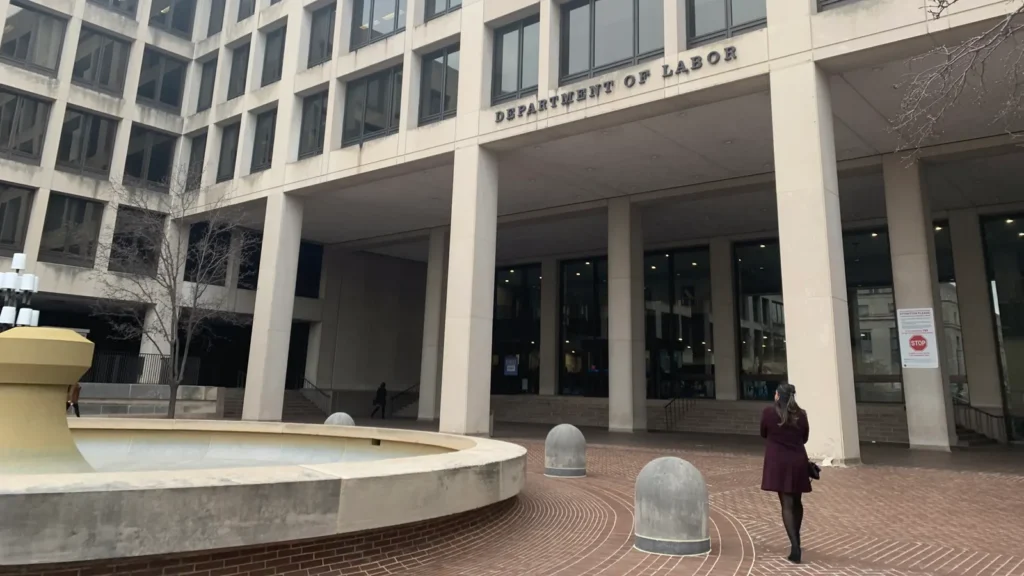
In a move rarely seen from high-ranking federal officials, Assistant U.S. Labor Secretary Henry Mack, head of the Department of Labor’s Employment and Training Administration (ETA), publicly shared his personal cell phone number with thousands of attendees at SHRM26 on June 18 in Orlando, Florida. This unprecedented gesture underscored a fervent appeal to employers: engage directly with federal resources to navigate a rapidly evolving labor market, address the growing skills gap, and prepare their workforces for the future, particularly in the face of artificial intelligence. Mack’s direct approach highlighted the administration’s commitment to cutting through bureaucratic red tape and fostering direct partnerships with the private sector to drive meaningful change in workforce development.
A Bold Overture at SHRM26
The annual Society for Human Resource Management (SHRM) conference, SHRM26, served as a prominent platform for Mack to deliver his urgent message. Attended by tens of thousands of HR professionals, business leaders, and policymakers, the conference is a crucial forum for discussing the latest trends and challenges in human capital management. Mack, a former university professor, brought a unique perspective combining academic insight with governmental policy experience, making his appeal resonate strongly with an audience acutely aware of talent acquisition and development hurdles. His willingness to offer direct access to his office, bypassing traditional channels, signaled a genuine desire to facilitate the utilization of often under-accessed federal funding opportunities. This unusual demonstration of accessibility was met with a mix of surprise and appreciation, setting a tone of direct engagement for his broader message.
Addressing the Systemic Skills Mismatch
Mack’s central thesis revolved around a systemic issue plaguing the U.S. labor market: a significant disconnect between the skills possessed by the workforce and the competencies required by available jobs. He pointed out that many employees possess higher levels of formal education than strictly necessary for their current roles, suggesting an inefficiency in how educational attainment translates to practical job readiness. This "skills mismatch" is not merely an inconvenience; it represents a substantial drag on productivity, innovation, and economic mobility. Research from organizations like the Conference Board and various economic think tanks consistently highlights that employers frequently struggle to find candidates with the right mix of technical and soft skills, even in a seemingly robust job market. This phenomenon underscores the need for a fundamental re-evaluation of how education and training systems align with industry demands.
Unlocking Federal Training Funds: A Call for Partnership
A cornerstone of Mack’s address was the availability of substantial federal funding designed to equip workers with in-demand skills. He cited federal training and education grants totaling between $200 million and $300 million annually, funds specifically earmarked for workforce development initiatives. These grants, administered through various Department of Labor programs, are intended to support employers and employees in adapting to the changing demands of the economy. However, Mack acknowledged a critical barrier: these funds are often accessed indirectly, typically requiring employers to partner with state and local workforce boards, community colleges, and universities. While these partnerships are essential for broad-based impact, Mack candidly admitted that navigating these entities can sometimes be "a pain to work with," echoing a common frustration among businesses.
To overcome this bureaucratic friction, Mack issued a direct challenge to the HR community. "There is no reason that bureaucracy should kill innovation and mobility," he asserted. He strongly encouraged individual SHRM chapters to "adopt a local workforce board," fostering closer collaboration to ensure these entities are more responsive to the specific talent needs of local employers. This proactive engagement, he argued, would empower HR departments to shape training programs that directly address their workforce shortages and future skill requirements, rather than relying on generic offerings. His offer of direct assistance for those struggling to connect with workforce boards or identify suitable funding opportunities served as a powerful testament to the DOL’s commitment to facilitating these vital partnerships.
The Evolution Towards Skills-Based Hiring and Learning
Central to resolving the skills mismatch, according to Mack, is a paradigm shift in both education and hiring practices. He advocated for a move towards competency-based and skill-informed learning within educational institutions. This approach prioritizes the mastery of specific, verifiable skills over traditional time-based credit accumulation, ensuring that learning outcomes are directly applicable to workplace demands. Concurrently, Mack urged employers to embrace hiring models that de-emphasize formal degrees in favor of demonstrated skills and capabilities. This shift, often referred to as "skills-based hiring," broadens the talent pool by recognizing diverse pathways to competence, including apprenticeships, boot camps, military service, and self-taught expertise, rather than exclusively relying on traditional four-year degrees.
To facilitate this crucial transition, the Department of Labor (DOL) has undertaken significant initiatives. Notably, last year, the DOL announced an interagency agreement with the Department of Education to create a national skills credentialing framework utilizing Learning and Employment Records (LERs). Mack elaborated on LERs as "machine-readable, industry-recognized competency statements" designed to capture and verify workers’ skills comprehensively. Unlike traditional academic transcripts or subjective self-assertions on professional networking sites, LERs offer a standardized, verifiable, and granular representation of an individual’s acquired skills. Mack emphasized their potential to be "more effective and comprehensive signals of workers’ skills," fostering greater transparency and trust in the hiring process. However, he stressed that the success of LERs hinges on widespread employer adoption, stating, "Otherwise, it’s just going to be sort of a one-way street." The initiative aligns with a broader national push to create a more dynamic and responsive labor market, where skills are the primary currency of opportunity.
Navigating the AI Frontier: Training and Human Skills
The pervasive influence of artificial intelligence (AI) on the future of work was a dominant theme at SHRM26, and Mack’s presentation directly addressed its implications. While acknowledging that the federal government does not yet possess enough granular data to precisely quantify AI’s disruptive potential across all occupations and industries, he affirmed that the DOL is proactively providing resources to help employers navigate anticipated challenges. "I am not yet convinced of the level of disruption [or] how radically AI is transforming certain occupations within different career clusters," Mack stated, signaling a measured, data-driven approach to policy. Nonetheless, he confirmed, "However, we are doing everything possible to help local stakeholders to prepare for that in their local contexts."
The DOL has already launched several significant initiatives to prepare the workforce for an AI-integrated future. In the past year, it announced $30 million in funding specifically for training in critical workforce shortage areas, including skilled trades and artificial intelligence. This investment aims to build a pipeline of talent capable of developing, deploying, and managing AI technologies. Furthering these efforts, in April, the DOL launched a dedicated website to provide organizations with information on building AI literacy and establishing AI-focused apprenticeships. These programs are crucial for upskilling current workers and developing new talent pools with the specialized knowledge required to thrive in an AI-driven economy.
Beyond technical competencies, Mack underscored the enduring importance of "human skills" in an era of increasing automation. Skills such as communication, critical thinking, problem-solving, creativity, collaboration, empathy, and adaptability are becoming even more valuable as AI takes over routine and analytical tasks. "We don’t want to lose the capacity and the ability to work with colleagues with empathy, sympathy and humility," he articulated, emphasizing that these uniquely human attributes will remain indispensable in fostering innovation, teamwork, and a healthy workplace culture. This perspective offers a counterbalance to anxieties about job displacement, suggesting that human-centric skills will define the next generation of professional success.
Broader Implications and a Collaborative Future
Mack’s address at SHRM26 represents a clear signal from the U.S. Department of Labor: the future of workforce development is collaborative, skills-focused, and directly responsive to industry needs. The initiative to promote federal training grants, the development of Learning and Employment Records, and proactive measures to address AI’s impact collectively paint a picture of a government agency striving to modernize its approach to labor market challenges. The implications for various stakeholders are profound. For HR professionals, it’s a call to action to become more engaged with public workforce systems, leverage available funds, and champion skills-based hiring within their organizations. For educators, it necessitates a closer alignment of curricula with industry demands and an embrace of competency-based learning models. For job seekers, it promises a more transparent and equitable pathway to career opportunities, where validated skills open doors regardless of traditional credentials.
The success of these initiatives will depend heavily on sustained commitment from all parties. While the federal government can provide frameworks and funding, the actual implementation and adoption lie with employers, educational institutions, and local workforce boards. Mack’s extraordinary gesture of sharing his direct contact information reflects a deep understanding of the practical hurdles faced by employers and a genuine commitment to facilitating their access to resources. It underscores a shift towards a more agile and responsive government, willing to break from conventional protocols to address urgent national workforce priorities. As the U.S. labor market continues its rapid transformation, driven by technological advancements and evolving economic demands, the emphasis on skills, continuous learning, and direct partnership will be paramount to ensuring a resilient, competitive, and inclusive workforce for the future.