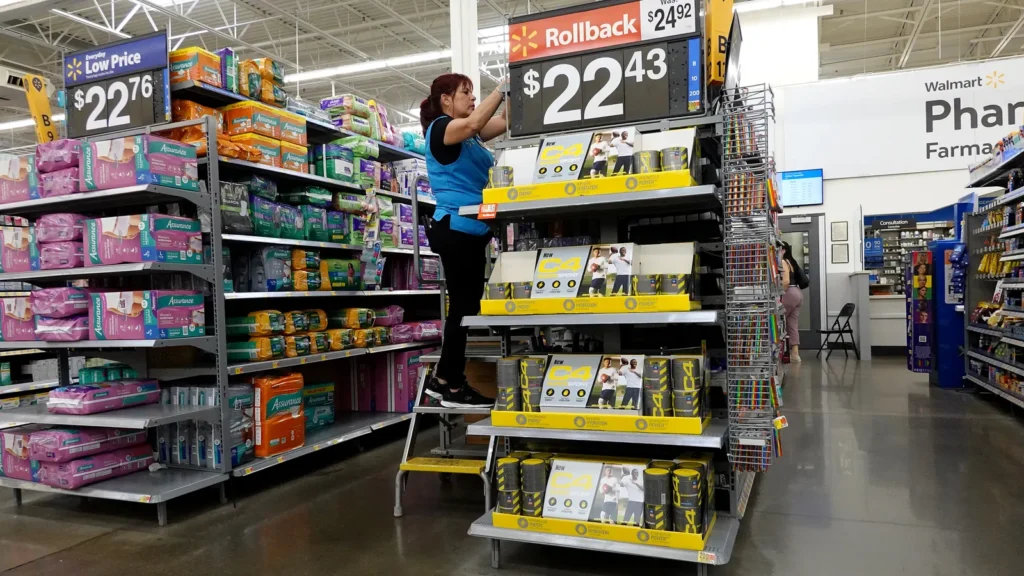
Despite the pervasive narrative surrounding the transformative power of artificial intelligence, leading retailers across the United States are unequivocally demonstrating a renewed commitment to their human workforce, underscoring the indispensable role associates play in curating the in-store customer experience. Recent earnings calls and corporate announcements from industry titans like Target, Walmart, Lowe’s, and The Home Depot reveal a strategic pivot: while AI serves as a potent accelerator for navigating routine, low-impact decision-making, consumers consistently seek human guidance for more sensitive, high-importance purchasing decisions. This dual-pronged approach signals a sophisticated evolution in retail strategy, where technology is seen not as a replacement for human interaction, but as a powerful enabler and amplifier of human capabilities.
The Enduring Value of Human Connection in a Digital Age
In an era increasingly dominated by digital interactions and self-service options, the human element in retail remains a critical differentiator. Greg Carlucci, a senior director analyst at Gartner, highlights this enduring preference: "What’s interesting is that we have seen that consumers are more inclined to speak with store associates if they are more sensitive or for high-importance decision-making." This observation resonates deeply with fundamental human psychology; people inherently trust other people, especially when navigating choices that carry significant personal or financial weight. Carlucci further emphasizes, "I think people inherently have also just grown up with store associates, and asking them questions to get a second opinion is still immensely valuable." This perspective underscores that the value proposition of a store associate extends beyond mere information provision; it encompasses reassurance, validation, and a personalized touch that algorithms, however sophisticated, struggle to replicate.
The Evolving Retail Landscape and the Omni-channel Imperative
The retail sector has undergone seismic shifts over the past two decades, driven by the relentless rise of e-commerce, changing consumer expectations, and disruptive global events. The initial promise of online shopping, offering unparalleled convenience and vast product selection, led some to predict the demise of brick-and-mortar stores. However, the reality has proven more nuanced. The COVID-19 pandemic, while accelerating digital adoption, also highlighted the critical need for adaptable retail models and the often-overlooked emotional connection fostered by physical spaces. Retailers now operate in an omnichannel environment, where the customer journey seamlessly weaves between digital touchpoints and physical locations. In this complex ecosystem, the physical store is no longer just a transaction hub but a crucial brand touchpoint, an experiential center, and a logistical node. The quality of in-store human interaction has emerged as a key determinant of brand loyalty and customer satisfaction, acting as a bridge between the impersonal efficiency of online platforms and the desire for personalized service. Industry data consistently shows that customers who have positive in-store interactions are significantly more likely to return, recommend the brand, and spend more per visit.
AI as an Accelerator, Not a Replacement: Empowering Associates
Rather than pitting AI against human employees, many forward-thinking retailers are strategically deploying AI tools directly into the hands of their associates. This approach transforms AI from a potential competitor into a powerful co-pilot, enhancing the human capacity for service excellence. This trend is exemplified by companies like Lowe’s and ACE Hardware.
Lowe’s, a prominent home improvement retailer, has seen tangible benefits from its "Mylow Companion," an AI assistant specifically designed for associates. President and CEO Marvin Ellison reported on a recent earnings call that the use of this AI tool is driving a 2% increase in in-store customer satisfaction scores. This seemingly modest percentage translates into millions of improved customer experiences annually across Lowe’s extensive store network, underscoring the significant impact of marginal gains when scaled.
Similarly, ACE Hardware rolled out its "Hey ARMA" assistant to over 2,300 stores last month. Designed to operate discreetly in the background, Hey ARMA empowers associates by providing instant access to detailed product information, inventory levels, and procedural guidelines, allowing them to serve shoppers more efficiently and accurately.
Carlucci explains the precise utility of such tools: "AI assistants are well-suited for helping associates dig for small but important details." While well-trained employees possess a wealth of knowledge, AI can instantly retrieve exact numerical specifications, such as a product’s dimensions, specific functionalities, or compatibility details. This capability dramatically speeds up service, particularly when customers are searching for a very specific item or need precise technical information. "Historically, if you had asked a question to a store associate, they may have had to reach out to a manager or go to the help desk," Carlucci notes. "A portable AI device can answer or help answer those questions, and it can also make sure they’re giving out the right information." This immediate access to verified, comprehensive data not only boosts associate confidence and efficiency but also elevates the customer’s perception of service quality and the store’s overall expertise.
Cultivating Expertise: The Rise of Specialized Roles
Beyond equipping general associates with AI, retailers are also investing heavily in specialized training and dedicated roles to address high-stakes customer interactions where deep human expertise and empathy are paramount. This strategy recognizes that while AI can handle common queries, nuanced advice and personalized recommendations often require a human touch.
Walmart, the world’s largest retailer, is a prime example of this specialization. Following a successful pilot program, the company is introducing the "Beauty Expert" position in hundreds of stores this year. These specialized associates receive initial training that far surpasses standard onboarding protocols, complemented by ongoing monthly and quarterly education. To further enhance their expertise, Walmart provides these "Beauty Experts" with "Walmart Beauty Boxes," enabling them to personally test and familiarize themselves with various products. This hands-on experience allows them to offer customers more informed, authentic, and trustworthy opinions, crucial in a category as personal and complex as beauty and skincare.
Carlucci underscores the logic behind such roles: "Investing more in associates who work in the higher-stakes categories at the big box stores makes sense." A dedicated beauty expert can adeptly answer intricate questions about skin types, ingredient effects, or product suitability—topics that often demand a level of nuanced understanding and empathetic communication beyond the current capabilities of even advanced AI.
Similarly, The Home Depot, another retail giant, began testing separate merchandising and in-store customer service teams late last year. Ann-Marie Campbell, senior executive vice president of U.S. stores and operations, revealed on a recent earnings call that stores implementing this change have reported an improved likelihood for visitors to shop again and greater customer engagement. Buoyed by these positive results, The Home Depot plans to roll out these operational changes across all its stores by the end of the year.
The introduction of dedicated support roles is particularly impactful for retailers selling high-value items, such as large appliances or complex home improvement solutions. In these scenarios, Carlucci argues, it’s not solely about technical expertise but also the psychological reassurance of "white glove service." "Having specialized store employees, I think, does help reinforce the fact that you’re… not just paying for the product itself, but you’re also getting that additional support and hand holding to make sure you’re making the right decision," he explains. This human assurance builds confidence, reduces purchase anxiety, and fosters a sense of trust that extends beyond the transaction itself.
The Fundamental Impact of Presence: Investing in Labor Hours
While technology and specialized training offer sophisticated solutions, sometimes the most effective investment is the simplest: ensuring enough human support is available on the sales floor. Target, a bellwether for general merchandise retail, has demonstrated this principle with remarkable success.
Lisa Roath, EVP and COO of Target, announced on a recent earnings call that the company achieved three-year highs for its net promoter scores (NPS) and customer satisfaction in its stores. These significant improvements were directly attributed to strategic investments in its store experience and increased labor hours, initiatives announced earlier in the year. Roath further detailed that customer experience and satisfaction metrics were consistently higher in stores that received increased training and labor support.
Target’s strategy also involved rebalancing workloads to free up employees, allowing them to dedicate more time to helping customers. Furthermore, the retailer is actively working to simplify its fulfillment processes. This aims to enable fast, store-based delivery without compromising the crucial in-store shopping experience provided by employees. This holistic approach acknowledges that overburdened employees cannot deliver optimal customer service, regardless of their training or tools.
Carlucci validates this straightforward yet impactful approach: "I think that enhances Target. For example, employees have more dedicated time to answer more specific questions." He reiterates the fundamental human need: "I think consumers also still want another human perspective, instead of just AI." This highlights that even with advanced digital solutions, the mere presence of an available, knowledgeable, and unhurried human associate can dramatically elevate the customer’s perception of service and overall shopping satisfaction. Studies indicate that stores with optimal staffing levels consistently outperform understaffed counterparts in key metrics like customer satisfaction, sales conversion rates, and employee retention.
Strategic Rationale: Beyond Customer Satisfaction
The comprehensive investments in human capital by major retailers are driven by a strategic rationale that extends beyond immediate customer satisfaction scores. These initiatives are designed to cultivate a sustainable competitive advantage in an increasingly homogenized retail landscape.
Firstly, in a market where product differentiation can be fleeting, superior customer service delivered by engaged and knowledgeable associates becomes a powerful differentiator. It fosters brand loyalty that transcends pricing wars or product availability. Customers are willing to pay a premium for exceptional service, turning a transactional relationship into a long-term partnership.
Secondly, these investments contribute significantly to employee morale and retention. When companies invest in training, specialized roles, and adequate staffing, employees feel valued, empowered, and better equipped to succeed. This, in turn, reduces turnover, lowers recruitment and training costs, and creates a more experienced and stable workforce. Engaged employees are more productive, more empathetic, and more likely to deliver outstanding service, creating a virtuous cycle.
Thirdly, integrating human expertise with AI tools represents a sophisticated approach to efficiency. It optimizes the allocation of resources, allowing AI to handle repetitive, data-intensive tasks, while humans focus on complex problem-solving, emotional engagement, and personalized advice. This synergy maximizes both technological capability and human potential, leading to a more streamlined and effective operational model.
Finally, these strategies are a testament to the evolving role of the physical store itself. Far from becoming obsolete, brick-and-mortar locations are transforming into experiential hubs, brand showcases, and crucial components of an integrated omnichannel strategy. Human associates are at the heart of this transformation, providing the interactive, empathetic, and tangible connection that digital channels cannot fully replicate.
Challenges and the Path Forward
While the benefits of investing in human associates are clear, retailers face several challenges in implementing and sustaining these strategies. The primary hurdle remains the cost of labor, which continues to rise. Balancing increased payroll with profitability targets requires careful financial planning and a clear demonstration of return on investment. Furthermore, effectively integrating new AI tools into existing workflows and ensuring consistent, high-quality training across thousands of stores and diverse employee demographics presents significant logistical complexities. Maintaining consistency in service quality across various store formats and geographical locations also requires robust operational frameworks and continuous monitoring.
Despite these challenges, the prevailing sentiment among retail leaders is clear: the future of retail is a hybrid one. It will be characterized by a seamless fusion of cutting-edge technology and authentic human connection. Retailers will continue to refine their approaches, leveraging AI to augment human capabilities, investing in specialized expertise for critical interactions, and ensuring adequate staffing to guarantee a consistently positive customer experience.
Conclusion
The recent strategic investments by retail giants like Target, Walmart, Lowe’s, and The Home Depot signify a profound realization within the industry: artificial intelligence, while revolutionary, is not a panacea for all customer experience challenges. Instead, its true power lies in its ability to empower and enhance the human element. By equipping associates with AI tools, developing specialized roles, and simply ensuring sufficient staffing, retailers are actively redefining the in-store experience. This commitment to the human touch in an increasingly automated world is not merely a trend but a fundamental shift towards a more balanced, empathetic, and ultimately more effective retail model. The future of retail will undoubtedly be smart, but critically, it will also remain deeply human, with knowledgeable and accessible associates standing as the cornerstone of customer satisfaction and loyalty.