
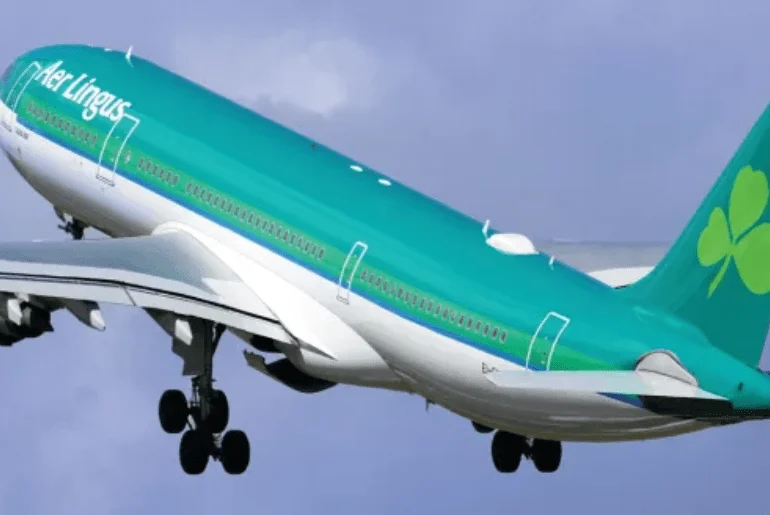
Aer Lingus, the Irish flag carrier, has announced a significant restructuring initiative set to eliminate up to 500 roles and scale back its network, as the airline moves decisively to control costs in what it describes as a challenging operating environment. The comprehensive reorganisation, conveyed on July 16, 2026, aims to reduce total flying capacity by approximately six per cent, impacting both long-haul and short-haul operations. A key component of this strategy involves the removal of "lower margin" routes from its Dublin hub, signalling a strategic shift towards more profitable segments.
Widespread Reorganization Announced
The airline’s decision will see service discontinued to several North American cities, including Denver, Las Vegas, and Minneapolis, destinations that have traditionally been part of Aer Lingus’s transatlantic expansion strategy. Additionally, the European network will also experience adjustments, with the route to Split in Croatia being cut. Service to Frankfurt, a key European business hub, will transition to a seasonal operation, available only during the peak summer months. These network adjustments reflect a strategic recalibration, prioritising profitability and route efficiency over sheer breadth of coverage.
The proposed job losses represent a substantial impact on the airline’s workforce, equating to roughly a quarter of its overall employee costs. This reduction mirrors a previous cut of 25 per cent in senior management positions, indicating a consistent focus on streamlining its organisational structure. According to the airline’s announcement, the job cuts will affect various departments: 70 pilots, 140 cabin crew members, and 290 head office staff at Dublin Airport could be impacted. With approximately 6,000 employees currently on its payroll, these proposed redundancies signify a significant internal shake-up for the carrier, which typically operates more than 100 routes connecting Europe and North America.
Driving Factors: Elevated Costs and Geopolitical Tensions
Aer Lingus explicitly linked its decision to a confluence of external pressures, primarily citing elevated fuel prices and increased competition on lucrative transatlantic routes. The airline specifically pointed to the ongoing US-Iran conflict as a significant factor driving global oil prices higher, directly impacting its operational expenses. Fuel costs typically constitute one of the largest expenditure categories for airlines, often accounting for 25-35% of total operating costs. Any sustained increase in these prices can severely erode profit margins, especially for carriers operating long-haul international routes which consume vast quantities of jet fuel.
This restructuring also follows a profit warning issued by Aer Lingus’s parent company, International Airlines Group (IAG), just last month. IAG, a multinational airline group that also owns British Airways, Iberia, Vueling, and LEVEL, had flagged that jet fuel expenses and persistent supply chain pressures would weigh more heavily on its earnings than previously anticipated. This group-level warning underscored the systemic challenges facing the aviation sector globally, providing a broader context for Aer Lingus’s specific actions. Supply chain disruptions, which have plagued various industries since the pandemic, continue to impact the availability and cost of aircraft parts, maintenance services, and new aircraft deliveries, adding further layers of financial pressure.
Detailed Network Adjustments
The decision to cut specific routes like Denver, Las Vegas, Minneapolis, and Split, and to make Frankfurt seasonal, suggests a rigorous analysis of route profitability and competitive intensity. Transatlantic routes, while often high-yielding, are also highly competitive, with numerous legacy carriers, budget airlines, and alliance partners vying for market share. Routes to leisure destinations like Las Vegas and Split might be more susceptible to demand fluctuations and price sensitivity, especially in an environment of rising costs. Denver and Minneapolis, while offering connections to significant regional markets, might have struggled to consistently achieve the load factors and yields necessary to justify their operational costs given the current economic headwinds. By removing "lower margin" routes, Aer Lingus aims to concentrate its resources on its most profitable and strategically important services, thereby improving overall network efficiency and financial performance.
Workforce Impact and Consultation Process
The proposed job losses, impacting a significant portion of its workforce across various operational and administrative functions, are expected to trigger extensive consultations. Aer Lingus has stated its intention to enter into discussions with staff representatives and unions to manage the redundancy process. The company has emphasised that these consultations will focus on limiting compulsory redundancies, suggesting a preference for voluntary severance schemes where feasible. Furthermore, the discussions will address measures necessary to secure future investment within the IAG group, implying that a successful restructuring and return to profitability are crucial for Aer Lingus to attract continued capital allocation from its parent company.
Trade unions representing Aer Lingus staff, such as Fórsa (representing cabin crew and ground staff) and IALPA (Irish Airline Pilots’ Association), are expected to engage vigorously in these consultations. Their primary concerns will likely revolve around the fairness of the redundancy process, the protection of workers’ rights, and ensuring that any job losses are implemented with maximum support for affected employees. The unions will also likely seek assurances regarding the long-term viability and growth prospects of Aer Lingus, and the potential for future job creation once the current challenges are navigated.
Aer Lingus’s Financial Performance Under Scrutiny
The urgency of Aer Lingus’s restructuring plan is underscored by its recent financial performance. Lynne Embleton, CEO of Aer Lingus, stated that the carrier is "speeding up its transformation" to position itself as a "strong investment case." The company is targeting an operating margin of 12 per cent to 15 per cent in the medium term. This ambition highlights the gap in its current performance; for 2025, Aer Lingus posted an 11.1 per cent operating margin, which fell short of the 15 per cent reported by its IAG peers, British Airways and Iberia. This disparity suggests that Aer Lingus has been facing unique or more pronounced challenges compared to other airlines within the IAG portfolio, necessitating a more aggressive response.
Further evidence of financial pressure comes from the reported €103 million loss in the first quarter of 2026. While the first quarter is often a seasonally weaker period for airlines due to lower travel demand outside of holiday peaks, a loss of this magnitude signals significant underlying issues that require immediate attention. Alongside the network changes and job cuts, Aer Lingus has also indicated that it will target supplier cost savings, seeking efficiencies across its procurement and operational expenditures to further bolster its financial position.
IAG’s Broader Strategy and Group Context
Aer Lingus’s restructuring aligns with IAG’s overarching strategy of optimising profitability across its diverse airline portfolio. IAG has historically focused on achieving strong operating margins and delivering shareholder value. The profit warning from IAG last month indicated that the group was grappling with the same macro-economic pressures impacting Aer Lingus, albeit with varying degrees of resilience across its individual carriers. British Airways and Iberia, with their 15% operating margins in 2025, appear to be more robustly positioned, potentially due to different route networks, cost structures, or market dynamics.
IAG’s investment decisions are often guided by the individual performance and potential of its subsidiary airlines. By aiming for a 12-15% operating margin, Aer Lingus is essentially trying to demonstrate its capability to be a strong and competitive entity within the IAG ecosystem, thereby securing continued strategic support and capital investment. The group’s emphasis on financial discipline means that underperforming assets are likely to face pressure to restructure and improve their profitability.
Industry Reactions and Stakeholder Concerns
The announcement from Aer Lingus is likely to elicit a range of reactions from various stakeholders. Industry analysts are expected to view the moves as a necessary, albeit painful, step to safeguard the airline’s long-term financial health in a volatile market. The focus on "lower margin" routes and cost control is a standard playbook for airlines facing such pressures. However, questions might be raised about the timing and the potential impact on Aer Lingus’s competitive positioning, especially regarding its transatlantic strategy.
For passengers, the immediate impact will be a reduction in direct services to the affected destinations. While alternative routes or carriers may be available, the convenience of direct flights from Dublin will be lost for these markets. This could potentially impact tourism and business links between Ireland and the affected regions, particularly the US cities of Denver, Las Vegas, and Minneapolis, which represent significant markets. The Irish government and local business communities may express concern over the reduction in connectivity and its potential knock-on effects on the Irish economy, which relies heavily on international air links for trade, tourism, and foreign direct investment.
Implications for Passengers and Irish Connectivity
The scaling back of Aer Lingus’s network, particularly the long-haul cuts, will inevitably have implications for passengers and Irish connectivity. For those travelling to or from Denver, Las Vegas, and Minneapolis, the direct route will no longer be an option, necessitating connecting flights, potentially increasing travel time and cost. While Aer Lingus may offer codeshare or interline agreements with partner airlines to maintain some level of access to these markets, the convenience of a direct flight from Dublin, a key hub for transatlantic travel, will be diminished. The move also signals a potential shift in Aer Lingus’s transatlantic strategy, possibly favouring routes with higher business traffic or established strong leisure demand over experimental or niche markets.
The seasonal operation to Frankfurt could impact business travellers who rely on consistent year-round service to one of Europe’s financial capitals. While leisure travellers might be less affected by a seasonal schedule, the move underscores a focus on demand-driven scheduling rather than maintaining year-round connectivity for strategic reasons. For Dublin Airport, the reduction in routes and capacity could impact passenger numbers and its status as a transatlantic gateway, although other carriers might step in to fill some of the gaps over time.
Looking Ahead: The Path to Profitability
The restructuring announced by Aer Lingus marks a critical juncture for the airline. The measures being implemented – job cuts, network rationalisation, and supplier cost savings – are designed to create a leaner, more efficient, and ultimately more profitable operation. The goal of achieving a 12-15 per cent operating margin within the medium term is ambitious, especially given the ongoing volatility in fuel prices and the competitive landscape.
The success of this transformation will depend not only on internal efficiencies but also on external factors, including the stability of global oil markets, the resolution of geopolitical conflicts, and the broader economic recovery. The consultation process with staff and unions will be crucial in ensuring a smooth transition and maintaining employee morale amidst significant changes. Ultimately, Aer Lingus aims to emerge from this period of restructuring as a more resilient and financially robust airline, capable of securing future investment from IAG and continuing its role as a vital link for Ireland’s international travel. The coming months will reveal the full impact of these decisions and the extent to which Aer Lingus can navigate the challenging skies ahead towards its stated goals of sustained profitability and strategic strength within the IAG group.








