
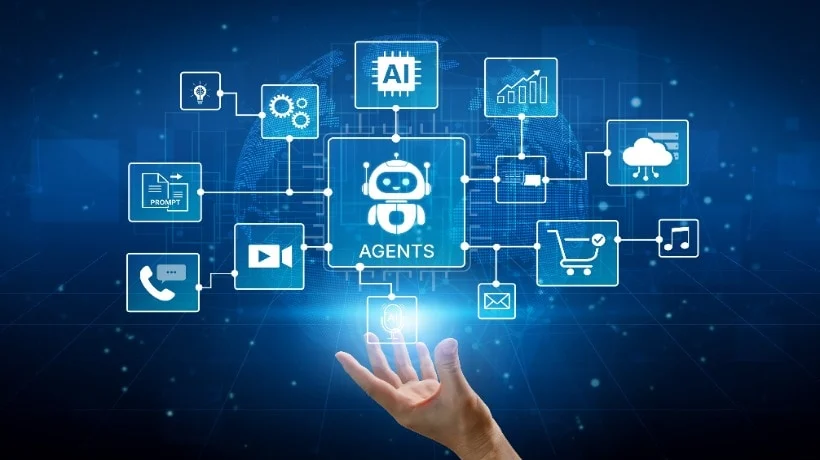
The global software development landscape has entered a transformative phase as the industry shifts from basic generative AI assistance to sophisticated AI agent orchestration and rigorous, data-driven productivity frameworks. This evolution marks the end of the "co-pilot" era, where AI merely suggested code snippets, and the beginning of an era characterized by autonomous agentic workforces that manage entire lifecycles within a governance-first environment. As organizations grapple with the increasing complexity of cloud-native architectures, the integration of orchestration layers and deep engineering visibility has become the new standard for maintaining competitive advantage and operational stability.
The Evolution of Engineering Flow: From Manual To Agentic
For decades, the software engineering community has prioritized the concept of "flow"—a psychological and operational state where developers engage in deep, uninterrupted work to solve complex problems. Historically, this state has been frequently disrupted by "administrative friction," including manual documentation, ticket management, and fragmented communication channels. By 2026, the rise of microservices and serverless environments has increased the cognitive load on developers to a point where traditional human-led management is no longer sufficient.
The current shift represents a fundamental change in how labor is distributed. Rather than developers using AI as a peripheral tool, they are now acting as architects of a multi-agent system. This transition has been necessitated by the realization that while Large Language Models (LLMs) are powerful, they require a structured ecosystem to be effective in an enterprise setting. Without orchestration, AI agents often operate in silos, leading to "hallucinations" or security vulnerabilities that can compromise an entire production environment.
The Architecture of AI Agent Orchestration
At the heart of this revolution is the orchestration layer— a controlled environment designed to coordinate the actions of multiple specialized AI agents. Unlike early AI scripts, these modern agents are "context-aware" and capable of multi-step reasoning.
Building an Agentic Workforce
The contemporary orchestration layer moves away from siloed toolsets toward a coordinated "agentic workforce." In this model, agents are assigned specific roles:
- Security Agents: Continuously scan codebases for vulnerabilities and misconfigurations.
- Remediation Agents: Receive alerts from security agents and automatically draft patches or configuration changes.
- Compliance Agents: Document every change made by the system, ensuring that all automated actions meet regulatory standards such as GDPR or SOC2.
By allowing these agents to communicate via a unified control plane, organizations can automate the "mundane" aspects of the Software Development Life Cycle (SDLC) while maintaining a human-in-the-loop for final approvals.
Governance and the Knowledge Graph
The primary barrier to professional AI adoption has historically been a lack of trust. To mitigate this, 2026-era orchestration platforms utilize "Knowledge Graphs" as a single source of truth. These graphs map an organization’s entire infrastructure, documentation, and historical data, ensuring that agents are not guessing but are referencing actual system states. This governance-first approach provides a "guardrail" system, preventing agents from making changes that fall outside of predefined security boundaries or architectural standards.
The Shift in Productivity Metrics: Beyond Vanity Data
As AI agents begin to handle a larger share of the workload, traditional methods of measuring productivity have become obsolete. Metrics such as "Lines of Code" (LOC) are now viewed as counterproductive, as AI can generate vast amounts of code that may actually increase technical debt.
Identifying "Fake Productivity"
Engineering leaders are increasingly wary of "fake productivity"—a phenomenon where teams appear highly active due to AI-generated output, yet the actual "cycle time" (the time from code conception to deployment) remains stagnant. To combat this, modern productivity frameworks focus on:
- PR Velocity and Quality: Analyzing whether AI-assisted pull requests are merged faster or if they lead to longer review cycles due to poor quality.
- Cycle Time Analysis: Measuring the end-to-end time of the development process to identify bottlenecks in the human-AI collaboration.
- Technical Debt Accrual: Monitoring how automated code generation impacts the long-term maintainability of the system.
Visibility into Causal Impact
Analytical platforms now provide visibility into the "causal impact" of AI investments. By tracking DORA (DevOps Research and Assessment) metrics—such as Deployment Frequency and Mean Time to Recovery (MTTR)—managers can see exactly where automation is providing a measurable lift. For instance, data from top-tier tech firms in 2026 suggests that teams using orchestrated agents have seen a 40% reduction in MTTR, as AI agents can perform initial triage and log analysis before a human developer is even paged.
A Chronology of the AI Integration Era
The path to the current state of AI orchestration has been rapid, marked by several key milestones over the last four years:
- 2022-2023: The Proliferation of Assistants. The introduction of tools like GitHub Copilot and ChatGPT focused on individual developer productivity through code completion and chat-based troubleshooting.
- 2024: The Rise of Multi-Step Agents. Developers began experimenting with "AutoGPT" style agents capable of performing sequential tasks, though these were often plagued by reliability issues.
- 2025: The Governance Pivot. Following several high-profile security incidents involving AI-generated code, the industry shifted toward "governance-first" orchestration, prioritizing security guardrails over raw speed.
- 2026: The Maturity of the Orchestration Layer. AI agents are now integrated into the core infrastructure of major enterprises, supported by robust productivity metrics that account for both machine output and human well-being.
Impact on Developer Well-being and Cognitive Load
A critical component of the 2026 productivity framework is the emphasis on "humanized" technology. High productivity is unsustainable if it leads to developer burnout. Modern platforms now track "cognitive load" by visualizing "flow" and identifying "bottleneck meetings" or excessive context-switching.
By offloading repetitive tasks to agents—such as writing boilerplate code, updating documentation, or performing regression testing—developers can reclaim their time for "deep work." Industry surveys indicate that developers in agent-heavy environments report higher job satisfaction, as they are empowered to focus on creative problem-solving and architectural design rather than administrative maintenance.
Analysis of Implications: The Future of the Engineering Role
The widespread adoption of AI agent orchestration has sparked a debate regarding the future role of the software engineer. While early fears suggested that AI would replace developers, the reality has been one of "liberation through automation."
From Coder to Curator
The role of the developer is evolving into that of a "system curator." Engineers are now responsible for defining the objectives, setting the guardrails, and reviewing the outcomes produced by their agentic workforce. This requires a shift in skill sets, moving away from syntax-heavy expertise toward higher-level systems thinking and security oversight.
Economic and Organizational Shifts
Organizations that fail to adopt these orchestration and productivity frameworks risk being buried under the weight of their own technical debt. The economic advantage in 2026 lies with companies that can leverage AI to achieve "engineering excellence"—a state where software is not just produced faster, but is more resilient, secure, and aligned with business outcomes.
Responses from Industry Leaders
Engineering VPs and CTOs have largely embraced the shift toward orchestration. "We’ve moved past the point of asking if AI can write code," says one industry analyst. "The question now is how we manage the millions of lines of code AI is writing for us. Orchestration is the only answer to that scale."
Furthermore, HR departments are beginning to use AI productivity metrics to identify teams at risk of burnout. "By looking at the data, we can see if a team is spending too much time fixing AI-generated bugs," notes a Chief People Officer. "It allows us to intervene and adjust our orchestration logic before the team reaches a breaking point."
Conclusion: Delivering on the Promise of Software
As we look toward the remainder of the decade, the synergy between AI agent orchestration and data-driven productivity frameworks will continue to refine the software development landscape. By building controlled ecosystems where agents can collaborate under human supervision, and by using sophisticated metrics to ensure that this automation provides genuine value, the industry is finally delivering on the promise of software: solving real-world problems faster and more efficiently than ever before.
The teams that thrive will be those that view AI as a sophisticated extension of human talent—an "agentic" partner that handles the complexity of the modern cloud, allowing the human heart and mind to focus on innovation. The transition to this AI-first world is no longer a future possibility; it is the current reality of 2026 engineering.






