

The rapid proliferation of artificial intelligence has moved the technology from the specialized laboratories of computer scientists directly into the boardroom, yet a significant disconnect remains between technological availability and strategic execution. While the narrative surrounding AI often focuses on large language models and complex neural networks, the actual success of AI within a corporate environment is increasingly dependent on non-technical leadership. According to the McKinsey Global AI Survey 2025, while approximately 88% of organizations have integrated AI into at least one business function, only a small fraction has managed to scale these initiatives across the entire enterprise. This implementation gap highlights a critical reality: the primary barrier to AI adoption is not a lack of technical talent, but a lack of clear, business-driven strategy from leadership.
The Shift from Technical Innovation to Strategic Integration
In the early stages of the current AI boom, which accelerated following the public release of generative AI tools in late 2022, many organizations treated AI as a specialized IT project. However, as the technology matures toward 2026, the focus has shifted toward operational utility. For non-technical leaders, this means moving away from the "how" of AI—the coding and model training—and focusing on the "where" and "why."
A robust AI strategy is essentially a business-focused plan that leverages automation and predictive analytics to improve measurable outcomes such as operational efficiency, revenue growth, and customer satisfaction. Industry analysts suggest that leaders who treat AI as a strategic asset rather than a technical tool are better positioned to align their teams and avoid the "random acts of digital" that often plague uncoordinated adoption efforts.

A Chronological Roadmap: The Evolution of AI in Business
The journey of AI integration typically follows a distinct chronology, beginning with experimentation and moving toward total organizational transformation.
- The Experimental Phase (2022–2023): Characterized by individual employees using consumer-grade AI tools for basic tasks like email drafting and brainstorming. Leadership during this phase was often reactive or cautious.
- The Pilot Phase (2024–Early 2025): Organizations began implementing departmental pilots, such as AI-driven customer service chatbots or automated marketing copy generators.
- The Strategic Alignment Phase (Late 2025–Beyond): This current era requires non-technical leaders to take ownership. Strategy is no longer about testing tools; it is about embedding AI into the core business model to solve specific, high-value problems.
Where AI Creates Measurable Value
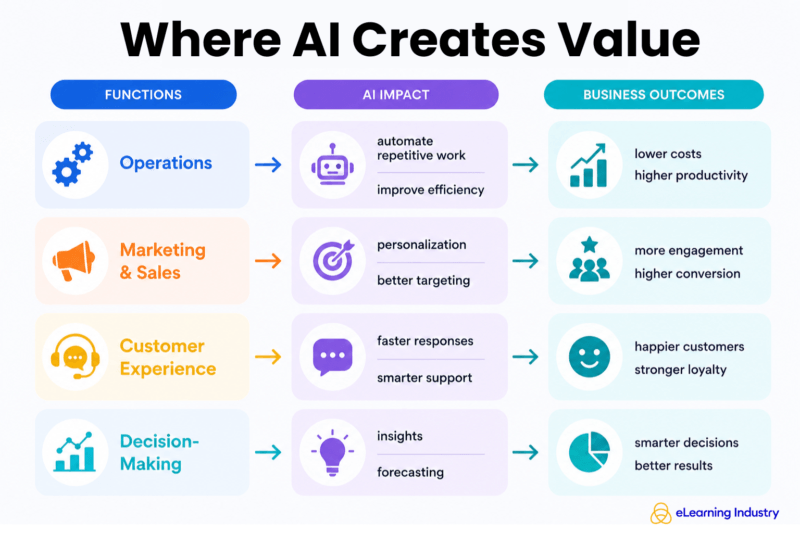
For executives looking to identify where AI can offer the highest return on investment (ROI), the focus should remain on six primary business pillars:
- Operations: AI excels at identifying bottlenecks and optimizing supply chains. Predictive maintenance in manufacturing and automated logistics routing are two areas where non-technical leaders can see immediate cost reductions.
- Marketing and Sales: By analyzing vast datasets, AI provides hyper-personalized customer insights, allowing for targeted campaigns that significantly increase conversion rates compared to traditional methods.
- Customer Experience: Beyond simple chatbots, AI-driven sentiment analysis helps leaders understand customer frustrations in real-time, allowing for proactive service adjustments.
- Decision-Making: AI processes internal data to provide forecasting models, helping finance and executive teams move from reactive to predictive planning.
- Finance: Automated auditing, fraud detection, and real-time expense management allow finance teams to focus on high-level strategic advisory roles rather than manual data entry.
- HR and Talent Management: AI assists in filtering resumes for specific skill sets and identifying internal employees who may be at risk of turnover, allowing for better retention strategies.
The FOCUS Framework for Implementation
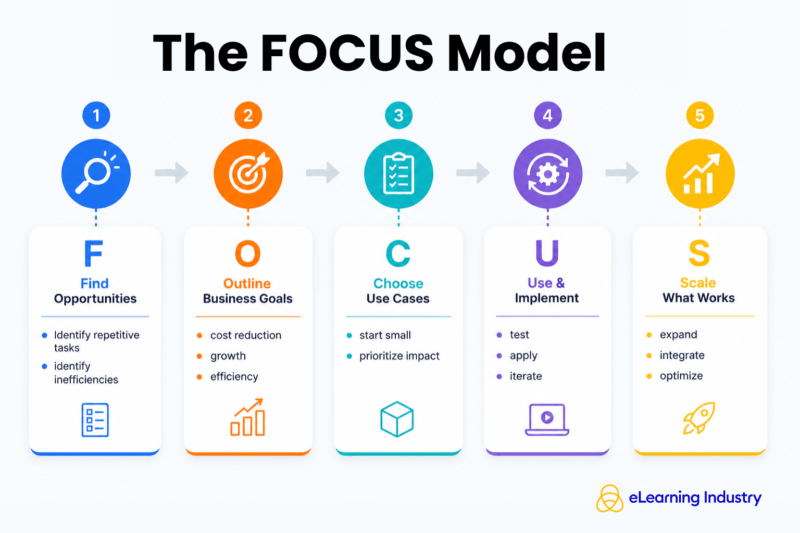
To simplify the transition from theory to practice, non-technical leaders can utilize the FOCUS model, a structured approach designed to ground AI initiatives in business reality.
Find Opportunities: The process begins with a thorough audit of daily operations to spot friction points. Leaders should look for tasks that are repetitive, data-heavy, or prone to human error.
Outline Business Goals: Every AI project must be tied to a Key Performance Indicator (KPI). Whether the goal is to reduce customer wait times by 20% or to lower operational overhead by 15%, clarity at this stage prevents "scope creep."
Choose Use Cases: Rather than attempting a complete overhaul, leaders should select high-impact, low-complexity use cases. Early wins build organizational confidence and provide the data needed to justify further investment.
Use and Implement: Execution should be iterative. By deploying AI tools in a controlled environment, teams can learn quickly and adjust parameters without disrupting core business functions.
Scale What Works: Once a pilot project proves successful, the focus shifts to cross-departmental integration. This involves standardizing data protocols and ensuring that different AI systems can communicate effectively.
Overcoming the "Analysis Paralysis" Trap
A common pitfall for non-technical executives is the belief that they must wait for perfect information or comprehensive technical literacy before acting. This hesitation often leads to "analysis paralysis," where the fear of making the wrong technological choice results in no choice at all.
Market data suggests that the "fast-follower" advantage is shrinking. Companies that delay their AI strategy risk falling behind competitors who are already reaping the benefits of increased speed and lower costs. The solution for leaders is to focus on the problem first, not the product. By identifying a specific business challenge—such as a lag in response time for client inquiries—leaders can then seek out the appropriate AI solution, many of which are now available as "off-the-shelf" integrations within existing software like CRM and ERP systems.
Addressing the Human Element: Upskilling and Culture
A successful AI strategy is as much about people as it is about software. Internal reactions to AI often range from excitement to fear of job displacement. It is the responsibility of non-technical leaders to foster a culture of "augmentation," where AI is seen as a tool that enhances human capability rather than replacing it.
Investment in upskilling is a critical component of this strategy. HR and Learning & Development (L&D) teams must be empowered to create training programs that help employees transition from manual tasks to oversight roles. According to industry experts, the "AI skills gap" is one of the greatest threats to long-term growth. Organizations that proactively address this through continuous learning platforms will have a more resilient and adaptable workforce.
Broader Implications and Competitive Advantage
The implications of a well-executed AI strategy extend far beyond internal efficiency. In a globalized market, AI adoption is becoming a prerequisite for competitive survival. Organizations with a mature AI strategy can respond to market shifts faster, innovate with greater precision, and offer superior customer experiences at a lower price point.
Furthermore, the role of the non-technical leader is evolving. The executives of the future will not necessarily be those who can write code, but those who can manage a hybrid workforce of humans and AI agents. This requires a high degree of emotional intelligence, strategic foresight, and the ability to bridge the gap between technical possibilities and business realities.
Conclusion: The Path Forward
The transition to an AI-driven business environment does not require a degree in computer science, but it does require a fundamental shift in leadership mindset. By focusing on outcomes, fostering a culture of learning, and following a structured framework like the FOCUS model, non-technical leaders can demystify the technology and turn it into a powerful engine for growth.
As AI continues to evolve, the most successful organizations will be those where the leadership takes ownership of the strategy early, treats implementation as an iterative process, and remains focused on creating tangible value for customers and stakeholders alike. The "AI rabbit hole" is only deep for those who enter it without a map; for the strategic leader, it is a clear path to a more efficient and innovative future.






