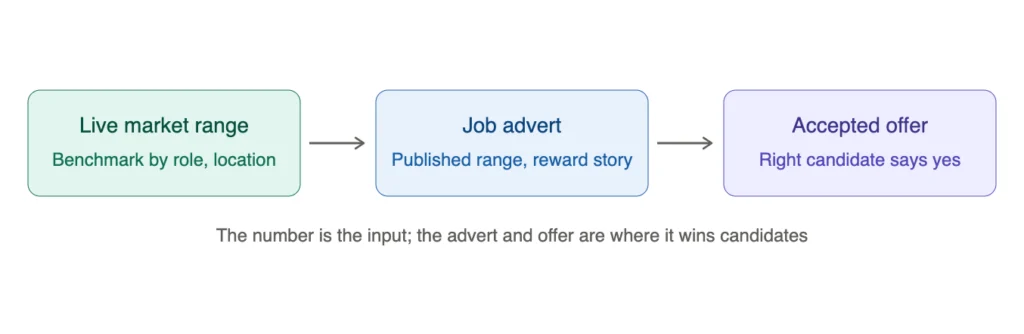
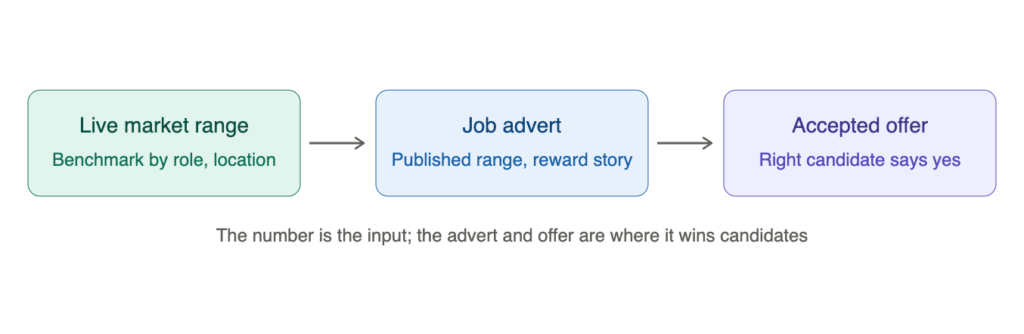
Salary benchmarking, while a critical input, is merely the foundation; its strategic application – how it’s positioned, articulated, and integrated into a comprehensive total reward package – is what ultimately persuades top talent to accept an offer over competing proposals. This strategic imperative has intensified significantly as employers grapple with an unprecedented global talent shortage. According to ManpowerGroup’s 2026 Global Talent Shortage Survey, a staggering 72% of employers report considerable difficulty in securing skilled talent, underscoring the fierce competition for qualified professionals. In a market where numerous organizations are pursuing the same limited pool of candidates, a meticulously crafted and transparent offer is no longer a luxury but a fundamental necessity.
The Evolving Landscape of Talent Acquisition
The concept of compensation has undergone a significant transformation, evolving from a static, internal process to a dynamic, market-driven strategy. Historically, salary structures were often determined by internal equity, historical precedents, and broad industry surveys conducted annually. While these methods provided a baseline, they often lagged behind real-time market shifts, particularly in fast-moving sectors. The advent of globalization, the rise of remote work, and rapid technological advancements have created a highly fluid labor market where compensation expectations can change quarterly, not just annually. This fluidity, coupled with a persistent "war for talent" – a phrase coined decades ago but more relevant than ever – demands a proactive and agile approach to compensation.
The current economic climate, characterized by fluctuating inflation rates and varying costs of living across different regions, further complicates the compensation landscape. Candidates today are more informed than ever, leveraging online resources like Glassdoor, LinkedIn Salary, and specialized data platforms to understand their market value. They are not just comparing base salaries but meticulously evaluating the entire reward ecosystem, including benefits, work-life balance, career development opportunities, and company culture. This shift necessitates that employers move beyond simply quoting a number and instead present a compelling, data-backed narrative that justifies their offer.
Understanding Salary Benchmarking: A Foundational Pillar
At its core, salary benchmarking is the systematic process of comparing an organization’s compensation and benefits offerings against external market data. Its primary objective is to ascertain whether current or proposed pay rates are fair, competitive, and justifiable in the broader talent market. This analytical process provides critical insight into where an organization’s offer stands – whether it leads the market, matches it, or lags behind – enabling deliberate, evidence-based decisions on compensation strategy.
It is crucial to distinguish salary benchmarking from a general pay review. While often conducted concurrently, benchmarking serves as the objective evidence, while a pay review is the internal process of deciding on adjustments based on that evidence. Benchmarking should ideally be an ongoing, independent activity, particularly when formulating new job offers or attempting to fill hard-to-source roles. For recruitment purposes, the central question benchmarking seeks to answer is: "Will a highly qualified candidate perceive this compensation figure as attractive enough to apply and ultimately accept?"
The process involves several key steps:
- Role Matching: Identifying comparable roles in the external market by focusing on actual duties, responsibilities, and required skill sets, rather than merely job titles, which can vary widely across organizations.
- Data Sourcing: Extracting salary data from trusted, up-to-date sources, which can include traditional compensation surveys, specialized HR data platforms, and increasingly, live job advertisement data.
- Filtering and Refinement: Applying filters that significantly influence compensation, such as geographical location, specific industry, company size, and the unique skills or experience level required for the role.
- Output Analysis: Interpreting the resulting data, which typically presents a range (e.g., lower quartile, median, upper quartile), illustrating the spread of compensation for similar roles in the defined market.
The ultimate decision on where to position an offer within this range—be it at the median, aggressively in the upper quartile, or strategically in the lower—is a strategic choice, supported by robust data. The freshness and precision of this data, coupled with the accuracy of the role match, significantly strengthen the defensibility of the compensation decision, both when engaging with internal stakeholders like hiring managers and when negotiating with prospective candidates.
The Imperative of Real-Time Data in a Dynamic Market
Traditional salary surveys, while valuable for annual compensation reviews and understanding historical trends, often present data that is several months, if not a year, old by the time it’s published. In today’s rapidly evolving job market, particularly for high-demand skills such as AI specialists, cybersecurity experts, or niche engineering roles, this lag can be a critical disadvantage. A survey reflects "what was" paid when the data was collected; conversely, live job advertisement data reveals "what is" being offered right now. This distinction is paramount when setting an individual offer in a competitive hiring environment.
Platforms like HR DataHub, which aggregate data from millions of live job postings, provide a real-time snapshot of market compensation. This allows organizations to understand current pay trends, identify emerging skill premiums, and gauge competitive offering ranges with a level of immediacy that traditional surveys cannot match. While advertised data may not always reflect the compensation of existing employees or the final negotiated salary, it accurately represents the initial offering landscape against which candidates are comparing opportunities today. For active recruitment, this live market view is often the most pertinent, as it directly addresses the competition presented by other active job postings.
The practical advantage of live data is its ability to move beyond isolated base pay. Recruiters can pull current ranges by role, location, and even specific skills, allowing for a more nuanced comparison of base pay against the fuller total reward package that candidates are actively evaluating. This comprehensive view helps identify discrepancies and opportunities to make an offer more attractive.
Strategic Application: Translating Data into Accepted Offers
Turning raw salary benchmarking data into a compelling offer that candidates accept requires a multi-faceted strategic approach. The original article highlights five critical areas for effective implementation:
-
Benchmark the Total Reward Package, Not Just Base Salary: Candidates invariably evaluate offers based on their total reward, not solely on the base salary figure. Two offers with identical base salaries are rarely equivalent once other components are considered. These can include retirement contributions (e.g., 401k match, pension plans), performance bonuses, equity (stock options, Restricted Stock Units), paid time off (vacation, sick leave, parental leave), health and wellness benefits, opportunities for professional development, and crucially, flexibility (remote or hybrid work options). For instance, a role offering $48,000 with a generous 401k match and a flexible hybrid work model can often be more appealing than a $50,000 role demanding five days on-site, particularly when factoring in commute costs and work-life balance. Top candidates perform this mental calculation before even applying, making a holistic view of compensation essential for initial attraction and ultimate acceptance.
-
Publish a Clear, Market-Aligned Salary Range in Job Advertisements: In an increasingly transparent job market, publishing a specific salary range in job ads is rapidly becoming the industry standard, and in some jurisdictions, a legal requirement (e.g., in New York City, Colorado, and California). Vague phrases like "competitive salary" are often perceived negatively by candidates, suggesting a lack of transparency or something to conceal, prompting strong candidates to overlook such postings. A specific, market-aligned range signals that the employer has done their due diligence, understands the role’s market value, and is committed to fair compensation. This proactive transparency builds trust with potential applicants even before the first interview, streamlining the recruitment process and attracting more qualified candidates who align with the proposed compensation. Ongig’s job description software, for example, assists teams in integrating clear, compliant salary ranges and comprehensive reward details into job postings, ensuring these are not treated as afterthoughts.
-
Contextualize and Explain the Offer: A salary range, by itself, is just a set of numbers. If an organization’s proposed range appears to deviate from what a candidate is seeing elsewhere, it is vital to provide a clear, concise, and credible explanation. This might involve highlighting a genuine skills premium for a highly specialized role, adjusting for a higher cost-of-living market, or outlining a clear progression path that includes significant pay increases within the first year. However, this explanation must be authentic and align with the reality of the role and company culture. The fastest way to lose a promising candidate is to present an embellished reward story during the initial stages that is quietly contradicted during subsequent interviews or once they join the company. Articulating the value proposition beyond the raw numbers, and doing so transparently, is key to fostering candidate confidence.
-
Benchmark and Leverage Alternative Compensation Levers When Base Salary is Capped: In scenarios where the base salary budget is constrained, effective benchmarking extends to identifying and optimizing alternative compensation levers. With average salary budget increases in the US projected at 3.4% in 2026, according to The Conference Board’s 40th annual Salary Increase Budgets survey, it is rare for an organization to significantly outbid rivals on base pay alone. However, budget can often be reallocated to enhance other aspects of the total reward package. This could involve a more robust retirement match, a clearer and more attractive bonus structure, additional paid time off, or enhanced flexibility options that, while costing little, hold immense value for the right candidate. In high-volume sectors like retail, non-monetary benefits such as employee discounts, comprehensive training programs, or a strong, recognizable employer brand can be powerful differentiators, often outweighing a small increment in base pay.
-
Strategically Allocate Budget to Hard-to-Fill Roles: A common pitfall in compensation strategy is spreading budget evenly across all open roles, which can lead to overpaying in competitive areas while inadvertently underpaying in roles where talent is scarce. Benchmarking during the recruitment cycle provides crucial insights into which roles are lagging behind market rates and which are competitively positioned. This data enables organizations to allocate resources more strategically, directing greater budget and recruitment effort towards roles that are demonstrably difficult to fill. For instance, a team-lead position lagging the market by 8% is likely to experience high candidate attrition, whereas an administrative role positioned precisely at the market median may not. Despite this, Mercer’s data indicates that 83% of US employers still distribute their salary increase budget uniformly across the organization, rather than prioritizing high-demand skills or critical talent gaps. This uniform distribution effectively starves the very openings where securing top talent is most challenging.
A Worked Example: Navigating Regional Pay Disparities
Consider the challenge of hiring a Regional Operations Manager in two distinct markets: New York City and a broader national footprint. Relying on a single national average from a traditional survey would likely lead to an overpayment in some regions and an underpayment in high-cost areas. Live market data, however, reveals significant geographical disparities. Glassdoor data, for instance, shows that a Regional Operations Manager in New York City averages $133,235, with a typical range of $105,323 to $171,087 (25th to 75th percentile). Nationally, the same role averages $123,905, with a range of $98,293 to $158,695.
This represents an approximate $10,000 difference at the midpoint, with the lower end of the New York City range often exceeding the national median. Consequently, these roles must be treated as distinct compensation challenges. For the national market, a base salary near the $124,000 midpoint, coupled with a robust benefits package and a clear career progression path, would be competitive. For New York City, the $124,000 figure would be perceived as significantly low, effectively screening out qualified candidates. Here, the base salary must be positioned towards the upper end of the local range, with an emphasis on the comprehensive total reward package and clear opportunities for advancement. This localized, data-driven approach ensures both roles are filled without overspending in either market, as each offer precisely matches the expectations of the candidates in their respective regions. Similar logic applies internationally, with tools like HR DataHub enabling granular, location-specific data pulls for markets such as the UK.
Common Pitfalls and Best Practices in Benchmarking
Despite its strategic importance, several common mistakes can undermine the effectiveness of salary benchmarking:
- Benchmarking Base Pay in Isolation: Failing to consider the full spectrum of total rewards significantly misrepresents an offer’s true value to candidates.
- Relying on Outdated Data: Using survey data that is months or even a year old in a rapidly changing market leads to offers that are no longer competitive.
- Ignoring Total Reward Components: Overlooking the value candidates place on non-monetary benefits, flexibility, and career growth can result in lost talent.
- Poor Communication of the Offer: Presenting an offer without a compelling narrative or clear explanation of its components can leave candidates unconvinced, even if the offer is competitive.
- One-Size-Fits-All Approach: Applying a single compensation strategy across diverse roles, locations, or skill sets will inevitably lead to underpayment in critical areas and overpayment in others.
To mitigate these risks, best practices include continuous monitoring of market data, fostering clear internal communication between HR and hiring managers, investing in training for recruiters on articulating total reward value, and leveraging technology for real-time data insights.
Broader Market Impact and Future Outlook
The meticulous application of salary benchmarking extends beyond individual hiring decisions; it shapes broader wage trends and promotes greater pay equity. By making data-driven decisions, organizations can identify and address internal pay gaps, reducing biases related to gender, race, or other protected characteristics. The increasing legislative push for pay transparency globally will further accelerate this trend, making robust benchmarking indispensable for compliance and ethical practice.
Looking ahead, the role of AI and advanced data analytics will become even more central to compensation strategy, enabling predictive modeling of talent supply and demand, personalized compensation recommendations, and automated benchmarking processes. The future of work, characterized by hybrid models and potentially location-agnostic pay structures, will require even more sophisticated and flexible compensation frameworks. HR’s role will continue to evolve from administrative to strategic, with compensation professionals becoming critical business partners who leverage data to drive organizational success and attract the talent needed to innovate and thrive.
Conclusion
In today’s hyper-competitive talent landscape, the number displayed on a job advertisement carries more weight than ever before. It serves as an immediate indicator to potential candidates of an employer’s diligence, the perceived value of the role, and the viability of pursuing further conversation. Strategic, data-driven compensation is no longer just a best practice; it is a fundamental competitive differentiator. By moving beyond static data, embracing real-time market intelligence, and holistically articulating the total reward package, organizations can significantly enhance their ability to attract, secure, and ultimately retain top-tier talent.
For organizations navigating these complexities, particularly in regions like the UK, specialized tools such as HR DataHub provide live job advert data filterable by role, location, and specific skills. This empowers HR teams to calibrate compensation precisely to what the market is offering in the current week, rather than relying on outdated annual surveys. This proactive approach to compensation not only secures critical hires but also reinforces an organization’s commitment to fairness and transparency, fostering a stronger employer brand and a more resilient workforce.
David Whitfield, CEO and co-founder of HR DataHub, brings over two decades of experience in HR and Reward. His work is focused on empowering organizations to make confident, data-driven pay decisions by drawing insights from over 30 million live job postings, ensuring strategic and defensible compensation practices.