
Block Inc., the financial technology giant behind Square and Cash App, has recently made waves with a startling announcement: plans to lay off approximately 40% of its workforce, impacting around 4,000 employees, with the stated intention of replacing these roles with artificial intelligence. This bold move, articulated by CEO Jack Dorsey, has ignited widespread discussion and scrutiny regarding the practicalities, implications, and true motivations behind such a significant workforce transformation. While the announcement was delivered with a degree of directness, the specifics of its implementation remain notably scarce, leaving many to question the feasibility and long-term consequences of this AI-driven strategy.
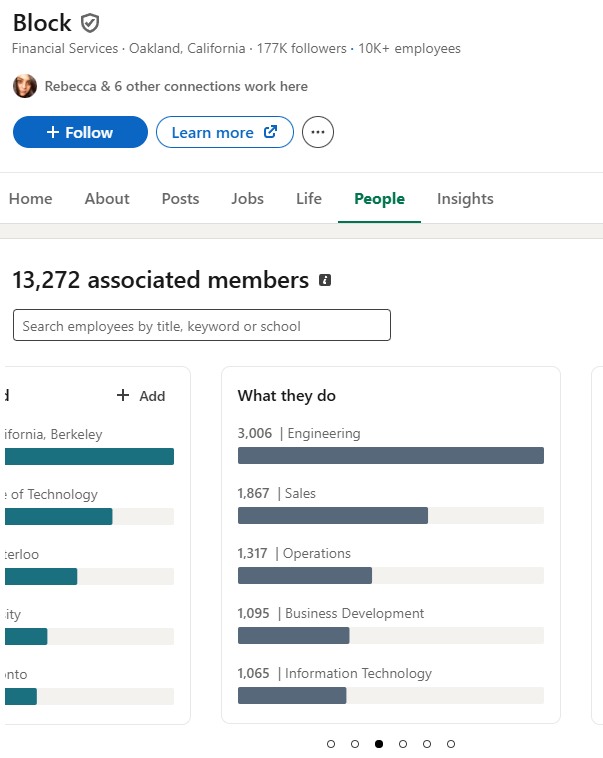
The company, which employs over 10,000 individuals according to LinkedIn data, with a significant concentration in engineering, IT, operations, and sales, is embarking on a path that many in the industry are watching closely. Early reactions from those within the AI development sphere, such as individuals working at companies like Anthropic, highlight the monumental nature of this shift, suggesting it could foreshadow a broader trend of job displacement across various sectors. This has prompted a deeper dive into the underlying dynamics at play within Block Inc. and the wider corporate landscape’s engagement with artificial intelligence.

Unpacking the Block Inc. Announcement: A Closer Look
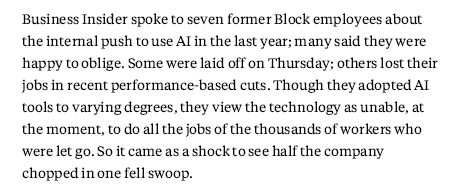
Initial inquiries into Block Inc.’s strategic pivot reveal a lack of clarity regarding the precise mechanisms through which AI will supplant such a substantial portion of its human workforce. Interviews conducted by Business Insider with seven Block employees indicated that there was no clear understanding of how this business transformation would unfold. This ambiguity suggests that the company’s vision, while bold, may not yet be fully translated into actionable plans at the employee level, or that the communication surrounding the transition has been less than comprehensive.
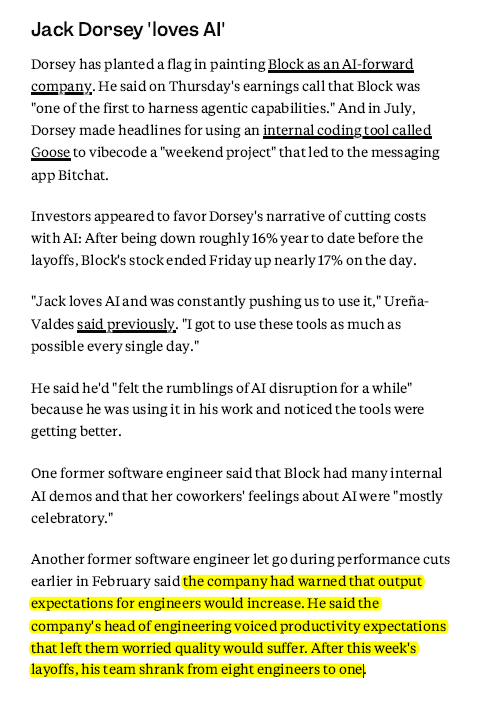
Jack Dorsey’s expressed enthusiasm for artificial intelligence is well-documented. This personal conviction likely fuels the company’s aggressive adoption strategy. However, the assertion that AI can seamlessly replace 4,000 employees raises critical questions about the nature of their roles and the current capabilities of AI technologies. Many experts posit that AI, while rapidly advancing, is more adept at automating specific tasks rather than entire job functions, especially those requiring complex problem-solving, nuanced decision-making, and interpersonal skills.
AI as a Catalyst for Performance Management?
A prevailing theory emerging from industry observers is that the AI narrative might serve as a convenient justification for addressing underlying performance or organizational inefficiencies. This perspective draws parallels to instances where significant workforce reductions have been framed around technological advancements, potentially masking a need for organizational restructuring or performance management.

The historical context of major layoffs, such as those seen at Twitter following Elon Musk’s acquisition, where significant bureaucracy was identified, lends credence to the idea that "AI" can act as a powerful euphemism for cost-cutting or streamlining operations. It is plausible that Block Inc. is leveraging the current AI fervor to undertake a significant organizational redesign, aiming to enhance efficiency and reduce operational overhead.
Research conducted by HR and talent analytics experts, including extensive studies on organizational redesign around AI, has often found that companies focusing solely on AI as a job-elimination tool yield limited success. True transformation, leading to substantial job reduction or significant productivity gains, typically necessitates a holistic re-engineering of business processes, not merely the introduction of new technology. Studies, such as those detailed in "The Rise of the Superworker" and research on "Dynamic Work Design," emphasize that effective AI integration requires a strategic approach to redesigning workflows and roles to leverage human-AI collaboration.
Financial Realities and Operational Efficiency
A closer examination of Block Inc.’s financial performance, when compared to industry peers like Visa, Mastercard, and Shopify, reveals a notable difference in profitability and gross margins. Block’s financial metrics suggest it operates at a lower scale and with less efficiency than these competitors. This disparity could indicate that the company is under pressure from investors to improve its financial standing and operational output.
The move towards AI-driven automation, therefore, might be a strategic response to investor dissatisfaction and a concerted effort to boost operating efficiency. By reducing its human capital expenditure, Block Inc. could be aiming to achieve greater profitability and a more competitive financial profile. This aligns with a broader trend in the corporate world where companies are increasingly exploring technological solutions to enhance their bottom line.
The Nuances of AI Transformation: Beyond Job Displacement
The narrative that AI will unilaterally eliminate large swathes of jobs requires careful consideration. While AI is undoubtedly transforming the nature of work by automating repetitive tasks, its role in wholesale job replacement is more complex than often portrayed.
1. The Short-Term Approach to AI Transformation
Companies that view AI primarily as a tool for immediate job elimination may find their strategies short-sighted. The implementation and scaling of enterprise AI require significant human capital. Building, managing, and maintaining AI systems necessitate specialized roles in areas such as model development, training, verification, and ongoing system oversight. The non-deterministic nature of AI means that continuous monitoring and adaptation are crucial to ensure predictable and accurate outcomes, particularly in customer-facing applications like those of Cash App. The development of robust AI governance and operational frameworks is essential to mitigate risks and ensure the reliability of these systems.
2. The Substantial Cost of AI Implementation
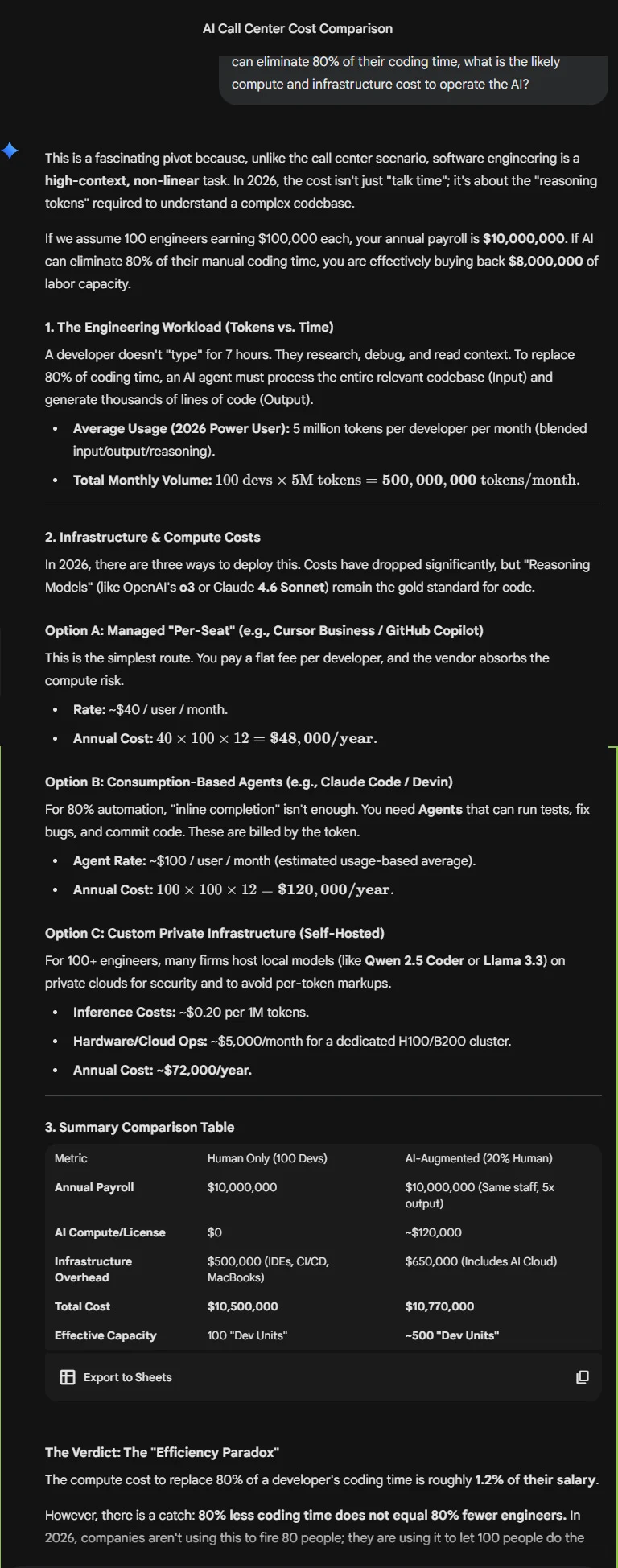
Beyond the potential for job displacement, the financial implications of AI adoption are significant. While replacing human roles, particularly in areas like customer support, might seem cost-effective initially, the total cost of ownership for AI solutions can be substantial. For instance, replacing a human call center agent, who might earn an annual salary of $35,000, with an AI agent that costs $15,000-$20,000 per year (assuming voice capabilities) still represents a considerable investment when factoring in the costs of training, ecosystem maintenance, and data governance.
The economics become even more intricate when considering roles like software engineering. While AI tools can significantly augment the productivity of human engineers, the operating costs of advanced AI systems, particularly those requiring extensive "reasoning tokens" for complex codebases, can sometimes exceed the cost of human labor. For example, a team of 100 engineers earning $100,000 each incurs an annual payroll of $10 million. If AI can automate 80% of their manual coding tasks, yielding $8 million in labor capacity, the cost of AI compute, development, and maintenance must be factored into the equation, potentially narrowing the perceived savings.
3. Re-Engineering Processes: The True ROI of AI
The most impactful transformations driven by AI are rarely initiated by job displacement. Instead, they stem from a fundamental re-engineering of business processes. Leading companies are not simply replacing workers; they are redesigning their operations to leverage AI for enhanced capabilities and strategic advantages.
Examples of this approach include Allianz’s use of digital twins to optimize claims processing and knowledge sharing, and Travelers’ implementation of AI to scale employee enablement and accelerate time-to-market. Hubspot is developing AI to offer new client services, rather than reducing its workforce. Similarly, AI platforms like Galileo aim to scale businesses exponentially by enabling interaction with a much larger client base than would be possible through traditional means.
In the case of Block Inc., while an initial layoff might be a precursor, the true long-term value of its AI strategy will depend on its ability to fundamentally re-engineer its business operations. Investors will be looking for tangible results that go beyond workforce reduction, indicating a strategic evolution of the company’s core functions and service delivery.
The Broader Implications for the Future of Work
The Block Inc. announcement serves as a potent case study in the evolving relationship between technology and employment. While the immediate focus is on job displacement, the deeper implications lie in the imperative for companies to embrace AI as a tool for process innovation and strategic growth.
The pressure for companies to increase "talent density" and move away from a "hire to grow" model, which can dilute employee productivity, is a significant driver behind these technological shifts. The ultimate success of Block Inc.’s AI initiative will be determined by its capacity to achieve this re-engineering, creating a more agile, efficient, and innovative organization.
For businesses and HR leaders, the lesson from Block Inc. is clear: AI should not be viewed as a simple job-eliminating strategy. Instead, it presents an unparalleled opportunity for fundamental business re-engineering. The true measure of success will be in how effectively companies can leverage AI to create new value, enhance capabilities, and adapt to the dynamic landscape of the modern economy. The coming months and years will reveal whether Block Inc. can indeed orchestrate such a transformation, moving beyond initial layoffs to a more profound and sustainable integration of AI into its operational fabric.







